Feb 27, 2020 | Events, News
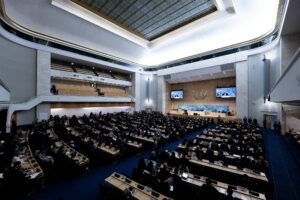
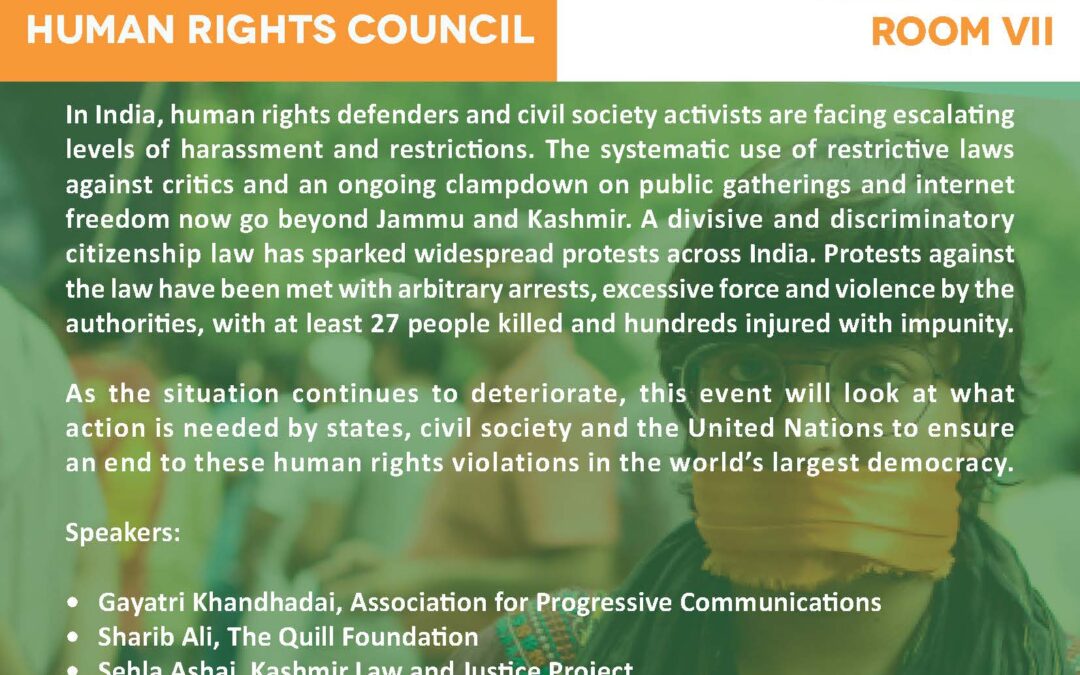
On 2 March, the ICJ and other NGOs will present discussion of the situation for human rights in India at a side event to the UN Human Rights Council in Geneva.
The event takes place Monday 2 March 2020, 14:00 – 15:00, in Room VII, Palais des Nations, Geneva.
In India, human rights defenders and civil society activists are facing escalating levels of harassment and restrictions. The systematic use of restrictive laws against critics and an ongoing clampdown on public gatherings and internet freedom now go beyond Jammu and Kashmir. A divisive and discriminatory citizenship law has sparked widespread protests across India. Protests against the law have been met with arbitrary arrests, excessive force and violence by the authorities, with at least 27 people killed and hundreds injured with impunity.
As the situation continues to deteriorate, this event will look at what action is needed by states, civil society and the United Nations to ensure an end to these human rights violations in the world’s largest democracy.
A flyer for the event can be downloaded here in PDF format: UN-Event-India-2019
Feb 27, 2020 | Events, News
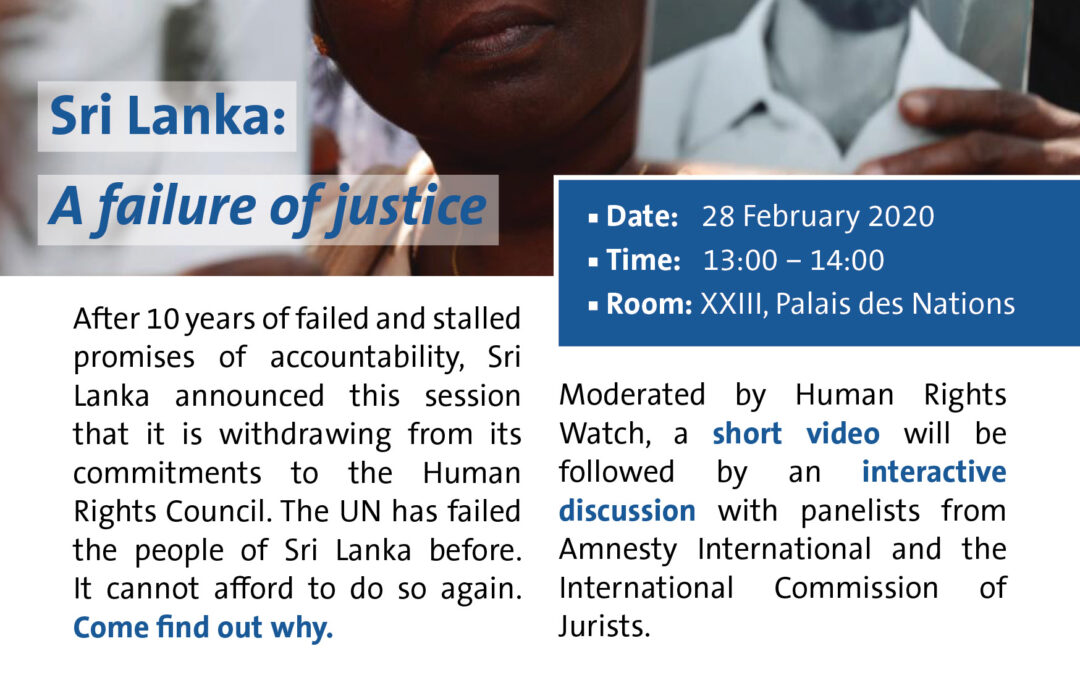
An event at the UN Human Rights Council on 28 February will highlight the continuing failure of Sri Lanka to secure justice for crimes under international law, and discuss ways forward for international efforts to fill the gap.
The event will take place 28 February 2020, 13:00 – 14:00, in Room XXIII of the Palais des Nations in Geneva.
It will be moderated by Human Rights Watch, with a short video will be followed by an interactive discussion with panelists from Amnesty International and the International Commission of Jurists.
A flyer for the event can be downloaded in PDF format here: HRC43 – Sri Lanka
Feb 27, 2020 | News
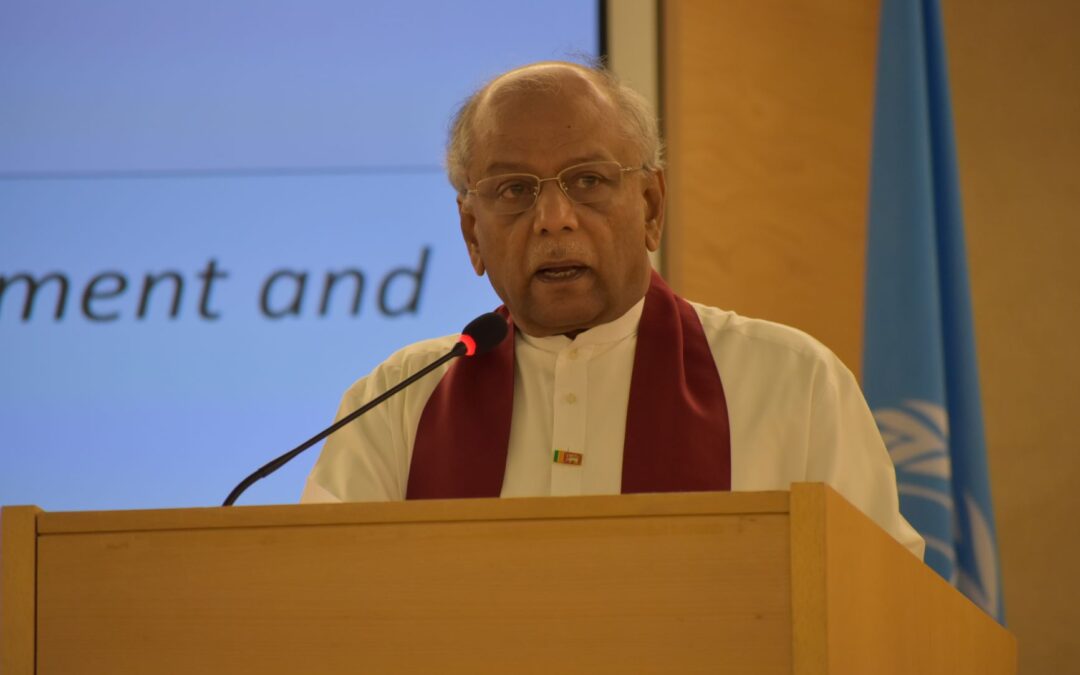
The ICJ today condemned the Sri Lankan Government’s announced “withdrawal” of support for the process under UN Human Rights Council (UNHRC) Resolutions 30/1, 34/1 and 40/1.
Minister of Foreign Affairs, Dinesh Gunawardane, formally announced the decision on 26 February at a High-Level Segment of the 43rd session of the UNHRC in Geneva.
“The Government of Sri Lanka’s refusal to implement effective measures for truth, justice, accountability and reconciliation, including as set out in the resolutions of the Human Rights Council, places it in violation of its obligations under international law,” said Frederick Rawski, ICJ’s Regional Director for Asia and the Pacific. “Holding perpetrators of human rights violations accountable at the international level now appears to be the only real option – including referral to the International Criminal Court, the creation of an ad hoc international mechanism, and the exercise of universal jurisdiction.”
Gunawardane stated that the Government of Sri Lanka would instead “achieve sustainable peace through an inclusive, domestically designed and executed reconciliation and accountability process, including through the appropriate adaptation of existing mechanisms, in line with the Government’s policy framework.”
“It is the Sri Lankan Government’s failure to initiate a credible and comprehensive approach to transitional justice in the aftermath of the war that led to the intervention of the international community in the first place,” said Rawski. “Sri Lanka’s domestic legal system has repeatedly demonstrated that it is unable to address systemic and entrenched impunity for crimes under international law perpetrated by the military and security forces,” he added.
Pronouncements by the President, on protecting military personnel from any accountability measures coupled with appointments to senior command positions individuals credibly accused of serious human rights violations indicate that the long history of impunity of security forces in Sri Lanka is set to continue.
The ICJ is deeply concerned that the Government’s official refusal to implement the UN resolutions comes at a time when the human rights situation in Sri Lanka is rapidly deteriorating. It threatens to undermine even the meagre progress made over the past few years, which albeit slow and wholly insufficient, has been primarily due to the continued engagement of the Council, OHCHR and international community. The UNHRC process is also the only forum at the global level where Sri Lankan civil society and victim groups have had the opportunity to engage openly in dialogue with the Government and other States on human rights concerns in Sri Lanka.
The validity of adopted resolutions of the Council does not depend on their acceptance by the government concerned. Reporting and discussion of Sri Lanka’s implementation or failure to implement them will take place this year and in 2021 at the Council regardless of the Government’s position.
Contact
Frederick Rawski, ICJ’s Asia Pacific Regional Director, t: +66 2 619 84 77; e: frederick.rawski(a)icj.org
Feb 27, 2020 | Advocacy, News
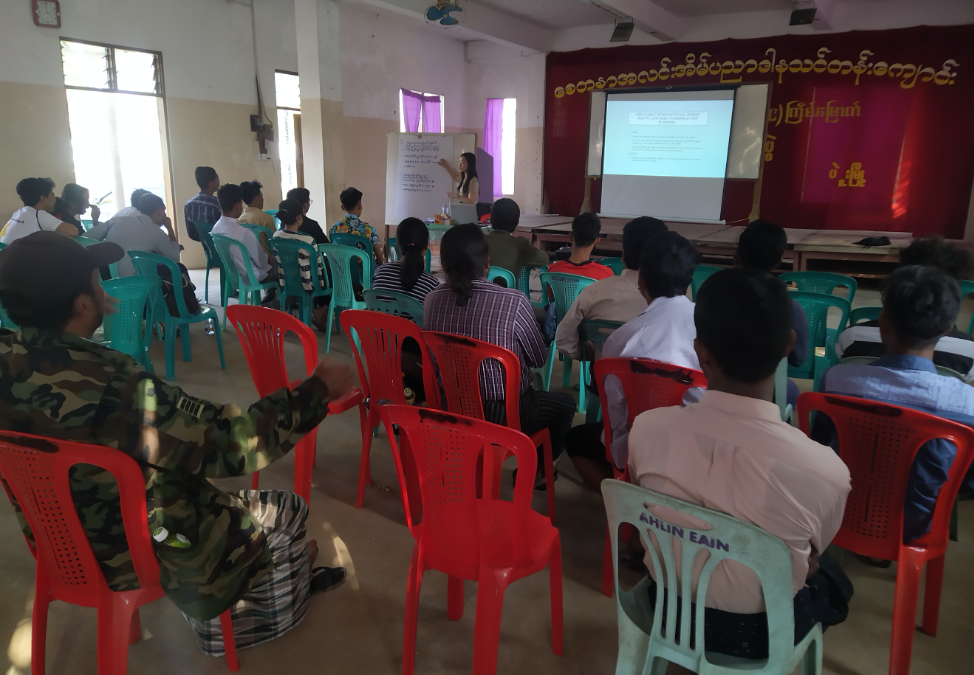
In January and February 2020, the ICJ supported community dialogue events on international and national law and standards relating to freedom of thought, conscience, religion and belief.
The events were organized by the Young Men’s Christian Association (YMCA) for around 50 youths and human rights defenders from Chin State and Bago Region in Myanmar.
The program sought to improve the capacity of local youths and human rights defenders from Chin State and Bago Region to understand how freedom of religion or belief (FoRB) is protected by the international and national legal frameworks and apply this understanding to their activities.
The ICJ’s national legal researcher, Ja Seng Ing, introduced the concept of freedom of religion or belief (FoRB) u, and applicable international standards on FoRB for Myanmar including how FoRB interacts with other human rights such as freedom of expression. She presented an overview of the domestic legal framework on FoRB and highlighted the State’s obligation to implement such laws and policies to respect and protect the equality, non-discrimination and other rights of individuals and to particularly address violations of their rights to FoRB.
The participants raised the need to improve the quality of public discussion on FoRB and related human rights, and shared this experiences in advocating for the protection of FoRB – including the limitation and challenges that they have faced.
The activities are part of the ICJ’s ongoing effort to convene civil society actors and lawyers in Myanmar with a view to advancing FoRB in the country, and builds on the ICJ’s previous work on this theme.
Contact
Ja Seng Ing, ICJ Legal Researcher, e: jaseng.ing(a)icj.org
Related material
Primer on international human rights law and standards on the right to freedom of thought, conscience, religion or belief, January 2019
New report examines right to freedom of religion or belief in Malaysia, March 2019
Feb 19, 2020 | News
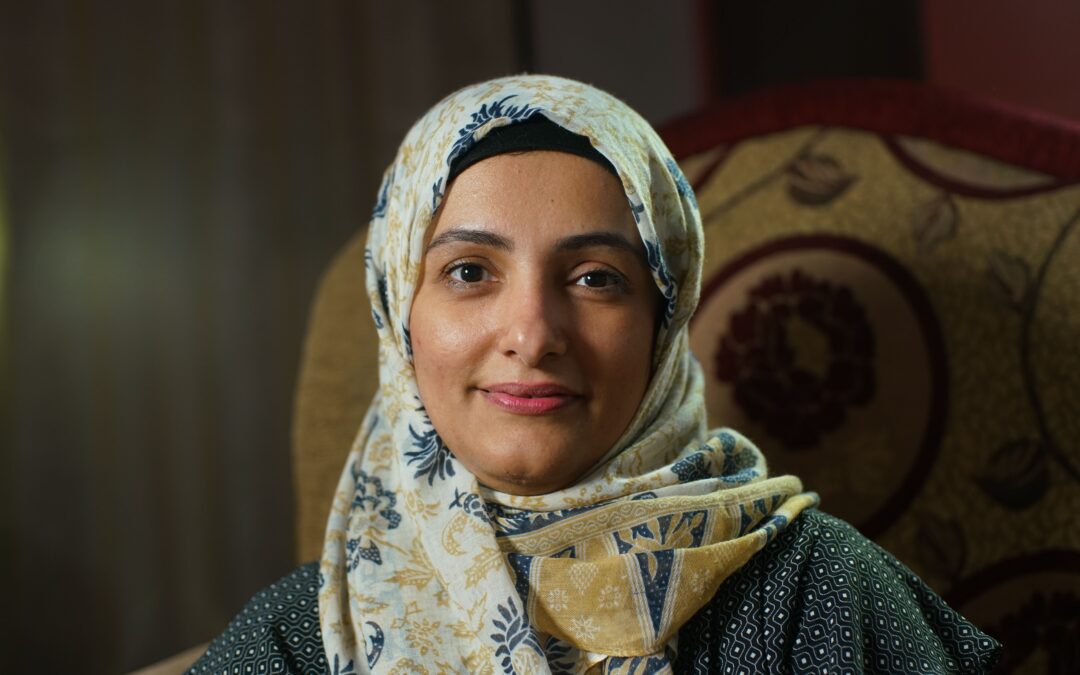
Huda Al- Sarari, Yemeni lawyer and human rights defender, is the 2020 Martin Ennals Award laureate. She was among three women selected as finalists by a jury of ten of the world’s leading human rights organizations, including the ICJ, along with Sizani Ngubane, South Africa, and Norma Librada Ledezma, Mexico.
The 2020 Martin Ennals Award ceremony, co-hosted by the Martin Ennals Foundation and the City of Geneva, was held today, and for the first time in the history of the Award, all three finalists are women.
“Women human rights defenders are subject to the same risks as every human rights defender, but as women, they also face certain forms of violence and violations due to their gender. They are often stigmatized and ostracized by community leaders, faith- based groups and even family members,” said the Mayor of the City of Geneva, Sandrine Salerno.
“The Martin Ennals Foundation is particularly proud to honour and support three resilient women human rights defenders this year, our laureate Huda Al-Sarari, as well as our two finalists Sizani Ngubane and Norma Librada Ledezma for their achievements. We hope that the award will shed a light on their achievements, and strengthen protection mechanisms around them,” said Philippe Currat, President of the Board of the Martin Ennals Foundation.
Huda Al-Sarari is a Yemeni lawyer and human rights defender who graduated in Sharia and Law from Aden University. She also holds a masters in Women’s Studies and Development from the Women’s Centre at Aden University. Over the last years, Huda investigated, exposed and challenged the enforced disappearances that occurred as a result of secret prisons run by foreign governments in Yemen where thousands of men and boys have suffered from arbitrary detention, torture and extrajudicial killings. She collected evidence on more than 250 cases of the abuse taking place within those prisons.
“Being a human rights defender in Yemen is extremely challenging, and being a woman makes this even more difficult. In a male-dominated society, I have to prove myself maybe ten times more than a man,” she said.
Despite the threats, defamation campaigns and sacrifices she and her family endured, Huda continues to stand alongside the families of those who have disappeared.
“Receiving the 2020 Martin Ennals Award for human rights defenders means the world to me. It gives me great strength and emboldens me to continue this fight for justice. I believe the Award will be incredibly important in drawing attention to the continual plight of victims of arbitrary detention, abuse and torture in Yemen,” she added.
“We commend Huda for the work that she conducted, not only against the backdrop of the ongoing Yemeni civil war, but also, in a country where women still struggle to express their political and civil rights. Huda’s legacy is crucial as her thorough investigations and search for accountability will serve to bring justice for human rights violations occurred during the conflict,” said Hans Thoolen, Chair of the Martin Ennals Award Jury.
The two finalists of the Martin Ennals Award this year are Sizani Ngubane (South Africa) and Norma Librada Ledezma (Mexico).
Sizani is a human rights defender who advocates for land rights for women in rural areas on South Africa. She also supports women to access education, and fights for the end of the traditional practice of Ukuthwala, which is the abduction and forced marriage of young girls and women.
Norma is the founder of Justicia para Nuestras Hijas. She has supported over 200 investigations into cases of feminicide, enforced disappearance and human trafficking in Chihuahua, Mexico.
Both were praised by the Martin Ennals Jury member organizations for their commitment and tremendous achievements in their respective countries.
Additional information
The City of Geneva has hosted the Award ceremony since 2008, together with the Martin Ennals Foundation, as part of its deep commitment to the defense of human rights. The support of the City, by means of its Service for International Solidarity, reflects its mission to promote human rights both internationally and
The Jury of the Martin Ennals Award is comprised of ten of the world’s leading human rights organizations: the ICJ, Amnesty International, FIDH, Human Rights First, HURIDOCS, International Service For Human Rights, Brot für die Welt (Bread for the World), Front Line Defenders, Human Rights Watch and the World Organization Against Torture.
Download
Universal-MEA2020bios-News-2019-ENG (full bios of finalists, in PDF)
Universal-MEA2020winner-News-Press releases-2019-ARA (full story in Arabic, PDF)
Universal-MEA2020bios-News-2019-ARA (full bios of finalists, in Arabic, PDF)
Contact
Olivier van Bogaert, Director Media & Communications, ICJ representative in the MEA Jury, t: +41 22 979 38 08 ; e: olivier.vanbogaert(a)icj.org
Watch the ceremony as it happened
https://www.facebook.com/MartinEnnals/videos/2552501445008021/
Feb 19, 2020 | News
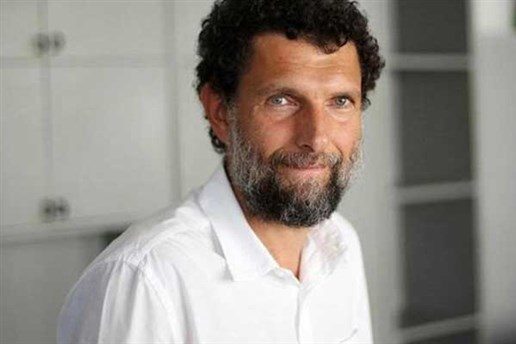
The ICJ and IBAHRI condemn yesterday’s re-arrest of Turkish human rights defender Osman Kavala, immediately following his acquittal on charges connected to the Gezi Park demonstrations that began in May 2013.
Osman Kavala was arrested on his release from prison yesterday evening, on suspicion of “attempting to disrupt the constitutional order” connected to the failed coup attempt of 2016.
“For Osman Kavala to be acquitted yesterday, on charges for which there was never credible evidence against him, only to be immediately re-arrested on another highly improbable charge, suggests a criminal justice system that is operating to suppress independent civil society rather than uphold due process and the rule of law,” said Róisín Pillay, Director of the ICJ’s Europe and Central Asia Programme.
Osman Kavala has been held in pre-trial detention since October 2017. The European Court of Human Rights recently ordered that Turkey must act to secure his immediate release, and found that his detention violated his right to liberty (Article 5.1 ECHR) and his right to speedy judicial review of detention (Article 5.4 ECHR), and pursued an improper purpose (Article 18 ECHR).
“It is disgraceful that the Turkish authorities seek to evade compliance with their obligation under the European Convention on Human Rights to end the arbitrary detention of Osman Kavala, by releasing and re-arresting him. We call for these new charges to be dropped and for Osman Kavala to be immediately released,” said Baroness Helena Kennedy QC, IBAHRI Director.
Background
Mr Kavala has been in detention since 18 October 2017 pending trial on charges connected to the Gezi Park protests. The Gezi Park protests began in May 2013 as an effort by a group of environmentalists to save a park in central Istanbul from being rezoned, but soon grew into nationwide demonstrations. Police quelled the protest in Taksim Square with the use of tear gas and water cannons.
Mr Kavala’s trial, along with 15 other defendants, took place before Istanbul 30th Assize Court. The IBAHRI and the ICJ jointly sent international observers to attend all hearings of the trial.
Contact :
Róisín Pillay, Director for Europe and Central Asia Proramme, t: +32 2 734 84 46; e: roisin.pillay(a)icj.org