Feb 12, 2019 | News
As the trial of twelve Catalan separatist leaders begins before the Spanish Supreme Court today in Madrid, the ICJ warns that their trial on broadly defined offences of rebellion and, possibly, sedition unduly restricts rights of freedom of expression, assembly and association.
“The very broad definition of the offence of rebellion being applied in this case risks unnecessary and disproportionate interference with rights of freedom of expression, association and assembly,” said Róisín Pillay, ICJ Europe and Central Asia regional Director.
The twelve political leaders – including high-ranking Catalan government officials – have been charged in connection with their part in the administration on 1 October 2017 of a referendum on Catalonian independence.
The referendum was conduced despite having been declared illegal by the Constitutional Court.
The voting process during the referendum was partially suppressed by the police, with credible reports of the use of unnecessary and disproportionate force in breach of Spain’s international law obligations.
“Interference with peaceful political expression and protest must be justified as strictly necessary and proportionate under international human rights law. Where peaceful protests or political actions, even if declared unlawul by the authorities, provoke an excessive response by the police, it is solely the police and other state authorities who should be held responsible for the violence,” Pillay said.
“It is crucial that the Supreme Court, in its consideration of these charges, takes full account of Spain’s obligations under international human rights law,” she added.
The ICJ is concerned that prosecutors, and the Supreme Court in admitting the indictment in the case, have ascribed an unduly broad meaning to the offence of “rebellion” under article 472 of the Criminal Code.
According to that article, the offence requires violent insurrection to subvert the constitutional order.
But the referendum organizers are not accused of using or advocating violence.
Rather, they are being tried on the basis that they should have foreseen the risk of intervention and the use of force by the police.
It is therefore alleged that the defendants were criminally responsible for the violence that ensued from their decision to carry on with the referendum, despite it being declared illegal.
Although the Supreme Court has held that the use of force by Spanish law enforcement authorities during the repression of the referendum of 1 October 2017 was “legitimate and, as such proportionate”, international observers have concluded that such use of force was excessive and disproportionate.
In accordance with international human rights law, the mere fact that the use of force is considered to be legal under national law, does not of itself mean that it can be considered to be necessary and proportionate.
The Supreme Court has further already accepted that, if the facts alleged by prosecutors are proven, they could amount to the offence of sedition, which is committed by those that that rise up publicly and in a tumultous way, by force or by unlawful means, to impede the implementation of laws or of authorities’ orders.
“Vague, broadly defined offences of sedition or rebellion risk violation of the principle of legality, as well as arbitrary and disproportionate interference with human rights,” said Róisín Pillay.
“In a highly sensitive and politicised case such as that of the Catalonian referendum, they would set a dangerous precedent for the targeting of peaceful independence movements and political dissent, not only in Spain but internationally,” she added.
Several of the accused have already been held in pre-trial detention for lengthy periods, further exacerbating the severity of the interference with rights to freedom of expression, association and assembly, and casting doubt on the proportionality of the response.
Contact
Róisín Pillay, Director, ICJ Europe Programme, t: +32 476 974263 ; e: roisin.pillay(a)icj.org
Background
The 12 people on trial in connection with the October 2017 referendum include Oriol Junqueras (photo), former Catalan vice-president; Carme Forcadell, former Catalan parliament speaker; eight former ministers in the Catalan government – Jordi Turull, Raül Romeva, Joaquim Forn, Santi Vila, Meritxel Borràs, Dolors Bassa, Josep Rull, Carles Mundó -; Jordi Sànchez the former leader of the Catalan National Assembly (ANC); and Jordi Cuixart, former head of the independence organisation Òmnium Cultural.
The trial, which begins on 12 February in the Supreme Court in Madrid, is expected to last for several months.
Spain has obligations to protect freedom of expression, including political expression, under Article 10 of the European Convention on Human Rights (ECHR) and Article 19 of the International Covenant on Civil and Political Rights (ICCPR); and freedom of peaceful assembly and association under Article 11 ECHR and Article 21 and 22 ICCPR.
The Human Rights Committee in its General Comment on freedom of expression has affirmed that: “extreme care must be taken by States parties to ensure relating to national security, whether described as official secrets or sedition laws or otherwise, are crafted and applied in a manner that conforms to the strict requirements of paragraph 3 of article 19 ICCPR, which requires that restrictions on freedom of expression be provided for by law and must be necessary for a legitimate purpose, such as national security or public order .) Rights to participate in public life are protected under Article 25 ICCPR.
Feb 4, 2019 | News
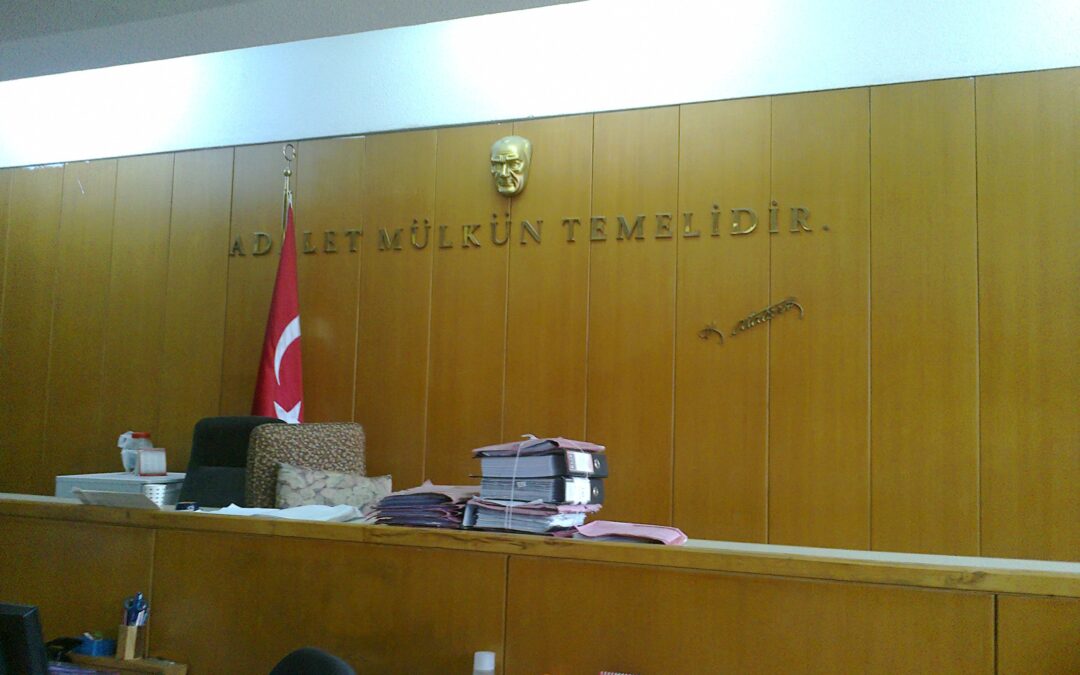
The ICJ is concerned that the dismissal of 17 judges and prosecutors by Turkey’s Council of Judges and Prosecutors on 10 January, for alleged membership of or connections with the “Fetullahist Terrorist Organisation” (FETÖ) did not respect their right to a fair trial.
The decision by the Council of Judges and Prosecutors (CJP) is particularly problematic because it lacks any reasoning on the individual situation of each judge and prosecutor.
The ICJ points out that international law provides that judges may be dismissed only through a fair hearing before an independent authority. The lack of individual reasoning in dismissal decisions strikes at the heart of the right to a fair hearing.
Furthermore, the ICJ recalls its conclusions in the 2018 report Justice Suspended that, within the current constitutional framework, the Council of Judges and Prosecutors (CJP) is not provided with the guarantees necessary to ensure its institutional independence.
Despite the state of emergency having been lifted since last July 2018, extraordinary powers given to the Council of Judges and Prosecutors to dismiss judges and prosecutors during the State of Emergency were extended for 3 years by Law no. 7145. It is unacceptable in a State governed by the rule of law that judges and prosecutors – whatever charges may be against them – be dismissed without respect for the right to a fair procedure, in disregard of international standards.
Considering that the Council of State has not delivered a single decision about dismissed judges and prosecutors during the state of emergency, in more than two years now, it seems likely that it would take at least two years before the recent decision of the CJP is reviewed by an independent judicial authority. Until then, absent further action by the CJP, the reasons for the dismissals will not be known by the purged judges and prosecutors, or by the general public.
The ICJ calls on the CJP to revoke its order and re-examine the cases under the ordinary dismissal procedures and on the Turkish Government and Parliament to modify the constitutional rules on the CJP to ensure its full independence.
Finally, the ICJ expresses concern at the conviction of the former head of the judges’ organisation YARSAV, Mr Murat Arslan, for alleged membership of FETÖ. There are credible reports of violations of the right to a fair trial in the proceedings, including four changes of judges during the proceedings, often without reasons given and without re-examination of witnesses, significant limitations to the defence access to evidence before trial and use of witnesses with undisclosed identity. The ICJ considers that these allegations of violations of the right to a fair trial should be thoroughly re-examined in appeal before an independent court and in full respect of Mr Arslan’s fair trial rights.
Background
On 10 January, the Council of Judges and Prosecutors made use for the first time of special powers to dismiss judges and prosecutors without complying with the ordinary procedure, invoking extraordinary powers enacted by Law No 7145 of 31.07.2018. This legislation inserted into ordinary law several powers that had previously existed under the state of emergency legislation.
One of the amendments made by Law No 7145 of 31.07.2018 was to the Decree Law No 375 dated 1989. A Temporary Article (Article 35) was added to the Decree. On the basis of this article, the General Assembly of the Constitutional Court, the Presidency Councils of Court of Appeal, the Council of State, the General Assembly of the Council of Judges and Prosecutors, a Commission set up by the Ministry of National Security, and the Presidency of the Court of Audit, were each authorised to take dismissal decisions for public officials/judges and prosecutors under their mandate for three years from the date of the endorsement of the law No 7145.
Based on this amendment, on 10 January 2019 the Council of Judges and Prosecutors took its first decision (Decision No. 2019/1) by dismissing 17 judges and prosecutors (6 Public prosecutors, 3 Members of Administrative Court, 7 judges of of Tax Court) based on the allegation of membership to FETÖ.
International law and standards provide that disciplinary proceedings should be conducted by an independent authority or a court with all the guarantees of a fair trial and provide the judge with the right to challenge the decision and sanction. Disciplinary sanctions should be proportionate.
The UN Basic Principles on the independence of the judiciary set out international standards for discipline, suspension and removal of judges, including in order to ensure impartiality and independence of courts and tribunals as required by international law (including the International Covenant on Civil and Political Rights and the European Convention on Human Rights). The Basic Principles state that a:
“charge or complaint made against a judge in his/her judicial and professional capacity shall be processed expeditiously and fairly under an appropriate procedure. The judge shall have the right to a fair hearing. The examination of the matter at its initial stage shall be kept confidential, unless otherwise requested by the judge. …
The Consultative Council of European Judges (CCJE) adds that “a Head of State, Minister of Justice or any other representative of political authorities cannot take part in the disciplinary body.”
Contact
Massimo Frigo, ICJ Senior Legal Adviser for the Europe and Central Asia Programme, t: +41 22 979 3805, e: massimo.frigo(a)icj.org
Jan 31, 2019 | Multimedia items, News, Video clips
For the past two years the ICJ and its partners Refugee Rights Turkey (RRT), the European Council on Refugees and Exiles (ECRE) and Mülteci-Der (MD) have provided trainings and training materials for Turkish lawyers on international human rights law relating to migration and asylum as part of the project Fostering Access to Rights for Migrants, Refugees and Asylum-Seekers in Turkey.
The project has worked to enhance access to justice for migrants, refugees and asylum-seekers, through establishing, equipping and supporting a well-informed group of lawyers and civil society organizations in Turkey and link them with their counterparts in EU Member States to defend the rights of migrants, refugees and asylum-seekers.
In a public event on the 17 December 2019 hosted in Ankara to mark the conclusion of the project, the ICJ and its partners presented a promotional video describing the work conducted throughout the project.
Watch video here:
(Rough Turkish subtitles available but will be revised at a later stage | Turn the Turkish subtitle by clicking on CC.)
The project “Fostering Access to Rights for Migrants, Refugees and Asylum-Seekers in Turkey” is funded by the European Instrument for Democracy and Human Rights (EIDHR) of the European Union.

Jan 18, 2019 | News
A legal challenge to the violations of migrant children’s social rights on mainland Greece and its North Eastern Aegean islands has been lodged by the ICJ and the European Council on Refugees and Exiles (ECRE) before a European body specialized in the protection of social rights at the European level.
The legal action, taken in the form of a collective complaint to the European Committee on Social Rights, catalogues the numerous instances of Greece failing its child care and protection obligations towards migrant children by leaving them in conditions of squalor, insecurity and violence.
The complaint to the Committee, an impartial body which oversees the protection of certain economic and social rights by assessing the conformity of domestic law and practice with the European Social Charter, has been supported by the Greek Council for Refugees and includes reports from Médecins Sans Frontières on health and living conditions of migrant children in Lesvos.
Amongst the most blatant infringements of migrant children’s rights described in the complaint has been the systematic and ongoing absence of sufficient accommodation facilities and the lack of an effective guardianship system for unaccompanied children in Greece, exposing them to significant protection risks, including homelessness and placement in detention.
Such severe deficiencies in basic care facilities has led to dire living conditions which deprive children of their most fundamental rights.
Overcrowded, insalubrious and dangerous conditions prevail most obviously on the North Eastern Aegean islands where the standards of human dignity and special protection accorded to children by virtue of their particular status under international human rights law are repeatedly violated.
The complaint notes that the dearth in basic care facilities for migrants in Greece extends to medical services, particularly on the islands, which has a serious knock-on effect on hygiene, sanitation and substantive physical and mental health care and treatment for children.
In addition, mixed living arrangements, limited, if not non-existent security patrols and deficient guardianship systems have led to numerous reports of sexual abuse, violent assaults, harassment and humiliation of migrant children in camps on the Greek islands.
The consequences of the conditions listed in the complaint have been, in certain locations, children self-harming and even attempting suicide.
“Greece’s deference to the violations being committed against migrant children on its territory has gone on for far too long without any foreseeable improvement on the horizon.
Transfers of migrant children and vulnerable persons from the islands to the mainland are paralysed by a shortage of places on the mainland and administrative encumbrances.
All the while, children are left to languish in a forgotten environment of impoverishment and destitution.
This legal challenge to Greece’s indifference will hopefully pave the way for institutional condemnation and for substantive change in the protection of society’s most vulnerable” says Amanda Taylor, Senior EDAL Coordinator at the European Council on Refugees and Exiles.
“As signatory of the European Social Charter, Greece is under an international obligation to ensure that migrant children in its jurisdiction have access to basic economic and social rights. Particularly in the case of migrant children, who find themselves in a vulnerable situation, remaining even for a short period of time in such terrible conditions as currently exist in Greece, is likely to result in irreparable harm and injury and have a detrimental and non-reversible impact on their development,” said Karolína Babická, Legal Adviser for Europe and Central Asia with the ICJ.
“This complaint refers to two of the most pressing protection issues in Greece; the protection of unaccompanied minors and the conditions prevailing on the Greek islands after the launch of the EU-Turkey Statement, where migrant children are stranded. In December 2018, almost two out of three unaccompanied children in Greece were deprived of a place in long-term accommodation facility for minors. At the same time, 30% of the 14,600 persons remaining on the Greek islands were children. Thus, the procedure initiated before the European Committee of Social Rights can significantly contribute to guaranteeing the respect of migrant children’s rights in Greece,” said Alexandros Konstantinou, member of the Legal Unit of the Greek Council for Refugees.
The complaint awaits examination and determination by the European Committee on Social Rights.
As part of the complaint and in order to immediately alleviate the situation which migrant children face in Greece, ECRE and ICJ have urgently requested Greece to remove migrant children from unsuitable and overcrowded camps on the islands; to provide them with adequate and age-appropriate facilities, sufficient food, water and medical care, and with effective and competent guardians; and to remove unaccompanied migrant children from detention and place them in tailored accommodation suitable for their age.
Read the full complaint here.

Dec 21, 2018 | News
CORE and the ICJ have been granted permission to intervene in an appeal before the United Kingdom Supreme Court (Vedanta Resources PLC and another v. Lungowe and others).
The two organizations will provide evidence on comparative law and international standards regarding the responsibilities of companies in relation to human rights and environmental protection, in particular the recognition of a duty of care of parent companies in relation to the communities living in the surrounding of companies operations.
In August 2015, 1800 Zambian villagers launched a legal action in the UK against mining company Vedanta Resources Plc and its Zambian subsidiary, Konkola Copper Mines, claiming that their water sources and farming land were poisoned from the copper mining operations of both companies.
Last year, the Court of Appeal upheld a High Court ruling that the Zambian claimants had a legal right to bring a claim through the courts in the UK and that a parent company may owe a duty of care to third parties affected by its subsidiary. Vedanta is appealing this ruling in the Supreme Court.
CORE and the ICJ have been lead participants in the elaboration processes of all major international instruments in the field of businesses’ human rights responsibilities in the last decade and are also specially situated to provide information on the state of the law in various jurisdictions.
Our submission is that the Court of Appeal’s conclusion that Vedanta arguably owed a duty of care to the claimants is supported by: international standards regarding the responsibilities of companies in relation to human rights and environmental protection; material published by the UK government with the aim of implementing those international standards; and comparative law jurisprudence.
The hearing will take place on 15-16 January 2019.
Dec 21, 2018 | Multimedia items, News, Video clips
The ICJ invited a number of women lawyers to Geneva to participate in a training workshop and gain practical experience of UN human rights mechanisms as part of a project supported by the German Mission to the United Nations in Geneva.
One group of women came to Geneva in June during the 38th session of the UN Human Rights Council and 70th session of the Committee on the Elimination of Discrimination against Women, and the other group came in September to coincide with the 39th session of the Human Rights Council.
During the week long training workshops participants learned about the international human rights mechanisms available to tackle issues of women’s access to justice and gained hands-on exposure to the operation of these mechanisms in practice.
Participants spoke about the impact that the CEDAW Convention has had in their domestic legislation.
Donia Allani a lawyer and lecturer at the Faculty of Legal, Political and Social Sciences of Tunis, discussed the impact of CEDAW in shaping legislation in Tunis to eliminate violence against women and facilitate access to justice but noted that women still faced stigmatization.
Donia Allani commented, however, that UN mechanisms could be improved to ensure that all activists and feminists can access these mechanisms without fear of reprisals.
Uzbek lawyer Sabina Saparova, also spoke of the impact that international law and standards can have domestically. She explained that Uzbekistan’s ratification of the CEDAW Convention provided an international commitment to incorporating equality between men and women into its legal structure. Recently the president of Uzbekistan initiated the first steps toward the adoption of a law on the prevention of domestic violence.