Nov 18, 2015 | Events, News
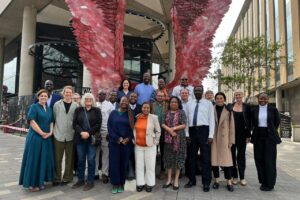
The ICJ, OSCE and Group 484 are holding a training on migration and international human rights law starting on Tuesday 17 November in Vrnjačka Banja (Serbia).
The training has been organised by the Organisation for Security and Cooperation in Europe (OSCE) and the Serbian NGO “Group 484” and will be given by the International Commission of Jurists.
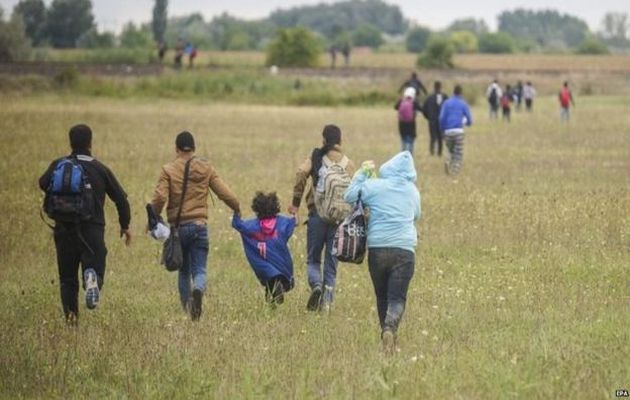
It will focus on international protection of migrants and asylum seekers, access to territory and asylum and the principle of non-refoulement, in light of the current migrants and refugee crisis and drawing from the jurisprudence of the European Court of Human Rights, of the UN human rights systems and from EU law.
The training will be centred on the ICJ Practitioners Guide no. 6: Migration and International Human Rights Law.
Serbia-JointTrainingMigrationHR-Events-2015-ENG (download the agenda in English)
Nov 17, 2015 | News
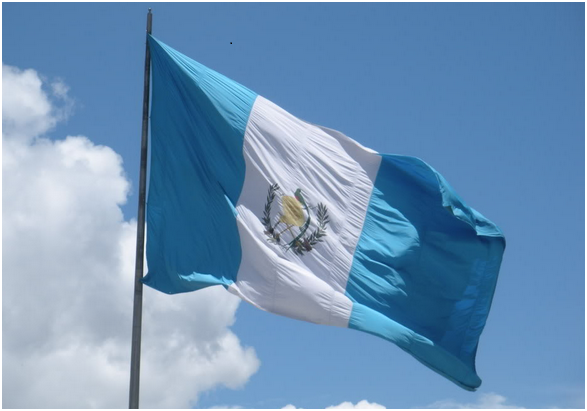
Desde el año 2004, la CIJ ha señalado casos en los que el Estado de Guatemala dirige su poder punitivo en contra de defensores y defensoras de derechos humanos por su asociacion a actos pacíficos en defensa de los recursos naturales de distintas comunidades en el país.
Ante esta práctica, que socava el derecho a defender los derechos humanos, la CIJ expresa:
1. La criminalización de la protesta social se ha convertido en un fenómeno recurrente en Guatemala, en la que el Derecho Penal es utilizado como instrumento de represión y deslegitimación de la labor que las y los defensores de derechos humanos llevan a cabo en el país.
2. Especial preocupación causan las detenciones arbitrarias de las que son objeto defensores y defensoras de derechos humanos, que trabajan en áreas de alta conflictividad social y se vinculan a la protección de los recursos naturales, territorios o derechos de los Pueblos Indígenas. En algunos casos, el Estado de Guatemala ha optado por la suspensión de las garantías constitucionales en esas regiones, decretando estados de prevención o de sitio.
3. Con el objeto de conocer el impacto de esta práctica, la eurodiputada Marina Albiol, visitó Guatemala del 2 al 5 de noviembre del presente año. En dicha ocasión, la CIJ acompañó a su delegación en una visita in situ a los departamentos de Huehuetenango y San Marcos, para entrevistarse con defensores y defensoras de Derechos Humanos, así como para sostener reuniones con funcionarios de gobierno y movimientos sociales.
4. La delegación constató que frecuentemente las y los líderes comunitarios y defensores de derechos humanos, son sometidos a procesos penales injustos, práctica que consituye una herramienta para el acoso a dichas personas.
5. La delegación pudo constatar el caso de las detenciones arbitrarias de Ermitaño Bernardo López , Rigoberto Juárez y Domingo Baltazar, Francisco Pedro (Chico Palas), Adalberto Villatoro (Don Tello), Arturo Pablo Juan,Saúl Méndez y Rogelio Velásquez, todos ellos del Departamento de Huehuetenango; en los dos últimos casos mencionados, se ha dictado sentencia absolutoria, pero ambos continúan detenidos. Todos han padecido su privación de libertad , en la cárcel de Huehuetenango o en la prisión de la zona 18 de Guatemala, bajo condiciones extremadamente difíciles. Los anteriores no son los únicos, ya que junto a ellos se encuentran detenidas arbitrariamente otras defensoras y defensores de derechos humanos del departamento de Huehuetenango y de otros departamentos.
6. Asímismo preocupa la detención de Mauro Vay, dirigente y defensor de derechos humanos de la organización CODECA, quien se encuentra bajo medida sustitutiva, pero con restricciones que han afectado su derecho al trabajo y libertad de movimiento, durante todo el año 2015 en el departamento de Suchitepéquez.
7. La Comisión Interamericana de Derechos Humanos ha expresado que la protesta social pacífica, es una herramienta fundamental para la labor de defensa de los derechos humanos, esencial para la crítica política y social de los gobiernos. En tal sentido, los Estados están obligados a asegurar que ningún defensor o defensora de los derechos humanos sea impedido de reunirse y manifestarse públicamente en forma pacífica.
Ante estos hechos, Wilder Tayler, Secretario General de la CIJ expresó: “Urgimos a las autoridades del Estado de Guatemala a detener la criminalización de la protesta social y las detenciones arbitrarias que este fenómeno conlleva. Amendrentar y obstaculizar la labor de defensoras y defensores de derechos humanos constituye de por sí, una violación del derecho de las garantías individuales”.

Nov 17, 2015 | News
La CIJ demanda a las autoridades guatemaltecas terminar con la impunidad que rodea el caso Siekavizza.
La CIJ ante la impunidad prevaleciente en el caso Siekavizza expresa:
El llamado “caso Siekavizza” constituye un caso paradigmático de femicidio supuestamente cometido por el esposo de la víctima Cristina Siekavizza, el 16 de julio de 2011. El cuerpo de la víctima no ha aparecido hasta ahora.
- Por las circunstancias que rodean este caso la CIJ ha solicitado reiteradamente que éste sea conocido por la Comisión Internacional contra la Impunidad en Guatemala (CICIG); no solo porque el principal sospechoso es hijo de una ex Presidenta de la Corte Suprema de Justicia, sino porque existen elementos suficientes para considerar que puede haber existido una conjura criminal para mantener el caso en la impunidad.
- Desde que se dieron los hechos tan deplorables, el Sistema de Justicia de Guatemala mostró ineficiencia y falta de voluntad política para esclarecer los hechos y llevar ante la justicia al o a los supuestos responsables. Las autoridades estatales no adoptaron las medidas necesarias para llevar a cabo una investigación eficiente y rápida.
- Lo anterior permitió que se afectara la escena del crimen y que el presunto responsable se refugiara en otro país y escapara a la justicia.
- Los cuatro años de impunidad que lleva el caso, han provocado un profundo pesar a los familiares de Cristina Siekavizza a quienes en su momento, el Estado deberá resarcir los daños causados.
- Este es tan solo uno de los miles de casos criminales que se mantienen en la impunidad frente a la pasividad de las autoridades correspondientes. En general la justicia en Guatemala sigue seriamente afectada por altos índices de impunidad.
Wilder Tayler, Secretario General de la Comisión Internacional de Juristas con sede en Ginebra, Suiza expresó: “Seguiremos observando el desarrollo de este caso; hacemos un enérgico llamado a todos los operadores de justicia involucrados, para que pongan el más riguroso empeño para permitir esclarecer un crimen tan grave. La impunidad que rodea el caso debe superarse cuanto antes.”

Nov 16, 2015 | News
The International Commission of Jurists (ICJ) deplores the devastating criminal attacks carried out in Paris on 13 November, leading to the loss of at least 129 lives and many serious injuries. The ICJ extends its condolences to the victims and their families.
The attacks were calculated to cause the greatest possible arbitrary destruction of lives and of human rights.
Those responsible for these heinous crimes must now be investigated and brought to justice, in a manner that ensures strict compliance with human rights and the rule of law.
Nov 13, 2015 | News
The Peruvian authorities must revise a number of its laws and policies to better protect economic, social and cultural rights (ESCR) in the country, the ICJ says.
The call comes at the end of a one-week mission by the ICJ to gather information on and assess the impact of extractive industries on the economic, social and cultural rights of local populations, especially peasant and indigenous communities.
In particular, the ICJ is concerned at the adverse human rights impact of “Ley 30230” that aims at facilitating investment.
While investment can make an important contribution to the realization of human rights, the ICJ considers that this particular law effectively leads to a degradation of human rights by lowering social and environmental protection standards.
The ICJ does welcome the enactment of protective legislation by Peru, including that protecting and implementing the right to free, prior and informed consent of indigenous peoples or regulating the use of force by the police.
However, the ICJ notes these laws are often not effectively implemented in practice.
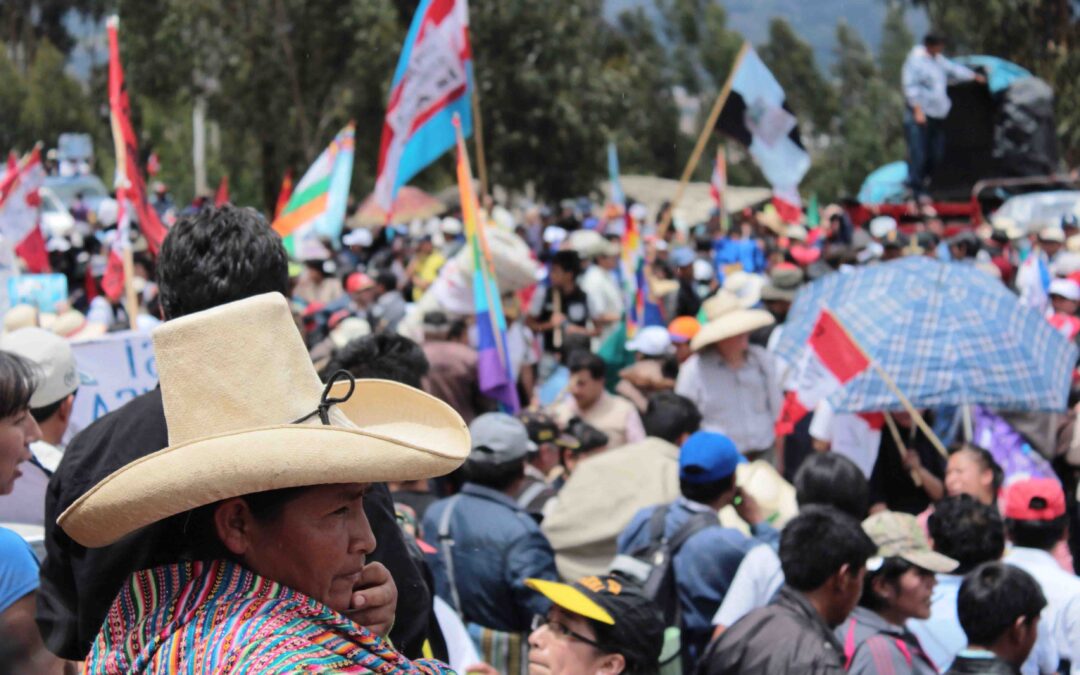
During the mission the ICJ verified information on the increasing number of violent conflict and social protests relating to mining projects.
“A large proportion of current social conflicts in the country is taking place in areas of extractive industrial activities. With a trend to lower the protection of economic and social rights and the environment in order to facilitate investment, there is a high risk that violent conflict will increase even more,” said Sandra Ratjen, Senior Legal Adviser for ICJ’s Programme on Economic, Social and Cultural Rights.
“There is a gap between Peru’s international law obligations to respect and protect human rights and the systematic threats to the enjoyment of rights, such as the right to water, to health or to housing, or to free and prior, informed consent that communities in mining areas are facing,” she added.
The ICJ is particularly concerned at the alleged unlawful use of lethal force to suppress demonstrations and social protests in mining areas such as in the recent case of Las Bambas.
The ICJ received information from various sources that in some instances the security forces had used such force in contravention of the principles of necessity and proportionality.
The ICJ urges the Peruvian authorities to take the following measures to strengthen the protection of Economic, Social and Cultural Rights in the country:
- maintain and strengthen the national laws and policies protecting human rights, particularly economic, social and cultural rights and the environment;
- accordingly revise legislation that obstructs the State to comply with its international human rights obligations, including those related to the realization of rights such as the right to decent work the rights to health and safe water or the right to be protected against forced evictions;
- fully ensure the free exercise of the right to peaceful assembly and of freedom of expression of individuals and peoples, including human rights defenders.
Additional information:
The ICJ mission included: María Clara Galvis, a Colombian lawyer specialized in international human rights law and Professor at Universidad Externado de Colombia ; Rafael Uzcátegui, a Venezuelan sociologist and Coordinator General of the Venezuelan Programme of Education and Action on Human Rights (PROVEA); Sandra Ratjen, Senior Legal Adviser for ICJ’s Programme on Economic, Social and Cultural Rights; and Olivier van Bogaert, ICJ Director of Media and Communications.
The delegation met with authorities from various Peruvian Ministries, representatives from extractive companies, cooperation agencies, human rights non governmental organizations, trade unions and community-based organizations.
In December, the ICJ will release a final report containing its findings and recommendations on the situation of economic, cultural and social rights in the context of extractive activities and the rise of social conflicts in Peru.
Contact:
Sandra Ratjen, Senior Legal Adviser for ICJ’s Programme on Economic, Social and Cultural Rights, t: +55 96 48 13 628; e: sandra.ratjen(a)icj.org
Peru-ESCR mission-News-Press release-2015-SPA (full press release in PDF, Spanish)
Photo credit: Jonas Hulsens

Nov 11, 2015 | News
While welcoming the Maldives government’s revocation of the emergency yesterday, the arbitrary manner in which the emergency was first imposed and then suddenly revoked within the span of a week reflects a deeper erosion of the rule of law in the country, the ICJ said today.
On 10 November, a week after declaring a 30-day state of emergency, the Maldives lifted the emergency reportedly because authorities had arrested several people in connection with an alleged plot to “use dangerous weapons and explosives”, thereby neutralizing the purported national security threat cited as the grounds for the emergency.
Maldivian authorities have not provided any information as to who or how many individuals were arrested or the nature of the charges.
“The imposition of a state of emergency is not a political tool to be used willy-nilly as a matter of convenience to suspend human rights protections and suppress political opposition,” said Nikhil Narayan, ICJ’s South Asia Senior Legal Adviser.
“A state of emergency that suspends constitutional rights is not to be declared lightly,” he added. “It has serious implications for human rights and the rule of law in the country, and must only be invoked in the most extreme situations and in accordance with international law.”
International law expressly permits derogations of certain human rights only in times of public emergency which threatens ‘the life of the nation’.
“Declaring a 30-day emergency and then suddenly lifting it a week later only reinforces the serious concerns previously raised as to the legitimacy of the emergency in the first place, and speaks to the larger rule of law crisis in the country,” Narayan said.
The emergency decree issued by the Maldives government last week suspended several constitutional rights, including the right to freedom of peaceful assembly, and reduced the constitutionally mandated period for the vice president to respond to impeachment charges from 14 to 7 days.
The opposition Maldivian Democratic Party (MDP) had planned a public anti-government demonstration for 6 November, two days prior to which the emergency was declared.
Meanwhile, the vice president was removed from his post the day after the emergency decree, 5 November, in a swift and seemingly arbitrary impeachment hearing.
“The circumstances surrounding events in the Maldives this past week clearly suggest that the government was using the emergency as a ploy to prevent the planned opposition rally and to eliminate the vice president as a political threat,” said Narayan.
The emergency also granted sweeping powers of search, arrest and detention without warrant to the police, who reportedly raided several buildings and arrested an unknown number of individuals under its emergency powers over the past week.
“The Maldives government cannot flout international law by invoking emergency powers as a means to deny the due process rights of the vice president and others arrested or detained for alleged crimes,” added Narayan. “The government must ensure that the individuals arrested during the emergency are afforded their full fair trial and due process rights in accordance with international law.”
Additional Information:
The ICJ previously raised concerns that the alleged grounds for the emergency did not appear to establish a threat to the life of the as required by the high threshold set by international law, and could not in any event justify the complete suspension of constitutional rights.
In August 2015, following a joint fact-finding mission to the Maldives, the ICJ and South Asians for Human Rights (SAHR) documented the breakdown of the rule of law and human rights in the Maldives in a 35-page report, Justice Adrift: Rule of Law and the Political Crisis in the Maldives.
Contact:
Nikhil Narayan, ICJ Senior Legal Adviser for South Asia, t: +977 9813187821 ; e: nikhil.narayan(a)icj.org