Dec 2, 2015 | News
The ICJ today denounced the execution of four individuals convicted for their involvement in terrorism in secret trials by military courts.
Four civilians, namely Maulvi Abdus Salam, Hazrat Ali, Mujeebur Rehman and Sabeel alias Yahya, were hanged in Kohat early morning today after being sentenced to death by military courts earlier this year.
In a press statement issued on 13 August, the media wing of the armed forces announced they were convicted for their involvement in “terrorist activities”, including harboring, funding and transporting “suicide bombers” who attacked the Army Public School in December last year.
According to the statement, they are all “active members” of the “Toheedwal Jihad Group”.
The ICJ considers that the executions are unlawful, in breach of Pakistani law and its international legal obligations.
“The failure of the government and military authorities to make public information about the time and place of their trials, the charges and evidence against them, as well as the judgments of military courts have confirmed fears of human rights groups and the legal community that military trials in Pakistan are secret, opaque and constitute a violation of the right to a fair trial,” said Sam Zarifi, ICJ’s Asia Director.
The ICJ emphasizes that under international standards, civilians may not be tried before military tribunal.
As highlighted by the ICJ in a briefing paper released in April, proceedings before Pakistani military courts fall well short of national and international standards requiring fair trials before independent and impartial courts: judges are part of the executive branch of the State and continue to be subjected to military command; the right to appeal to civilian courts is not available; the right to a public hearing is not guaranteed; and a duly reasoned, written judgment, including the essential findings, evidence and legal reasoning, is denied. In addition, the procedures of military courts, the selection of cases to be referred to them, the location and timing of trial, and detailed about the alleged offences are kept secret.
“The ICJ supports the pursuit of justice for all victims of terrorism in Pakistan, including the horrific attack on the Army Public School last year”, added Zarifi. “However, justice will not be done by subverting the foundational pillars of justice: the right to a fair trial and independence of the judiciary.”
The UN Human Rights Committee, the supervisory authority for the ICCPR, has emphasized that in trials leading to the imposition of the death penalty, “scrupulous respect of the guarantees of fair trial is particularly important” and “imposition of a sentence of death upon conclusion of a trial, in which the provisions of article 14 of the Covenant have not been respected, constitutes a violation of the right to life.”
Pakistan has hanged more than 300 people since it lifted a six-year moratorium on the death penalty in December 2014. Initially lifted only for terrorism-related offences, the Government resumed executions in all cases in March 2015. Less than ten per cent of the total executions relate to terrorism-related offences.
“These executions only fulfill a desire for retribution and add to the disturbing trend of hanging people in the name of fighting terrorism in Pakistan and the region,” said Zarifi. “The death penalty has not been shown to have any deterrent effect on crime or terrorism anywhere in the world.”
The ICJ opposes capital punishment in all cases without exception. The death penalty constitutes a violation of the right to life and the right not to be subjected to cruel, inhuman or degrading punishment.
In December 2014, the UN General Assembly adopted a resolution, for the fifth time since 2007, emphasizing that the use of the death penalty undermines human dignity and calling on those countries that maintain the death penalty to establish a moratorium on its use with a view towards its abolition.
Some 117 UN Member States, a wide majority, voted in favor of a worldwide moratorium on executions as a step towards abolition of the death penalty.
In line with the present international trend, the ICJ reiterates its call on Pakistan to impose an official moratorium on executions, with a view to abolishing the death penalty.
Contact
Sam Zarifi, ICJ Asia Pacific Regional Director (Bangkok), t: +66 807819002; email: sam.zarifi(a)icj.org
Reema Omer, ICJ International Legal Adviser for Pakistan (London), t: +447889565691; email: reema.omer(a)icj.org
Additional Information
On 6 January 2015, less than a month after a terrorist attack on an army public school in Peshawar that killed nearly 150 people, most of them children, Parliament voted to amend the Constitution of Pakistan, 1973, and the Army Act, 1952, to allow military courts to try civilians for offences related to terrorism.
Since January 2015, 56 cases have been referred to military courts, out of which 31 have been decided. Military courts have found the accused persons guilty in all cases. 27 convicts have been given the death penalty and four have been sentenced to life imprisonment.
Around 20 cases are still pending before the various military courts.
Nov 28, 2015 | News
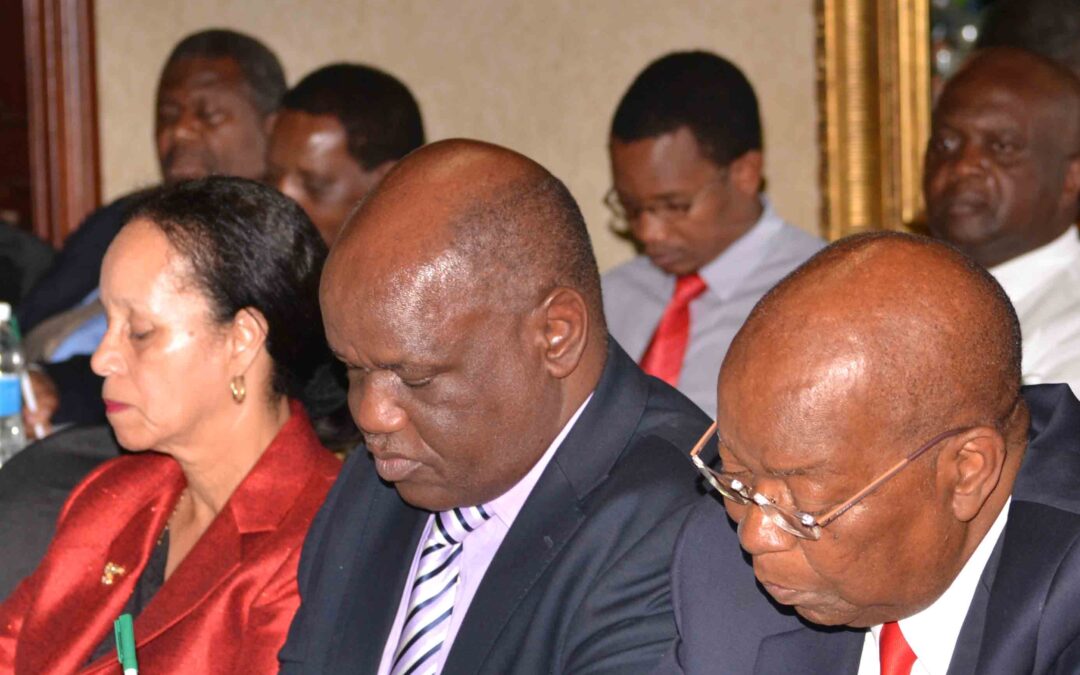
The ICJ co-hosted the Joint Zimbabwe Judicial-Legal Practitioners Colloquium in Zimbabwe. The meeting was held in conjunction with the Law Society of Zimbabwe (LSZ) and the Judicial Services Commission (JSC) of Zimbabwe.
The meeting took place on 27 – 28 November 2015 under the theme “Access to Justice: Barriers and Solutions (A Bar-Bench Dialogue)”.
This year it congregated 30 legal practitioners and 60 Judges who sought to have an honest discussion on the challenges that affect access to justice in Zimbabwe in an attempt to seek practical solutions to these challenges for greater access.
The Chief Justice Godfrey Chidyausiku, and the President of the Law Society Mrs Vimbai Nyemba, in their opening remarks both highlighted the importance of this dialogue platform to justice delivery in Zimbabwe.
They both noted how the colloquium has over the years contributed towards the construction of bridges between the bar and the bench and the doing away of hostilities for the betterment of Justice delivery.
Nov 25, 2015 | News
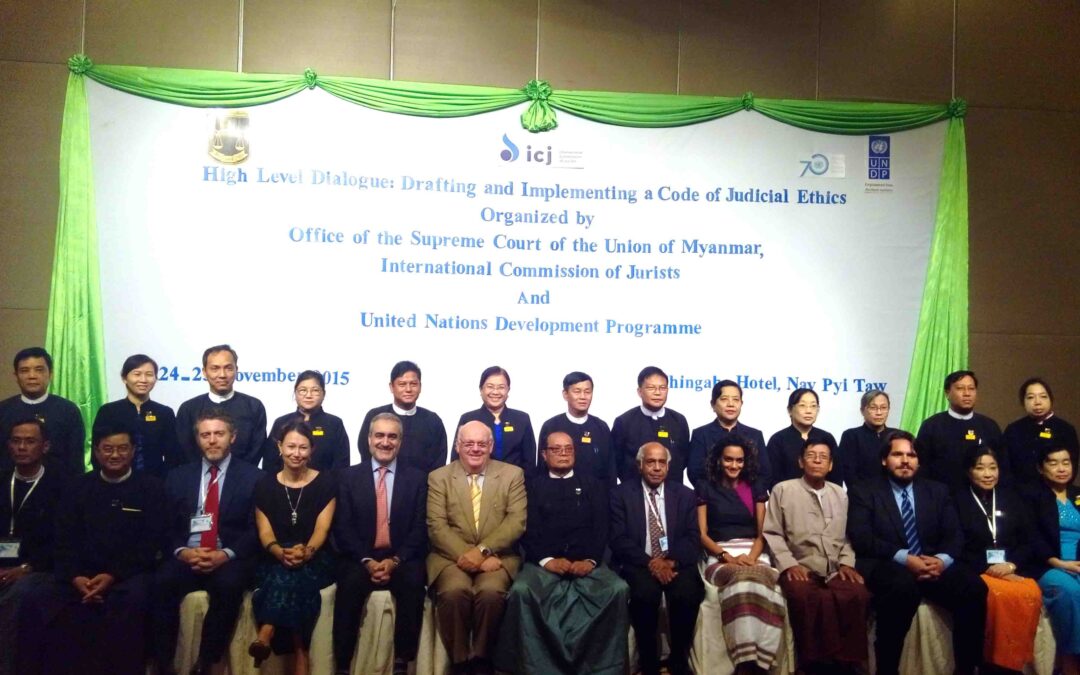
The ICJ, the UNDP and the Office of the Supreme Court of the Union (OSCU) held a High Level Dialogue on “Drafting and Implementing a Code of Judicial Ethics” in Nay Pyi Taw on 24-25 November 2015.
This followed on a commitment by the OSCU to create a new code and to work together with the ICJ and UNDP to ensure it is informed by and implemented in accordance with international best practice.
The Judicial Ethics Review Committee, Regional High Court Judges and other senior court administrators participated in the Dialogue.
The participants and their international counterparts from the ICJ and UNDP discussed the content of the Draft Code of Ethics, international standards on Judicial Codes of Ethics and accountability mechanisms.
In opening the Dialogue, the Honourable Supreme Court Justice of the Union, U Mya Thien explained that the new code reflecting international standards would enhance public trust and promote accountability in the Judiciary.
In his opening remarks, Sam Zarifi, the ICJ’s Regional Director for Asia and the pacific noted the historic occasion in which the world was watching transition in Myanmar.
During the Dialogue, former ICJ Commissioner and UN Special Rapporteur on the Independence of Judges and Lawyers, Dato Param Cumaraswamy, and Justice Murray Kellum of Australia shared their wealth of experience developing codes of ethics and accountability mechanims at the national and international levels.
Both explained that public perception of the Judiciary is key in a transition to the rule of law and human rights.
All participants agreed the Myanmar’s judiciary is not yet independent and that its current judicial code of ethics requires updating.
It was acknowledged that new code of ethics would develop the independence of the judiciary in Myanmar.
Sam Zarifi explained that, “in order for the Supreme Court to assert judicial independence it must demonstrate that it can hold itself accountable to a code of ethics.”
Both the UNDP and the ICJ congratulated the OSCU for following its Strategic Plan for 2015-2018 and engaging in a dialogue designed to further this process.
Both expressed willingness to continue working with Myanmar’s judiciary on the issues of judicial independence, the rule of law and human rights.
Nov 25, 2015 | News
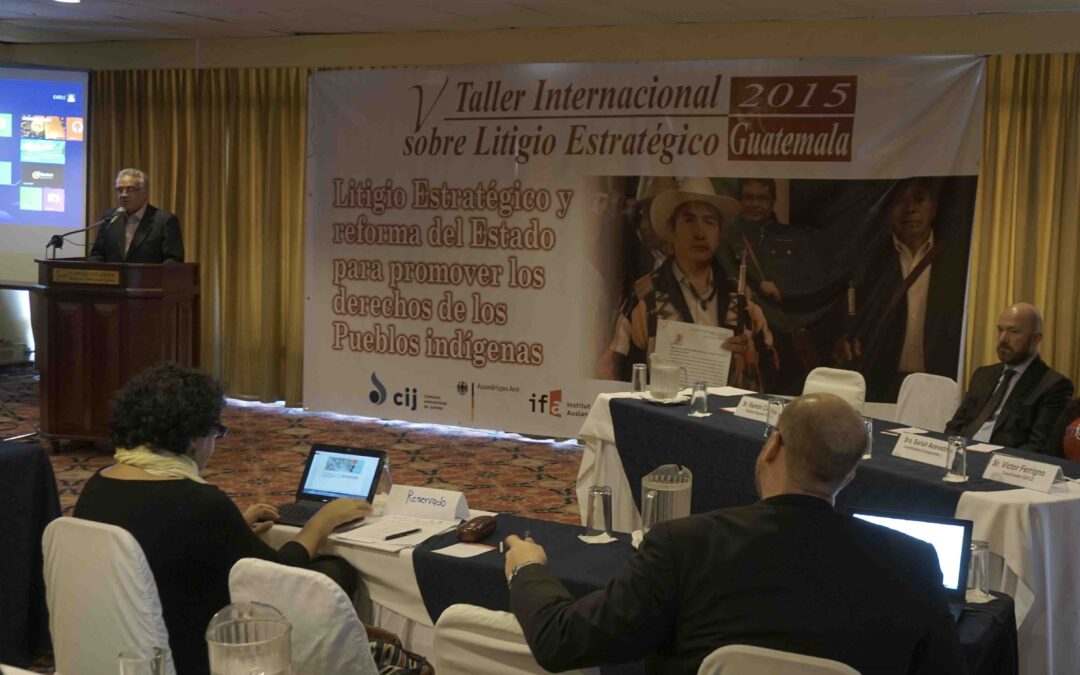
Inauguration of the 5th International Seminar on Strategic Litigation in Guatemala City.
On 25th November, Ramon Cadena, Director of the ICJ Regional Office in Central America, together with Alberto Brunori, Representative of the OCHCR in Guatemala and Victor Ferrigno, Coordinator of Support for Strategic Litigation in Guatemala, launched the event.
During the two-day seminar over 100 human rights defenders, lawyers and academics from the American continent will share experiences, good practices and achievements in the use of strategic litigation as part of a broader strategy to promote and defend human rights.
In addition to strategic litigation, other focal points for discussion include indigenous peoples’ land rights and the identification of priorities in legal and constitutional reform.
Nov 24, 2015 | News
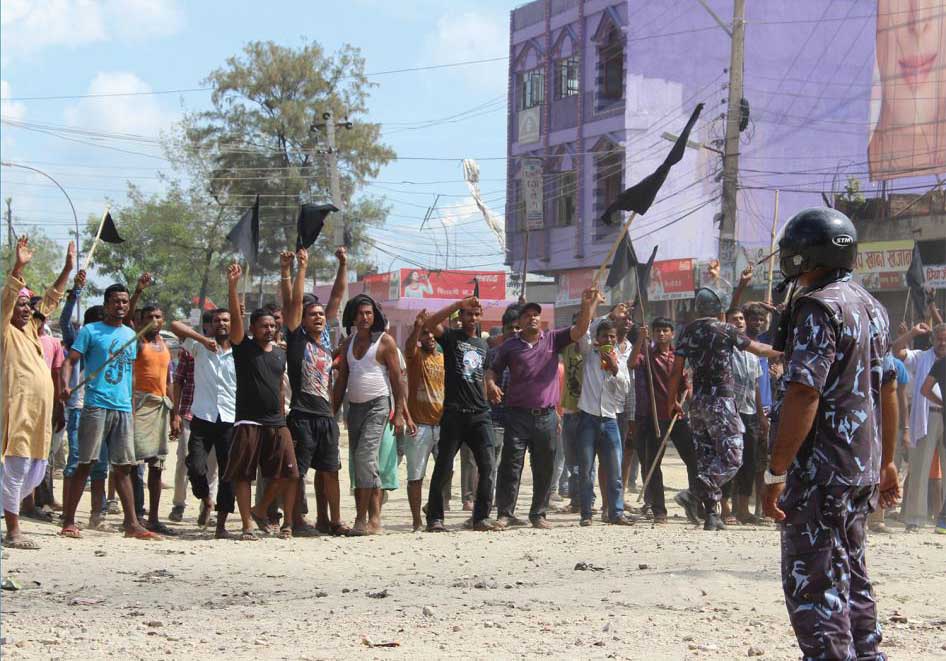
The government and all political parties, along with the country’s neighbors and international supporters, must act immediately to end the increasingly violent political crisis in the southern Terai region said the ICJ today.
The associated border blockade that has imposed severe shortages of necessary commodities throughout the country must also be ended, the ICJ added.
Over the weekend, three individuals were killed and at least another 28 individuals, including 15 police officers, were injured during clashes following an apparent impasse in talks among political parties trying to end the crisis over the newly adopted Constitution.
“Nepali authorities should promptly investigate and bring to justice the perpetrators – be they security forces or protesters – of any unlawful killings and other acts of violence committed during the ongoing protests in the Terai, and ensure that security forces refrain from the use of excessive force against civilians,” said Sam Zarifi, ICJ’s Asia-Pacific Director.
“At the same time, the Nepal government must address the severe shortage of commodities and the impact it has had on economic and social rights by prioritizing the most urgent needs while working to resolve the constitutional crisis,” he added.
The border blockade initiated nearly three months ago has had a deeply detrimental impact on the economic and social rights of the population countrywide, including the rights to food, water and sanitation, health and adequate housing, by causing severe shortages of essential commodities such as fuel, cooking gas and medical supplies throughout the country.
Madhesi groups have been demonstrating against Nepal’s new Constitution in the Terai since August 2015, protesting discriminatory aspects of the new Constitution that they argue would entrench marginalization, and have been staging a de facto blockade at the main border posts along the Nepal-India border since the Constitution was adopted on 20 September 2015.
India has been accused of imposing or collaborating in the blockade, an allegation which the Indian government has denied.
The ICJ has previously highlighted the lack of proper consultation in the drafting and adoption of the Constitution as well as the substantive human rights defects in its text, particularly the discriminatory provisions on the rights of women and some ethnic groups.
More than 45 persons, including 8 police personnel, have been killed during violent confrontations that have erupted between protesters and security forces since the demonstrations began, with allegations of excessive use of force by Nepali security forces as well as violent attacks by protesters against police personnel.
One Indian national was apparently killed by Nepali security forces at the Birgunj border last month.
“The Nepal government has a responsibility to protect the rights and security of its people and to re-establish the rule of law in the Terai,” said Zarifi. “However, Nepal must at all times respect the people’s right to peaceful protest and free assembly, and ensure that security forces exercise maximum restraint when responding to the demonstrations.”
The ICJ emphasizes that India and Nepal have an obligation to protect the human rights, including the economic and social rights, of persons impacted by their acts or the actions of those under their jurisdiction, and accordingly have an obligation to remove obstacles to the enjoyment of those rights.
“Nepal has an obligation to ensure that all available resources at their disposal have been mobilized to alleviate the human rights and humanitarian impact of the border blockade on the most vulnerable sections of the population,” Zarifi added. “The Nepal government must provide a clear plan to assess and address the impact of the blockade by prioritizing available supplies to the most urgently needed areas throughout the country, not just in Kathmandu.”
“The impact of the blockade is all the more acute because the country is still reeling from the 25th April earthquake and its ongoing aftershocks,” Zarifi said. “The international community, particularly neighboring India, should do all it can to ensure that urgent humanitarian assistance gets to the Nepali people.”
Contact
Nikhil Narayan, ICJ Senior Legal Adviser for South Asia, t: +977 9813187821 ; e: nikhil.narayan(a)icj.org
Photo credit: HRW

Nov 19, 2015 | News
Bangladesh President Abdul Hamid should stay the imminent executions of Salahuddin Quader Chowdhury and Ali Ahsan Mohammad Mujahid, the ICJ said today.
Salahuddin Quader Chowdhury, a leader of the opposition Bangladesh Nationalist Party, and Ali Ahsan Mohammad Mujahid, a leader of the Jamaat-e-Islami party, were found guilty of crimes committed during the 1971 war for independence in Bangladesh by the International Crimes Tribunal (ICT) in October 2013.
On 18 November 2015, the Supreme Court rejected their review petitions challenging their death sentences.
The only legal option available to them now is to seek a pardon from the President.
“The ICJ expresses its solidarity with the victims and survivors of the human rights violations committed during the 1971 war, and believes the perpetrators of these atrocities must be brought to justice,” said Sam Zarifi, ICJ Asia Pacific Regional Director. “However, the death penalty, especially following a deeply flawed trial, amounts to nothing more than vengeance and does not serve the interests of justice.”
The ICJ has previously raised concerns that trials before the ICT do not comply with international standards for fair trials.
Following the two previous executions in Bangladesh resulting from convictions by the ICT to date (Muhammad Kamaruzzaman in April 2015 and Abdul Qader Mollah in December 2013), the ICJ raised concerns about the serious procedural flaws in the ICT at all stages: pre-trial release has been routinely and arbitrarily denied; witnesses have been abducted and intimidated; and there have been credible allegations of collusion between the Government, prosecutors and judges.
UN agencies have also raised fair trial concerns with respect to how certain cases have been heard at the ICT.
Concerns have been raised with respect to Salahuddin Quader Chowdhury and Ali Ahsan Mohammad Mujahid’s trials as well.
“There have been several problems about the fairness of the trials under the ICT,” Zarifi added.
“Instead of compounding injustice by executing people who have been found guilty through flawed trials, the Government of Bangladesh should commute these death sentences and abolish the death penalty.”
The ICJ opposes capital punishment in all cases without exception.
The death penalty constitutes a violation of the right to life and the right not to be subjected to cruel, inhuman or degrading punishment.
Contact:
Sam Zarifi, ICJ Asia Pacific Regional Director (Bangkok), t: +66 807819002; email: sam.zarifi(a)icj.org
Background:
Ali Ahsan Mohammad Mojaheed was convicted by the International Criminal Tribunal and sentenced to death in July 2013. The Supreme Court upheld the conviction and sentence in June 2015.
Salahuddin Quader Chowdhury was found guilty and sentenced to death in October 2013 for war crimes, including genocide. The Supreme Court on appeal upheld the decision in July 2015.
The ICJ calls on Bangladesh to impose an official moratorium on the death penalty, with a view to abolishing the death penalty outright.
In December 2014, the UN General Assembly adopted a resolution, for the fifth time since 2007, emphasizing that the use of the death penalty undermines human dignity and calling on those countries that maintain the death penalty to establish a moratorium on its use with a view towards its abolition.
117 UN Member States, a clear majority, voted in favor of a worldwide moratorium on executions as a step towards abolition of the death penalty.