Aug 7, 2015 | News
The SC’s decision to uphold the possibility of trial before military courts of individuals accused of committing terrorism related offences and belonging to “any terrorist group or organization using the name of religion or a sect” is a blow to human rights and the rule of law, said the ICJ.
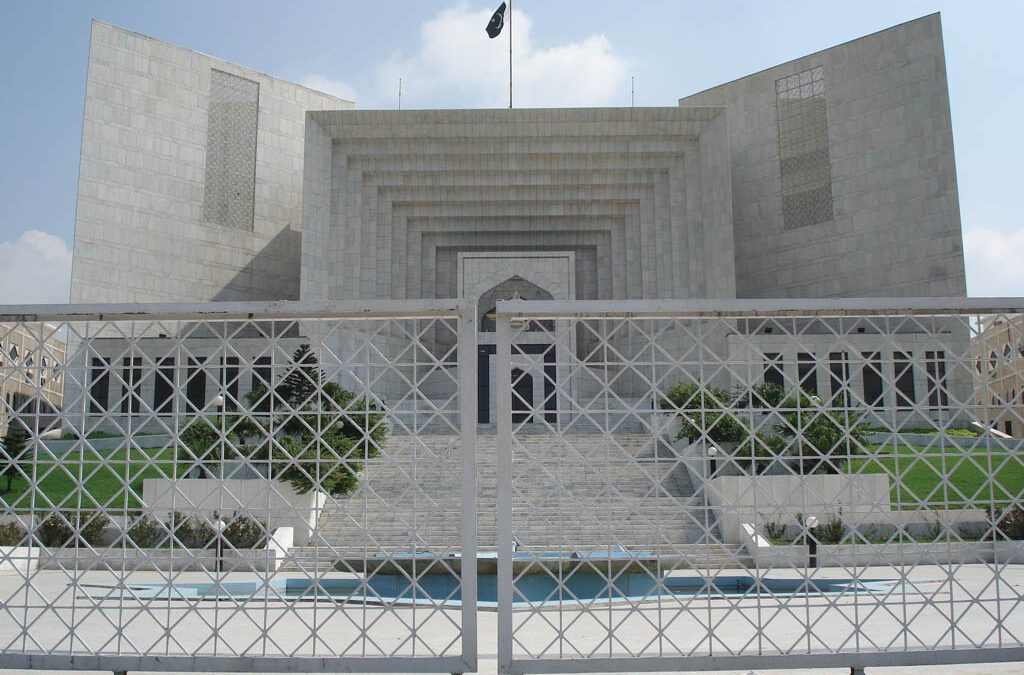
In a split decision on the validity of the 21st amendment to the country’s Constitution, delivered on Wednesday, nine judges of the Supreme Court held that the trial of suspected terrorists, including civilians, by military courts was within the constitutional framework of the country and met principles of criminal justice.
The judges also ruled that individuals who claim to, or are known to belong to “any terrorist group or organization using the name of religion or a sect” constituted a valid classification allowing for differential treatment under the constitution.
Six dissenting judges expressed the view that the 21st constitutional amendment was incompatible with the right to a fair trial and independence of the judiciary. Two judges did not give an opinion on the merits, but suggested that the Supreme Court did not have the jurisdiction to review constitutional amendments.
The 902-page judgment also responds to challenges to the 18th amendment to the Constitution, including the procedure for judicial appointments.
“This judgment squarely puts Pakistan at odds with its international obligations and weakens the Supreme Court’s hard won reputation as the last resort for protecting the rights of Pakistani people,” said Sam Zarifi, ICJ’s Asia Director. “The Court has missed an important opportunity to reverse the militarization of justice in progress under the guise of combatting terrorism and to reinforce independence of the judiciary in the country.”
The trial of civilians in military courts for terrorism-related offences is incompatible with international standards, which require that those accused of any criminal offence are guaranteed a fair trial by an independent, impartial and competent tribunal.
ICJ’s briefing paper, published in April, provides a detailed assessment of the incompatibility of military trials in Pakistan with its international law obligations.
The Supreme Court, however, did not engage with international standards of fair trial and independence of the judiciary.
At least eight judges of the Supreme Court were of the opinion that it is for the Federal Government alone to ensure that their conduct “does not offend against the Public International Law or any International Commitment made by the State”.
“It is very disappointing that the Supreme Court has abdicated its primary role in acting with the other branches of the State to implement its obligations under international law,” added Zarifi. “International law is clear -all organs of the State, including the judiciary, must respect international human rights commitments, which include the right to a fair trial. Indeed, it is a core judicial responsibility to state what the law provides, whether the source of the law is international or domestic.”
The majority judgment also goes against previous Supreme Court rulings on military courts. In the past, the Court had reasoned that military courts do not meet the requirements of independence and impartiality; the establishment of military courts for trial of civilians amounts to creating a “parallel judicial system”; and that impeding the right to a fair trial cannot be justified on the basis of the public emergency or the “doctrine of necessity.
Military courts in Pakistan also have the power to award death sentences. On 2 April 2015, military courts convicted seven people of undisclosed offences in secret trials.
Of them, six were sentenced to death and one was sentenced to life in prison. The Supreme Court’s judgment has cleared the way for their execution.
Contact
Sam Zarifi, ICJ Asia Pacific Regional Director (Bangkok), t: +66 807819002; email: sam.zarifi(a)icj.org
Reema Omer, ICJ International Legal Advisor for South Asia (Lahore), t: +923214968434; email: reema.omer(a)icj.org
Read also:
ICJ denounces law permitting military trials of civilians
Trials of civilians before military tribunals a subversion of justice
HRCP, ICJ demand clarification on juveniles’ trial by military courts
Additional information
In a significant development, by a 13-4 majority the Supreme Court held it has jurisdiction to review constitutional amendments passed by Parliament on the touchstone of the “salient features” and the preamble of the Constitution. What those salient features are, however, was left unaddressed.
On 6 January 2015, less than a month after a terrorist attack on an army public school in Peshawar that killed nearly 150 people, most of them children, the Pakistani Parliament unanimously voted to amend the Constitution of Pakistan, 1973, and the Army Act, 1952, to allow military courts to try civilians for offences related to terrorism.
Military courts in Pakistan are not independent or impartial. Trials before military courts in Pakistan fall far short of national and international fair trial standards.
Pakistan has resumed executions since December 2014, in response to a spate of terrorist attacks in the country. At least 196 people on death row have already been executed. According to available data, only a small fraction – less than 10 pecent – of those executed were convicted of terrorist offences.
ICJ opposes capital punishment in all cases without exception. The death penalty constitutes a violation of the right to life and the right not to be subjected to cruel, inhuman or degrading punishment.
Aug 6, 2015 | News
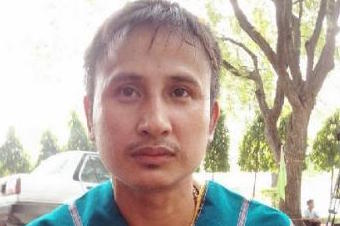
Thailand’s Department of Special Investigations (DSI) should launch a special investigation into the apparent enforced disappearance of Karen activist, “Billy,” the ICJ and the Justice for Peace Foundation (JPF) said today.
Today, Billy’s wife, Phinnapha Phrueksaphan, delivered a letter to the DSI requesting it to assume jurisdiction over the case after the police investigation has presented little progress since Billy was last seen in the custody of Kaeng Krachan Park officials on 17 April 2014.
“This is precisely the kind of case the DSI was created to investigate,” said Kingsley Abbott, International Legal Adviser at the ICJ.
“The investigation is complex, the suspects include influential administrative officials and if Billy was forcibly disappeared then an extremely serious crime under international law has been committed. The police investigation does not appear to have advanced significantly in more than a year and so now it’s long past time for the DSI to take over,” he added.
Phinnapha Phrueksaphan also asked the DSI for Pol. Col. Traiwit to be part of any DSI investigation team due to the commitment she thinks he has demonstrated to the investigation so far and to disclose the results of the DNA testing of the blood allegedly found in a Park Official’s vehicle (in which Billy was last seen).
She was supported by Angkhana Neelapaijit, the head of JPF, whose own husband, Somchai Neelapaijit, was the victim of enforced disappearance in 2004 and whose case the DSI is still investigating.
“Thailand must act on its repeated commitments to combating enforced disappearance by handing this case over to the DSI. There are strong parallels between Billy’s case and the case of my husband and there is no reason why the DSI should be investigating one and not the other,” said Angkhana Neelapaijit.
The DSI was created by The Special Investigation Act B.E. 2547 (2004) and is sometimes referred to as the FBI of Thailand. It has the power to assume jurisdiction over special criminal cases including complex cases that require special inquiry; crimes committed by organized criminal groups; and cases where the suspect is an influential person or an administrative official.
Background
Since Billy “disappeared” his wife has been raising their five children on her own.
Thailand, pursuant to its international legal obligations, including as a party to the International Covenant on Civil and Political Rights, is required to promptly, independently and effectively investigate and, where appropriate, prosecute, punish and provide a remedy and reparation for the crime of enforced disappearance.
The Royal Thai Government has signaled its recognition of the gravity of the crime of enforced disappearance and its commitment to combating it by signing (but not yet ratifying) the International Convention for the Protection of All Persons from Enforced Disappearance on 9 January 2012. The Convention affirms the absolute right not to be subject to enforced disappearance and places an obligation on states to make it a criminal offence punishable by appropriate penalties that take into account its “extreme seriousness.”
The Thai Cabinet is currently considering a draft law that would make enforced disappearance and torture stand-alone crimes in Thailand.
Since July 2014, the ICJ has repeatedly called for the DSI to assume jurisdiction over the case.
For more information see:
https://www.icj.org/thailand-strengthen-efforts-to-solve-the-apparent-enforced-disappearance-of-billy/
https://www.icj.org/thailand-disappearance-of-billy-demands-special-investigation/
https://www.icj.org/thai-authorities-must-urgently-investigate-billys-disappearance/
Contact
Kingsley Abbott, ICJ International Legal Adviser, email: kingsley.abbott(a)icj.org or mobile: +66 94 4701345
Angkhana Neelapaijit, Justice for Peace Foundation, email: angkhana.nee(a)gmail.com or mobile: +66 84 7280350
Thailand-Disappearance Billy-News-PR-2015-ENG (full text of the press release)
Thailand-Disappearance Billy-News-PR-2015-THA (full text of the press release in Thai)
Aug 6, 2015 | News
Malaysian authorities must stop using vague and poorly defined laws to arrest and harass people for participating or organizing peaceful demonstrations, the ICJ said today.
The ICJ called for the repeal of Section 124B of the Penal Code, or its amendment in line with international standards.
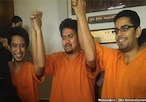
At least 37 people have been swept up in arrests in recent days, many on 1 August at a rally organized in Kuala Lumpur by Demi Malaysia (For Malaysia) – a youth group comprised of activists from civil society groups, political parties and student organizations.
“As an immediate matter, the Malaysian government must ensure that no charges are brought against some 37 people who were arrested and detained this week for organizing a peaceful public demonstration,” said Emerlynne Gil, ICJ’s Senior International Legal Adviser on Southeast Asia. “As the government faces a wave of public criticism, it seems to be resorting to new legal mechanisms to block peaceful assembly and free expression—but these are guaranteed human rights and a crucial component of parliamentary democracy.”
At least 30 people were detained in the past few days under Section 143 of the Penal Code, which addresses “unlawful assemblies”.
Another seven people were arrested and held under Section 124B of the Penal Code, which states:
“Whoever, by any means, directly or indirectly, commits an activity detrimental to parliamentary democracy shall be punished with imprisonment for a term which may extend to twenty years.”
The seven individuals arrested under Section 124B were Adam Adli, Shukri Abdul Razab, Mandeep Singh, Safwan Anang, Hishammudin Rais, Vince Tan, and Fahmi Zainol. They were arrested before the public assembly occurred and are alleged to be involved in organizing the event.
“The use of Section 124B against people organizing a peaceful protest is particularly alarming, as the law’s language is impermissibly vague and broad, and the punishment of 20 years imprisonment is disproportionately harsh,” said Gil. “The Malaysian government must immediately move to substantially amend or repeal this problematic law, and meanwhile ensure that it is not used to charge any peaceful protesters.”
Gil further said: “An activity detrimental to parliamentary democracy’ is defined under Section 130A of the Penal Code to mean actions that are violent or unconstitutional, conditions clearly not present with this group of people arrested”.
“Section 124B has never been used before and the Malaysian government should ensure that this is never used in the future,” she added.
All 37 individuals arrested were released on police bail, except for Adam Adli, Shukri Abdul Razab, and Mandeep Singh, who were released after their lawyers successfully obtained an order from the High Court to review the order to remand them.
“Malaysia’s current political situation will likely see more public demonstrations critical of the government; it is the government’s responsibility to allow these peaceful protests to take place and to defend the rights of the protesters, not to trample on their rights,” Gil said. “Malaysia has the positive obligation under international human rights law not only to protect peaceful assemblies, but also to facilitate the exercise of the right to freedom of peaceful assembly.”
The right to freedom of peaceful assembly is guaranteed in key international human rights instruments.
The UN Human Rights Council underscored its commitment to promote and protect the right to freedom of peaceful assembly and association by adopting several resolutions on this issue, the most recent of which is Resolution 24/5, which was adopted in October 2013.
In Resolution 24/5, the UN Human Rights Council reminded States of their obligation to respect and fully protect the rights of all individuals, including human rights defenders, to assemble peacefully.
Background
On 1 August 2015, youth group Demi Malaysia (For Malaysia) organized a rally in Kuala Lumpur to call for the resignation of Malaysian Prime Minister Najib Razak for having failed to provide adequate responses on how 1Malaysia Development Berhad (1MDB), a strategic government fund, will be able to repay its debts that have amounted to billions of ringgit. Recently, Prime Minister Najib Razak has been facing allegations that he misappropriated RM 2.6 billion (USD 700 million) of 1MDB funds.
Adam Adli, Shukri Abdul Razab and Mandeep Singh were arrested and detained under s.124B of the Penal Code a day before the rally, while four others, Safwan Anang, Hishammudin Rais, Vince Tan and Fahmi Zainol were arrested and detained under the same provision on 1 August before the rally begun.
Contact
Emerlynne Gil, ICJ Senior International Legal Adviser, (Bangkok); t: +668 409 23575; e: emerlynne.gil(a)icj.org.
Photo: Zikri Kamarulzaman / Malaysiakini
Aug 3, 2015 | News
The ICJ is urging the Pakistani Government to immediately release, and drop all charges against, dozens of people arrested on 26 and 30 July in the context of a peaceful protest against forced evictions in Islamabad.
“This is yet another illustration of the Government using Pakistan’s counter-terrorism laws against peaceful protesters to clamp down on dissent,” said Sam Zarifi, ICJ’s Director for Asia and the Pacific.
“Peaceful protest is not an act of terrorism but a fundamental human right recognized by the Constitution as well as international human rights treaties that Pakistan is a party to,” he added.
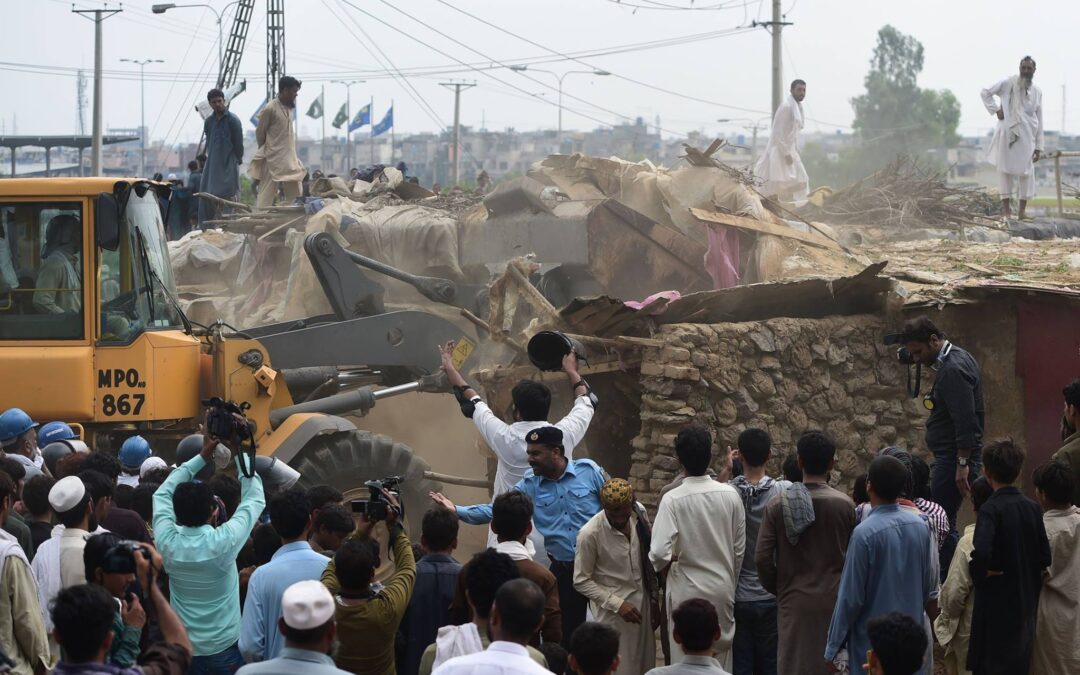
The protest, forcibly dispersed by the police, was organized against the demolition of houses and the forceful eviction of over 8000 people residing in a slum in the city.
The Government alleges the slum is illegal and all residents are encroachers; the inhabitants claim that under Pakistani law, all informal settlements must either be formalized or the inhabitants must be provided alternate housing.
At least 66 individuals arrested were booked under Section 7 of the Anti-Terrorism Act, 1997 (ATA) for “obstructing the authorities”, “demonstrating force with a view to terrorizing citizens” and “creating mischief”.
Following a court order, they have been placed in police remand (custody of the police) for interrogation, where they may be at imminent risk of torture and other ill-treatment.
An anti-terrorism court released four of the detainees today. The rest, however, remain in police custody, and according to reports received by ICJ, many of them are being denied access to families and friends.
“The risk of abuse is inherent in the Anti-Terrorism Act, which defines terrorism in vague and overbroad terms. The Government must urgently amend the ATA to ensure it meets the internationally recognized tests of necessity, legality and proportionality,” Zarifi said.
Pakistan has a long history of using the ATA against political activists and human rights defenders.
In 2014, a dozen political activists, including Baba Jan, a prominent human rights defender from Hunza, were sentenced to life imprisonment by an anti-terrorism court for protesting against the government’s failure to assist victims of a landslide.
Before that, six power loom workers from Faisalabad were arrested in the context of a protest demanding minimum wage. In 2011, they were sentenced to 81 years in prison each under the ATA.
The International Covenant on Economic, Social and Cultural Rights, which Pakistan ratified in 2008, obligates States to recognize the right to an adequate standard of living, which includes housing.
The Human Rights Commission of Pakistan too has reminded the Government of its duty to provide shelter to the people of Pakistan and make arrangements to provide alternate housing to inhabitants of informal settlements.
“Forcibly evicting people from their homes without providing them any alternate housing can in itself be a human rights violation. Arresting peaceful protesters and denying their right to a fair trial even further adds to the culpability of the authorities,” Zarifi added.
Contact:
Sam Zarifi, ICJ Asia Pacific Regional Director (Bangkok), t: +66 807819002; email: sam.zarifi(a)icj.org
Reema Omer, ICJ International Legal Advisor, South Asia (London), t: +447889565691; email: reema.omer(a)icj.org
Additional Information:
Under Article 11(1) of the International Covenant on Economic, Social and Cultural Rights (ICESCR), which Pakistan ratified in 2008, States Parties recognize the right of everyone to an adequate standard of living, including adequate food, clothing and housing, and to the continuous improvement of living conditions.
States Parties are to take appropriate steps to ensure the realization of this right, recognizing to this effect the essential importance of international co-operation based on free consent.
The right to peaceful assembly is guaranteed under international human rights law, including Article 21 of the International Covenant on Civil and Political Rights (ICCPR), which Pakistan ratified in 2010 and is legally obligated to implement.
The UN Declaration on Human Rights Defenders also reiterates that everyone has the right to participate in peaceful activities against violations of human rights and fundamental freedoms, and obligates the State to take necessary measures to ensure the protection by the competent authorities of peaceful protestors against “any violence, threats, retaliation, de facto or de jure adverse discrimination, pressure or any other arbitrary action as a consequence of his or her legitimate exercise of the rights”.
Photo by Geo News
Aug 2, 2015 | News
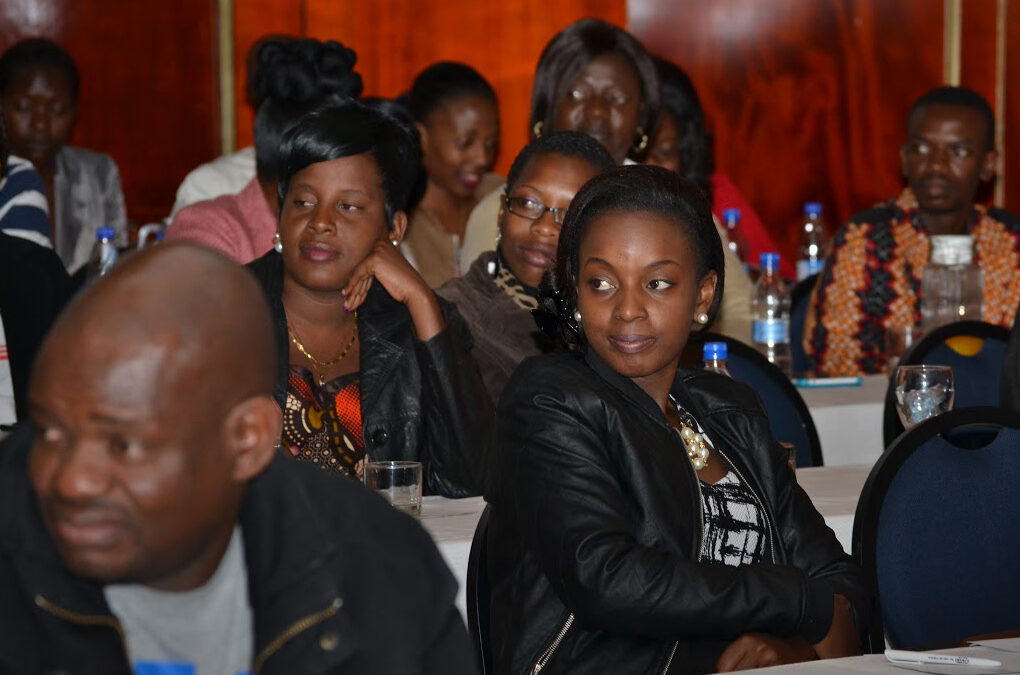
From 31 July to 2 August 2015 the ICJ supported a training and induction workshop for the Zimbabwe National Prosecuting Authority (NPA) in Harare, with over 200 participants.
The public prosecutors came from the Eastern Division comprising of Midlands, Manicaland and Masvingo provinces.
The objective of the training and induction workshop was to appraise the prosecutors of the changes brought about by the Constitution, international and regional standards in the conducting of prosecutorial duties, their independence and accountability.
The presentations also focused on the Criminal Procedure and Evidence Act as the main guiding framework for public prosecutors which has been significantly altered with the assumption of a new Constitution in respect of fair trial rights.
The NPA and the public prosecutors required a platform to collectively familiarize themselves with the changes and conducting of their duties guided by national, international and regional standards.
For purposes of infusing best regional and international practices, presentations included international principles and standards for prosecutors under United Nations Basic Principles on the Role of Prosecutors; the Principles and Guidelines on the Right to Fair Trial and Legal Assistance in Africa; the relationship of the NPA and other arms such as the Judicial Service Commission and the Police.
An array of resources persons were invited and included Justice Chinembiri Bhunu, from the Judicial Service Commission, Virginia Mabiza, Permanent Secretary Ministry of Justice Legal and Parliamentary Affairs, Andrew Chigovera, former Attorney General of Zimbabwe, former Commissioner on the African Commission on Human and Peoples Rights and Dr. Tarisai Mutangi, law lecturer Midlands State University.
As a new establishment under the Constitution, the NPA explored the available and needed continuous professional development for prosecutors to fully equip them for their mandate.
The Principal of the Judicial College of Zimbabwe (a partner of the ICJ), Mr. Shana, presented on the opportunities for continuous professional development for prosecutors for acquaintance with new legal developments.
The training follows additional support that ICJ made to the National Prosecuting Authority (NPA) under a European Union (EU) funded agreement to develop a strategic plan for the NPA in respect of which a strategic planning workshop was held from 6 to 8 July 2015,
Contact:
Arnold Tsunga, ICJ Regional Director for Africa, t: +27 73 131 8411, e: arnold.tsunga(a)icj.org
Jul 31, 2015 | News
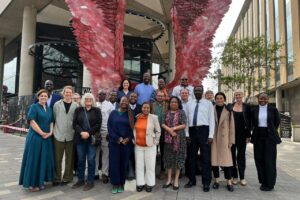
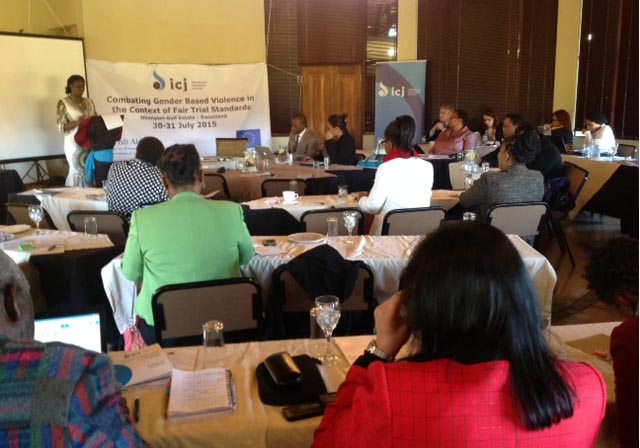
The ICJ held a colloquium on this issue on 30-31 July. Judges, magistrates, lawyers, members of academia, and civil society leaders from SADC, ECOWAS and the East African Community attended the event.
The Acting Chief Justice of the Kingdom of Swaziland, MCB Maphalala and the Secretary General of ICJ, Wilder Tayler, officially opened the colloquium.
The participants discussed the concept of gender-based violence; the efforts to combat impunity in sexual offences and gender based violence at the national, regional and international level and made recommendations to eliminate the scourge.
One of the key objectives of the workshop was to contribute to the process of enacting sexual offences and domestic violence legislation in Swaziland.
The Sexual Offences and Domestic Violence Bill of Swaziland is before the house of assembly, which has asked stakeholders to submit their views, on what should be included in the law.
The judges, lawyers and civil society leaders had robust and honest discussions touching on effective innovative strategies to combat sexual and gender based violence.
Some of the recommendations included the training of judicial officers to be gender sensitive, changing societal attitudes and prejudices, raising awareness amongst parliamentarians, creative interpretation and application of regional and international standards when adjudicating cases of sexual offences and gender based violence as well as observance of fair trial standards at the national, regional and international level.
The colloquium was made possible with funding from IrishAid.