Feb 7, 2014 | News
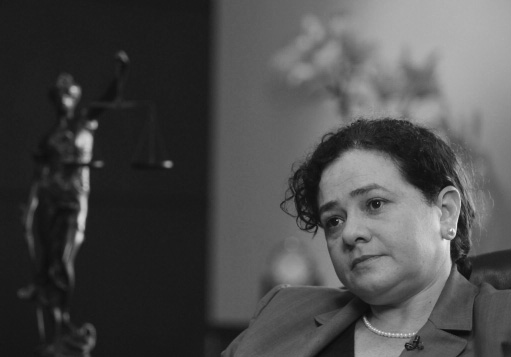
La actual Fiscal General y Jefa del Ministerio Público, Claudia Paz y Paz, fue nombrada el 10 de diciembre de 2010 para dirigir la institución por un período de 4 años, que legalmente vence el 9 de diciembre de 2014.
Su nombramiento ocurrió, hasta dicha fecha, como resultado de la repetición del proceso de selección debido a acusaciones que cuestionaban la honorabilidad e idoneidad de la persona previamente electa.
La actual Fiscal General y Jefa del Ministerio Público se ha constituido por sus resultados de gestión ante el Ministerio Público, como una figura democrática e independiente que ha realizado una importante labor en la protección y defensa de derechos humanos y en el desmantelamiento de estructuras criminales importantes. Esta figura contraviene los intereses de oscuros grupos que buscan interrumpir la continuidad del trabajo de la Fiscal.
Por ello, un abogado, ha puesto en marcha acciones jurídicas promoviendo que la Corte de Constitucionalidad acceda a reducir el período de gestión de la actual Fiscal.
El 05 de febrero del presente año, la Corte de Constitucionalidad emitió una resolución en que concede un amparo provisional y ordena al Congreso de la República convocar a la conformación de un nuevo proceso de elección para cambio de Fiscal General.
De confirmarse este amparo provisional por parte de la Corte de Constitucionalidad, se tendría como resultado que la fiscal sea removida de su cargo y se estaría violentando el Estado de Derecho.
Guatemala-Commuicado en defensa del estado de derecho-news-web story-2014-spa (full text in pdf)
Photo credit: ICTJ
Feb 7, 2014 | News
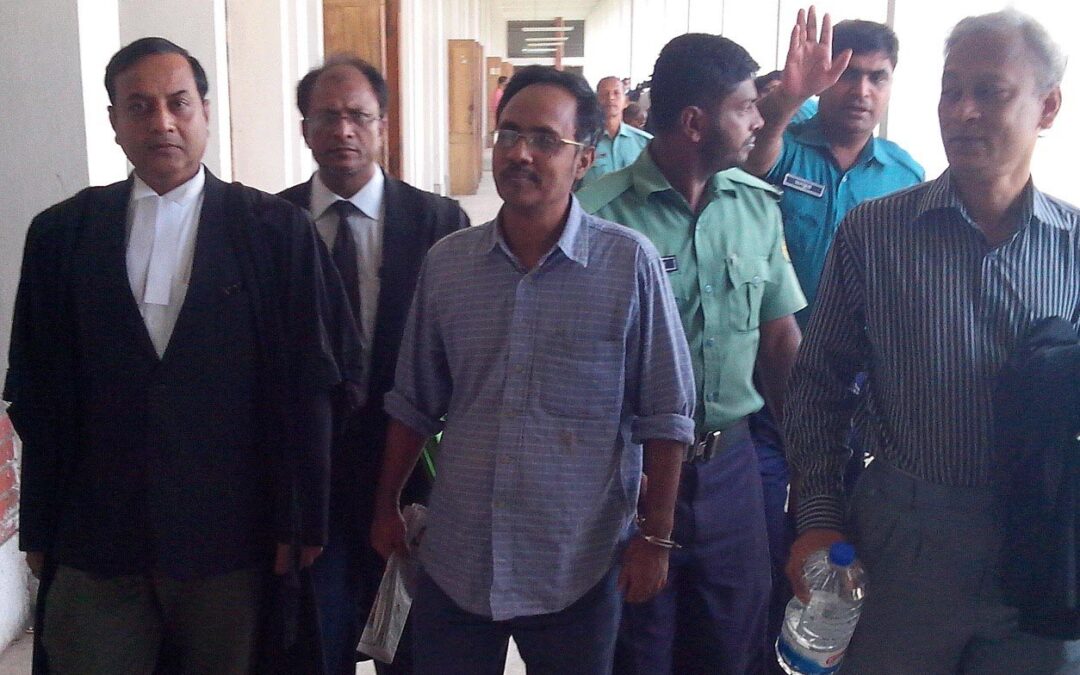
Bangladesh authorities must immediately cease their harassment of Adilur Rahman Khan, Secretary of Odhikar, a prominent human rights organization and ICJ affiliate, and members of his family, the ICJ said today.
On 5 February 2014, Odhikar reported that two officers of the Special Branch of Police followed a member of Adilur Rahman Khan’s family from his home. When he realized he was being followed he decided to return home. The security officers continued to follow him, and parked their motorcycle next to his house.
Odhikar previously reported that security forces monitor its Dhaka offices as well as Adilur Rahman Khan, his family and other staff. In August 2013, security forces raided Odhikar’s office, confiscating computers containing potentially sensitive material such as the identities of witnesses.
“These actions are deliberate acts of intimidation against Odhikar, its staff and their families, designed to silence the legitimate actions of human rights defenders,” said Ben Schonveld, the ICJ’s Asia Director.
Article 12 of the United Nations Declaration on the Right and Responsibility of Individuals, Groups, and Organs of Society to Promote and Protect Universally Recognized Human Rights and Fundamental Freedoms (Declaration on Human Rights Defenders), clarifies that States must take all necessary measures to ensure the protection of human rights defenders from any violence, threat, retaliation, pressure, or any other arbitrary action as a consequence of the legitimate exercise of rights, including the freedom of expression.
Background:
Adilur Rahman Khan and Nasiruddin Elan, Secretary and Director of Odhikar, have been charged under section 57 of the Information and Communication Technology (ICT) Act, 2006, for publishing a report on the Government crackdown on a Hefazat-e-Islam rally in May 2013. The report alleged that 61 people were killed in the protest; the Government disputes the number of casualties. Rahman and Khan were indicted on 8 January 2014 and are both currently on bail.
Contact:
Ben Schonveld, ICJ South Asia Director (Kathmandu), t: +977 14432651; email: ben.schonveld(a)icj.org
Reema Omer, ICJ International Legal Advisor (London), t: +447889565691; email: reema.omer(a)icj.org

Feb 6, 2014 | News
The ICJ calls on the Government of Malaysia to stop the execution of death row prisoner Chandran, apparently scheduled to take place on Friday 7 February.
Chandran was convicted for murder and sentenced to death on 16 April 2008.
While the Government of Malaysia has not publicly released the date, according to the Malaysian Bar Council, his execution is planned to take place on 7 February 2014.
Despite the prohibition of mandatory death sentences under international human rights law, the laws in Malaysia maintain the mandatory death sentence for offences such as murder, treason and drug trafficking.
The Malaysian Bar Council, a partner organization of the ICJ, has noted that there have been several instances in the past when the Government of Malaysia indicated that it would review the mandatory death penalty, with a view to its possible abolition or the possible reintroduction of a discretionary death penalty. It has also indicated its intention of reviewing the penalty of death for drug-related offenses.
“Considering prohibition of the mandatory death penalty in international human rights law and the past indications made by the Government of Malaysia that it intends to review the imposition of mandatory death penalty, it is deeply concerning that it still aims to proceed with the execution of Chandran on Friday,” said Sam Zarifi, ICJ Regional Director for Asia and the Pacific.
In October 2013, Malaysia underwent their second Universal Periodic Review where it was urged by several countries to review the mandatory nature of death penalty, maintain a moratorium, and ultimately move to abolish the death penalty.
Malaysia is set to respond to these recommendations in March 2014.
The Malaysian Bar Council estimates that there are approximately 900 prisoners in death row in Malaysia awaiting execution.
The ICJ considers that the use of the death penalty constitutes a violation of the right to life and the right not to be subjected to cruel, inhuman or degrading punishment.
In addition to calling a halt to the execution of Chandran, the ICJ urges the Government of Malaysia to amend its laws and take steps towards the abolition of the death penalty in the country, including the implementation of a moratorium.
Contact:
Emerlynne Gil, ICJ International Legal Adviser for Southeast Asia, t +66 2 619 8477; email: emerlynne.gil(a)icj.org
Craig Knowles, ICJ Media Consultant, t +66 81 9077653; email: craig.knowles(a)icj.org

Feb 4, 2014 | E-bulletin on counter-terrorism & human rights, News
Read the 79th issue of ICJ’s monthly newsletter on proposed and actual changes in counter-terrorism laws, policies and practices and their impact on human rights at the national, regional and international levels. The E-Bulletin on Counter-Terrorism and Human...
Jan 31, 2014 | News
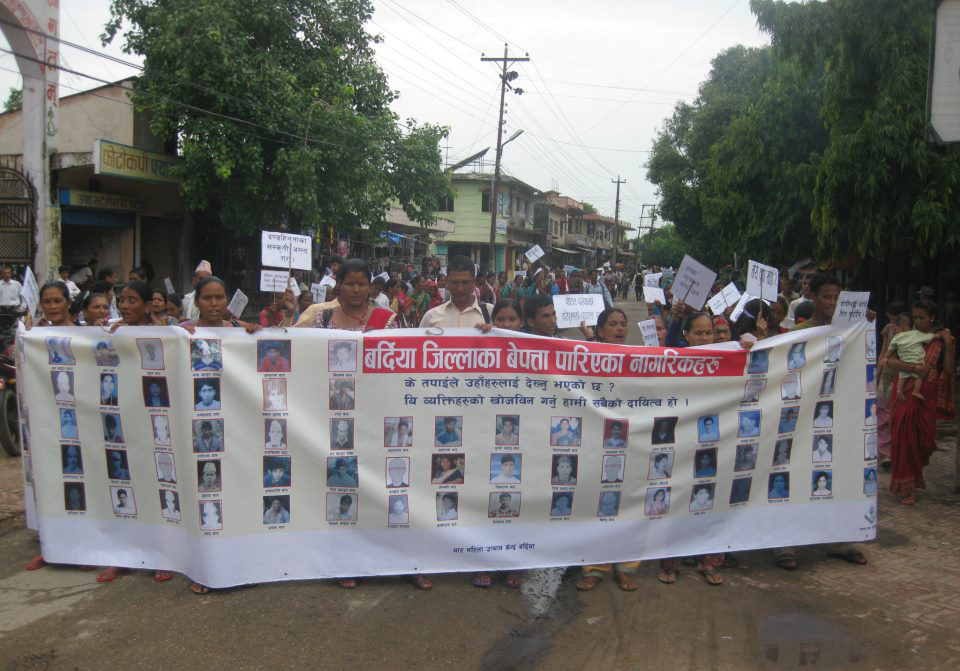
The Parliament of Nepal should reject the Ordinance on Truth, Reconciliation and Disappearances tabled this week and enact a new transitional justice mechanism that complies with international human rights law, the ICJ and HRW said today.
The Ordinance on Disappearances, Truth and Reconciliation Commission, signed by the President on 14 March, 2013, was declared unconstitutional and in violation of international human rights law by the Nepali Supreme Court on 2 January, 2014.
In a directive, the Supreme Court ordered the Ordinance be repealed or amended significantly to bring it in line with Nepal’s obligations under national and international law.
However, on 27 January, the Government reintroduced the Ordinance with no amendments in the meeting of the Legislative-Parliament – in direct contravention of the Supreme Court’s orders.
“Tabling a rejected version of the Ordinance after the Supreme Court’s landmark judgment on transitional justice is contemptuous, and raises serious concerns over the government’s respect for the rule of law in Nepal,” said Ben Schonveld, ICJ’s South Asia Director.
The Interim Constitution says clearly that the Supreme Court’s rulings are binding on the Government of Nepal. Article 116 of the Interim Constitution states that any order issued by the Supreme Court in the course of the hearing of a case shall be binding on the Government of Nepal and all its offices and courts.
The Supreme Court has previously held that any mechanism for transitional justice must conform with international standards, lead to accountability for serious human rights violations, and ensure victims their right to remedy and reparations, which includes the right to truth, justice, and guarantees of non-recurrence.
In its 2013 briefing paper, “Authority without Accountability,” the ICJ expressed concern over multiple provisions in the Ordinance, including amnesty provisions, which would entrench impunity for gross human rights violations in Nepal.
Any amnesty for gross human rights violations would add another layer to the complex web of immunities, documented in the report, that continue to shield those responsible for human rights abuse from accountability in Nepal.
“The Parliament of Nepal should strongly reject the tabled Ordinance and the government must expeditiously implement the Supreme Court’s directive,” said Meenakshi Ganguly, South Asia Director at Human Rights Watch. “The ordinance in its current form violates undertakings made as part of the peace agreement, and essentially strips victims of serious rights abuses of a proper chance at justice.”
The rights groups called on the government to implement the Supreme Court’s ruling, creating a new transitional justice law that, at a minimum:
- Establishes two separate transitional justice commissions: a “Truth and Reconciliation Commission” and a “Commission of Inquiry on Enforced Disappeared Persons;”
- Criminalizes the act of enforced disappearance in accordance with the definition set out in the International Convention on the Protection of All Persons from Enforced Disappearance and ensures that it is punishable with penalties commensurate with the gravity of the crime;
- Criminalizes other serious crimes, including crimes against humanity, and other crimes under international law, in a manner that is consistent with international law;
- Prohibits amnesties for gross human rights violations or crimes under international law;
- Does not contain a limitation period on the reporting of violations and ensures there are no time limits on the prosecutions of of serious crimes including enforced disappearance, other crimes under international law including, war crimes, and crimes against humanity;
- Ensures that the composition and structure of the Commissions complies with international standards. In particular, there should be a fair vetting system which aims to ensure the impartiality of the commission members and to ensure that no individuals against whom there are credible allegations they have committed human rights abuses are selected as Commissioners;
- Requires the necessary legal and institutional measures to be taken to enable and ensure the establishment, adequate resourcing and maintenance of effective victim and witness protection mechanisms; and
- Establishes and requires other necessary legal, administrative, institutional, or other arrangements for an effective reparation program.
Contact:
In Bangkok, Sam Zarifi: +66-857200723; or sam.zarifi(a)icj.org
In Kathmandu, Ben Schonveld +977-9804596661; : ben.schonveld(a)icj.org
Read also: ICJ releases new report on the struggle for justice in Nepal
The report Authority without accountability: the struggle for justice in Nepal can also be downloaded below:
Nepal-SUMMARY-Authority without Accountability-Publication-report summary-2012 (full text in pdf)
Nepal-FULL-Authority without accountability-publications-report-2012 (full text in pdf)
Jan 23, 2014 | News
The ICJ criticized the Phnom Penh Municipal Court’s decision to deny bail to 23 people who were arrested and detained earlier this month following protests by garment factory workers seeking a higher minimum wage.
The detainees’ lawyers told the ICJ that the court denied bail for the first nine detainees, arrested on 2 January 2014, in order to “guarantee their presence for further legal proceedings”, “to preserve public order” and “to prevent instability that results from the commission of crimes”.
The remaining 13 detainees, arrested on 3 January 2014, were denied bail in order to “end crime”, “prevent new crime” and “ensure detainees are available for trial”.
The decision to deny bail to the 22 detainees followed the Court’s decision on 13 January 2014 to deny bail to Vorn Pao, President of the Independent Democracy of Informal Economy Association (IDEA).
Considering his application separately from the others, the court, similarly, provided the same reasons as in the case of the first nine detainees.
“International law is clear that pre-trial detention could only be exercised in exceptional situations, and avoided if suitable alternatives are possible,” said Sam Zarifi, ICJ’s Regional Director for Asia and the Pacific. “The reasons presented by the Court don’t justify holding these activists in prison right now.”
All 23 of those whose bail applications have been denied have been charged with causing intentional violence and damage to property. Three face additional charges for violent resistance against a public official, as well as a traffic offence.
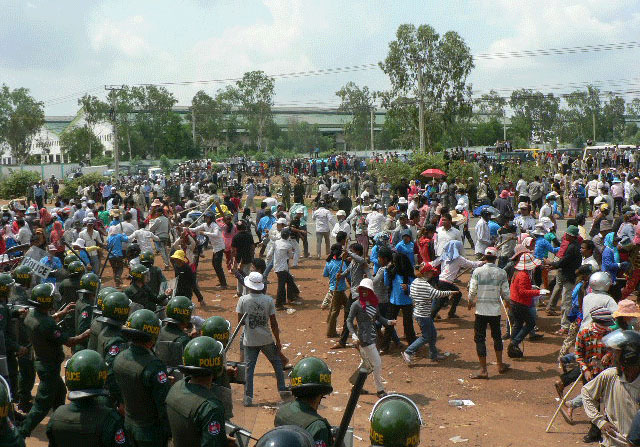
They were arrested as part of the government’s response to striking garment workers and demonstrators protesting the 28-year-rule of Prime Minister Hun Sen (photo).
Security forces shot and killed at least four protesters on 3 January. The government has banned further protests.
Article 9(3) of the International Covenant on Civil and Political Rights (ICCPR), to which Cambodia is a party, guarantees the right to liberty. It states, “It shall not be the general rule that persons awaiting trial shall be detained in custody, but release may be subject to guarantees to appear for trial”. Such guarantees include bail.
“There are alternatives to the detention, such as bail or other conditions the court could impose on these 23 detained activists if the Court is concerned, on the basis of substantiated and objective grounds that there is a risk that each of them will abscond before the trial or interfere with the investigation,” said Zarifi. “In the absence of such proof and the serious consideration of alternatives the continued pre-trial detention of each of the 23 individuals would amount to arbitrary detention under international human rights standards.”
Vorn Pao’s lawyers filed an appeal on 14 January 2014 and the Court is expected to issue a decision on his appeal by 3 February 2014.
According to the Cambodian Centre for Human Rights, Vorn Pao appears weak and continues to suffer pain from the head injuries he sustained.
Lawyers for the other 22 detainees have also expressed their intention to appeal the Court’s decision to deny them bail.
Contact:
Sam Zarifi, ICJ Asia-Pacific Regional Director, (Bangkok), t:+66 807819002, e-mail: sam.zarifi(a)icj.org
Craig Knowles, ICJ Media & Communications, (Bangkok), t:+66 819077653, e-mail: craig.knowles(a)icj.org