Oct 21, 2013 | News
The ICJ welcomes today’s ruling by the Grand Chamber of the European Court of Human Rights in the case of Inés Del Rio Prada, affirming that changes made retroactively to the remission of her sentence violated her rights.
The ICJ, which intervened as third-party in the case, says the judgment reinforces and makes effective the principle of non-retroactivity of criminal law, an essential element of the rule of law.
“This is a highly significant judgment that affirms and strengthens the rule of law in criminal sentencing,” said Róisín Pillay, Director of the ICJ Europe Programme. “Rules and practices that have a significant impact on the calculation and remission of sentences must not be applied retroactively to the detriment of a convicted person.”
“The key principle that the Grand Chamber has upheld today is that the rules that apply to the calculation of the sentence to be served, must be clear and foreseeable under the law at the time of conviction. Subsequent re-interpretation by the courts cannot fundamentally revise the principles that apply to a sentence already handed down. While States have the responsibility for setting sentencing rules for crimes, any changes to those rules which would result in an increased penalty must not applied retroactively in breach of (Article 7 of) the European Convention on Human Rights,” she added.
BACKGROUND:
Inés Del Rio Prada had been convicted of terrorism offences and sentenced to a total of over 3,000 years of imprisonment.
According to Spanish sentencing rules in force at the time, this theoretical sentence was tantamount to an effective sentence of 30 years imprisonment.
While at that time, the benefit of sentence reduction for work performed in prison was applied to the 30-year period, in 2008 the Spanish courts decided to deduct such benefits from the 3,000 years of nominal imprisonment instead, thereby significantly reducing their impact, and leading to a considerably longer sentence in the case of the applicant.
In its judgment, the Grand Chamber held that the application of changes to Spanish sentencing rules as applied to applicant Inés Del Rio Prada had violated the prohibition on retroactive penalties guaranteed in Article 7 of the European Convention on Human Rights.
It held that a 2006 decision of the Spanish Supreme Court, which altered the system of calculation of maximum terms of sentences, leading to reduced remission of sentences for work done in prison, constituted a retroactive redefinition of the sentence previously imposed, which could not have been foreseen.
As such, the Court held that Spain had violated its obligations under article 7 of the European Convention on Human Rights (ECHR).
The Court also found that the applicant’s continued detention violated the right to liberty under Article 5(1) ECHR, and required her release at the earliest possible date.
Contact:
Róisín Pillay, Director, ICJ Europe Programme, t +32 2 734 8446; e-mail : roísín.pillay(a)icj.org
Read also:
Third Party Intervention in Del Rio Prada v. Spain
Oct 17, 2013 | Events
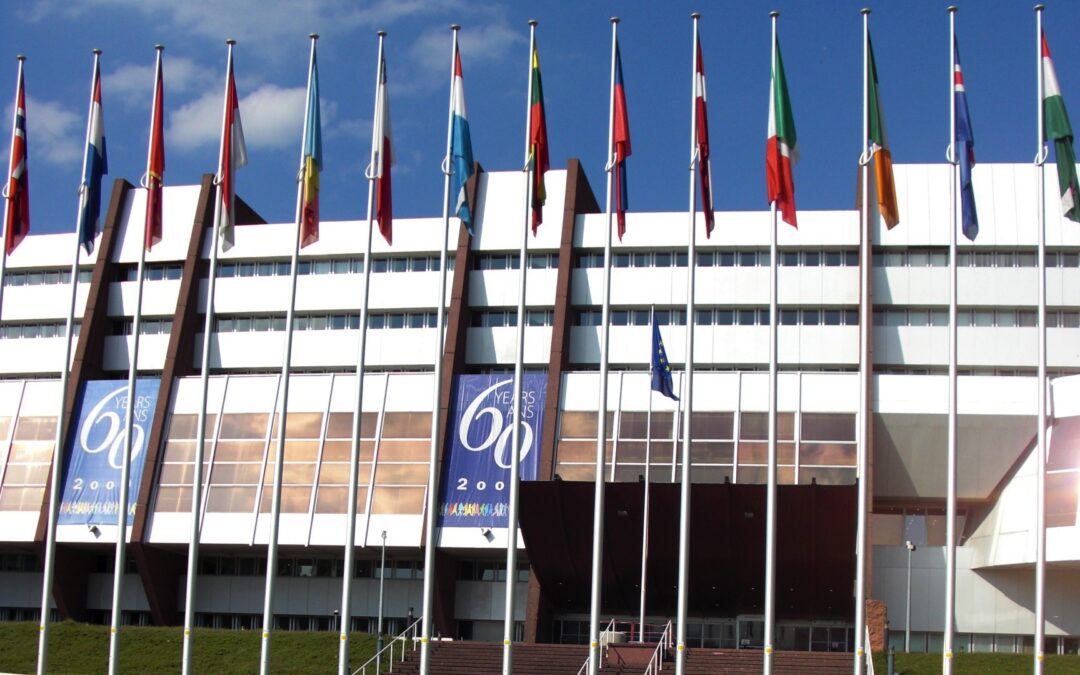
The ICJ participated in a meeting of experts within the Council of Europe’s Steering Committee on Human Rights (CDDH) in Strasbourg on 14-16 October 2013.
The Drafting Group on Human Rights and Business of the Steering Committee on Human Rights (CDDH-CORP) has drafted a Declaration of support to the Guiding Principles on Human Rights and Business for consideration by the Committee of Ministers. The ICJ expresses satisfaction at the progress made during the meeting and hopes that the draft declaration will be finally approved by Ministers and that this expert group will be able to move on to drafting a non-binding instrument on access to justice in the context of business activities.
Steering Committee meeting page (for agenda and report, including the draft Declaration)
Photo credit: © notfrancois (the author has no involvement in nor does support this submission)

Oct 10, 2013 | News
The ICJ calls on the Dhaka Central Jail authority to immediately process an order for bail issued for the release of Adilur Rahman Khan.
The six-month bail was ordered by the High Court of Bangladesh on 8 October 2013.
The Attorney General filed an application seeking a stay on the bail order, which was denied by the Appellate Division of the Supreme Court of Bangladesh on 9 October 2013.
The bail order was signed by the required Sessions Judge and delivered to the Dhaka Central Jail in the late afternoon on 9 October 2013.
Over 24 hours later, Adilur Rahman Khan still remains in custody in the Kashimpur Jail.
“The bail order must be carried out expeditiously without undue delay or other obstruction, including by the Executive. To do so would undermine the independence of the judiciary and constitute arbitrary detention,” said Ben Schonveld, ICJ South Asia Director.
It has been two months to the day that Adilur Rahman Khan was arbitrarily detained for the lawful exercise of the right to freedom of expression, the ICJ recalls.
Under international law, notably Article 9 of the International Covenant on Civil and Political Rights, to which Bangladesh is a party, everyone has a right to liberty and security of person.
Any detention or deprivation of liberty must be in accordance with procedures established by law.
The ICJ calls on the jail authorities to uphold the order of the Appellate Division of the Supreme Court of Bangladesh and immediately release Adilur Rahman Khan on bail.
CONTACT:
Sheila Varadan, ICJ Legal Advisor, South Asia Programme (Bangkok), t: +66 857200723; email: sheila.varadan(a)icj.org

Oct 10, 2013 | News
On the 11th World Day against the Death Penalty, the ICJ calls on South Asian States to stop the resurgence of executions in the region.
The ICJ considers the death penalty in all cases to constitute a violation of the right to life and the right not to be subjected to cruel, inhuman or degrading punishment.
“In the past year, we’ve seen an alarming increase in the number of executions in South Asia,” said Sheila Varadan, International Legal Advisor for the South Asia Programme.
“Capital punishment is State-sanctioned vengeance. The deliberate and premeditated act of taking a human life in State custody can never constitute a form of justice. It is is an irreversible form of punishment that, as we have seen time and again, cannot be administered without some degree of subjectivity and arbitrariness,” she added.
India ended its eight-year moratorium on the death penalty with the executions of Ajmal Amir Kasab in November 2012 and Afzal Guru in February 2013.
Although the current policy on a moratorium is unclear, Pakistan appears to be leaning towards resuming executions. In November 2012, Pakistan carried out its first execution in five years when it hanged solider Muhammad Hussain.
In July 2013, the newly-elected Government signaled its intention to recommence civilian executions after it failed to renew the five-year moratorium. Over 8000 people have been sentenced to death in Pakistan.
Bangladesh also continues to exercise the death penalty. It has over 1000 individuals on death row.
Bangladesh’s International Crimes Tribunal has handed down the death penalty in six of the seven cases completed, despite growing international criticism over the independence and impartiality of the proceedings.
South Asia’s increasing resort to the use of the death penalty goes against a 15-year worldwide trend towards abolition. More than 150 of 192 United Nations member States have now either abolished the death penalty or do not practice it, including 30 States from the Asia-Pacific region.
The United Nations General Assembly has adopted a number of resolutions calling for a worldwide abolition of the death penalty. In its most recent resolution in 2012, an overwhelming majority of UN member States voted in favor of a worldwide moratorium on executions as a step towards the abolition of the death penalty.
“India, Pakistan and Bangladesh are part of a dwindling number of States who still retain this cruel and inhumane form of punishment,” Varadan said.
The ICJ urges India, Pakistan, and Bangladesh to immediately impose a moratorium on the death penalty, with a view to abolishing it and accede to the Second Optional Protocol to the International Covenant on Civil and Political Rights on the abolition of the death penalty.
CONTACT:
Sheila Varadan, ICJ Legal Advisor, South Asia Programme, t: +66 857200723; email: sheila.varadan(a)icj.org
NOTE:
- The United Nations has adopted various instruments in support of the call for the worldwide abolition of the death penalty. In 2007, the UN General Assembly adopted a resolution emphasizing that ‘that the use of the death penalty undermines human dignity’ and calling for the establishment of a moratorium on the use of the death penalty ‘with a view to abolishing the death penalty.’ The resolution was reaffirmed in 2008, 2010, and most recently in December 2012, when a large majority of UN Member States voted in favor of a worldwide moratorium on executions as a step towards the death penalty’s abolition.
Oct 8, 2013 | News
The Joint Mobile Group was selected as the 2013 Laureate Martin Ennals Award. The ICJ is one of the ten members of the jury.
The Award is given by the International Human Rights Community to Human Rights Defenders who have shown deep commitment and face great personal risk.
The aim of the award is to provide protection through international recognition.
Strongly supported by the City of Geneva, the Award was presented here today.
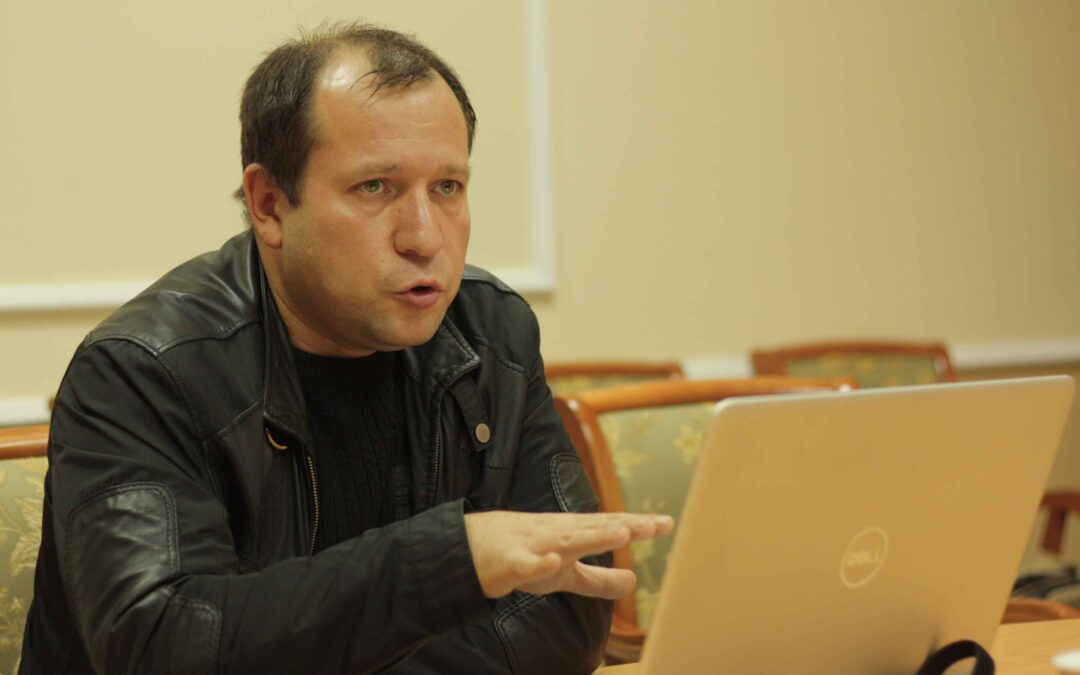
After the murder of several human rights activists working in Chechnya, Igor Kalyapin (photo) started the Joint Mobile Group.
To reduce the risk they send investigators on short missions to Chechnya to document Human Rights abuses.
This information is then used to publicize these abuses to seek legal redress.
Igor Kalyapin speaking of the effect of international publicity said: “When the international community is watching us it is more difficult for the authorities to take steps against us.”
Micheline Calmy-Rey, Chair, Martin Ennals Foundation said: “The choice of the Jury has again shown that human rights defenders are the most crucial actors and can make a difference on the ground.”
The Jury also selected two recipients of the New Martin Ennals Prizes: Mario Joseph, who is referred to as Haiti’s most important Human Rights lawyer and has worked on some of the most important cases in Haiti, including the current case against the former dictator Jean-Claude “Baby Doc” Duvalier; and Mona Seif, from Egypt, core founder of the “No To Military Trials for Civilians” national movement.
The main award of the human rights movement, the Martin Ennals Award for Human Rights Defenders (MEA) is a unique collaboration among ten of the world’s leading human rights organizations to give protection to human rights defenders worldwide. The Jury is composed of the following NGOs: ICJ, Human Rights Watch, Amnesty International, World Organisation Against Torture, FIDH (International Federation for Human Rights), HURIDOCS, Human Rights First, Front Line Defenders, International Service for Human Rights and German Diakonie.
Watch the MEA movie on Joint Mobile Group

Oct 5, 2013 | News
During a one-week mission that concluded on 4 October, the ICJ received information on the tense situation faced by the Supreme Court’s Constitutional Chamber, whose independence has been subjected to political influence for more than a year.
The ICJ is concerned about a complaint filed with the Legislative Assembly which requests a provisional judgment against four judges of the Constitutional Chamber for alleged prevarication, abuse of power and disobedience. This could result in their removal from the Court.
The ICJ wishes to reiterate that, in accordance with international standards, the judiciary must be protected from any restrictions, improper influences, inducements, pressures, threats or interferences, direct or indirect, including from legislative or executive authorities.
The mission, led by a high-level ICJ delegation that included ICJ Commissioners Justice Philippe Texier and Professor Rodrigo Uprimny, focused on access to justice and legal remedies for victims of violations of economic, social and cultural rights.
It engaged in discussions with members of the legal profession, civil society and various authorities including the public prosecutor office (the Procuradoria General de la Republica and the Procuradoria para la Defensa de los Derechos Humanos), as well as with the Constitutional Chamber.