May 4, 2015 | News
Following a recent international conference, the ICJ and the other participants elaborated and signed the Tunis Declaration on the Arab Court of Human Rights.Among other things, the Tunis declaration (see below) is calling for the members of the League of Arab States (LAS) to refrain from ratifying the Statute of the Arab Court unless and until it is revised in accordance with international standards, with a view to creating an effective Arab human rights court.
The conference was organized from 8-9 April in Tunis by the ICJ and the Legal Agenda, and attended by international, regional and national judges, lawyers, human rights defenders and members of civil society.
Key provisions of the Statute of the Court, which was adopted by the Ministerial Council of the League of Arab States on 7 September 2014, were discussed and assessed in light of the experience and practice of regional human rights systems and international mechanisms.
Conference participants identified both shortcomings of the Statute and the necessary reforms required to establish a court that provides meaningful access to individuals alleging a violation of their human rights.
A detailed analysis of the provisions of the Statute can be found in the ICJ’s report, The Arab Court of Human Rights: A Flawed Statute for an Ineffective Court, published on 8 April 2015 (to access the Statute of the Court, see annex 1 of the ICJ report).
MENA-Arab Court Tunis Declaration-Advocacy-2015-ENG (full text in PDF, English)
MENA-Arab Court Tunis Declaration-Advocacy-2015-ARA (full text in PDF, Arabic)
Apr 24, 2015 | News
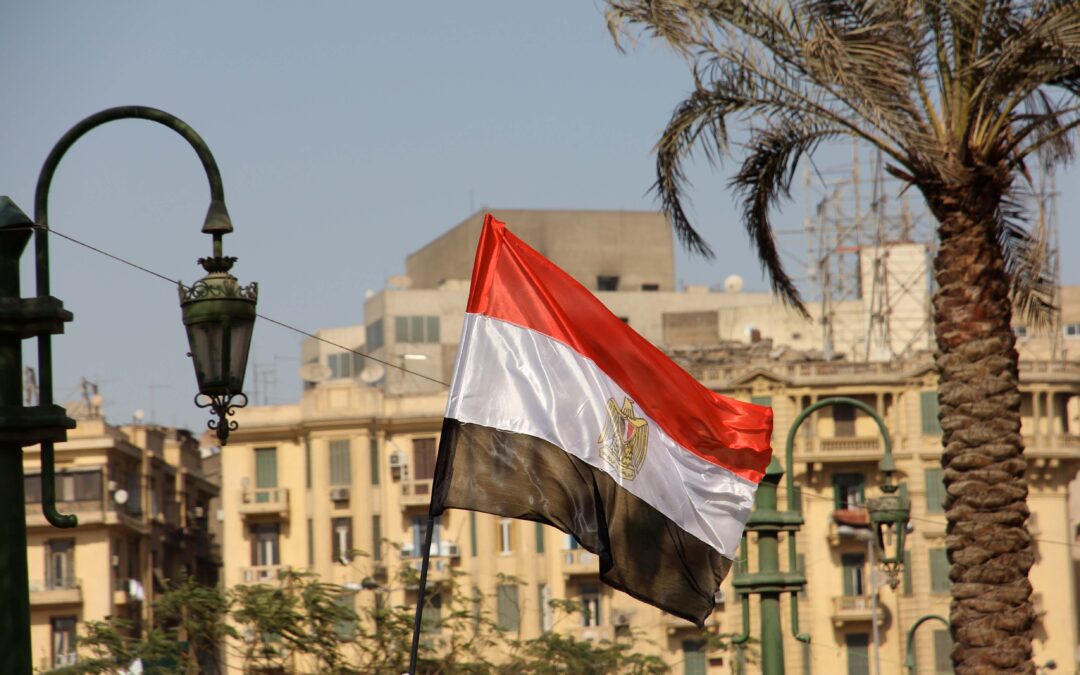
The ICJ today called on the Egyptian authorities to ensure a prompt, impartial and effective investigation into the deaths of two lawyers, Imam Afifi and Karim Hamdi, who recently died while in police custody in Mataria police station.
The ICJ is deeply concerned that the deaths of Imam Afifi and Karim Hamdi while in police custody are part of a widespread and sustained campaign targeting hundreds of lawyers since 2013, including those defending political opponents of the regime and human rights activists, as well as lawyers exercising their rights to freedom of assembly and expression.
“The Egyptian authorities must effectively investigate and prosecute all those responsible for the alleged torture and death of Imam Afifi and Karim Hamdi while in police custody and must hold accountable any person responsible for wrongful conduct ,” said Said Benarbia, Director of the ICJ MENA Programme.
“The authorities must bring an end to their ongoing campaign of harassing and persecuting lawyers, including arbitrary arrests and prosecutions, for simply discharging their professional duties or for speaking out against human rights violations,” he added.
Under international standards, lawyers should be able to carry out their professional duties free from hindrance, intimidation, harassment or interference, says the ICJ.
They should not be identified with their clients or their clients’ causes or subject to arbitrary arrest and prosecutions as a result of the discharge of their functions.
Background:
On 10 April, Imam Afifi, a 63-year old lawyer, was assaulted and arrested in the Mataria neighborhood where a demonstration was taking place against the government.
He was detained in Mataria police station where he was allegedly subjected to torture, including a severe beating to his head.
On 11 April, he was transferred from the police station to Mataria hospital.
A medical report from the same day, to which the ICJ had access, indicates that Imam Afifi was admitted to the hospital with a massive trauma to the head. He died in hospital on 22 April.
On 22 February, another lawyer, Karim Hamdi, was arrested and questioned on suspicion of belonging to the Muslim Brotherhood, membership of which has been outlawed, and participating in an unauthorized demonstration against the government.
While in police custody in Mataria police station, he was reportedly severely beaten on his neck, chest and abdomen. He died two days later after being transferred to hospital.
Following a complaint by the Bar Association to the prosecutor’s office, two members of the National Security Agency were charged with torturing and murdering Karim Hamdi.
Additional information:
According to information available to the ICJ, attacks against lawyers since 2013 include the following:
On 23 April 2015, six lawyers were summoned for interrogation in relation to their participation in a demonstration on 9 March to protest against the death of Mr Karim Hamdi.
The lawyers also challenged the prosecutor’s decision to prohibit anyone from reporting on the investigation into Mr Hamdi’s case.
On 23 March 2015, human rights lawyer, Azza Soliman, was charged with breaching public order and security under the 2013 Demonstration Law after voluntarily providing testimony against police involved in the killing of Social People’s Alliance party activist, Shaimaa El Sabbagh, on 24 January 2015.
The Qasr El Nile Prosecution Office in Cairo subsequently changed her status from witness to defendant.
On 9 February 2015, a human rights lawyer, Ms Mahienour El Massry, was sentenced to two years imprisonment after she attended the El-Ramel police station in Alexandria, in March 2013, in order to defend demonstrators.
The charges against her included “insulting government employees in the performance of their duties”, “insulting representatives of the authorities” and “attempting to break into a police station”.
Three lawyers, Basma Zahran, Mahmoud Bilal and Oussama Al Mahdi, were referred for investigation, on 3 September 2014, for “disrupting and causing trouble” during trial proceedings for insisting that their client, the human rights activist Ahmed Douma, seated in a sound-proof glass cage, should be heard.
On 5 July 2013, Abdel Men’em Abdel Maqsoud was arrested while attempting to attend the interrogation of his clients, deputy Secretary General of the Muslim Brotherhood, Rachad Bayoumi, and Mohamed Saad Al Katanah.
He was detained before being released on bail on 2 September 2014.
Contact:
Alice Goodenough, Legal Adviser of the ICJ Middle East and North Africa Programme, t: 44 7815 570 834, e: alice.goodenough(a)icj.org
Nader Diab, Associate Legal Adviser of the ICJ Middle East and North Africa Programme, t: 41 229 793 804, e: nader.diab(a)icj.org
Egypt-Deaths of lawyers-News-Press release-2015-ARA (full text of Arabic version in PDF)
Apr 14, 2015 | News
The ICJ is deeply concerned over the decision of the High Judicial Council and the President of the Cairo Court of Appeal to investigate two judges with a view to referring them to the disciplinary Council.
Media reports have indicated that Assem Abdel Jabar, deputy president of the Cassation Court, and Hicham Raouf, a judge in Cairo’s Appeal Court, are being investigated over their individual participation, together with other leading lawyers and legal experts, in a workshop organized by an Egyptian organization, United Group, to discuss and propose new legislation on the prevention of torture.
According to information available to the ICJ, the two judges have so far not been formally notified of any charges against them and have received no information about the allegations on which they are based.
The actions against these judges continue a pattern of intimidation and attempted silencing of judges who are seen by authorities as not aligning themselves with government objectives.
The apparent investigation is only the latest in a string of cases where judges have been subject to arbitrary disciplinary proceedings for legitimately exercising their rights to freedom of expression and assembly.
On 14 March 2015, the Disciplinary Council forced 31 judges into retirement for signing a statement, on 24 July 2013, which criticized the “attack on the constitutional legitimacy and the ouster of the legitimate president that was elected”.
The disciplinary proceedings against these judges were marred with violations of due process rights.
The judges were not adequately informed of the date and location of the hearings, defence witnesses were not called and requests by the judges that the hearings be public were disregarded.
On 4 April 2015, a disciplinary hearing took place against Zakaria Abdelaziz, former president of Egypt’s Judges Club and one of the leading advocates for judicial independence in Egypt.
The charges alleged “involvement in politics” and “breaking into the State Security Building during a demonstration on 5 March 2011”.
According to information available to the ICJ, the case files were not made available to Zakaria Abdeaziz until the first hearing despite repeated requests to obtain them.
Under international human rights law and standards, judges are guaranteed the right to freedom of belief, association, assembly and expression, including by commenting on matters of public concern and matters pertaining to the rule of law and human rights situation in a country.
“Instead of subjecting judges to arbitrary proceedings for lawfully exercising their rights, the Egyptian authorities should stop its sustained campaign to muzzle judges who are seen as not friendly to the authorities,“ said Said Benarbia, Director of the ICJ MENA programme. “The Egyptian authorities must reinstate all judges who were removed from office solely for exercising their rights to freedom of expression and assembly and drop all charges against those currently subject to disciplinary proceedings for charges stemming from the exercise of these rights.”
Contact:
Alice Goodenough, Legal Adviser of the ICJ Middle East and North Africa Programme, t: +44 7815 570 834, e-mail: alice.goodenough(a)icj.org
Nader Diab, Associate Legal Adviser of the ICJ Middle East and North Africa Programme, t: +41 229 793 804, e-mail: nader.diab(a)icj.org
Egypt-Judges harassed-News-web story-2015-ARA (full text in PDF)
Feb 19, 2015 | News
The ICJ and other rights groups welcome the decision Africa’s main human rights treaty body has made which recognizes Sudan’s obligation to protect human rights defenders and to ensure that their work promoting and protecting the rights of others is not hindered or frustrated.
The ICJ, the International Federation for Human Rights (FIDH), the World Organisation against Torture (OMCT), the African Centre for Justice and Peace Studies (ACJPS) and REDRESS hail the important decision of the African Commission on Human and Peoples’ Rights (ACHPR), published on 13 February 2015, which called on Sudan to effectively investigate and prosecute the security and intelligence officers alleged to be responsible for the arbitrary arrest, torture and ill-treatment of three prominent human rights defenders; to reopen and unfreeze the bank accounts of a human rights organization shut down in connection with the case and to pay them compensation.
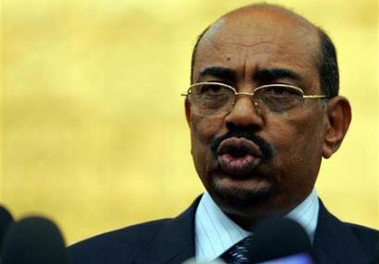
Human rights defenders Monim Elgak, Amir Suliman and the late Osman Hummaida were targeted for their supposed cooperation with the International Criminal Court in a pending case against the President of Sudan Omar Al Bashir (photo) arising from international crimes committed in Sudan’s Darfur region.
The three human rights defenders were arrested on 24 November 2008 by Sudan’s National and Intelligence Services (NISS) and subjected to torture and ill-treatment for three days.
After their release, they were effectively forced to flee Sudan because of their fear of further persecution, given the impunity enjoyed by the security and intelligence services and the inaction of the Sudanese government.
Suliman was Director of the Khartoum Centre for Human Rights and Environmental Development (KCHRED), which in 2009 was shut down by the Sudanese authorities and had its bank accounts frozen.
Hummaida, an ardent advocate for human rights who founded the Khartoum Centre and set up the ACJPS in Uganda, after his release, to ensure continued reporting of the human rights situation in Sudan, died in 2014.
The complainants turned to the ACHPR in 2009. The Commission found their complaint admissible in 2012, agreeing that the Sudanese justice system prevented them from obtaining redress in Sudan.
OMCT and FIDH intervened on their behalf at the ACHPR and the complaint was supported by the ICJ, ACJPS and REDRESS.
Reacting to the decision, Amir Suliman, Legal Programme Coordinator of ACJPS and complainant in the case, said: “The African Commission’s decision is an important recognition of the harm caused not only in our own case but the daily harm caused to the Sudanese people through the actions of the security and intelligence services. It also highlights the lack of effective safeguards against torture and remedies for victims.”
Monim El Jak, complainant in the case and Acting Chairperson of the Commission for the Protection of Civilian and Human Rights in the conflict zones of Southern Kordofan and Blue Nile, said: “We hope this decision will make the Sudanese government stop and reflect on its ongoing crackdown on civil society groups and human rights activists and also helps to put an end to other human rights violations.”
The UN Human Rights Defenders Declaration establishes that states must take effective measures to facilitate the work of human rights defenders and protect their rights.
Gerald Staberock, OMCT Secretary General, added: “The ruling sends a powerful message against torture and for the protection of those who fight torture and impunity in Sudan and in Africa. Sudan has now to fully implement and comply with this ruling providing reparations. It is time for all to recognize the vital role human rights and anti-torture activists play for the benefit of their societies.”
Karim Lahidji, the FIDH President, said: “The decision of the African Commission is significant and comes in a context where Sudanese human rights defenders continue to work in an environment that is marked by extreme insecurity and rampant impunity. Sudan must ensure that reprisals against those advocating for justice and fundamental rights and freedoms are no longer tolerated and unpunished.”
Arnold Tsunga, ICJ Africa Regional Programme Director, said: “The Government of Sudan must now expeditiously comply with the findings of the African Commission to provide reparation to the victims, as well as to ensure guarantees of non-repetition.”
Lutz Oette, REDRESS Counsel, added: “Human rights defenders continue to be harassed, arbitrarily arrested, detained, and prosecuted in Sudan, or driven into exile. The African Commission’s decision is a timely reminder of Sudan’s obligations to protect human rights defenders, and to put a stop to its current practice.”
Contact:
Arnold Tsunga, ICJ Africa Regional Programme Director, t +27 73 131 8411, e arnold.tsunga(a)icj.org

Feb 3, 2015 | News
The ICJ condemns yesterday’s decision of the Giza Felonies Court to confirm the death sentences of 183 individuals that had been simultaneously imposed in one mass trial.
The charges include murder, mutilation and attempted murder and relate to an attack on a police station in Kerdasa that took place in August 2013.
According to the ICJ, the trial has involved a litany of violations of fair trial rights, including denying many of the accused the right to legal counsel, denying the right to a public hearing, refusing to allow defence witnesses to testify, prohibiting the cross-examination of prosecution witnesses by defence counsel, and failing to produce credible evidence as to the individual guilt of each accused.
“Once again, Egypt’s judiciary has abdicated its fundamental responsibility to uphold the rule of law and human rights, instead resorting to unfair mass trials and death sentences as a technique to suppress dissent and to crack down on critics of the military and Government,” said Said Benarbia, Director of the ICJ MENA Programme.
“Egypt’s judiciary must act independently, impartially, with integrity and as a check against the Executive’s arbitrary powers and policies, not as a tool to implement them,” he added.
The imposition of death sentences following unfair mass trials constitutes a gross violation of Egypt’s obligations under international human rights law, including those relating to the right to life, the prohibition of torture and other cruel, inhuman or degrading treatment or punishment, and fair trial rights.
The ICJ opposes the use of the death penalty in all circumstances as a violation of the right to life and a form of cruel, inhuman and degrading punishment.
The UN General Assembly has repeatedly, by a large majority, called for a moratorium on its use.
Even those states that retain the death penalty have acknowledged that any imposition of the death penalty through a process that fails to meet the most stringent fair trial standards, inherently violates the right to life.
Contact:
Said Benarbia, ICJ Director of the ICJ Middle East and North Africa Programme, t: 41 22 979 38 17, e: said.benarbia(a)icj.org
Dec 19, 2014 | News
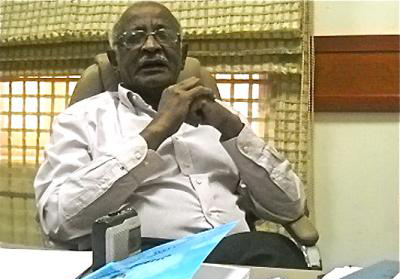
Prominent human rights lawyer Dr Amin Mekki Medani, and lawyer and political opposition leader Farouk Abu Issa, remain in detention at an unknown location. The two men were arbitrarily arrested by the Sudanese authorities in early December.