Dec 16, 2015 | Advocacy, Events
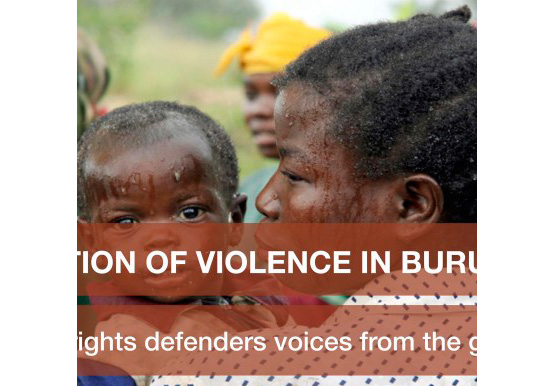
The ICJ joins other non-governmental organisations in co-sponsoring “Escalation of Violence in Burundi: Human rights defenders voices from the ground”, a side event to the Human Rights Council’s special session on Burundi, 17 December 2015.
The event will take place Thursday 17 December – 9.00-10.00 am in Room XII, Palais des Nations, Geneva
Panelists:
Mr Pierre Claver Mbonimpa, Association for the Protection of Human Rights and Incarcerated Persons (APRODH)
Ms Margaret Barankitse, Maison Shalom
Mr Anschaire Nikoyagize, Ligue ITEKA
Ms Carina Tertsakian, Human Rights Watch
The event will be moderated by Nicolas Agostini of FIDH.
The event will be webcast live by the International Service for Human Rights (ISHR).
Follow on twitter using the hash-tag #BurundiHRDs
A flyer for the event is available here: Burundi-UNHRC-Advocacy-SideEvent-2015
Dec 11, 2015 | Events, News
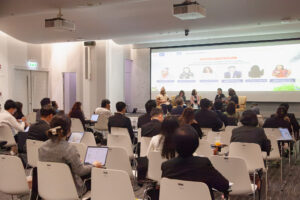
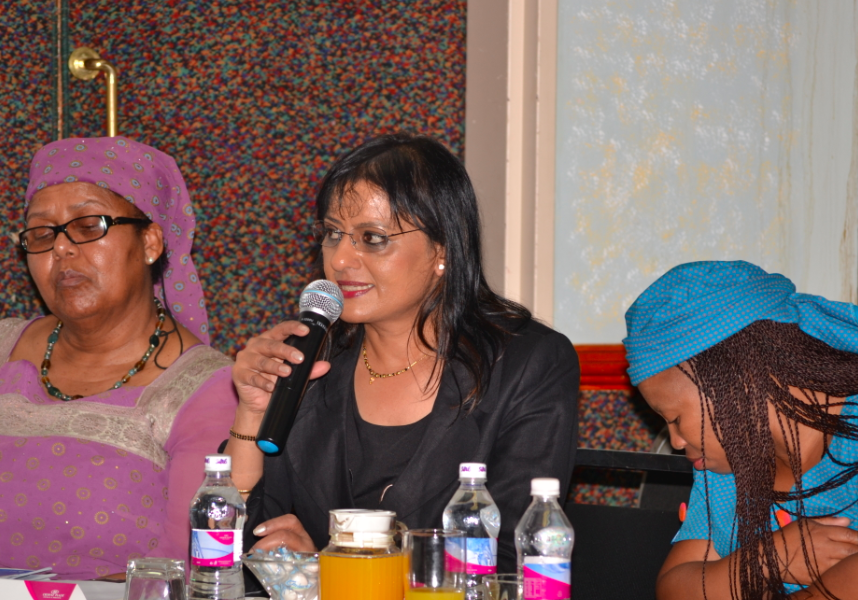
On 10-11 December, the ICJ gathered leading jurists and human rights defenders in Harare, Zimbabwe to discuss measures needed to implement legal reform and change attitudes to eliminate sexual and gender based violence.
For International Human Rights Day (10 December), the ICJ organized high level panel discussions, chaired by ICJ Commissioner Justice Qinisile Mabuza.
Justice Mabuza, who is also a judge for the High Court of Swaziland and for the Common Market for Eastern and Southern Africa (COMESA) Court of Justice, set the tone for the discussions that followed in setting out the extent of the problem of sexual and gender based violence not only within Africa but also on a global scale.
One panel consisted of Judge Lillian Tiabtemwa-Ekrikubinza, Supreme Court Judge of Uganda; Magistrate Asha Ramlal of South Africa; Judge Lavender Makoni, High Court Judge of Zimbabwe; and Magistrate Polo Banyane from Lesotho.
This panel provided a judicial perspective from magistrates and judges from across the region, sharing their experiences and common problems encountered in tackling sexual and gender based violence in their jurisdictions.
The judges spoke about the need to adopt a gender analysis in judicial decision-making and to be conscious of the way in which pervasive gender stereotypes can influence even seemingly gender neutral decisions.
They also spoke of the practicalities in implementing domestic violence and sexual offences legislation as well as the challenges involved when this legislation does not exist.
Welekazi Stifole from Tshwaranang Legal Advocacy Centre; Kelvin Hazangwi from Padare (Men’s Forum on Gender) and Lisa Gormley, ICJ Consultant on women’s rights participated in a second panel.
The participants shared their perspectives and insights concerning reviewing legislation, identifying problems with evidence gathering, analyzing the international and regional frameworks covering gender based violence and in working with perpetrators and within communities to change cultural attitudes.
The second day of the gathering featured a consultative meeting on the ICJ’s forthcoming Practitioner’s Guide on Women’s Access to Justice for Gender-Based Violence.
ICJ expert consultant Lisa Gormley presented the Guide and participants shared their experiences in relation to its content, as well as developing strategies for its future implementation.
Representatives of civil society, judges, lawyers and law students participated in both events, contributing to a broader understanding of sexual and gender based violence issues and strengthening national and international networks of defenders of women’s rights.
Nov 28, 2015 | News
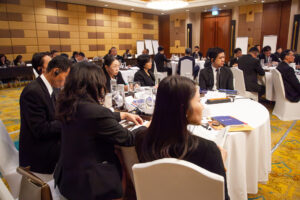
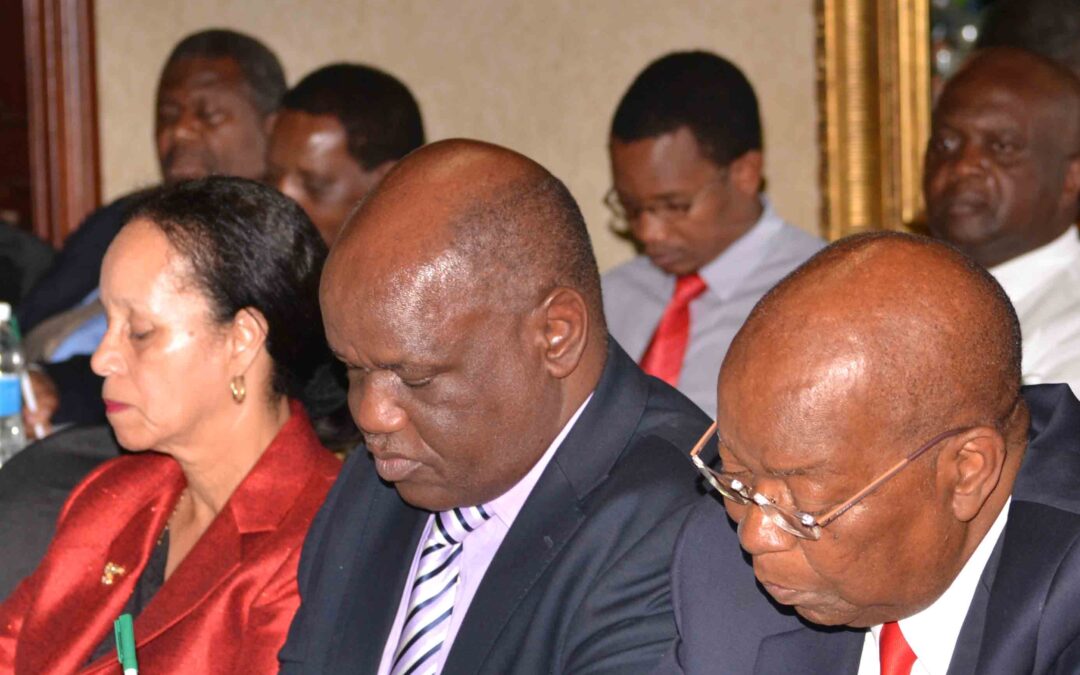
The ICJ co-hosted the Joint Zimbabwe Judicial-Legal Practitioners Colloquium in Zimbabwe. The meeting was held in conjunction with the Law Society of Zimbabwe (LSZ) and the Judicial Services Commission (JSC) of Zimbabwe.
The meeting took place on 27 – 28 November 2015 under the theme “Access to Justice: Barriers and Solutions (A Bar-Bench Dialogue)”.
This year it congregated 30 legal practitioners and 60 Judges who sought to have an honest discussion on the challenges that affect access to justice in Zimbabwe in an attempt to seek practical solutions to these challenges for greater access.
The Chief Justice Godfrey Chidyausiku, and the President of the Law Society Mrs Vimbai Nyemba, in their opening remarks both highlighted the importance of this dialogue platform to justice delivery in Zimbabwe.
They both noted how the colloquium has over the years contributed towards the construction of bridges between the bar and the bench and the doing away of hostilities for the betterment of Justice delivery.

Nov 7, 2015 | News
The ICJ, Lawyers for Human Rights Swaziland (LHR(S), Lawyers for Human Rights South Africa (LHR), and Southern Africa Litigation Centre (SALC) organized a training on strategic litigation for lawyers and human rights defenders from 6-7 November 2015 in Ezulwini.
The training was intended to empower Swazi lawyers and human rights defenders with tools for legal empowerment through litigation.
Further the training provided an opportunity for introducing the participants to international, regional and domestic mechanisms for strategic litigation and analysis of strategic litigation cases, opportunities and challenges in Swaziland.
Participants were drawn from different private law firms, human rights organisations, and the office of the Attorney General and women’s rights organisations.
To nurture regional peer learning and approaches the President of the Law Society of Lesotho Advocate Shale gave the key note presentation borrowing on lessons from other regions and Lesotho.
Resources persons included David Cote (LHR), Caroline James (SALC), Otto Saki (ICJ) and Thabiso Mavuso (Swaziland).
The expected impact is that increasingly lawyers and human rights defenders will take up strategic litigation as part of contributing to the achievement of systemic change and positive enforcement of fundamental rights and freedoms.
This training was held with the generous support of the European Union (EU) through the EU Delegation to Swaziland.
Contact:
Arnold Tsunga, ICJ Regional Director for Africa, t: +27 73 131 8411, e: arnold.tsunga(a)icj.org
Mandla Mkhwanazi LHR Swaziland Chairperson, t: +268 7602 6320, e: m.z.mkhwanazi(a)swazi.net
Caroline James, Lawyer, Southern Africa Litigation Centre t: 27 72 200 1813, e: CarolineJ(a)salc.org.za
David Cote, Programme Manager: Strategic Litigation Programme, LHR (South Africa) t: +27 11 339 1960, e: david(a)lhr.org.za
Oct 4, 2015 | News
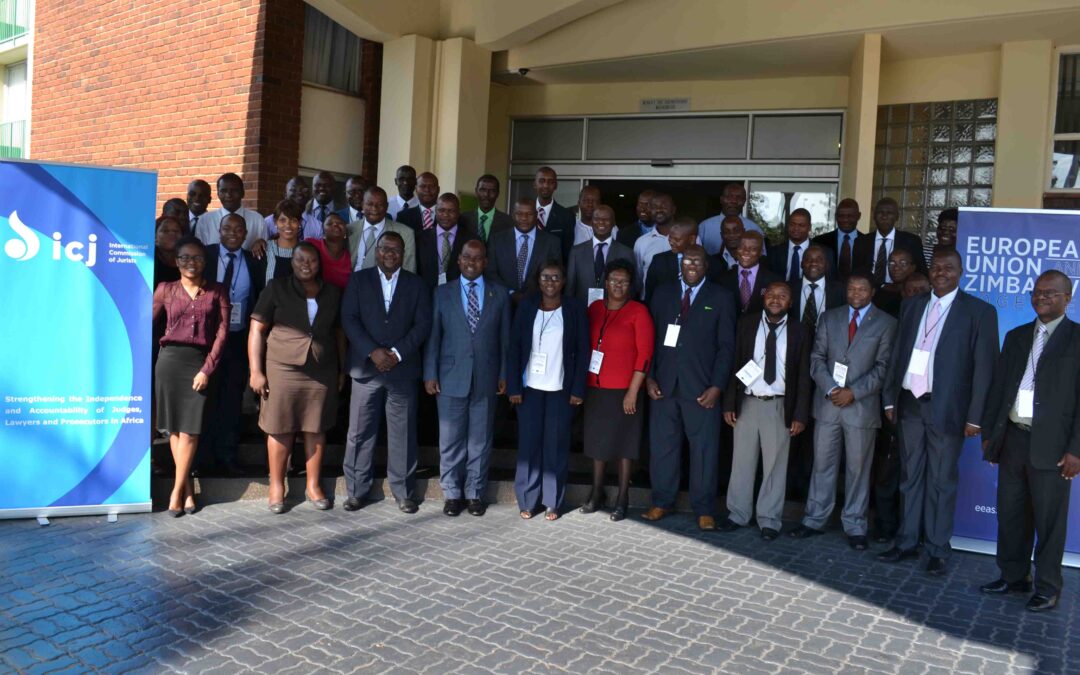
With support from the European Union (EU) and ICJ, the National Prosecuting Authority (NPA) held the first of two training of trainers in Bulawayo from 2-4 October 2015.
The training focused on regulations, code of ethics and prosecutorial guidelines and was attended by 50 senior prosecutors, senior law officers and office directors in attendance.
The participants are expected to then roll out the training at their various stations to cover the entire 500 women and men strong team of prosecutors.
Prior to adoption of the 2013 Constitution, prosecutors were supervised by the Attorney General under the Ministry of Justice.
Issues in respect of conduct, discipline, appointment, performance appraisal and other related conditions of service were dealt with through the line ministry and civil service commission.
The passage of the Constitution and the enactment of the NPA Act introduced the office of the Prosecutor General equally tasked with regulating the conduct of its staff through the NPA Board or any other delegated authority within the NPA.
The regulations and code of ethics were gazetted on 7 August 2015.
The code of ethics provides for the independence, integrity, propriety, impartiality, political engagement, competence and diligence of prosecutors in Zimbabwe.
The Prosecutor General also developed prosecutorial guidelines as mandated by the Constitution and the NPA Act on the institution of and conducting of criminal proceedings.
The objectives of the training were to equip senior officials with skills to conduct trainings for middle and lower officers to ensure greater compliance with the requirements of the new constitution of Zimbabwe; to familiarize senior officials on the regulations and code of conduct to ensure greater compliance with the requirements of the new constitution of Zimbabwe and to familiarize and train senior officials on the application of prosecutorial guidelines consistent with the requirements of the new constitution of Zimbabwe.
Following the completion of the trainings, the ICJ and NPA will conduct routine and random visits to different stations for purposes of observing the implementation, roll out of trainings and spot checks.
Remote support will also be provided in terms of statutes, such as the NPA Act, the regulations and code of ethics.
Further work is being explored to produce an updated prosecutor’s handbook that covers issues of prosecutorial conduct, ethics and guidelines.
Contact
Arnold Tsunga, ICJ Regional Director for Africa, t: +27 73 131 8411, e: arnold.tsunga(a)icj.org
Aug 28, 2015 | News
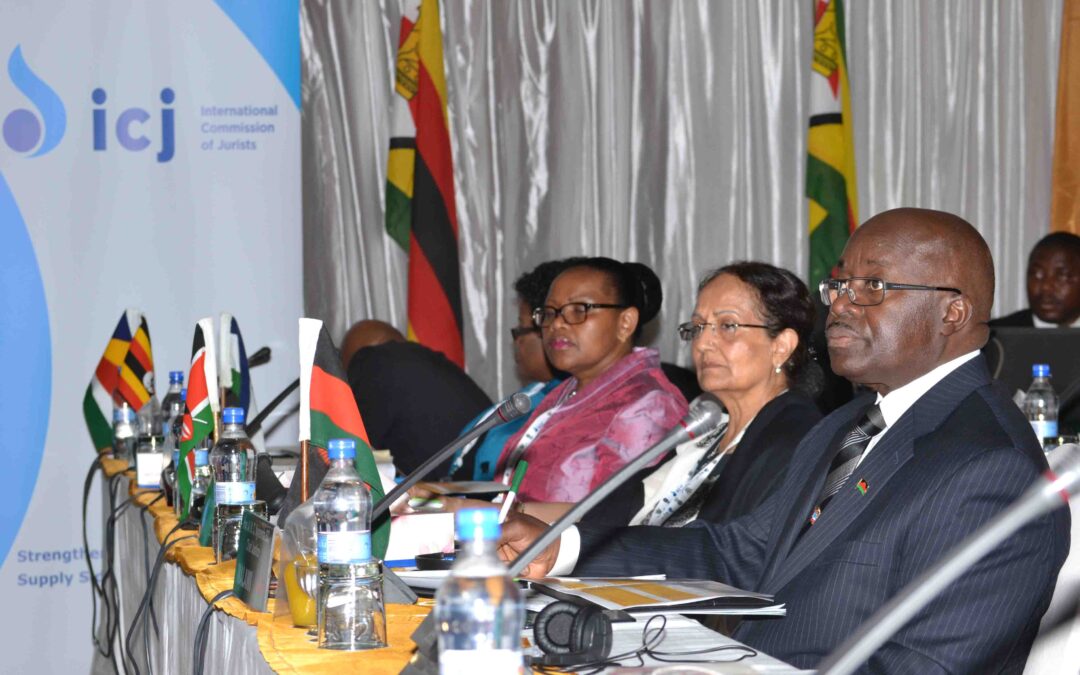
The Africa Regional Programme of the ICJ co-hosted the Southern African Chief Justices’ Forum Annual Conference in Zimbabwe, held on 27-28 August 2015 under the theme “Guaranteeing the Right to a Fair Trial in Africa; Show casing Best Practice”.
The meeting was organized in conjunction with the Southern Africa Chief Justices’ Forum (SACJF) and the Judicial Services Commission (JSC) of Zimbabwe.
This year it congregated 13 Chief Justices and 120 senior judges from East and Southern Africa.
The overall objective of the conference was to provide space for judiciaries in East and Southern Africa region to share achievements, best practices and innovations in justice delivery.
To this end, the conference sought to create a platform for judiciaries that had excelled in a variety of areas to showcase their achievements.
The programme was divided into three sub-themes, all of which had a direct relationship with the underlying theme of Fair Trial Rights in the Region.
The three sub thematic areas discussed were Appointment procedures, Judicial Training and Judicial Reform Each of the sessions was chaired by one of the Chief Justices, whose role it was to moderate the discussions and the speakers.
The panels had a presentation by a chief justice and experiences from another jurisdiction presented by a senior judge.
The presentations were then considered by discussants who were eminent academics.
Download the final declaration here:
Zimbabwe-SACJF ANNUAL CONFERENCE Declaration-Advocacy-2015-ENG (full text in PDF)