Sep 26, 2016 | News
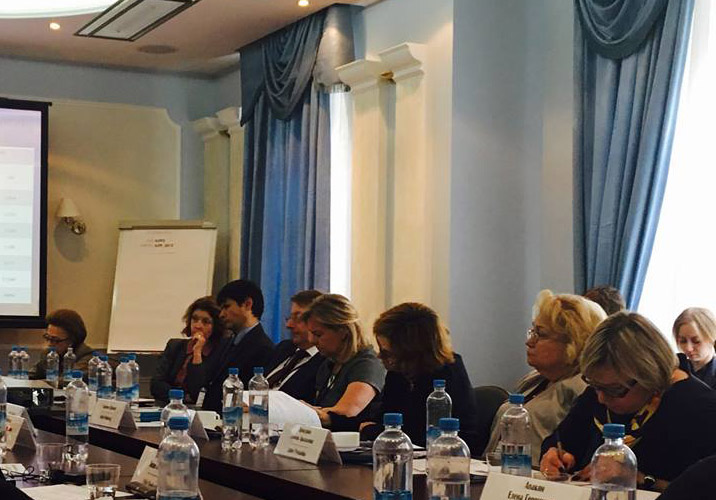
Today, the ICJ, in cooperation with the Institute of Law and Public Policy (ILPP) held a round table discussion “Independence, effectiveness and quality of justice: comparative perspectives” in Moscow.
Judges from Norway, the Netherlands, Italy and Russian and German legal scholars took part in the event.
ICJ Commissioner Justice Tamara Morschakova moderated the seminar.
Assessing the independence of judges, quality of judgements and enforcement of judgements were discussed among other topics.
The agenda of the event an be downloaded here.
Sep 6, 2016 | News
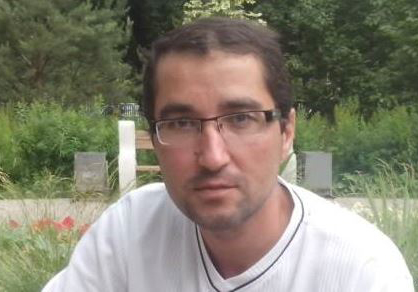
The ICJ has deplored the arrest and detention on questionable charges of Jamshed Yorov (photo), a lawyer practicing in Tajikistan.
Following his arrest on 22 August 2016, the lawyer was remanded in custody in a pre-trial facility in Dushanbe for two months.
He was charged with “disclosure of State secrets” under part 1 of article 311 of the Criminal Code of Tajikistan.
Jamshed Yorov was detained on Monday, 22 August 2016. On the next day, he called his family and informed them that he was in police custody and being questioned in connection with the alleged leaked publication of the text of a classified court judgment on the internet.
The judgment concerned the case of thirteen leaders and three members of the Islamic Renaissance Party of Tajikistan (IRPT), who had been sentenced on 2 June 2016 to various long-term custodial terms, including life-imprisonment.
Jamshed Yorov represented Mahmadali Hait, one of the leaders of the IRPT, who was sentenced to life imprisonment.
The ICJ is concerned that the decision to arrest Jamshed Yorov may have been in response to the legitimate exercise of his professional functions in representation of Mahmadali Hait.
Any such reprisal would be contrary to a fundamental tenet of the rule of law, reflected in the UN Basic Principles on the Role of Lawyers, that lawyers shall not be identified with their clients or their clients’ causes as a result of discharging their functions.
Additionally they must be able to perform all their profession functions without intimidation, hindrance, harassment or improper interference.
The principles affirm that lawyers must not suffer, or be threatened with, prosecution or administrative, economic or other sanctions for any action taken in accordance with recognised professional duties, standards or ethics.
The ICJ calls on the Tajikistan authorities to comply with all international human rights obligations of Tajikistan, including the right to a fair trial, in the case of Jamshed Yorov.
In accordance with the right to liberty as enshrined in Article 9 of the International Covenant on Civil and Political Rights (ICCPR), pre-trial detention should be ordered in exceptional cases only as a last resort, and in any event there needs to be the possibility to seek bail.
The proceedings should take full account of Jamshed Yorov’s professional duties as a defense lawyer, and should ensure that he does not suffer any criminal or administrative sanction as a result of the discharge of these duties.
The ICJ is further concerned that Jamshed Yorov’s arrest is allegedly linked to disclosure of a ‘secret’ judgment.
Article 14(1) of ICCPR, which guarantees the right to a fair trial, provides that all court judgments must be made public except where the interest of juvenile persons otherwise requires, or where the proceedings concern matrimonial disputes or the guardianship of children.
More generally, under international standards everyone has the right to seek, receive, use, and impart information held by or on behalf of public authorities, or to which public authorities are entitled by law to have access.
While there are narrow exceptions on national security grounds, these are subject to strict limits and safeguards which do not appear to have been met.
Background information
This arrest follows a pattern of arrests of lawyers in 2014-2016, which raises serious concerns about the protection of the right to a fair trial and compliance with international standards on the role of lawyers in Tajikistan.
These arrests, including the arrest of Jamshed Yorov, may have a significant “chilling” effect on the willingness of defense lawyers to take on cases of clients that may be considered sensitive, especially cases that involve accusations of breach of national security and are heard in closed sessions.
Jamshed Yorov is the brother of Buzurgmehr Yorov, who was arrested in November 2015 and who led, before his arrest, the defence for seven leaders of the IRPT Political Council.
Burzurgmehr Yorov remains in remand prison, together with another lawyer, Nuriddin Makhamov, who also represented the IRPR and has been in remand prison since November 2015. Their trial is ongoing.
The ICJ and other international NGOs earlier expressed their concern that this case may also be connected with the performance of laweyers’ professional functions.
The ICJ also expressed its concern at the conviction of lawyer Shukhrat Kurdratov on 13 January 2015 on charges of fraud and bribery for which he was sentenced to nine years in prison. Despite recent reports of a possible amnesty, his conviction will remain in force.
tajikistan-lawyer-yorov-case-news-web-stories-2016-rus (full text in Russian, PDF)
Jul 21, 2016 | News
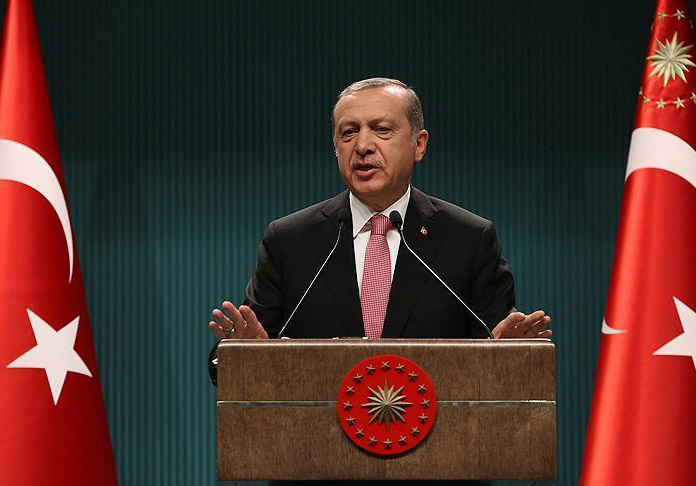
The ICJ urges Turkish authorities to fully respect the rule of law and human rights under the recently declared state of emergency.
The ICJ is concerned that yesterday’s declaration of a state of emergency could further exacerbate the ongoing attack on institutions and professions that are guardians of the rule of law in Turkey, including the judiciary, the media and academia.
The ICJ reiterates its concern at the ongoing purge within the judiciary that led to the suspension of 2,745 judges and the arrest of hundreds.
Since then, Turkish authorities have summarily suspended, dismissed or arrested more than 50,000 academics, judges, including military judges, and public officials.
The ICJ is concerned that many of these measures are arbitrary and unlawful.
“Turkey needs to respect the tenets of the rule of law and human rights law during the state of emergency,” said Wilder Tayler, ICJ Secretary General.
“There are human rights that can never be restricted even in a state of emergency, notably the right to life, the prohibition of torture or ill-treatment, and the essential elements of arbitrary deprivation of liberty and to a fair trial,” he added.
“The current allegations of torture and ill-treatment of detainees and arbitrary arrests already point to serious violations of human rights. Widespread arrests and suspensions of judges, which began before the declaration of any state of emergency, threaten the right to a fair trial,” Tayler further said.
“The state of emergency must not be used as a means to subvert the rule of law and human rights.”
The ICJ remains concerned at President Erdoğan’s statements that he would allow for a reinstatement of the death penalty.
The ICJ firmly opposes the death penalty under any circumstances, and its reintroduction in Turkey which would also be incompatible with Turkey’s obligations under the European Convention on Human Rights and the Second Optional Protocol to the International Covenant on Civil and Political Rights.
Contact
Róisín Pillay, Director, ICJ Europe Programme, t: +32 476 974263 ; e: roisin.pillay(a)icj.org
Massimo Frigo, Legal Adviser, ICJ Europe Programme, t: +41 22 979 38 05 ; e: massimo.frigo(a)icj.org
Background information
The Council of Ministers, chaired by President Recep Tayyip Erdoğan, declared yesterday a three-month state of emergency throughout the whole territory of Turkey in accordance with article 120 of the Turkish Constitution.
The declaration must be ratified by the National Assembly. He has not yet announced what specific measures will be introduced.
Turkey is a party to many human rights treaties, including the European Convention on Human Rights and the International Covenant on Civil and Political Rights.
Under these treaties, the declaration of a state of emergency must remain within the strict boundaries of the law, in particular constitutional and international law.
Any measures derogating from them must be strictly necessary to meet a threat the life of the nation.
Certain human rights obligations cannot be derogated from even under a state of emergency. All rights must continue to be respected, although lawful derogating measures may restrict their scope of application.
Jul 18, 2016 | News
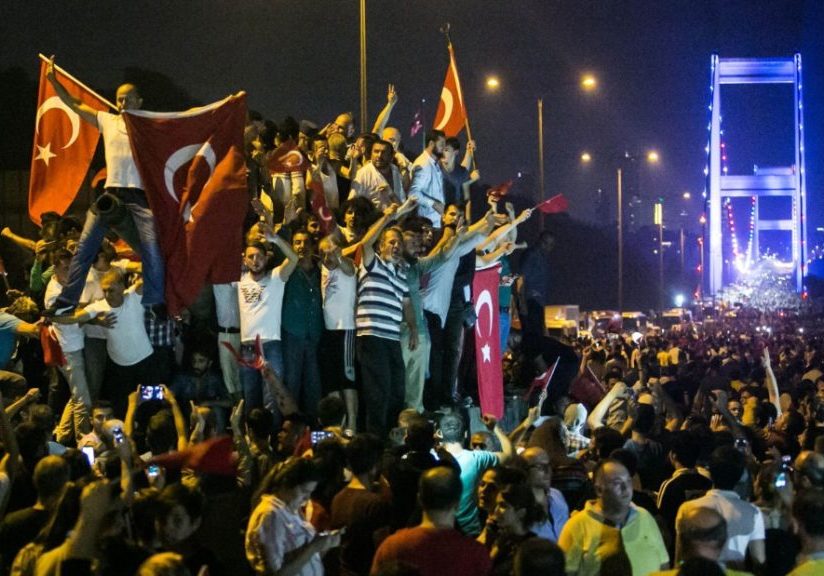
At a critical moment for Turkish democracy, the ICJ today urged the government to uphold the rule of law and respect Turkey’s obligations under international human rights law.
The ICJ condemns what appears to be a wholesale attack on the judiciary, implemented within hours of the failed coup attempt of 15 and 16 July.
“At such moments of crisis, it is crucial that the independence and security of tenure of judges is respected, so that public confidence can be maintained in the fairness of the justice system,” said Wilder Tayler, ICJ Secretary General.
“Purging the judiciary now endangers the deepest foundations of the separation of powers and the rule of law. An independent judiciary will be critical to ensure a functioning administration of justice for all people in Turkey as the country emerges from the crisis,” he added.
Reports indicate that on 16 July 2,745 judges were suspended by the High Council for Judges and Prosecutors (HSYK). Arrest warrants were issued for more than a hundred judges.
Two judges of the Constitutional Court, and ten members the HSYK itself, are reportedly among those detained. The ICJ fears that many of these detentions may be arbitrary.
Allegations that the judges concerned were linked to the attempted coup have not been supported by evidence, and it defies credulity that such a high number of judicial authorities could have been involved in the planning or execution of the military coup d’etat.
According to the ICJ, the measures are arbitrary, and contrary to fundamental rule of law principles.
In June, an ICJ report, Turkey: the judicial system in peril, analysed the increasing government control of the Turkish judiciary, including the HSYK, and arrests and dismissals judges, in violation of international standards.
“This weekend’s mass suspensions and arrests of judges represent a dramatic escalation of an attack on judicial independence that was already underway,” said Tayler.
“Disciplinary proceedings against judges should not proceed until it is clear that they will be heard by a body that is fully independent of the executive, and in accordance with the right to a fair hearing,” he added.
The ICJ is also deeply concerned at suggestions by the government that the death penalty may be introduced for those involved in the failed coup.
Re-introduction of the death penalty would violate Turkey’s obligations under Protocol 13 to the European Convention on Human Rights, and would amount to inhuman and degrading treatment in breach of Article 3 of the Convention.
The ICJ considers the death penalty to constitute in all circumstances a violation of the right to life and the prohibition on cruel, inhuman or degrading punishment.
Contact:
Róisín Pillay, Director, ICJ Europe Programme, t: +32 476 974263 ; e: roisin.pillay(a)icj.org
Additional information:
Under international standards on the independence of the judiciary, judges should be subject to suspension or removal only for reasons of incapacity or behaviour that renders them unfit to discharge their duties.
The ICJ recently published its Practitioners’ Guide N°13 on Judicial Accountability, a major study on international law and standards on the accountability of judges.
Further guidance on relevant international law and standards can be found in the ICJ Legal Commentary to the Geneva Declaration on Upholding the Rule of Law and the Role of Judges and Lawyers in Times of Crisis.
Jun 24, 2016 | News
The ICJ conducted a research mission to Azerbaijan on 20-23 June, to assess the situation of lawyers in the country, in light of concerns about recent criminal and disciplinary proceedings against lawyers.
During the mission the ICJ met with lawyers and legal experts to discuss the governance of the legal profession, including questions of access to the profession, the need for sufficient numbers of qualified lawyers to provide effective access to justice, and the role of the bar association in protecting lawyers against harassment or interference in their work.
In the course of the mission the ICJ met with several lawyers against whom disciplinary proceedings had been initiated, or who had faced criminal or other sanctions. Many of these lawyers have been prominent in bringing human rights cases before the national and international courts.
On 23 June, ICJ representatives observed a hearing in the case of lawyer Alaif Ghasanov before the Baku Administrative Economic Court no.1, in which he is challenging his disbarment.
The ICJ will publish a report of the mission with recommendations to address harassment of lawyers and for reform of the governance of the legal profession.
Jun 23, 2016 | News
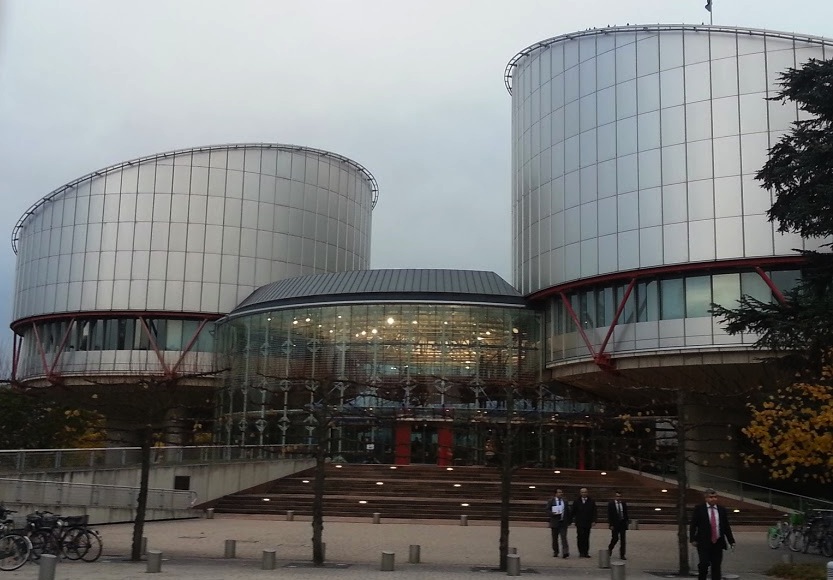
The ICJ welcomes today’s judgment of the European Court of Human Rights that the removal from office of Hungarian Supreme Court President András Baka violated the European Convention on Human Rights (ECHR).
The Court found that the pre-mature termination of his appointment deprived him of a fair process and was based on public statements he made that were critical of certain justice system reforms.
The ICJ intervened as third party in this case. The judgment is expected to be influential around the world in cases involving judicial independence and expression.
“Today’s judgment is a vindication for the security of tenure and freedom of expression of judges not only in Hungary, but around the world,” said Massimo Frigo, ICJ Europe Programme Legal Adviser.
“Judges should never be precluded from exercising their right and duty to speak out in protection of judicial independence,” he added.
In its ruling, the Grand Chamber of the European Court of Human Rights ruled that, by ending his prescribed term in office pre-maturely through a targeted legislative reform because of his public criticism, Hungary had violated his right to freedom of expression, under article 10 of the European Convention on Human Rights.
The Court held that expressing statements on the reform of the judiciary and other legislation was not only Judge Baka’s right, but also his duty.
The Court further ruled that former Supreme Court President András Baka had enjoyed a right to access courts to challenge his dismissal, and that his removal from office by a law that precluded such challenges violated article 6 of the ECHR on the right to a fair hearing.
In its judgment, the European Court cited a wide range of United Nations, European, Inter-American, and other international instruments and standards on judicial independence and freedom of expression.
The International Commission of Jurists anticipates that the Court’s ruling and reasons will have an important influence on cases concerning judicial independence and expression around the world.
Background:
Judge András Baka, former judge of the European Court of Human Rights from 1991 to 2008, had been appointed as President of the Supreme Court of Hungary on 22 June 2009.
His term in office, which was on his appointment guaranteed by law to continue until 22 June 2015, was prematurely terminated on 1 January 2012 following the entry into force of the Transitional Provisions of the new Hungarian Constitution.
This rule modified the eligibility requirements for the position of President of the Supreme Court, effectively excluding judge András Baka from the position.
Judge András Baka was also President of the National Council of Justice, and had publicly expressed criticism concerning various legal reforms brought on by the Hungarian Government that he considered to undermine the independence of the judiciary.
The judgment can be downloaded in PDF format.
Read also:
ICJ third party intervention
The ICJ also recently published a comprehensive analysis of relevant global standards in its Practitioners Guide No. 13 on judicial accountability.
An online compilation of global and regional standards on independence and accountability of judges, lawyers and prosecutors is also available here.
Contact
Massimo Frigo, Legal Adviser, ICJ Europe Programme, t: +41 22 979 38 05 ; e: massimo.frigo(a)icj.org