Jun 9, 2016 | Agendas, News
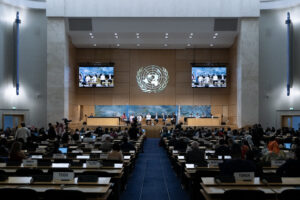
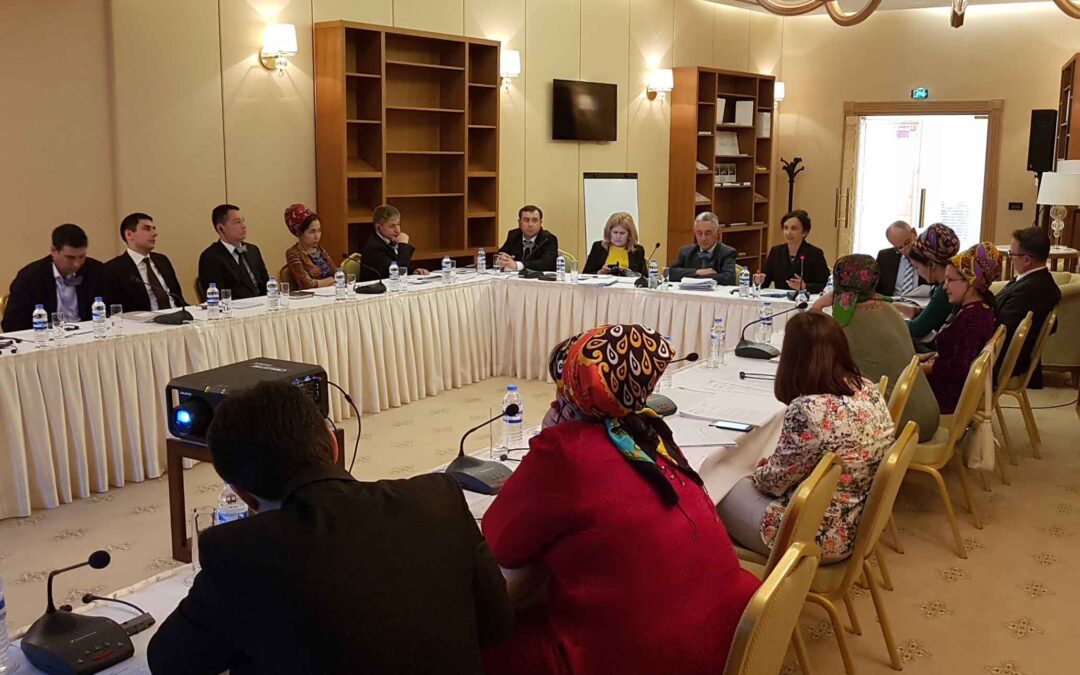
The ICJ today conducts a training seminar organized in Ashgabat on international human rights obligations and national courts.
The seminar will be attended by judges of the Supreme Court, representatives of the Prosecutor General’s office, the Ministry of Justice, lawyers as well as representatives of other institutions.
ICJ commissioners and staff members will participate event, including Justice Azhar Cachalia, Justice Radmila Dicic, Professor Andrew Clapham.
The seminar is organised in cooperation with the EU.
Contact
Róisín Pillay, Director, Europe Programme, roisin.pillay(a)icj.org
Temur Shakirov, Legal Adviser, Europe Programme, temur.shakirov(a)icj.org

Jun 9, 2016 | News
The ICJ welcomes the landmark decision issued today by the UN Human Rights Committee in the case of Amanda Mellet v. Ireland under the Optional Protocol to the International Covenant on Civil and Political Rights.
The Committee found that, by forcing Amanda Mellet to choose either to carry her foetus to term, despite its fatal fœtal abnormality, or to travel abroad to seek an abortion, Ireland had subjected her to cruel, inhuman or degrading treatment and discrimination, in violation of its obligations under the Covenant.
The ICJ considers that in light of the Committee’s decision Ireland must provide reparation to Amanda Mellet and reform its laws to prevent future violations.
Otherwise, Ireland will be in breach of its legal obligation to provide Amanda Mellet with an effective remedy – including in the terms set out in the Committee’s decision – for the human rights violations she suffered.
Related readings:
Full text of Human Rights Committee’s decision (download in PDF)
May 12, 2016 | News
The ICJ is concerned at the reported resignations of federal judges in the Chechen Republic of the Russian Federation following apparent pressure by the acting Head of the Republic Ramzan Kadyrov who had suggested that resignation would be the “most correct decision of their lives”.
The ICJ considers these statements, which appear to have led directly to the resignations of federal judges, to be inappropriate interference with the functioning and independence of the judiciary.
The ICJ calls on the Russian Federation judicial authorities to take all measures within their power to ensure that all judges’ security of tenure is preserved and that any allegations of misconduct are addressed through appropriate disciplinary proceedings that respect the right to a fair hearing.
The ICJ further calls on the executive authorities to refrain from any comments which may undermine the independence of the judiciary.
On 5 May, Ramzan Kadyrov, currently acting Head of the Chechen Republic, recommended that several named judges should step down.
In his post on social media, Kadyrov identified as problems unfair decisions of courts, procrastination in criminal cases, decisions regarding housing and inconsistent decisions.
He mentioned that although examples of such decisions were sporadic, they did not help build trust in the judiciary.
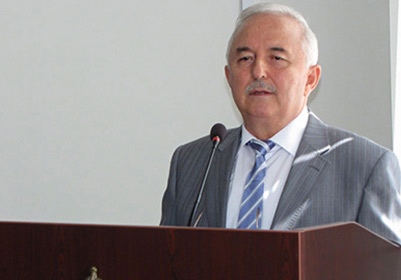
He then recommended that the President of the Supreme Court of the Chechen Republic, Magomed Karatayev (photo) and three other judges, Takhir Murdalov, Sulyan Yandarov and Zayndi Khusainov, should resign “if they had a notion of honour and professional ethics”.
It was reported that two judges of the Urus-Martan City Court and Grozny District Court, Sulyan Yandarov and Zayndi Khusainov, submitted their resignations on the same day.
The President of the Supreme Court of Chechnya, Magomed Karatayev, and his deputy Takhir Murdalov, are reported to have already filed a request for resignation.
The resignations, apparently in direct response to criticism by the executive, undermine the separation of powers and the independence of the judiciary in the Russian Federation.
Under international law, including the right to a fair trial protected, inter alia, by Article 6 of the European Convention on Human Rights and Article 14 of the International Covenant on Civil and Political Rights, the independence of the judiciary must be guaranteed.
The UN Basic Principles on Independence of the Judiciary enshrines “the duty of all governmental and other institutions to respect and observe the independence of the judiciary” and provides the judiciary shall not be subject to “any restrictions, improper influences…pressures, threats or interferences, direct or indirect from any quarter or for any reason.”
While judges have an obligation to adhere to judicial ethics and should be held accountable for professional misconduct, the representatives of the executive must refrain from statements which jeopardize the independence of the judiciary.
The Council of Europe’s Recommendation on judges specifies that “the executive and legislative powers should avoid criticism that would undermine the independence of or public confidence in the judiciary.”
Public pressure from the executive on judges to resign can nullify the security of tenure of judges protected under national and international law and standards.
According to Principle 12 of the Basic Principles on the Independence of the Judiciary, “[j]udges, whether appointed or elected, shall have guaranteed tenure until a mandatory retirement age or the expiry of their term of office, where such exists.”
Under international standards, allegations of misconduct against judges should be dealt with by the self-governing institutions of the judiciary, through fair disciplinary procedures.
Under the Basic Principles, the only basis for removal of judges is “incapacity or behaviour that renders them unfit to discharge their duties.
The comments by Ramzan Kadyrov also run contrary to the legislation of the Russian Federation, which spells out in detail the procedure for disciplinary measures against judges in case of alleged professional misconduct.
RUSSIA-Chechen judges statement-News-web story-2016-RUS (full text in Russian, PDF)
May 10, 2016 | News
The ICJ today expressed concern at the disbarment proceedings against lawyer Muzaffar Bakhishov that are taking place before the Narimanov district court.
The ICJ calls for the disbarment proceedings to respect international standards on the role of lawyers and to ensure that no sanction is imposed contrary to the right to freedom of expression, as guaranteed under international law.
The ICJ understands that the proceedings against Mr Bakhishov, following a recommendation for disbarment by the Plenum of the Bar Association, are related to critical statements he made in a media interview with the news website moderator.az on the functioning of the Azeri judiciary with regard to judicial review of detention.
In the interview, he criticized the arrests of large number of persons by officers of the Ministry of National Security and the tendency of judges to approve orders of detention without proper scrutiny. He further raised concerns about lack of accountability of judges for failure to protect against arbitrary detention.
Under international law and standards, lawyers, like other individuals, enjoy the right to freedom of expression, including in regard to their professional role. Protection of lawyers’ right to freedom of expression is not only important to the individuals in question. It also serves to safeguard the important public function played by lawyers in a democratic society to comment on matters related to the rule of law and the administration of justice. Lawyers must be able to carry out these and their other professional functions without interference or intimidation.
The right to freedom of expression is protected in international human rights law, including by article 19 of the International Covenant on Civil and Political Rights (ICCPR) and article 10 of the European Convention on Human Rights (ECHR). Azerbaijan is party to both of these treaties.
The UN Basic Principles on the Role of Lawyers specify that lawyers “…shall have the right to take part in public discussion of matters concerning the law, the administration of justice and the promotion and protection of human rights …” The European Court of Human Rights has emphasized that lawyers are entitled to comment in public on the administration of justice, provided that their criticism does not overstep certain bounds, based on principles of dignity, honour, integrity, and respect for the fair administration of justice.
The ICJ considers that disciplinary proceedings against lawyers, solely for expressing criticism of the conduct or functioning of the judiciary, whether in the course of court hearings or elsewhere, constitute an unjustified interference with freedom of expression. As the European Court of Human Rights has noted in Maurice v. France, this is particularly the case where the allegations have been presented in good faith and are substantiated by evidence.
Azerbaijan-BakhishovDisbarment-Statement-2016-AZE (download statement in Azeri)
Contact:
Massimo Frigo, Legal Adviser of the ICJ Europe Programme, t: +41 22 9793805, e-mail: massimo.frigo(a)icj.org
May 3, 2016 | News
The ICJ is concerned at the reported improper interrogation as a witness of lawyer Marina Moshko and searches of her apartment and office by investigators of the Investigative Committee of Russia together with officers of the St. Petersburg and Leningrad Region Federal Security Service.
The interrogation was in connection with a criminal case against her client, Natalia Koltsova, related to alleged criminal business activities.
Targeting a lawyer in the investigation of the lawyer’s client runs contrary to international law and standards, and to principles of lawyer-client confidentiality enshrined in both Russian and international law.
The ICJ therefore calls on the law enforcement authorities to refrain from any measures which obstruct access to a lawyer and the right to an effective defence, including improper interrogation of lawyers as witnesses, and searches of lawyers’ premises.
The Russian authorities must uphold Russian law and the country’s international legal obligations on this matter and must take steps to ensure that lawyers are effectively protected against any form of harassment or improper interference.
During the searches, authorized by the Basmannyi District Court of Moscow, the files Marina Moshko’s clients were examined and photographs were taken of one file, which contained evidence in the same criminal case in which Marina Moshko is acting for the defence (see additional information below).
In addition to the searches of the lawyer’s premises, the investigators conducted a “confrontation” (a form of investigatory interview) between the lawyer and her client’s mother.
Marina Moshko was thereafter excluded from representation of her client as she was herself considered to be a witness in the case.
This case is hardly the first of its kind.
In a recent report entitled Towards a Stronger Legal Profession in the Russian Federation, the ICJ expressed concern at “cases of interrogations of lawyers in order to exclude them from representing a party to the proceedings”.
The report concluded that “[i]nterrogation of a lawyer as a witness constitutes a serious interference with the work of lawyers in clear contradiction to Russian legislation and international standards on the role and independence of lawyers.”
The ICJ recalls that the Russian Federation Code of Professional Ethics of Lawyers prohibits lawyers from making witness statements about any facts known to him or her in the context of professional activities (Article 6 (6)).
Both the Law “On advocates’ activities and advokatura in the Russian Federation” (Article 8 (2)) and the Russian Criminal Procedure Code (article 56 (3)) prohibit summoning lawyers as witnesses in cases in which they represent clients.
Furthermore, searches of lawyers’ premises and interference with clients’ files are contrary to international law and standards on lawyer-client confidentiality, which is an element both of the right to respect for private life, and of the right to a fair trial.
In particular, the UN Basic Principles on the Role of Lawyers, in Principle 22, stipulate that: “[g]overnments shall recognize and respect that all communications and consultations between lawyers and their clients within their professional relationship are confidential”.
The UN Human Rights Committee has also underscored that such practices may breach the obligation of States to ensure the right to a fair trial under the International Covenant on Civil and Political Rights (ICCPR), particularly where “lawyers are released from their obligation of professional confidentiality and obliged to testify or face the risk of imprisonment”
This case apparently represents such an instance in which a lawyer is excluded from representing a party, and lawyer-client confidentiality is breached, through questioning her as a witness. Such exclusions interfere with a defendant’s access to effective legal representation and may damage the effectiveness of the defence, contrary to the right to fair trial protected, inter alia, by Article 6 of the European Convention on Human Rights and Article 14 of the ICCPR.
Contact:
Róisín Pillay, Director, Europe Programme, roisin.pillay@icj.org
Temur Shakirov, Legal Adviser, Europe Programme, temur.shakirov@icj.org
Additional information:
Marina Moshko represents Natalia Koltsova, a suspect in the case on a criminal group allegedly created by Dmitry Zarubin, owner of the Cartier boutique. Dmitry Zarubin was arrested in autumn 2015 and charged with creation of an organized criminal group which brought expensive electronic goods as cheap building materials. Natalia Koltsova is charged with heading one of the units of the alleged criminal group. These searches are reportedly related to the representation of Natalia Koltsova.
The ICJ understands that the Council of the Chamber of Lawyers of Leningrad Region has addressed a letter to the Prosecutor General of the Russian Federation regarding this problematic case of the searches of lawyers.
Read also ICJ’s Report Towards a Stronger Legal Profession in the Russian Federation
Russia-Marina Moshko statement-News-Web story-2016-RUS (story in Russian, PDF)
Apr 22, 2016 | News
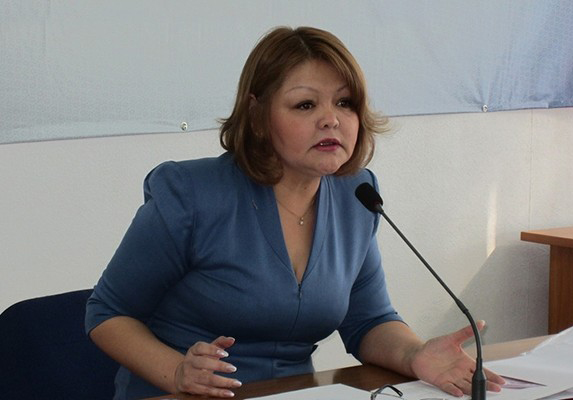
The ICJ welcomes the decision of the Almaty City Court in favour of Ayman Umarova, a lawyer who received repetitive demands from the investigative authorities to testify as a witness in a case in which she represented a client.
The Court decided that those demands were contrary to the law of the Republic of Kazakhstan.
Earlier this month, on 8 April, Umarova (photo) had challenged the official summons of Baurzhan Muzhikov, the head of an investigative group of the Anti-Corruption Service of Almaty, to testify as a witness.
The Medeu Regional Court confirmed the lawfulness of such demands, concluding that it was not related to her professional activity.
On 18 April, the Appeals Collegium of the Almaty City Court overturned the decision of the Medeu Regional Court.
Umarova was represented in the case by 28 lawyers as a demonstration of solidarity by the profession.
“The matter concerns not only Ayman Umarova but the entire legal community. If the case sets a precedent, the rights of our citizens will be in jeopardy,” Anuar Tugel, the President of the Republican Collegium of Lawyers, was reported to have said.
“The decision of the Almaty City Court is an important step in protecting the independence of the legal profession,” said Temur Shakirov, Legal Adviser of the ICJ Europe Programmme.
“While it is welcome that the Court remedied the practice of a forced testimony contrary to the international standards on the role of lawyers, it is worrying that such instances of obstruction of the work of lawyers continue to occur,” he added.
The UN Basic Principles on the Role of Lawyers, in Principle 22, stipulate that: “Governments shall recognize and respect that all communications and consultations between lawyers and their clients within their professional relationship are confidential”.
The UN Human Rights Committee has expressed concerns where “lawyers are released from their obligation of professional confidentiality and obliged to testify or face the risk of imprisonment” (UN Doc CCPR/C/TUN/CO/5 (2008), para. 15).
The ICJ recalls that, in accordance with of the UN Basic Principles, lawyers should be able to perform their professional duties without intimidation, hindrance, harassment or improper interference (Principle 16) and should never be identified with their clients’ causes (Principle 18).
Contact:
Róisín Pillay, Director, Europe Programme, roisin.pillay(a)icj.org
Temur Shakirov, Legal Adviser, Europe Programme, temur.shakirov(a)icj.org
Additional information:
On 28 March 2016, Ayman Umarova started her representation of Sayat Nadirbayev in a criminal case related to Talgat Ermegiyaev, former head of the Astana EKSPO-2017 company, accused of embezzlement.
On 2 April, after a request on the phone by the head of the Investigative Department of the Anti-Corruption Service of Almaty Baurzhan Muzhikov, Ayman Umarova received an official demand to appear and testify as a witness in the case. Since then she was required to appear and testify several times.
On 6 April, the Chair of the Almaty Collegium of Lawyers received a letter signed by Baurzhan Muzhikov, the head of an investigative group of the Anti-Corruption Service of Almaty, asking it to “facilitate the appearance of lawyer Umarova Ayman … to question her as a witness”.
On the same day, the Republican Collegium of Lawyers issued a statement where it qualified this request as a “violation of the guarantees of advocates’ activities” and urged that “appropriate measures [be taken] in regard to the officers of the Anti-Corruption Service”.
Kazakhstan-Landmark decision-News-Web Stories-2016-RUS (full text in Russian, PDF)