Apr 6, 2020 | News
ICJ has joined other NGOs in welcoming steps taken by Indian authorities to decongest prisons in an effort to contain the novel coronavirus (COVID-19). The Government should release all unjustly detained prisoners as a matter of priority.
The joint statement read as follows:
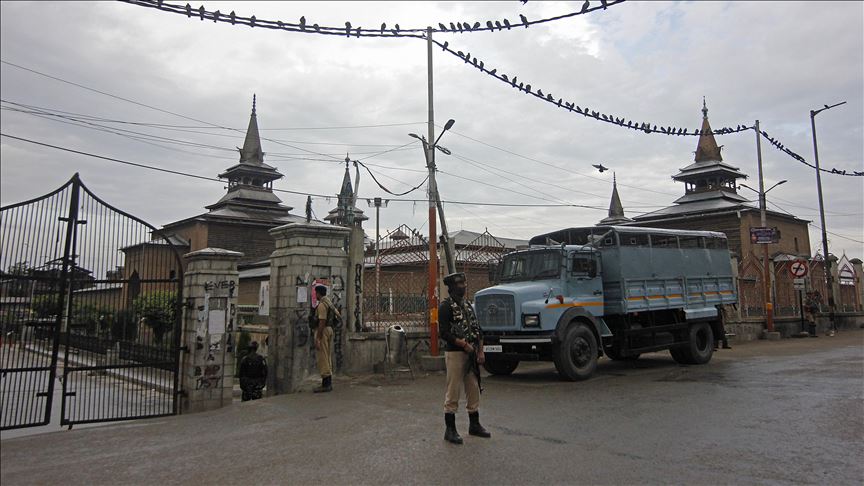
The fate of hundreds of arbitrarily detained Kashmiri prisoners hangs in the balance as the number of confirmed cases of coronavirus in India passes the 4,000 mark and many more are likely to remain undetected or unreported.
Inmates and prison staff, who live in confined spaces and in close proximity with others, remain extremely vulnerable to COVID-19. While the rest of the country is instructed to respect social isolation and hygiene rules, basic measures like hand washing – let alone physical distancing – are just not possible for prisoners.
Under international law, India has an obligation to ensure the physical and mental health and well-being of inmates. However, with an occupancy rate of over 117%, precarious hygienic conditions and inadequate health services, the overcrowded Indian prisons constitute the perfect environment for the spread of coronavirus.
In a bid to contain the spread of the disease among inmates and prison staff, the Supreme Court asked state governments on 23 March 2020 to take steps to decongest the country’s prison system by considering granting parole to those convicted or charged with offenses carrying jail terms of up to seven years.
The United Nations High Commissioner for Human Rights Michelle Bachelet also called on governments to “examine ways to release those particularly vulnerable to COVID-19, among them older detainees and those who are sick, as well as low-risk offenders.”
Various state governments in India have now begun releasing detainees. However, there is a concern that hundreds of Kashmiri youth, journalists, political leaders, human right defenders and others arbitrarily arrested in the course of 2019, including following the repeal of Article 370 of the Indian Constitution on 5 August 2019, will not be among those benefiting from the measure. Article 370 provided special status to Jammu & Kashmir.
Human rights groups and UN experts have repeatedly called for the release as a matter of priority of “those detained without sufficient legal basis, including political prisoners and others detained simply for expressing critical or dissenting views.”
Last month, the Ministry of Home Affairs revealed that 7,357 persons had been arrested in Jammu & Kashmir since 5 August 2019. While the majority have since been released, hundreds are still detained under sections 107 and 151 of the Criminal Procedure Code, the Unlawful Activities (Prevention) Act (UAPA), and the Public Security Act (PSA), a controversial law which allows the administrative detention of any individual for up to two years without charge or trial. Reportedly, many of those still detained are minors.
Many of those detained were transferred to prisons all across India, thousands of kilometers away from their homes, hampering their lawyers’ and relatives’ ability to visit them. Some of the families, often too poor to afford to travel, have been left with nothing but concerns over the physical and psychological well-being of their loved ones.
Mr. Miyan Abdul Qayoom, a human rights lawyer and President of the Jammu & Kashmir High Court Bar Association, was also cut off from his family and lawyer. Detained since 4 August 2019 in India’s Uttar Pradesh State, he was transferred to Tihar jail in New Delhi following a deterioration of his health. Mr. Qayoom, 70, suffers from diabetes, double vessel heart disease, and kidney problems.
Mr. Ghulam Mohammed Bhat was also transferred to a jail in Uttar Pradesh. In December 2019, he died thousands of kilometers away from his home at the age of 65 due to lack of medical care.
With the entire country in a lockdown and a ban on prison visits for the duration of the outbreak imposed, inmates are more isolated from the outside world than ever. In such a situation, prison authorities must ensure that alternative means of communication, such as videoconferencing, phone calls and emails, are allowed. However, this has not often been the case. Especially in Jammu & Kashmir, where full internet services are yet to be restored after a communication blackout imposed on the population on 5 August 2019, contacts between inmates and the outside world are even more limited.
- Amnesty International India
- Asian Forum for Human Rights and Development (FORUM-ASIA)
- CIVICUS: World Alliance for Citizen Participation
- International Commissions of Jurists (ICJ)
- International Federation for Human Rights (FIDH)
- World Organisation Against Torture (OMCT)
To download the statement with detailed information and key recommendations, click here.
Apr 1, 2020 | News
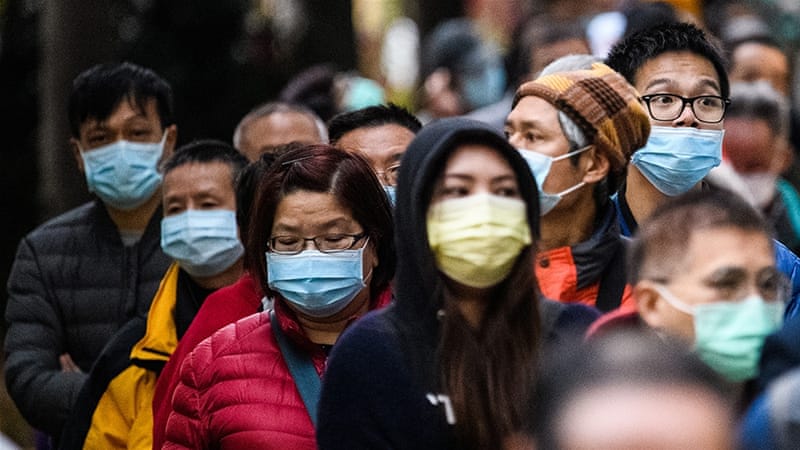
The ICJ today called on States in Southeast Asia to respect and protect human rights online and offline, in accordance with their obligations under international law, as they take steps to stop the spread of COVID-19.
It urged States to ensure that avoiding adverse impacts on the exercise of the rights to freedom of expression, opinion, information and privacy are front and center when implementing measures to counter misinformation about the virus.
“This is a health emergency, unprecedented in modern times, that calls for urgent, targeted and effective responses by the State including measures to curtail false or misleading information about the spread of COVID-19,” said Frederick Rawski, ICJ’s Director for Asia and the Pacific.
“However, such measures must be implemented in accordance with rule of law principles, and their enforcement should protect the rights to health and life just as much as the rights to free expression, opinion, information and privacy.”
Governments in Southeast Asia have introduced and begun to enforce severe measures to control information online about the virus. This raises concerns about the potential for State over-reach in light of how Southeast Asian governments have historically enforced laws to curtail rights and censor content online in violation of international law. This trend was mapped out in its 2019 regional report.
The ICJ’s concerns has already been substantiated by recent actions taken by law enforcement authorities in some countries in the region. Arrests and detentions for online expression, in some cases without a warrant, have been reported in the Philippines, Malaysia, Indonesia, Cambodia, Vietnam and Thailand. Some of the laws in these countries which the ICJ had identified in its report as non-compliant with international human rights standards have been mis-used to arrest, detain and charge individuals accused of spreading false information online on the COVID-19 virus.
Legal provisions pursuant to which these arrests have been made carry significant criminal penalties including imprisonment terms and heavy fines – in some cases for merely expressing criticism of government measures on social media, such as complaints about inadequate screening measures or a lack of government preparedness.
“We urge governments not to repeat the mistakes of the past. The mere perception that the law is being used to suppress speech will only undermine the credibility of State institutions at a time when maintaining public trust is crucial,” said Rawski.
“Misinformation can be curtailed using less intrusive means than arrests, detentions and disproportionately onerous fines or imprisonment terms.”
To download the full statement with background information, click here.
Contact
Frederick Rawski, ICJ Asia Pacific Regional Director, e: frederick.rawski(a)icj.org
See also
ICJ, ‘Southeast Asia: ICJ launches report on increasing restrictions on online speech’, 11 December 2019
Mar 27, 2020 | News
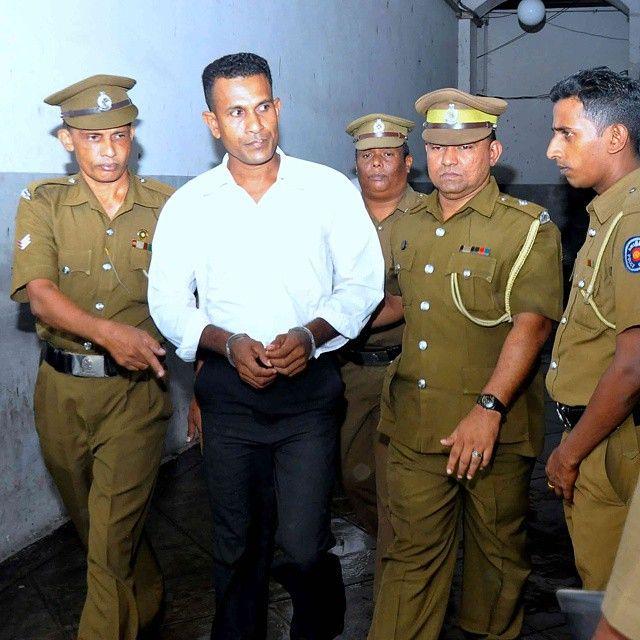
The ICJ today condemned the Presidential pardon granted to murder convict Sunil Ratnayake, Former Staff Sergeant of the Sri Lankan Army.
Sri Lankan President Gotabaya Rajapaksa pardoned Former Staff Sergeant Sunil Ratnayake who was convicted in 2015 for the murder of eight Tamil civilians, including three children, in Mirusuvil in April 2000. The conviction and death sentence was affirmed by the Supreme Court of Sri Lanka in 2019.
The ICJ said that the pardon cast serious doubt upon the Government’s commitment to accountability and the rule of law in Sri Lanka.
While the ICJ welcomes the lifting of the death sentence, the full pardon and extinguishment of serious punishment constitutes a blow to the victims of these violations.
“The prosecution of Staff Sergeant Ratnayake for his involvement in the killing of civilians, including children, at Mirusuvil was a rare exception to the usual lack of accountability for human rights violations committed during the conflict,” said Frederick Rawski, ICJ’s Regional Director for Asia and the Pacific. “Such a pardon is incompatible with international standards relating to impunity and access to justice, and reinforces the well-founded public perception that the military is exempt from any form of accountability, even for the most heinous crimes”.
The ICJ stressed that for serious crimes such as unlawful killing of civilians, there should be no amnesties or pardons that are inconsistent with the right to victims of such violations to reparation.
“It is particularly distressing that a presidential pardon of this nature has been issued at a time when the nation is dealing with the potentially devastating impacts of the COVID-19 outbreak,” said Rawski. “The government would be advised to focus on responding to legitimate calls to release prisoners of minor offences, and take measures to address prison congestion, rather than taking cynical advantage of the crisis to free convicted war criminals.”
It is noteworthy that during his presidential campaign, Gotabaya Rajapaksa had made repeated pledges to release “war heroes languishing in prison over false charges and cases”. The ICJ is deeply concerned that this presidential pardon may be the first of the many to come.
The ICJ has consistently raised concerns about the severe lack of accountability regarding crimes perpetrated by the Sri Lankan armed forces – most recently before the Human Rights Council in February 2020.
The ICJ opposes capital punishment in all cases without exception as a violation of right to life and to freedom from cruel, inhuman or degrading punishment.
Contact
Frederick Rawski, ICJ’s Asia Pacific Regional Director, t: +66 2 619 84 77; e: frederick.rawski(a)icj.org
Mar 26, 2020 | News
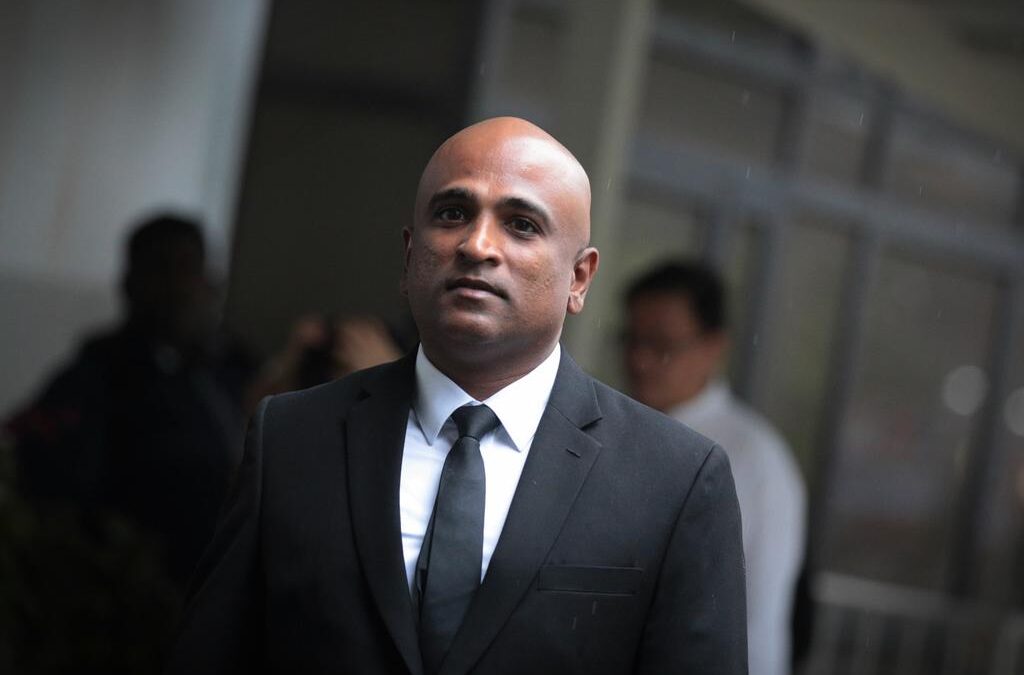
The ICJ, Amnesty International, ARTICLE 19, ASEAN Parliamentarians for Human Rights, CIVICUS and Human Rights Watch today called on Singapore authorities to drop investigations of human rights lawyer M Ravi and two other individuals under Singapore’s contempt of court law and cease their harassment of human rights defenders.
On 13 March, police raided the office of human rights lawyer M Ravi, editor of an independent news website, Terry Xu, seizing his phone, passport and firm’s laptop.
He is apparently under investigation for contempt of court under the Administration of Justice Act (AJPA).
The investigation followed the publication of articles on independent media website ‘The Online Citizen’ (TOC) relating to his client, Mohan Rajangam, a Singaporean who challenged the legality of his extradition from Malaysia in 2015.
The same day, police raided the home of Terry Xu, TOC’s editor, and confiscated his electronic equipment. He is also being investigated for contempt of court under the AJPA, after he published articles on Rajangam’s case. Two other individuals are also being subject to investigation, including Rajangam himself and a writer for the TOC.
Even as the police have stated that the publication online on TOC of parts of Rajangam’s affidavit breached contempt of court regulations, it is unclear what exact content poses a risk of prejudice to the court proceedings.
“The contempt of court doctrine under common law was, for years, used by authorities to curtail speech surrounding politically sensitive topics and cases,” noted Frederick Rawski, ICJ’s Director for Asia and the Pacific.
“After the coming into force of the AJPA, the contempt regime is even more vulnerable for misuse – these current raids and investigations only evidence that how the law can be abused to violate the rights of individuals.”
Investigations of the four individuals for contempt of court continue. The ICJ has been informed that as of 15 March, M Ravi had put the police on notice that the contents of his mobile phone and laptop are subject to legal professional privilege and should remain confidential until a formal ruling is made by a court of law on the matter.
Terry Xu and M Ravi have been targeted and harassed constantly by authorities for information they have released in their professional capacities as an independent journalist and human rights lawyer respectively – notably through abuse of legal mechanisms. Terry Xu is currently fighting pending cases in court relating to alleged defamation of political officials and Singapore’s problematic Protection from Online Falsehoods and Manipulation Act (POFMA). M Ravi has similarly faced action by the Attorney-General’s Chambers for his advocacy against the death penalty.
“In the lead-up to elections, it is even more crucial that the Singapore government ensure that freedom of expression, opinion and information are protected and that independent media is allowed to operate to ensure communication of a diversity of opinions and ideas and inform public opinion,” said Rawski.
“For these reasons we urge the authorities to cease harassment of the four individuals and call on them to drop investigations against them”.
Read the joint statement here.
Contact
Frederick Rawski, ICJ Asia Pacific Regional Director, frederick.rawski(a)icj.org
Background
In its 2019 regional report, ‘Dictating the Internet: Curtailing Free Expression, Opinion and Information Online in Southeast Asia’, the ICJ found that in Singapore contempt of court proceedings have been used to curtail freedom of expression and information under the guise of “maintaining orderly proceedings” and “protecting public confidence in the judiciary”, particularly in cases of online criticism touching on politically sensitive matters.
In October 2017, the Administration of Justice (Protection) Act 2016 came into force, despite well founded concerns that its vague provisions could result in abusive interpretation and implementation, given existing trends of use of contempt of court under common law to limit freedom of expression.
The AJPA lowered the threshold for contempt in what is referred to as “scandalizing the Court”, expanding judicial powers to punish such contempt with increased and onerous penalties. Section 3(1) criminalizes the “scandalizing of court” through (i) “impugning the integrity, propriety or impartiality” of judges by “intentionally publishing any matter or doing any act that… poses a risk that public confidence in the administration of justice would be undermined” (section 3(1)(a)); and (ii) “intentional” publishing of any material which interferes with pending court proceedings, or sub judice contempt (section 3(1)(b)). Section 3(1)(a) reduced the threshold for “scandalizing” contempt to a mere “risk” of undermining public confidence in the judiciary, where the common law test established in the landmark case of Attorney-General v Shadrake Alan was to establish a “real risk” of such undermining of confidence. This exacerbated a standard that was already deeply problematic.
Section 12(1) of the AJPA increased the maximum penalty for “scandalizing” contempt to three years’ imprisonment or a fine of S$100,000 (approx. USD 72,051) or both, when under common law, a six-week imprisonment sentence and S$20,000 (approx. USD 14,410) fine had been deemed appropriate.
Mar 24, 2020 | News
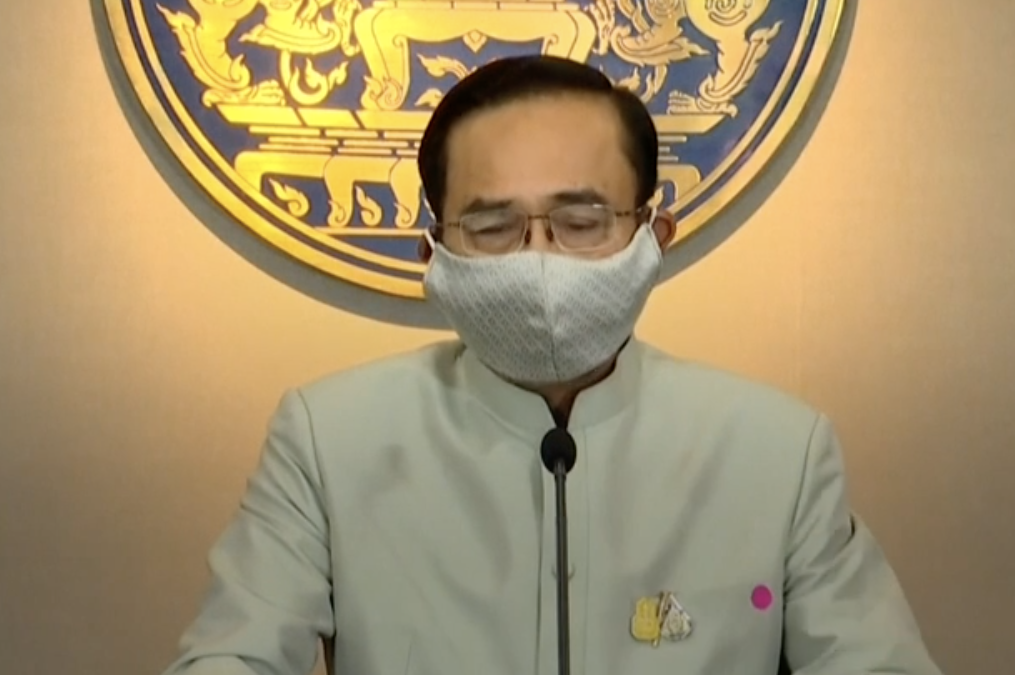
As the Thai government moves to exercise its power under the Emergency Decree on Public Administration in Emergency Situation B.E. 2548 (2005) (“Emergency Decree”) to combat the COVID-19 outbreak, the ICJ reiterates its recommendations made since 2005 regarding lawful and proportionate exercise of this power in a manner consistent with Thailand’s obligations under international law.
The ICJ urges the Thai Government to take these recommendations into consideration when imposing any measures to address the COVID-19 outbreak:
- A state of emergency used to justify any permissible derogation from obligations under international human rights law must meet the standard that an emergency “threatens the life of the nation”, as set out in the International Covenant on Civil and Political Rights. Parliament should play an active role in providing oversight.
- Any limitations on or derogation from the exercise of internationally guaranteed rights should be limited in duration, strictly necessary, and proportionate to the specific threat posed.
- Derogating measures may only limit the scope of other rights to the extent strictly necessary to meet a threat to the life of the nation, but they may not suspend the applicability of any right in its entirety.
- This necessity must be continually re-assessed so that the derogating measures apply for the shortest time possible. Certain human rights, including the right to life, the right to life, the freedom from torture or ill-treatment, the essential elements of arbitrary deprivation of liberty and to a fair trial and the right to an effective remedy can never be restricted even in a state of emergency.
- It should be clearly stated which officials have responsibility for implementing the provisions of the emergency law and what their powers and responsibilities are.
- All officials responsible for implementing the law should be explicitly stated to be under the authority of the ordinary law of Thailand, with no immunity for any criminal acts carried out in the exercise of their responsibilities.
- The decisions and actions of officials exercising powers under the emergency law should be subject to review by the courts.
Download the statement in Thai here.
Mar 20, 2020 | News
The ICJ condemned the execution today of four men who were convicted of raping and murdering a 23-year-old student in December 2012.
The ICJ denounced the executions, and urged the Indian Government to abolish the death penalty. It called on the Government to introduce systemic changes to the legal system that would deter violence and improve access to justice for women.
“State-sanctioned executions are little more than public theatre that risk celebrating and perpetuating violence at the expense of the rule of law,” said Frederick Rawski, ICJ Asia-Pacific Director. “As heinous as these crimes were, the imposition of the death penalty – the deterrent effect of which has been widely debunked – does nothing to improve the lives of women.”
According to senior lawyer Vrinda Grover, a renowned Indian human rights defender, “In 2013, the criminal laws were amended; however seven years later the graph of rapes has not diminished.”
Instead of compelling the state to invest in plugging the gaps in the investigation, prosecution and adjudication of sexual crimes and formulating victim oriented processes, the clamour for execution of the convicts has hijacked the discourse. Seven years later, the power of the state to extinguish life stands entrenched, while women and girls in India continue to struggle to live a life of freedom, safety and dignity, as equal persons, ” said Vrinda Grover.
The UN Human Rights Committee has stated that “[t]he death penalty cannot be reconciled with full respect for the right to life, and abolition of the death penalty is both desirable and necessary for the enhancement of human dignity and progressive development of human rights.”
The ICJ opposes capital punishment in all cases without exception as a violation of right to life and to freedom from cruel, inhuman or degrading punishment.
The ICJ called upon the Indian Government to join the large majority of States and take immediate steps to end the practice of capital punishment, as prescribed by repeated United Nations General Assembly Resolutions.
To download the full statement with background information, click here.
Contact
Maitreyi Gupta, ICJ India Legal Adviser, t: +91 77 560 28369 e: maitreyi.gupta(a)icj.org
Frederick Rawski, ICJ Asia-Pacific Director, t: +66 64 478 1121; e: frederick.rawski(a)icj.org
Read Also
ICJ, Press Release, September 2013 – India: Executing perpetrators of Delhi Gang Rape Case ‘counterproductive to preventing sexual violence’