Oct 21, 2019 | News
A new briefing paper by the ICJ calls upon Myanmar authorities to ensure that the right to freedom of thought, conscience, religion or belief and respect for culture and tradition are never used as pretexts to justify discrimination and violence in the country.
“The analysis in the ICJ’s paper makes clear why there is a pressing need for Myanmar authorities to undertake significant legal and practical reforms, to ensure that all people can exercise their freedom of religion and belief and enjoy equal protection of their human rights,” said Frederick Rawski, Asia Pacific Region Director for the ICJ.
The paper focuses its analysis on two particular sets of laws – the colonial era ‘blasphemy’ laws, which in recent years have also been used as one of the several measures to restrict free speech and the controversial ‘race and religions laws’ passed in the run up to the national elections in 2015, particularly those related to religious conversion and marriage of Buddhist women.
“The briefing paper highlights a number of laws in Myanmar that impair the enjoyment of the right to freedom of religion or belief’’, said Canadian Member of Parliament David Anderson, Chair of the International Panel of Parliamentarians for Freedom of Religion or Belief Steering Committee, which supported production of the paper.
In recent years, Myanmar courts have convicted individuals under ‘blasphemy’ provisions even in the absence of any evidence of deliberate and malicious intent to insult a religion, let alone on the basis of irrefutable evidence of incitement to violence, hostility or discrimination on religious grounds.
In addition to the use of colonial-era blasphemy laws, Myanmar has a more recent set of four laws that appear to specifically target non-Buddhists, and particularly the Muslim community. While all four laws give rise to concerns about the right to freedom of thought, conscience, religion or belief, the laws related to conversion and marriage are the most problematic.
The briefing paper also identifies a number of other challenges related to the protection and promotion of the right to freedom of religion or belief in Myanmar. These include:
- Highly discriminatory legal arrangements for citizenship and the rights of residents in Myanmar;
- Arbitrary restrictions on places of worship, mostly for Christians and Muslims;
- Preferential treatment of Buddhism, for example in the national school curriculum.
In light of these challenges, the briefing paper offers 11 key recommendations to the Government of Myanmar in ensuring that Myanmar’s legal framework is implemented in accordance with international human rights law and fully protects the right to freedom of religion or belief.
This report is part of a series of ICJ publications on the right to freedom of religion or belief.
Contact
Frederick Rawski, Asia Pacific Director for the ICJ, frederick.rawski(a)icj.org
Liv H. Kvanvig, Coordinator, IPPFoRB, lk(a)nhc.no
Palak Rao, Communications and Advocacy Adviser, IPPFoRB, pr(a)nhc.no
Download
New Briefing paper on Challenges to Freedom of Religion or Belief in Myanmar
See also
New primer on Freedom of Religion or Belief in International Human Rights Law
New Briefing paper on Challenges to Freedom of Religion or Belief in Malaysia
Oct 20, 2019 | Advocacy, News
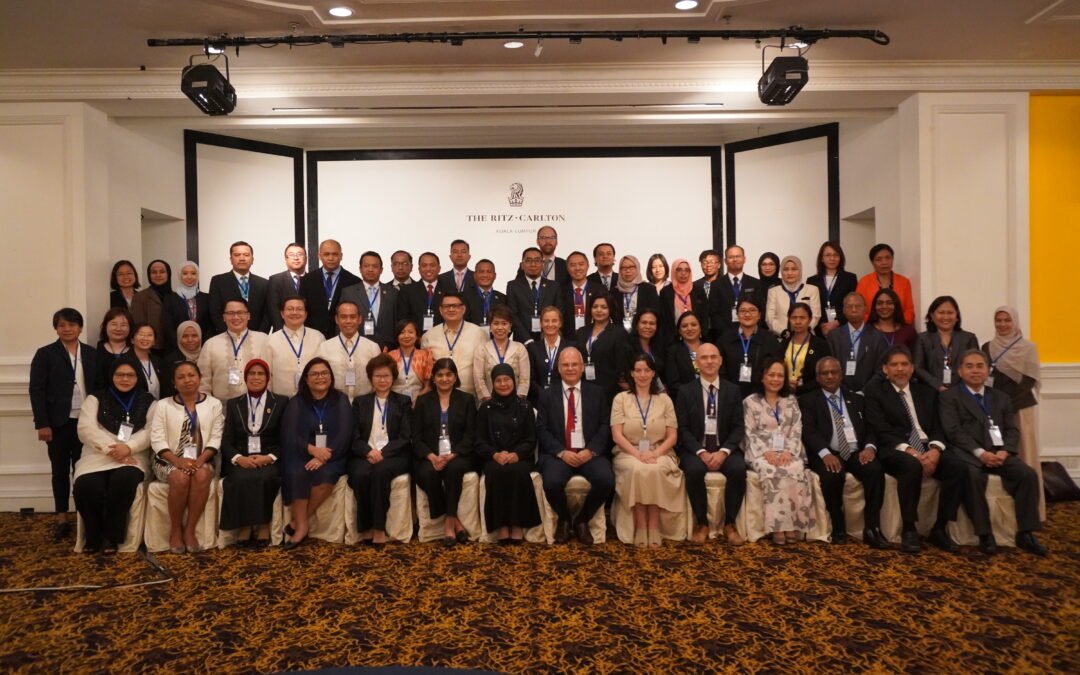
From 18 and 19 October 2019, the ICJ, in collaboration with UN Women and the Federal Court of Malaysia, convened the 2019 Southeast Asia Regional Judicial Dialogue in Kuala Lumpur, Malaysia.
The judges from Malaysia, Philippines, Indonesia, and Timor-Leste discussed how to apply the Convention on the Elimination of All Forms of Discrimination against Women (CEDAW) and other international legal instruments in their work at the domestic level to eliminate the negative impact of stereotyping and gender bias in the judiciary.
“We need to ensure that CEDAW and international human rights obligations are fully applied by national authorities, and not just taken as aspiration or long-term goal,” said Frederick Rawski, ICJ Regional Director for Asia and the Pacific.
“These standards need to have the force of law and made real, in workplace and in domestic settings, to ensure that women are free from violence and that there is access to justice when violence does occur.”
The judicial dialogue was opened by Malaysia’s first female Chief Justice, The Right Honourable Tan Sri Tengku Maimun binti Tuan Mat. The Chief Justice emphasized during her keynote speech the need for regular capacity strengthening initiatives for judges to be aware of gender-related issues. She emphasized further that “Judicial stereotyping can undermine the ability of women to exercise and enforce other rights guaranteed by law.”
This message was echoed by Carla Silbert of UN Women who said: “We see that women are often impacted disproportionately and thus judges should uphold women’s rights as human rights. It is a crucial role for the court to deliver justice with gender sensitivity.”
ICJ Commissioner Dato Ambiga Sreenavasan and the Ambassador of Sweden to Malaysia, Dag Juhlin-Dannfelt addressed the ongoing reforms in Malaysia and gender equality.
“Malaysia has its first female Chief Justice and has shown a remarkable growth of female leaders in influential positions. However, the participation of women in the labor workforce is still very low and it remains a challenge for us,” said Dato Ambiga Sreenavasan, Commissioner of the ICJ.
“The drive for democracy is to support and strengthen gender equality and the rule of law,” said Ambassador Dag Juhlin-Dannfelt. “ICJ’s Bangkok General Guidance for Judges on Applying a Gender Perspective in Southeast Asia is an important tool to address gender equality in judiciary.”
The dialogue included discussion on the topics of equality & non-discrimination, access to justice under international human rights law, gender stereotyping and gender discriminatory practices in cases involving women who are victims of trafficking.
Many participating judges said that they would be applying in their judicial work the tools introduced to them in the dialogue, including the Bangkok General Guidance. These could be used in decision-making, assessing evidence presented before them, and handling witnesses in their courts. Some also said that they plan to disseminate the information and tools to their colleagues in the judiciary.
Contact
Boram Jang, International Legal Adviser, Asia & the Pacific Programme, e: boram.jang(a)icj.org
Resources:
To access pictures from the event, click here.
Oct 10, 2019 | Advocacy, News
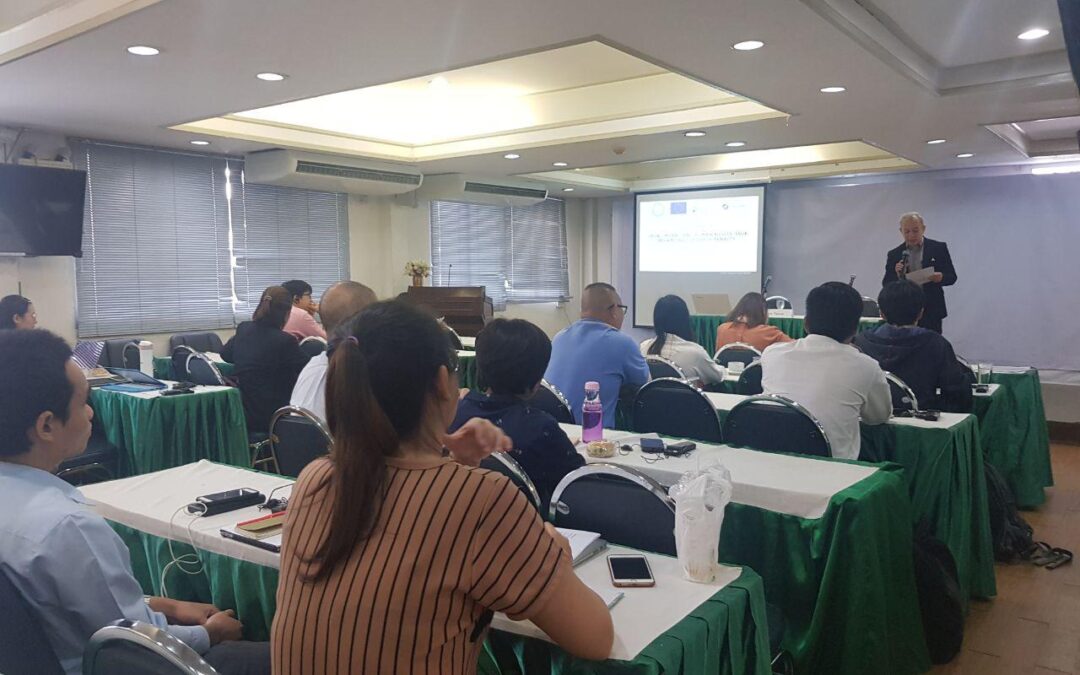
On 9 October 2019, in commemoration of the World Day against the Death Penalty (10 October), the ICJ, Thai Journalists Association (TJA), Internews, and the Delegation of the European Union in Thailand held a workshop on “Legal, Moral and Human Rights Issues in Death Penalty” at the Thai Journalists’ Association.
The participants included 35 journalists from various news agencies in Thailand and journalism and human rights students.
The course aimed to help strengthen the capacity of journalists to write informatively and critically about death penalty issues in Thailand. Through this course, journalists learned about the abolition of death penalty in other regions of the world and reviewed cases which have transformed public opinion on capital punishment around the world.
Sanhawan Srisod, the ICJ’s Legal Adviser, held a session to discuss capital punishment in Thailand’s criminal justice system. She underscored that there is no perfect justice system and as the risk of miscarriage of justice is always present, the death penalty should not be retained. She further encouraged journalists to help strengthen calls for an effective criminal justice response to serious crimes, as an alternative to the death penalty. She further pointed out current domestic investigation and prosecution practices which risk breaching international law and standards. These, she noted, may hamper the legality and efficiency of investigations and prosecutions, and pose a risk of rendering an innocent person eligible for capital punishment.
Other speakers at the Workshop included:
- E. Mr Pirkka Tapiola, Ambassador of the European Union to Thailand
- E. Mr Emilio de Miguel Calabia, Ambassador of Spain to Thailand
- Judge Hanne Sophie Greve, Commissioner, the International Commission against the Death Penalty (ICDP)
- Representative from Thailand’s Ministry of Justice
- Toshi Kazama, Photographer and anti-death penalty advocate
- Orasom Suthisakorn, Author and prison writing course instructor
Background
The ICJ categorically opposes the death penalty in all situations and considers it a violation of the right to life and a form of cruel, inhuman or degrading punishment.
Thailand has repeated commitments on the international stage to work towards abolition and has committed to becoming an abolitionist state in its master plan for human rights.
In June 2018, however, 26-year-old Teerasak Longji was executed by lethal injection for aggravated murder. It was Thailand’s first execution in nine years. The last previous execution occurred in 2009 when two men were executed for drug-related crimes.
The UN General Assembly, has repeatedly adopted Resolutions supported by very wide majorities, calling on all retentionist states to observe a moratorium on the death penalty with a view to full abolition.
Thailand is a State party to the International Covenant on Civil and Political Rights (ICCPR). Thailand has not become party to the Second Optional Protocol to the ICCPR, aiming at the abolition of the death penalty in law and practice.
In March 2017, the UN Human Rights Committee, the body mandated to interpret and monitor compliance with respect to the ICCPR, issued Concluding Observations after reviewing Thailand’s 2nd country report on the implementation of its obligations under the ICCPR. The Human Rights Committee recommended that Thailand “consider abolishing the death penalty and acceding to the Second Optional Protocol to the ICCPR”, and if the death penalty is maintained, to “take all measures necessary… to ensure that it is limited to the most serious crimes, such as acts carried out with the intention of killing.”
There are reportedly 55 crimes punishable by death in Thailand, including crimes relating to corruption, bribery and drugs, which do not meet the threshold of the “most serious crimes” within the meaning of the ICCPR.
Oct 7, 2019 | News
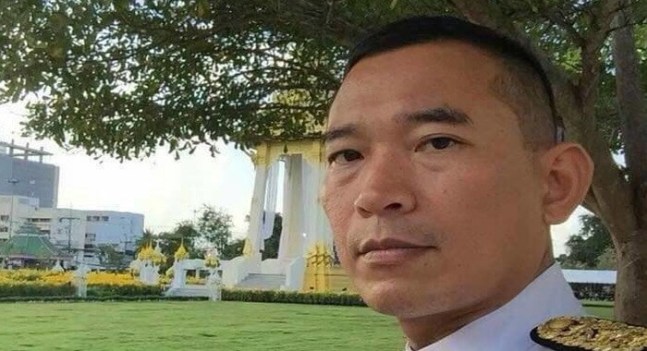
The apparent suicide attempt of a judge in southern Thailand highlights the need for urgent reform of the judiciary to improve its independence from political interference, the ICJ said today.
Judge Khanakorn Pianchana, Vice Presiding Judge of the Yala Provincial Court in Thailand’s restive southern region, reportedly shot himself in the chest following his delivery of a verdict on 4 October in a case in which he alleged political interference in his judicial functions. Judge Khanakorn is currently hospitalized in critical condition.
“This unfortunate incident again shows the need for sustained reforms of law enforcement and particularly of the independence of the judiciary in Thailand,” said Frederick Rawski, ICJ’s Asia director.
Judge Khanakorn had alleged in a 25-page note that he was ordered in confidence to rewrite his ruling exonerating five suspects of murder charges – a decision he had allegedly reached on the basis of lack of sufficient evidence. The five have had been detained and interrogated under special security laws in force in the Southern Border Provinces of Thailand.
Under Thai law, if a superior judicial officer disagrees with a ruling of any judge, he or she must express such disagreement in writing and is forbidden from speaking to a judge in confidence to reverse the ruling.
“The ICJ has worked for years with the judiciary in southern Thailand to improve the administration of justice, especially by addressing problems such as the improper admission of evidence and problematic evidence-gathering by security forces countering armed groups,” Rawski said. “This case again shows how misuse of emergency decrees in southern Thailand has aggravated the political pressure exerted on judges.”
Today, the case was submitted to the Office of the Judicial Commission for its consideration. The Commission, chaired by the President of the Supreme Court, comprises of qualified members who are judicial officers of each level of the Court. Consequently, the Commission passed a resolution to set up a Sub-Committee comprises three of its members to investigate into the allegations.
Particularly because Judge Khanakorn’s claim involves several senior judges in active services, the Sub-Committee set up by the Commission to investigate the allegations must therefore be independent institutionally and functionally, at all stages of the investigation. Their mandate should be broadened to look into whether there is wider pattern and practice of interference beyond this case.
Background
Judge Khanakorn presided over a trial involving the alleged murder of five people in Yala province in 2018. Following the killing, authorities arrested five suspects who were charged with murder, secret association, conspiracy and gun-related offences. If convicted, three out of five defendants could be sentenced to death.
The five suspects were reportedly detained and interrogated under much-criticized special security laws which remain in force in the Southern Border Provinces of Thailand – i.e Martial Law and Emergency Decree. The ICJ has repeatedly criticized how the Martial Law confers upon military authorities the powers to arrest and detain any person without a warrant for up to seven days for interrogation and questioning and does not require detainees to be brought before a court at any stage of their detention. The ICJ has also repeatedly analyzed and criticized the Emergency Decree, which breaches international law and standards, by allowing authorities to detain suspects, with the leave of the Court, for up to 30 days. The law does not require a detainee to be physically brought before the Court during this period.
Information submitted to the court as evidence in this case had reportedly been obtained from the suspects during detention periods prescribed under Martial Law and the Emergency Decree. Judge Khanakorn noted in his statement that he was of the view that any information obtained during this period should not be admissible because rights protections had not been afforded to the suspects who had been detained under security laws, as they are provided to suspects in other criminal trials. This position had reportedly led to the disagreements between the judge and his supervisor over the case ruling.
The ICJ has repeatedly expressed concern on the use as evidence of information obtained during interrogation under emergency laws in criminal proceedings of security-related cases, in the form of witness statements or inquiry reports from interrogation officials. The ICJ has called on Thailand to review existing standards in all special security laws and relevant articles in the Criminal Procedure Code regarding the admissibility of evidence that are not compatible with international fair trial standards.
Judge Khanakorn also described in his statement that certain evidence needed to have been ruled inadmissible as it had not been collected by competent authorities but by volunteers who were not competent or specialized in evidence collection.
Judge Khanakorn further asserted that interference in his judicial functions had also occurred in 2018 when he had been under pressure to reduce the sentence of three military officers who had been found to have shot villagers to death.
The right to a fair hearing in judicial proceedings before an independent and impartial court or tribunal is guaranteed in several human rights instruments, including the International Covenant on Civil and Political Rights (ICCPR), which Thailand is a party. The right is also enshrined in section 188 of the 2017 Constitution of Thailand.
International standards also reaffirm that judicial independence requires not only the independence of the judiciary as an institution from the other branches of government; it also requires judges being independent from each other. Such freedom from undue influence that might come from other judges is guaranteed in several internationally accepted standards, including Principle 1.4 of the Bangalore Principles of Judicial Conduct and its Commentary; article 3 of the Universal Charter of the Judge; and article 2 of the Basic Principles on the Independence of the Judiciary.
Further reading:
International principles on the independence and accountability of judges, lawyers and prosecutors – Practitioners’ guide, no. 1
Thailand: ICJ co-hosts lawyers’ meeting on admissibility of evidence in the national security context
Thailand : legal memorandum – hearsay evidence and international fair trial standards
Thailand : implementation of Thailand´s emergency decree
Contact:
Frederick Rawski, ICJ Asia-Pacific Director, t: +66 64 478 1121; e: frederick.rawski(a)icj.org
Download:
Thailand-Suicide of Judge-News-2019-THA (Thai version, in PDF)
Oct 4, 2019 | News
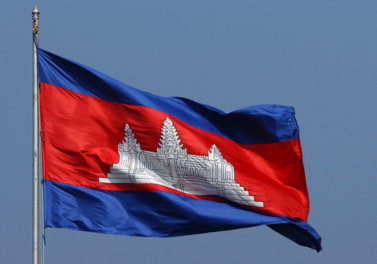
Today, the ICJ and 36 other civil society organizations called on the Government of Cambodia to drop charges against former Radio Free Asia (RFA) journalists Yeang Sothearin and Uon Chhin, who are being tried on spurious charges for multiple offences in connection with carrying out their journalist functions.
This comes after the latest hearing in the case yesterday by the Phnom Penh Municipal Court, where it postponed delivery of its verdict for a second time. The Court has now ordered that the case be returned to a new investigating judge for a reinvestigation.
The case is emblematic of a pattern of instances where journalists, human rights defenders, community activists, members of the political opposition and others have been subjected to intimidation and harassment for exercising their fundamental freedoms through misuse of laws and the judicial system.
The ICJ and other organizations have called for a cessation of this practice and urged the government to comply with their obligations under international law to protect these freedoms.
The trial of the two journalists which concluded on 9 August, had initially been expected to result in a verdict on 30 August, before it was postponed until yesterday’s hearing, when it was again postponed.
“These charges should have never been brought against Yeang Sothearin or Uon Chhin – They were brought with the sole purpose of silencing their work as journalists and chilling other independent voices in the country from speaking,” said Frederick Rawski, ICJ’s Asia and Pacific Regional Director.
The ICJ has stressed that the case against journalists does not comply with Cambodia’s international legal obligations to respect the right to liberty and to a fair trial.
“Given the arbitrary legal bases upon which the journalists have been charged and tried, the prolonging of their case prolongs this harassment and additionally violates their right to be tried without undue delay,” said Rawski.
In November 2017, Yeang Sothearin and Uon Chhin were arrested and detained in Prey Sar prison before they were provisionally charged with “supplying a foreign state with information prejudicial to national defence” under Article 445 of Cambodia’s Criminal Code. In March 2018, they were further charged with alleged production of pornography under Articles 38 and 39 of the Law on the Suppression of Human Trafficking and Sexual Exploitation.
Both men face up to 16 years in prison. They are currently under judicial supervision, following their release on bail after being held in pre-trial detention for more than nine months.
The journalists were arrested following the shutdown of RFA’s Cambodia bureau in the midst of a sharp deterioration in the situation for human rights and the rule of law in Cambodia prior to the 2018 national elections.
In September 2017, in a statement to the UN Human Rights Council, the ICJ had highlighted that civil society, independent media and the political opposition were under sustained attack in a “carefully orchestrated effort to silence dissenting voices in the lead up to national elections” and that laws were “being weaponized to this end”.
In October 2017, the ICJ in a report on the human rights situation similarly warned that the government was “relying on judges and prosecutors who lack independence to silence dissent and dismantle democracy” through “an endemic system of political interference in high-profile cases and an equally entrenched system of corruption in all others”.
Following the national elections, this trend has only worsened.
In August and September 2019, the ICJ and other organizations highlighted the “ongoing human rights crisis” in Cambodia and called for strengthened scrutiny at the Human Rights Council of the human rights situation in the country.
Download
Cambodia-charges against journalist-news-webstory-2019-ENG (full story in PDF)
Link to Joint Statement available here.
Contact
Frederick Rawski, ICJ Asia and Pacific Regional Director, frederick.rawski(a)icj.org

Oct 4, 2019 | Advocacy, News
Reform of the 1959 Defence Services Act is a necessary step to address ongoing military impunity. The case of Ko Par Gyi’s killing should be reopened to satisfy the State’s international law obligations and deter repetition of serious crimes by soldiers.
Five years after the death of journalist Ko Par Gyi, the ICJ calls on the Government of Myanmar to reform the 1959 Defence Services Act, which was used to shield soldiers from accountability for involvement in his killing.
“The case is emblematic of the 1959 Defence Services Act being used to enable impunity for human rights violations by soldiers throughout Myanmar, by transferring to military courts the authority to investigate and prosecute serious crimes against civilians,” said Frederick Rawski, Asia Pacific Region Director for the ICJ.
“Impunity for Ko Par Gyi’s death is another example of this law being used to shield soldiers from accountability for serious crimes,” added Rawski. “Legislators should reform the 1959 law to enable the public criminal prosecution of soldiers for serious crimes in all circumstances, and take other steps to address the accountability gap.”
After being detained by police in Mon State and transferred into military detention on 30 September 2014, Ko Par Gyi died four days later in the custody of Tatmadaw soldiers. Unceremoniously buried in a shallow grave, Ko Par Gyi’s death was hidden from his family and the public for weeks. Nobody has been held accountable for his death and his family lacks access to redress, including their right to know the truth.
A deeply flawed inquiry carried out secretly in military courts, pursuant to the 1959 Act, resulted in the acquittal of the soldiers allegedly involved. This effectively ended other efforts to hold the perpetrators accountable, including through an inquest at the Kyaikmaraw Township Court in Mon State. It also flouted the Myanmar National Human Rights Commission’s recommendation for a police investigation and public criminal trial to be undertaken by civilian authorities.
“Five years on, Myanmar authorities must finally initiate a thorough, independent and impartial investigation into the killing of journalist Ko Par Gyi,” said Sean Bain, legal adviser for the ICJ. “The truth must be established and recognized, and those responsible for his apparently unlawful killing need to be brought to justice in fair trials,” he added.
Several provisions of the 1959 Act are used to facilitate a transfer of cases involving military personnel from civilian to military courts, including for serious crimes against civilians. This has been used as a tool to avoid accountability in cases throughout Myanmar, such as its use to justify the early release of soldiers who were convicted by a military court in the killing of ten Rohingya civilians in Rakhine State in 2017.
International legal standards prohibit the use of military courts to try military personnel for gross human rights violations and crimes under international law. The detention and prosecution of journalists, based solely on their lawful activities undertaken while doing their job, violates the right to freedom of expression, and the rights to seek, receive and impart information and to participate in public affairs.
Myanmar authorities have an obligation to reopen the case of Ko Par Gyi with a view to establishing the circumstances of his death, as with any potentially unlawful killing by either State or non-State actors.
“By empowering civilian courts to oversee such cases, the NLD Government would send a powerful message to all justice sector institutions, including police, prosecutors and judges, that they can and should review potential crimes involving the military with independence and impartiality, in line with the rule of law,” added Bain.
The National League for Democracy (NLD)-led Government has the legislative authority to immediately reform the 1959 Act to align it with international standards. The ICJ has called for reform of this law, including by allowing the prosecution of soldiers for serious crimes to be undertaken under the jurisdiction of civilian courts.
See also:
ICJ, “The investigation and prosecution of potentially unlawful death: ICJ Practitioners’ Guide no. 14,” 14 September 2019, available here.
ICJ, “Achieving Justice for Gross Human Rights Violations in Myanmar – a baseline study,” 16 January 2018, available here.
Contact
Sean Bain, ICJ legal adviser, e: sean.bain(a)icj.org
Full statement with additional information, in English: Myanmar-Ko Par Gyi killing-Press-Releases-2019-ENG (PDF)
Full statement, in Burmese: Myanmar-Ko Par Gyi killing-Press-Releases-2019-BUR (PDF)