Nov 12, 2019 | News
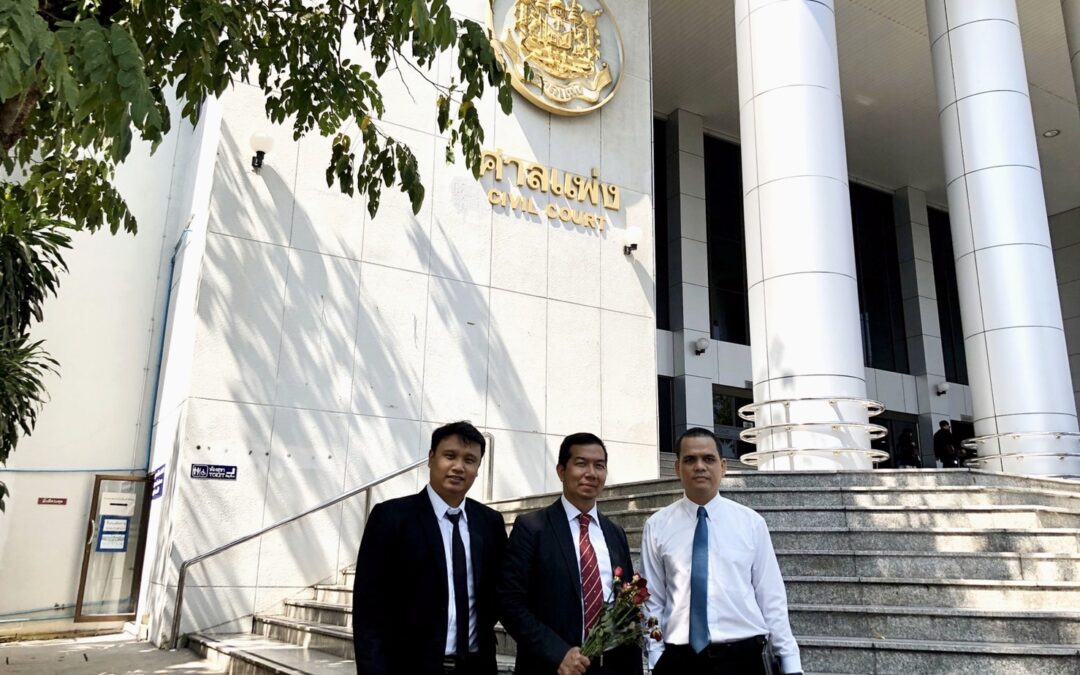
Today, the ICJ condemned the use of civil proceedings to harass Nakorn Chompuchart and Sira Osottham, lawyers representing labour rights researcher Andy Hall.
The ICJ called on Thailand to take measures to protect lawyers so that they can perform their duties without intimidation, harassment or improper interference.
On 12 November 2019, the Bangkok Civil Court conducted its first hearing in a tort case under the Civil and Commercial Code by a Thai fruit processing company, Natural Fruit Company Ltd. (‘the Company’), against the lawyers. The two lawyers represent Andy Hall in several criminal and civil proceedings brought against him seeking damages claimed to have resulted from his research into labour rights abuses allegedly committed by the Company. In the lawsuit against the lawyers, the Company is seeking 50 million Thai baht (approximately 1.65 million USD) as compensation for lost business.
“This legal action is part of a pattern of harassment by Natural Fruit against Andy Hall,” said Frederick Rawski, ICJ Asia Pacific Regional Director. “It is a bedrock principle of the rule of law that lawyers should not be identified with their clients or their clients causes as a result of discharging their function.”
In the complaint, Natural Fruit claims that Andy Hall and his lawyers “excessively exercise their rights”, “intentionally damage the Company’s reputation”, and “caused financial loss in their business” when they brought a case in 2017 against the Company, the Company’s lawyers, and public prosecutor for allegedly “giving false testimony” and “filing false complaint” in other criminal proceedings. The case was dismissed by the Supreme Court who was of the view that the Company exercised its right in good faith.
“This is not the first time in Thailand that lawyers have faced the unwarranted threat of criminal or civil prosecution when representing their clients,” said Rawski. “As with the criminal proceedings brought against Sirikan “June” Charoensiri for her professional activities as a lawyer, such vexatious actions set a precedent that endangers the ability of lawyers to effectively represent their clients. The government must take prompt and effective measures to ensure that the safety and independence of lawyers is guaranteed in law and in practice.”
Background
This case was also initially brought against Andy Hall, but was later withdrawn because the Court could not send court writs to Andy as he does not reside in Thailand.
Criminal and civil proceedings have brought against Andy Hall were in relation to the report of a Finnish NGO, Finnwatch, published in January 2013, called Cheap Has a High Price, which alleged that labour rights violations were taking place at Natural Fruit Company.
Thailand is a party to the International Covenant on Civil and Political Rights (ICCPR). Article 14 of the ICCPR guarantees the right of the clients of the concerned lawyers to an effective defense.
UN Basic Principles on the Role of Lawyers also provides that “governments shall ensure that lawyers are able to perform all of their professional functions without intimidation, hindrance, harassment or improper interference” and “shall not suffer, or be threatened with, prosecution or administrative, economic or other sanctions for any action taken in accordance with recognized professional duties, standards and ethics.” Moreover, lawyers should not be identified with their clients or their clients causes as a result of discharging their function.
To download the statement in Thai, click here. (PDF)
Contact
Frederick Rawski, ICJ Asia-Pacific Director, t: +66 64 478 1121; e: frederick.rawski(a)icj.org
Further reading
Thailand: verdict in Andy Hall case underscores need for defamation to be decriminalized
Thailand: amicus in criminal defamation proceedings against human rights defender Andy Hall
Nov 12, 2019 | Advocacy, News
The Government of Myanmar should adopt constitutional and legislative guarantees to enable the Myanmar National Human Rights Commission (MNHRC) to better protect and promote human rights for all persons in the country, according to a new ICJ briefing note.
Entitled Four Immediately Implementable Reforms to Enhance Myanmar’s National Human Rights Commission, the note analyzes the ability of the MNHRC to address various human rights violations, some of which have been found by experts to constitute the most serious crimes under international law. The briefing is available in Burmese and English.
“The NLD-led government should promptly reform the MNHRC Law, allowing for the selection of better qualified and representative Commissioners, and granting them the independence and resources necessary for their work. This reform is a low-hanging fruit for the NLD, and overdue” said Sean Bain, ICJ Legal Adviser.
“At the same time, Commissioners should robustly pursue their mandate, including by advocating for the rights of society’s most vulnerable people,” he added.
The MNHRC itself has recognized the need for law reform, in its self-assessment of 2018, and in its reform proposals to the Government. Any law reform process should be opened up to genuine public consultation, enabling inputs from experts and the general public.
“The MNHRC generally fails to act on reported human rights violations, from crimes by soldiers in border areas through to regular attacks on the press, rendering it ineffective in providing redress to victims,” said Sean Bain, ICJ Legal Adviser. “The MNHRC’s routine inaction in critical cases demonstrates its lack of the necessary independence to stand against state actors, particularly the military,” he added.
One illustrative case is the Commission’s reluctance to further pursue justice for the death in military custody of journalist Ko Par Gyi, whose killers were secretly tried and acquitted in a military court, despite the MNHRC’s finding that a public criminal prosecution was warranted. Commissioners have also been notably silent on gross human rights violations against Rohingyas, perpetrated by Tatmadaw soldiers in the context of “clearance operations”.
The note highlights that the Commission refrains from investigating alleged human rights violations by referencing Section 37 of the 2014 MNHRC Law. This provision is narrowly construed to effectively preclude the MNHRC from conducting inquiries on matters that are already the subject of a legal proceeding.
The composition of the Commission also does not reflect Myanmar’s ethnic, religious, regional and gender diversity, which further erodes its ability to address the conflict-related violations and abuses particularly prevalent in border areas such as Rakhine, Kachin and Shan states.
While amending problematic provisions in the 2014 MNHRC Law is warranted, a constitutional guarantee would also significantly improve the Commission’s institutional independence.
“A constitutional provision, in contrast to ordinary legislation, is subject to a stricter amendment process that would less likely render the MNHRC politically vulnerable,” said Jenny Domino, ICJ Associate Legal Adviser.
“Myanmar can look to the experience of the national human rights institutions of East Timor and the Philippines, which were established by constitutional provision at a time that both countries were transitioning to a democratic and rule of law based order”,” she added.
Four immediately implementable reforms for the Government of Myanmar are recommended:
- To the Union President and the Selection Board: appoint Commissioners through a transparent and fully consultative process that enables its composition to effectively protect human rights and appropriately reflect the full diversity of the population of Myanmar, including ethnic, religious, regional, gender and sexual identities;
- To the Commissioners: adopt a broad and active interpretation of their mandate, including by taking steps to address the most serious violations, including crimes under international law, and certain human rights cases that have gone before courts;
- To the Myanmar parliament: amend the 2014 MNHRC Law to include provisions that strengthen the MNHRC’s capacity and independence, and improve the appointment process for commissioners
- To the Constitutional Amendment Committee: propose provisions guaranteeing the structural and financial independence of the MNHRC in amending the 2008 Constitution.
To download the press release in Burmese, click here.
Download
Myanmar-MNHRC-Advocacy-Briefing-Note-2019-ENG (in English, PDF)
Myanmar-MNHRC-Advocacy-Briefing-Note-2019-BUR (in Burmese, PDF)
Contact
Jen Domino, ICJ Associate Legal Adviser, e: jenny.domino(a)icj.org, t: 09968134317
Daw Hnin Win Aung, ICJ Legal Adviser, e: hninwin.aung(a)icj.org, t: 09428122794
Related material:
Achieving Justice for Gross Human Rights Violations in Myanmar: Baseline Study
Myanmar: Five years without justice for journalist Ko Par Gyi
Nov 4, 2019 | Advocacy, News
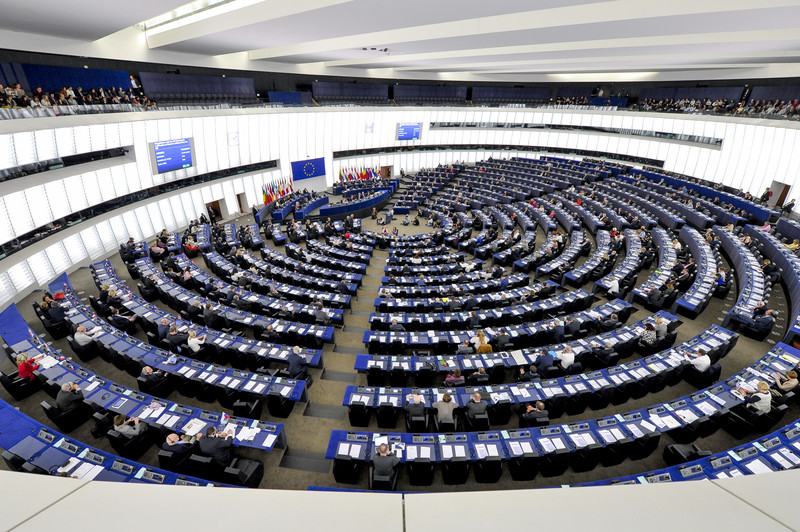
On 4 November, the ICJ and 16 other organizations called on Members of the European Parliament (MEPs) to postpone consent to the EU-Vietnam Free Trade Agreement (EVFTA) and the Investment Protection Agreement (IPA) until the Vietnamese government seriously tackles the deteriorating human rights situation in the country.
The letter was addressed to the President of the European Parliament, Chair of the International Trade Committee, Chair of the Foreign Affairs Committee, Chair of the Human Rights Subcommittee, Chair of the Development Committee and all Members of the European Parliament.
Noting that the Vietnamese government had, in recent years, intensified its crackdown on human rights defenders, members of civil society, religious groups and individuals who express opinions deemed critical of the government, continued to strictly curtail the rights to free expression, opinion, association and assembly, and tightly control the press, civil society and religious groups, the organizations expressed regret that negotiations for the EVFTA and the IPA had not led to more explicit and tangible human rights commitments from the Vietnamese government.
Vietnam currently benefits of unilateral trade preferences through the Generalised Scheme of Preferences (GSP), and the country’s failure to uphold its numerous human rights obligations under the scheme has yet to incur substantial pushback by the EU.
The organizations urged MEPs to ask the European Commission to set up an independent monitoring and complaint mechanism to address the human rights impacts that the EVFTA and IPA may have.
Joint Letter
Frederick Rawski, Director, ICJ Asia and the Pacific, email: Frederick.Rawski(a)icj.org
Nov 3, 2019 | News
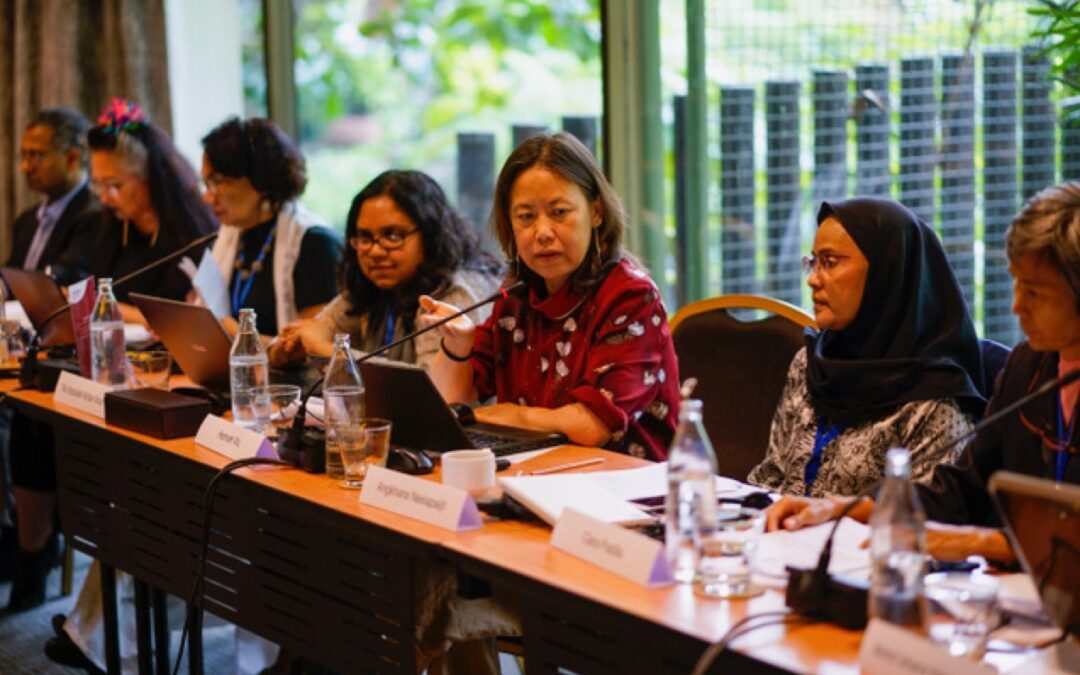
Bangkok, Thailand – From 1 to 2 November 2019, ICJ in collaboration with the UN Office of the High Commissioner for Human Rights (OHCHR) and the Ralph Bunche Institute for International Studies, hosted a consultation on gender and the right to freedom of religion or belief with the UN Special Rapporteur on Freedom of Religion or Belief, Dr. Ahmed Shaheed.
The primary objective of the consultation was to provide a forum for human rights defenders, particularly women and human rights defenders belonging to sexual orientation, gender identity, gender expression and sex characteristics (SOGIESC) minorities to share their perspectives on laws, practices and anti-rights strategies based on religion or belief that discriminate against women and SOGI groups and individuals in Asia. The consultation was attended by at least fifty-two (52) human rights defenders from all over Asia.
Emerlynne Gil, ICJ’s Senior International Legal Adviser, in her opening address, emphasized that gender equality and the right to freedom of religion or belief should not be viewed as inimical to each other. She said, “Women and individuals belonging to sexual orientation and gender identity minorities should also be able to being to a faith or religion of their choice, or religion into which they are born and they should continue to belong to the religion or belief without being discriminated against by the faith or religious community.”
The consultation included discussions on the domestic contexts and legal frameworks in relation to freedom of religion and the rights of women and SOGIESC minorities, including in relation to the right to health. The participants considered challenges faced by women and SOGIESEC minorities when religious leaders act as justice actors were also discussed. The consultation, while highlighting the good practices in advancing the rights of women and SOGIESC minorities, also explored existing challenges and tensions in respect of achieving gender equality.
At the conclusion of the consultation, Dr. Shaheed noted the diversity of the participants in the room, who came from all over Asia. He emphasized that “in order to engage more effectively and strategically, it is imperative that we improve our literacy in relation to the human rights framework and of religion in order to better understand its intersectionality.”
Contact
Sushmitha Thayanandan, National Legal Advisor, Sri Lanka (ICJ) e: sushmitha.thayanandan(a)icj.org
Oct 30, 2019 | News
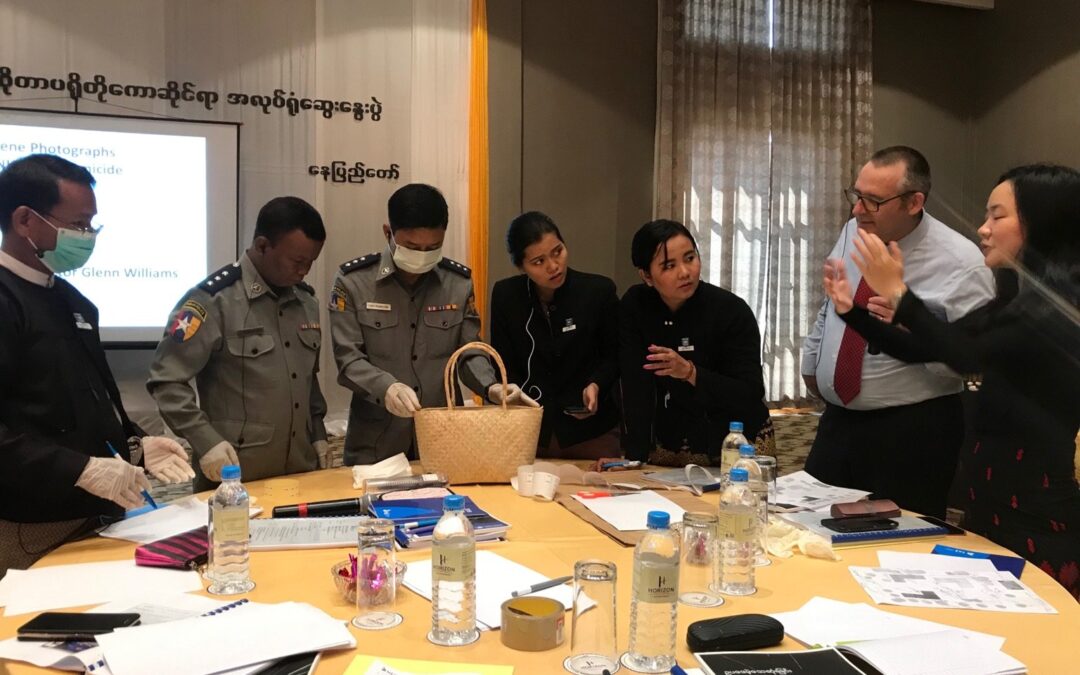
The ICJ hosted a two-day workshop on 28-29 October 2019 in Myanmar’s capital, Nay Pyi Taw. Organized jointly with the Union Attorney General’s Office (UAGO), 15 prosecutors and ten members of the Myanmar Police Force attended this event, entitled “Workshop on the Minnesota Protocol.”
Participants included persons involved in the conduct of criminal investigations, as well as senior members with oversight of their work. The workshop was opened with remarks by His Excellency U Win Myint, Deputy Attorney General of the UAGO, and Sean Bain, Legal Adviser for the ICJ in Myanmar. Both speakers underscored the importance of conducting effective investigations according to international standards.
The Minnesota Protocol provides guidance on the State’s implementation of its duty under international law to effectively, thoroughly and impartially investigate potentially unlawful killings, including when State actors may have been involved. It applies to deaths under custody, suspicious deaths, and suspected cases of enforced disappearance. The workshop takes place in a context in which Myanmar has experienced well documented and widespread incidences of such unlawful killings amounting to serious crimes under international law.
An overview of the international human rights law framework was provided by ICJ Associate Legal Adviser Jenny Domino, highlighting how the conduct of prompt, effective and impartial investigations into unlawful killings is a core component of the State’s obligation to uphold the right to life, binding on all States under international law. ICJ Legal Researcher Ja Seng Ing provided an overview of the contents of the Minnesota Protocol, including a discussion of its 2016 revision to align it with contemporary norms and practices.
Glenn Williams, an experienced international criminal investigator and Detective Inspector (Retired) of the New Zealand Police Force explained how to properly secure a crime scene and chain of custody in order to preserve the integrity of the evidence. Participants applied these skills in a group exercise based on a real-life case from the Solomon Islands. He also presented on the proper conduct of witness interviews, emphasizing the need to frame questions in a manner that would avoid the re-traumatization of victims. Glenn Williams further shared the investigative challenges of dealing with telecommunications evidence from his time at the Special Tribunal for Lebanon.
Dr. Porntip Rojanasunan, a forensic pathologist in Thailand and Member of the Expert Advisory Panel during the Minnesota Protocol revision process, shared her forensic expertise through illustrative cases that she had worked on in Southeast Asia in the past two decades. Dr Porntip stressed the importance of forensic pathology in determining the true cause of death. She also emphasized the importance of conducting an autopsy in potential cases of human rights violations.
The workshop is part of the ICJ’s ongoing promotion of international human rights law and standards globally. In Asia, this has included engagement with Myanmar authorities as well as authorities in neighboring countries.
See also:
Myanmar: ICJ discusses the Minnesota Protocol with prosecutors
ICJ Oral statement in the interactive dialogue with the fact finding mission on Myanmar
Report: Achieving Justice for Gross Human Rights Violations in Myanmar
Related material:
Minnesota Protocol (English)
Minnesota Protocol (unofficial Burmese translation)
Oct 22, 2019 | Advocacy, News
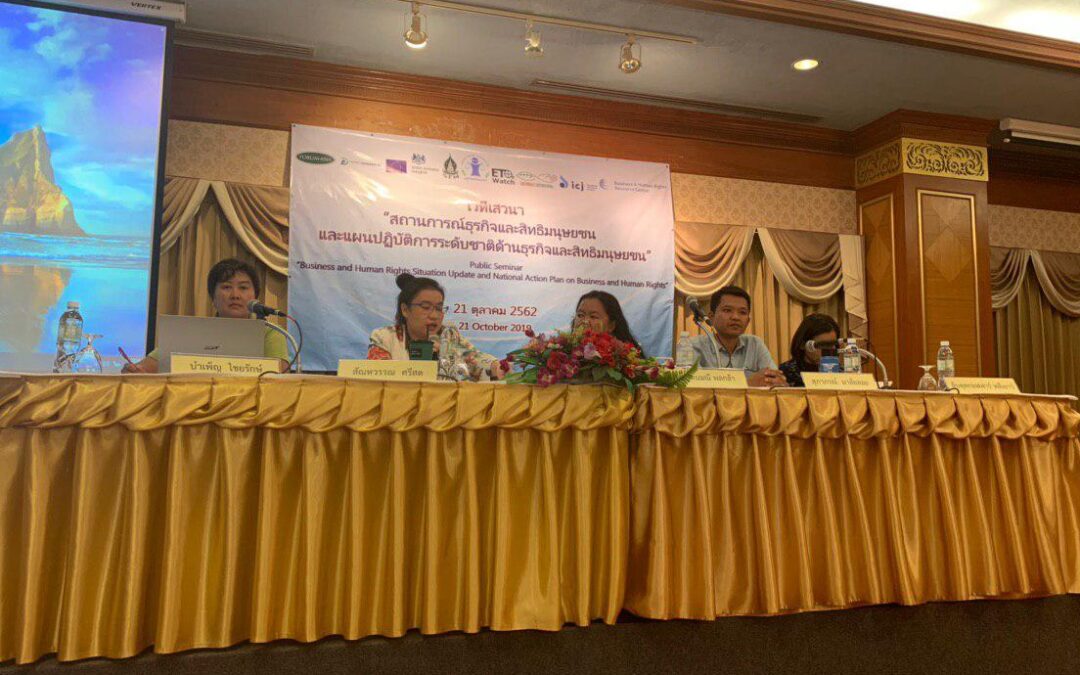
On 21 October 2019, the ICJ co-hosted an event on “Business and Human Rights and Thailand’s National Action Plan on Business and Human Rights” at Mido Hotel in Bangkok.
The discussion surrounded the evolution of business and human rights in Thailand and concerns arising with respect to the National Action Plan on Business and Human Rights (‘NAP’)’s key priority issues.
Notably, on the same day of this event, the NAP was being considered by the Cabinet for approval.
Participants included 37 individuals representing affected populations from all regions of Thailand, members of civil society organizations, and representatives from international organizations.
Sanhawan Srisod, ICJ’s Legal Adviser, spoke at a panel on ‘Land, Environment and Natural Resources’, addressing key concerns arising with respect to environmental laws in Thailand. These included the lack of adequate consultations with affected stakeholders before implementing development projects, inadequate assessment of environmental impacts prior to policy determination, inadequate protections under relevant laws on the environment, problems arising from Environmental Impact Assessment (EIA) and Environmental and Health Impact Assessment (EHIA) processes, and obstacles in accessing remedy for environment-related cases. She also facilitated another panel on judicial harassment of human rights defenders.
Saovanee Kaewjullakarn, ICJ’s Legal Consultant, facilitated a panel on Thai outbound investment and challenges with respect to access to justice for victims of human rights abuses committed by Thai corporations in the context of their business activities abroad.
The event was co-hosted with the Community Resource Centre Foundation (CRC), Spirit in Education Movement (SEM), Thai Extra-Territorial Obligations Working Group (Thai ETOs Watch), EarthRights International (ERI), Asian Forum for Human Rights and Development (FORUM-ASIA), Business and Human Rights Resource Center (BHRRC) and the British Embassy in Thailand.
Background
After the event, on 29 October 2019, the Cabinet approved and adopted the First National Action Plan on Business and Human Rights (2019-2022), making Thailand the first country in Asia to adopt the stand-alone NAP.
The NAP sets out plans to be followed by several public and private stakeholders in order to ensure the state’s and business’s duty to protect and respect human rights, and the general obligation of the State and businesses to provide for access to remedy in the case of business-related human rights violations and abuses. NAP has determined four key priority issues, including (1) Labor; (2) Land, environment and natural resources; (3) Human rights defenders; and (4) Cross border investment and multi-national enterprises.
Subject to these four key priority issues, the NAP emphasizes the duties of the relevant State agencies to, inter alia, review and amend certain laws, regulations and orders that are not in compliance with human rights laws and standards and ensure their full implementation, ensure mechanisms for redress and accountability for damage done to affected communities and individuals, overcome the barriers to meaningful participation of communities and key affected populations, and strengthen the role of businesses to “respect” human rights on a variety of key priority issues.
Its effectiveness in term of implementation is yet to be assessed because the NAP does not have the status of a law, but is merely a resolution from the executive branch. Under Thai law, a Cabinet Resolution is considered a “by-law” in accordance with section 3 of the Act on Establishment of Administrative Courts and Administrative Court Procedure, B.E. 2542 (1999).
In March 2019, the ICJ and Human Rights Lawyers’ Association (HRLA) had also submitted recommendations to the Ministry of Justice on Thailand’s draft NAP and expressed concern on the removal of a commitment that had been included in earlier versions of the NAP to “push for an Anti- Strategic Litigation against Public Participation (SLAPP) law”.
Further reading:
Thailand: ICJ hosts discussion on human rights consequences of Special Investment Zones
Thailand’s Legal Frameworks on Corporate Accountability for Outbound Investments
Thailand: ICJ and HRLA express concern about inadequate protections for human rights defenders in draft National Action Plan on Business and Human Rights