Sep 30, 2019 | Advocacy, News, Publications
The ICJ today published a “Strategic Litigation Handbook for Myanmar.” In this, the ICJ seeks to offer an accessible, concise and substantial overview of the conceptual basis and purpose of strategic litigation.
The Handbook shows the potential impacts of strategic litigation in Myanmar, by drawing on experiences from Myanmar and other countries, while recognizing the related challenges and opportunities, as expressed by legal professionals and civil society actors. It is intended to be useful to all legal practitioners and community activists in Myanmar.
While there is no universal definition or conception of ‘strategic litigation,’ the term is typically used to describe litigation whereby the interests may go beyond those of the primary litigants. The various adjudication processes it entails are sometimes referred to as ‘public interest litigation’, ‘impact litigation’, ‘test case litigation’, or ‘community lawyering’. What they all have in common is the idea that courts and the law can be used as part of a campaign to achieve broader change in relation to matters seen to be in the broader public interest.
Part one of the Handbook explores core aspects of strategic litigation, including its origins, key concepts, potential impacts, challenges and forums. In part two, areas of law are identified which offer potential options for strategic litigation actions, including procedures, legislation and constitutional writs. Practical steps for the planning and application of strategic litigation, such as media strategy and case selection, are outlined in part three. Finally, part four of the Handbook discusses related challenges in the Myanmar context, including a discussion of requisite reforms required in the justice sector more broadly.
The Handbook (first edition) is published in Burmese and English.

Sep 27, 2019 | News
ICJ today denounced the promulgation of the Khyber Pakhtunkhwa Actions (In Aid of Civil Power) Ordinance, 2019, by the Governor of the Khyber Pakhtunkhwa province on 5 August 2019.
The ICJ said that implementation of the Ordinance will lead to serious human rights violations and miscarriages of justice, contrary to the purported aims of the measures.
“The Ordinance is yet another example of Pakistan’s resort to ‘exceptional’ measures that are grossly incompatible with human rights protections, ostensibly to combat terrorism and other serious crime,” said Frederick Rawski, ICJ’s Asia Director.
“Pakistan must reject this dangerous, oppressive, and counter productive strategy and instead strengthen its judicial process and law enforcement in line with its domestic law and international human rights law obligations,” he added.
The Ordinance gives sweeping powers to members of the armed forces, including the power to detain people without charge or trial on a number of vaguely defined grounds where it appears that such “internment” would be expedient for peace. Individuals may be detained for an unspecified period without any right to be brought before a court of law or to challenge the lawfulness of detention before a court.
In addition to the vague and overbroad detention provisions, the Ordinance provides that statements or depositions by members of the armed forces shall on their own be sufficient for convicting the detainees if they are tried for any offence.
The Ordinance also provides wide immunity for armed forces for any action done, taken, ordered to be taken, or conferred, assumed or exercised by, before or after the promulgation of the Ordinance.
The Ordinance is incompatible with “fundamental rights” guaranteed by the Constitution of Pakistan, as well as Pakistan’s international legal obligations, including under the International Covenant on Civil and Political Rights (ICCPR), the ICJ said.
Article 9(4) of the ICCPR, for example, guarantees the right of all detainees to take proceedings before a court to challenge the lawfulness of their detention, and to be released if the court finds such detention unlawful.
The President of Pakistan passed similar regulations, namely, the Actions (In Aid of Civil Power) Regulations in 2011, which were applicable in the former Federally Administered Tribal Areas (FATA) and the Provincially Administered Tribal Areas (PATA). The Actions (in Aid of Civil Power) Regulations were extensively used as a legal cover for arbitrary detention and enforced disappearances.
In their review of Pakistan’s implementation of the ICCPR and the Convention against Torture (CAT), the UN Human Rights Committee and the UN Committee against Torture in 2017 expressed concern about the Regulations, and recommended that Pakistan “review the Actions (in aid of Civil Power) Regulation, 2011 with a view to repealing it or bringing it into conformity with international standards.”
“It is regrettable that not only did Pakistan flout these express recommendations of the UN Committees, but that it extended the scope of the regulations,” added Rawski.
“This step also calls into question Pakistan’s pledge for election to the UN Human Rights Council in 2017, where Pakistan ‘firmly resolved to uphold, promote and safeguard universal human rights and fundamental freedoms for all’,” Rawski said.
ICJ urges the Pakistan Government to immediately revoke the Khyber Pakhtunkhwa Actions (In Aid of Civil Power) Ordinance, and to review all national security legislation to ensure it is fully compatible with international human rights law and standards.
Contact
Frederick Rawski (Bangkok), ICJ Asia Pacific Regional Director, e: frederick.rawski(a)icj.org
Reema Omer, ICJ Legal Advisor (South Asia) t: +447889565691; e: reema.omer(a)icj.org
–
Full statement, with additional information: Pakistan-Khyber Pakhtunkhwa Actions Ordinance-Press releases-2019-ENG (PDF)
Sep 16, 2019 | Advocacy, News
Antonio Guterres should publicly condemn China’s widespread violations of the rights of its Muslim minority citizens, especially in Xinjiang Province, the ICJ demanded in a joint letter submitted along with Amnesty International, the International Federation for Human Rights (FIDH), Human Rights Watch, and the World Uyghur Congress.
The joint letter urged the UN Secretary-General to call for an end to widespread arbitrary detention of Muslim and minority communities through the immediate closure of Xinjiang’s ‘political education’ camps. Reports by the United Nations and human rights organizations have estimated that more than one million Muslims have been interned in extra-legal ‘political education’ detention camps.
“In the past few years, China’s violations in Xinjiang, including arbitrary detention, ill-treatment, pervasive surveillance and political indoctrination of Turkic Muslims, have intensified, and continue to worsen,” said Sam Zarifi, ICJ’s Secretary General.
“Quiet diplomacy has not worked. Mr. Guterres must exercise the full extent and power of his mandate as leader of the United Nations to demand and ensure protection of the rights of everyone in China, including all individuals in Xinjiang.”
The joint letter urged the UN Secretary-General to publicly support the creation of a UN fact-finding mission to assess the scale and nature of crimes under international law and human rights violations in Xinjiang. It further called on the UN Secretary-General to refrain from unqualified praise of China’s ‘Belt and Road’ Initiative – an investment initiative in which Xinjiang is a centerpiece – and to meet with representatives from the Uyghur community to hear first-hand of their plight.
“China has exerted immense and often inappropriate political pressure on individuals, governments and organizations criticizing its human rights violations,” said Zarifi. “The United Nations must push back against China’s political pressure and provide principled and steadfast leadership to end China’s political and cultural repression, and ongoing human rights violations in Xinjiang.”
Public criticism of China’s actions in Xinjiang has been growing. In August 2018, a member of the UN Committee on the Elimination of Racial Discrimination noted that China’s treatment of its Muslim minority citizens in Xinjiang had turned the region into a “‘no rights’ zone” with individuals being treated as “enemies of the State based on nothing more than their ethno-religious identity”. In March 2019, the UN High Commissioner for Human Rights, Michelle Bachelet, highlighted the need for her office to gain full access to facilitate independent and impartial investigation into ‘wide patterns of enforced disappearances and arbitrary detentions’ in the region. On 10 July 2019, 25 countries issued a joint statement calling on China to refrain from subjecting Uyghurs and other Muslim and minority communities in Xinjiang to arbitrary detention, surveillance and restrictions on freedom of movement.
Sep 10, 2019 | News
ICJ expressed concern over the decision given on 27 August 2019 by the Malaysian High Court that a fatwa issued against the women’s organization, Sisters in Islam, should be referred to the Syariah Court.
The High Court used as a basis Article 121 (1A) of the Federal Constitution, which states that secular courts do not have jurisdiction over matters pertaining to Islam.
The ICJ called on the Malaysian authorities to ensure that custom, tradition, and religion should not be used as a justification to undermine human rights, including women’s human rights.
In 2014, the Selangor Fatwa Council issued a fatwa declaring the Sisters in Islam a “deviant organization.” For many years, Sisters in Islam has been promoting more egalitarian interpretations of Islamic laws with the aim of ending discrimination against women and achieving equality in the Muslim family.
“For women to fully exercise their religious freedom, they must be able to retain or adopt the religion of their choice, and they must be able to continue belonging to this religion without being discriminated against within the religion,” said Emerlynne Gil, ICJ’s Senior International Legal Adviser.
The ICJ stressed that under international law, States have an obligation to protect people who are prevented from exercising their religious freedom by private actors, such as their own religious communities.
“The Malaysian government, including the judiciary, has the obligation to protect groups like Sisters in Islam when they face persecution from within their religious communities for propounding alternative views about their religion,” said Emerlynne Gil.
Furthermore, the ICJ had previously underscored in a 2019 briefing paper on the challenges to Freedom of Religion or Belief in Malaysia, the tensions emerging from jurisdictional disputes between civil courts, which apply federal and state laws, and Syariah courts, which apply Islamic laws.
In 2018, the UN Committee on the Elimination of Discrimination against Women, in reviewing the performance of Malaysia, voiced its own concern over “the existence of a parallel legal system of civil law and multiple versions of Syariah law, which have not been harmonized in accordance with the Convention on the Elimination of All Forms of Discrimination Against Women (CEDAW).” The CEDAW Committee concluded that this “leads to a gap in the protection of women against discrimination, including on the basis of their religion.
Contact:
Emerlynne Gil, Senior International Legal Advisor, ICJ, e: emerlynne.gil(a)icj.org
Sep 8, 2019 | News
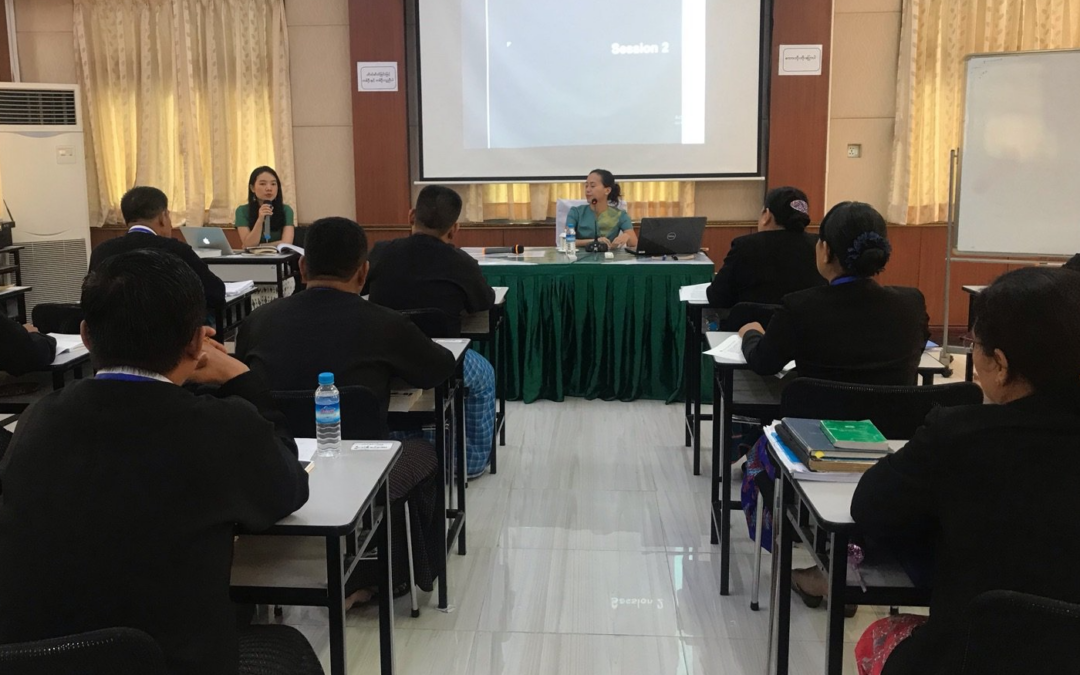
At a training event for senior prosecutors hosted by the Union Attorney General’s Office (UAGO) on 7 September 2019 in Yangon, Nay Pyi Taw, the ICJ made presentations on the international standards and legal obligation on unlawful killings.
Representing each of Myanmar’s 14 states and regions, some 30 law officers attended the activity, which was a capacity-building training hosted by the UAGO. This is part of the ICJ’s ongoing engagement with authorities in Myanmar as well as in neighboring countries on the Minnesota Protocol on the investigation of potentially unlawful death (the Minnesota Protocol).
The Minnesota Protocol provides guidance on the State’s implementation of its duty under international law to investigate potentially unlawful killings, including when State actors may have been involved. It applies to deaths under custody, suspicious deaths, and enforced disappearances. Myanmar has experienced widespread incidents of such deaths, including in recent years those constituting serious crimes under international law.
ICJ Associate Legal Adviser, Jenny Domino, introduced salient points of the Minnesota Protocol and shared relevant examples from experience promoting and protecting human rights in the Philippines. She highlighted the significance of the State’s duty to investigate potentially unlawful killings in upholding the right to life under international human rights law.
ICJ Legal Researcher, Ja Seng Ing, shared the case of Laotian activist Sombath Somphone, who was subjected to enforced disappearance on 15 December 2012 with the apparent consent or acquiescence of State agents. To date, Laotian authorities have failed to conduct effective investigations with a view to revealing the fate or whereabouts of Somphone. ICJ has repeatedly called for accountability on the issue.
Participants discussed these cases in relation to the comparative remedies and practical challenges related to the conduct of investigations in Myanmar, where police and prosecutors both have roles to play in the conduct of investigations.
First published in 1991 and subsequently revised in 2016 under the auspices of the United Nations Office of the High Commissioner for Human Rights, the Minnesota Protocol includes guidelines on conducting investigations to ensure that they are prompt; effective and thorough; impartial and independent; and transparent.
Since December 2017, the ICJ has co-hosted several regional workshops in Asia focused on this topic, with lawyers, academics, and State authorities from Thailand, Cambodia, Nepal, India, and Myanmar attending the events.
See also:
https://www.icj.org/thailand-launch-of-the-revised-minnesota-protocol/
https://www.icj.org/myanmar-reverse-laws-and-practices-that-perpetuate-military-impunity-new-icj-report/
Sep 6, 2019 | News
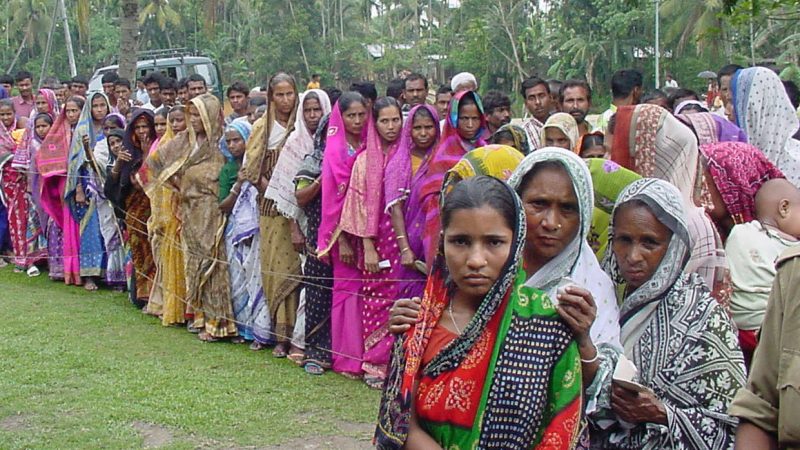
The ICJ, along with 124 other international and domestic civil society groups from around the world have condemned the actions of Indian government in publishing an incomplete and discriminatory Assam National Register of Citizens (NRC) on 31 August, 2019.
The NRC excludes some 1.9 million people – nearly 6 percent of the population of Assam – thereby rendering them at risk of statelessness. The statement points to violations of rights to equality and non-discrimination, as the process has disproportionately affected Muslims of Bengali descent, undocumented women and children as well as other minorities.
The groups call on India to take measures to redress the situation in a non- discriminatory and non-arbitrary manner, with full regard to due process rights and a commitment to protect the right to a nationality and to avoid statelessness of all long-term residents and their children.
Arbitrary deprivation of nationality is a human rights violation, which undermines the enjoyment of the human rights of those affected and their ability to participate fully in society. International law prohibits the arbitrary deprivation of nationality and obliges States to avoid statelessness, while guaranteeing the right of every child to acquire and preserve their nationality and to be protected from statelessness.
In 2015, the Assam state government, pursuant to a Supreme Court decision, announced it would initiate a process of updating the NRC, requiring every person in Assam who recognized themselves as an Indian citizen, to submit proof of their ancestry (or birth) in the country pre-dating 1971, the year that Bangladesh was formed. The act of requiring individuals to prove their citizenship by providing documentary evidence dating back over 50 years, and excluding applicants on the basis of their inability to fulfill this evidentiary burden, has led to arbitrary deprivation of nationality, contrary to Article 15 of the Universal Declaration of Human Rights.
Further, poor birth registration rates, despite an obligation under Article 7 of the Convention of the Rights of the Child to immediately register every birth has denied numerous applicants of a critical piece of evidence to establish their citizenship. Similarly, many people who possessed the required documents, have nonetheless been penalized due to administrative errors.
Despite repeated calls to action by UN human rights authorities, India has refused to reverse the process and other States have done little to press the Indian government to reverse course.
Those excluded from the list must appeal within 120 days to Foreigners Tribunals (FT), a quasi-judicial institution mandated to determine citizenship. In essence, this implies that the government already considers those excluded from the NRC to be foreigners, and not Indian citizens.
Find the full statement, endorsed by the ICJ and 124 other international and domestic civil society groups from around the world here: https://files.institutesi.org/cso-joint-statement-on-assam-nrc.pdf
Contact:
Maitreyi Gupta (Delhi), ICJ International Legal Adviser for India, t: +91 7756028369 e: maitreyi.gupta(a)icj.org
Frederick Rawski, ICJ Asia-Pacific Director, t: +66 64 478 1121; e: frederick.rawski(a)icj.org