Jul 24, 2018 | Events, News
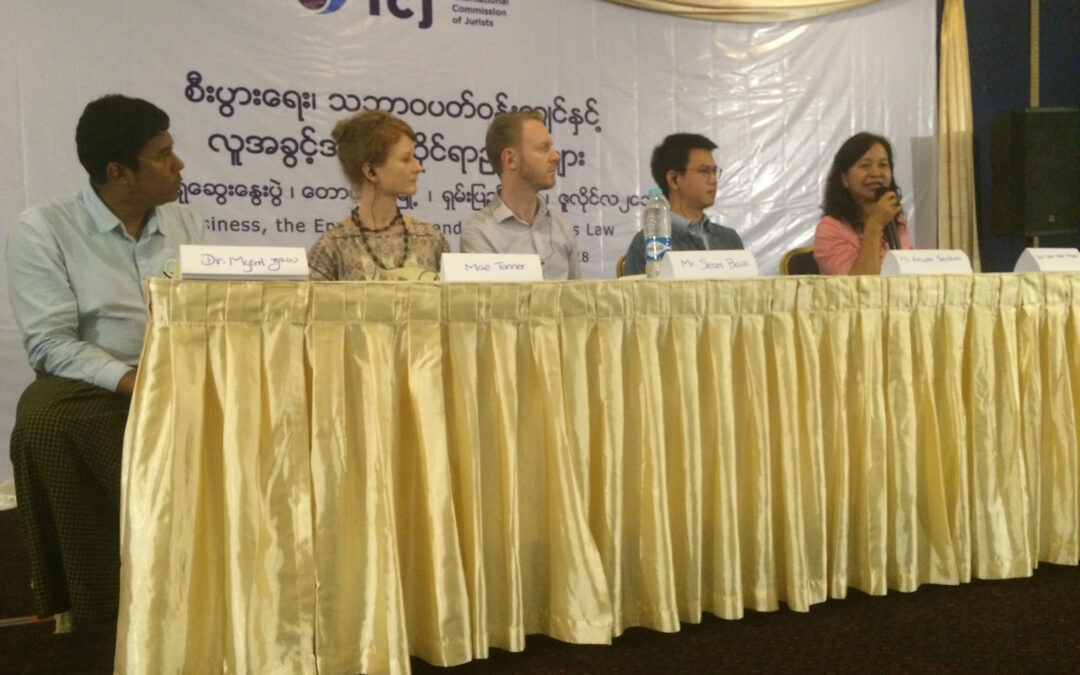
On 22 and 23 July the ICJ convened a workshop on Business, the Environment and Human Rights Law in Taunggyi, the capital of Myanmar’s Shan State.
This followed meetings between the ICJ’s legal advisers and the Shan State High Court and also with the State Advocate General on 13 July, to discuss rule of law developments.
The workshop aimed to identify ways to address the impacts of business activities on human rights and the environment, through legal advocacy including strategic litigation, and to provide a forum for cooperation and experience sharing among participants.
More than 50 lawyers, parliamentarians, human rights defenders and civil society representatives attended from Shan, Kayah and Mon states – provinces that together border Thailand, Laos and China.
An overview of the investment context was provided by Dr Myint Zaw of Paung Ku Myanmar, who also shared lessons from environmental activism in Myanmar.
As well as highlighting weaknesses in domestic law and policy, he presented concerns around lack of transparency and information sharing between the legislature and executive branches of government.
Australian lawyer and ICJ consultant Mae Tanner gave an overview of international human rights law and standards relevant to business activities and environmental protection, particularly emphasizing the obligations assumed by Myanmar in ratifying the International Covenant on Economic, Social and Cultural Rights.
She offered insights as to how UN mechanisms can be used by civil society to advance their advocacy on business and human rights in Myanmar.
Senior Advocate U Myint Thwin drew on his extensive litigation experience to share perspectives on the complex and confusing array of land laws in Myanmar and emphasized the importance of legal knowledge and training to combat corruption and achieve accountability.
The ICJ’s legal adviser Mr Sean Bain outlined the domestic laws relevant to investment and environmental protection in Myanmar and highlighted some key provisions that offer protection against human rights violations and abuses.
He noted the government’s stated aim of promoting the rule of law in Myanmar and emphasized the importance of demanding accountability, transparency and justice in this context.
Amarin Saichan, lawyer with Thai NGO EnLAW, shared experiences of pursuing strategic litigation to address unlawful and harmful business activities in Thailand, stressing the need for creativity in using the law to seek justice and accountability.
He also raised concerns around the use by government of strategic litigation against public participation in Thailand and explained how Thai lawyers are using the courts to guarantee the right protest against harmful development projects.
Participants had the opportunity to discuss how the strategies they shared could be used in the context of issues faced by their communities.
These included human rights and environmental concerns raised by energy and extractive projects, restrictions on shifting agriculture, and violations of the right to freedom of expression and assembly faced by communities who oppose state-backed developments.
They considered advocacy strategies for four case studies selected by participants from across Shan, Kayah and Mon states.
Throughout the workshop speakers and participants highlighted the importance of cooperation between civil society and lawyers, and the need to use Myanmar’s legal system more proactively as part of their broader advocacy strategies.
This workshop is part of the ICJ’s ongoing support to lawyers and civil society in Myanmar.
Jul 15, 2018 | News
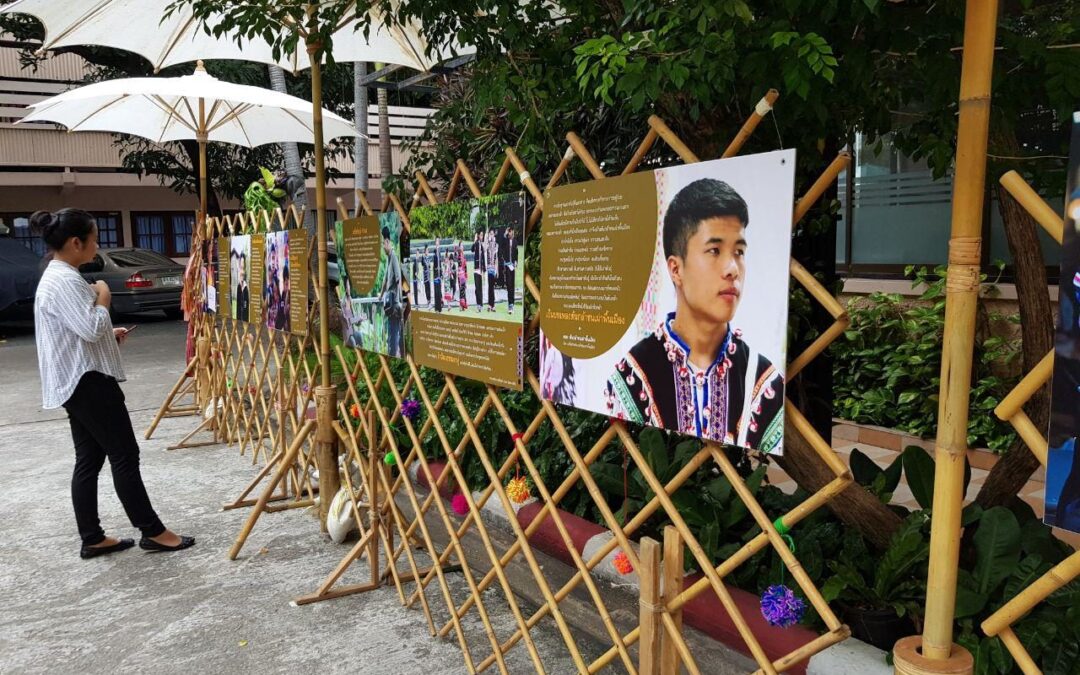
On 14 July 2018, the ICJ co-organized a discussion on extrajudicial killings in Thailand, focusing on the cases of Chaiyaphum Pasae and Abe Saemu.
The discussion was held at the Student Christian Centre in Bangkok.
Chaiyaphum Pasae, a Lahu youth activist, was killed by a military officer in the Chiang Dao district of Thailand’s northern Chiang Mai province in March 2017. The killing took place during an attempt to arrest him as an alleged drug suspect. Officials claimed Chaiyaphum Pasae had resisted arrest and was subsequently shot in “an act of self-defence”.
Abe Saemu, from the Lisu hill tribe, was killed by a military officer in February 2017 in the Chiang Dao district of Chiang Mai province in an attempt to arrest him on allegations of drug coffences. Officials claimed Abe Saemu had resisted arrest and was killed in “self-defence”.
During the discussion, ICJ’s National Legal Adviser Sanhawan Srisod addressed the audience to set out the international law and standards that apply to investigating potentially unlawful deaths, including the rights of victims and family members, referring to the standards set out in the revised Minnesota Protocol on the Investigation of Potentially Unlawful Death (2016), which was launched in Thailand on 25 May 2017.
Participants in the event included members of the families of Chaiyaphum Pasae and Abe Saemu, the lawyers in both of their cases, interested members of the public, media representatives, students and academics.
The discussion opened with an art exhibition and Lahu dance show by the Save Lahu group. Human Rights Commissioner Angkhana Neelapaijit then made a presentation on challenges in seeking accountability for extrajudicial killings in Thailand.
A panel discussion on the latest updates in the cases of Chaiyaphum Pasae and Abe Saemu followed, moderated by Pranom Somwong from Protection International.
The panel included relatives of Chaiyaphum Pasae and Abe Saemu; Ratsada Manuratsada, a lawyer representing the families in both cases and Krissada Ngamsiljamras, a representative from the National Human Rights Commission of Thailand.
A second panel considered challenges on the administration of criminal justice in the context of unlawful deaths.
Moderated by Pratubjit Neelapaijit of UN Office of the High Commissioner for Human Rights, the panel included Malee Sittikreangkrai (Chiang Mai University); Sumitchai Hattasan (Human Rights Lawyers’ Association); Namtae Meeboonsalang (Provincial Chief Public Prosecutor, Office of the Attorney-General); Kritin Meewutsom (Forensic doctor, Ranong Hospital); and Sanhawan Srisod (ICJ).
The event was conducted in collaboration with Cross Cultural Foundation (CrCF); Protection International (PI); UN OHCHR; Human Rights Lawyers’ Association (HRLA); Thai Volunteer Services (TVS); Dinsorsee Creative Group; Center for Ethnic Studies and Development, Chiang Mai University (CESD); Legal Research and Development Center, Chiang Mai University (LRDC) and Network of Indigenous Peoples in Thailand (NIPT).
Contact
Kingsley Abbott, Senior Legal Adviser, ICJ Asia Pacific Regional Office, kingsley.abbott(a)icj.org

Jul 13, 2018 | News
The Sri Lankan Government should reconsider and reverse its decision to bring back the death penalty for drug related offences, the ICJ said today.
On 10 July, the Sri Lankan Cabinet unanimously approved an action plan to implement the death penalty for “drug smugglers”.
According to the spokesperson of the Cabinet, 19 people convicted for “large scale drug offences” who “are still involved in drug trafficking…from within prisons” would initially be those initially designated for execution.
Sri Lanka has had a moratorium on the death penalty for over four decades.
The last execution carried out in the country was in 1976.
“The resumption of executions of convicted drug offenders would constitute a violation of the right to life under international law,” said Ian Seiderman, ICJ’s Legal and Policy Director.
”And, based on experience around the globe, it will not in any way serve the purported objective of tackling the problems of drug-related crime in Sri Lanka,” he added.
Article 6 of the International Covenant on Civil and Political Rights (ICCPR), which Sri Lanka acceded to in 1980, guarantees the right to life and requires that states that have not yet abolished the death penalty must restrict capital punishment to only the “most serious crimes”.
The UN Human Rights Committee, the supervisory body for the ICCPR, considers that the death penalty may never be used for drug offences.
The extraordinarily retrograde measure of resuming executions following a 42-year moratorium would also constitute a violation of article 6, which contemplates at least progressive movement towards abolition.
The UN General Assembly has repeatedly adopted resolutions emphasizing that that the use of the death penalty undermines human dignity and calling on those countries that maintain the death penalty to establish a moratorium on its use with a view to its abolition.
In 2016, an overwhelming majority of 117 UN Member States – including Sri Lanka – voted in favor of a worldwide moratorium on executions as a step towards abolition of the death penalty.
“At least 150 countries have now either abolished the death penalty in law or practice,” added Seiderman.
The ICJ considers the death penalty to be a violation to the right to life and the right not to be subjected to cruel, inhuman or degrading punishment.
The ICJ urges Sri Lanka to reinstate its moratorium on executions and take steps towards taking all necessary measures to abolish the death penalty.
Contact:
Ian Seiderman, ICJ’s Legal and Policy Director, email: ian.seiderman(a)icj.org
Reema Omer, ICJ’s International Legal Advisor, South Asia, email: reema.omer(a)icj.org
Jul 10, 2018 | News
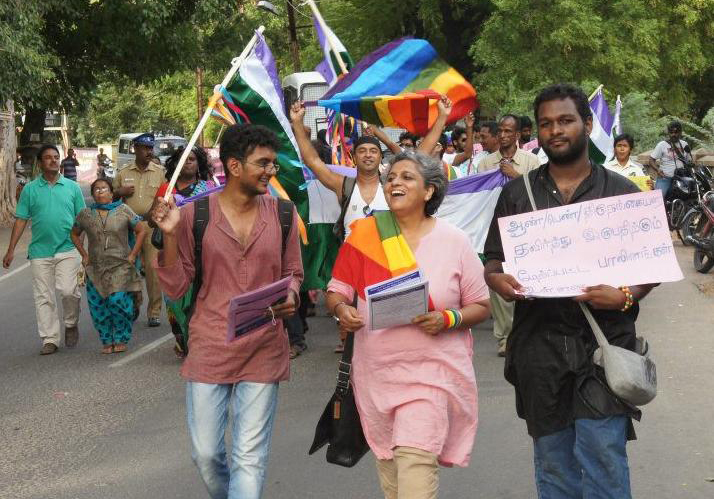
The SC is set to reconsider the criminalization of consensual same-sex relationships between adults, in response to a writ petition with significant ramifications for addressing the full range of human rights violations based on sexual orientation or gender identity in India said the ICJ.
The Indian Supreme Court commenced hearing the case, Navtej Singh Johar v. Union of India, which is joined with five connected cases, today, concerning the constitutional validity of the criminalization of consensual same-sex relations between adults under Section 377 of the Indian Penal Code in response to writ petitions filed by several LGBTI individuals.
Section 377 criminalizes “carnal intercourse against the order of nature”. Section 377 is a relic of the British colonial penal code and is replicated in several former British colonies even though it was it was finally repealed in Northern Ireland in 1982, following repeals in Scotland in 1980 and England and Wales in 1967.
“Hopefully, the Indian Supreme Court will follow and build upon the strong precedent set by the Delhi High Court in the Naz Foundation v. Govt. of NCT of Delhi that declared Section 377 and the criminalization of consensual same-sex relationships to be in violation of the Indian Constitution as well as international law in 2009,” said Sam Zarifi, ICJ’s Secretary General.
“There are real grounds for optimism as the Indian Supreme court as recently as August 2017 handed a landmark judgment in Justice K.S. Puttaswamy and Another v. Union of India and Others that declared the right to determine one’s sexual orientation and gender identity as core to the right of privacy,” he added
The ICJ has documented how section 377 has created a climate in which arbitrary arrest, extortion, harassment and blackmail of LGBTI persons in India thrives.
“The Indian judiciary’s decision to read down section 377 in Naz Foundation v. Govt. of NCT of Delhi, which was then overruled by the Supreme Court, has been used by several other jurisdictions, such as Trinidad and Tobago as support for putting an end to criminalization of same-sex relationships. So the outcome of this petition before the Indian Supreme Court is of significance not just to people in India, but to the fight against discrimination around the world,” Zarifi said.
“But even a good decision by the Indian Supreme Court will not end the discrimination against people on the basis of their sexual orientation or gender identity in India. It’s time for the Indian Parliament to repeal section 377 in its entirety and engage in a wide-ranging review to consider which gaps, if any, need to be filled, for example with respect to acts constituting rape or other sexual offences,” he added.
Contact:
Maitreyi Gupta (Delhi), International Legal Adviser for India, t: +91 7756028369 ; e: maitreyi.gupta(a)icj.org
India-Supreme Court and Section377-News-press release-2018-ENG (full story with additional information, in PDF)
Jul 9, 2018 | News
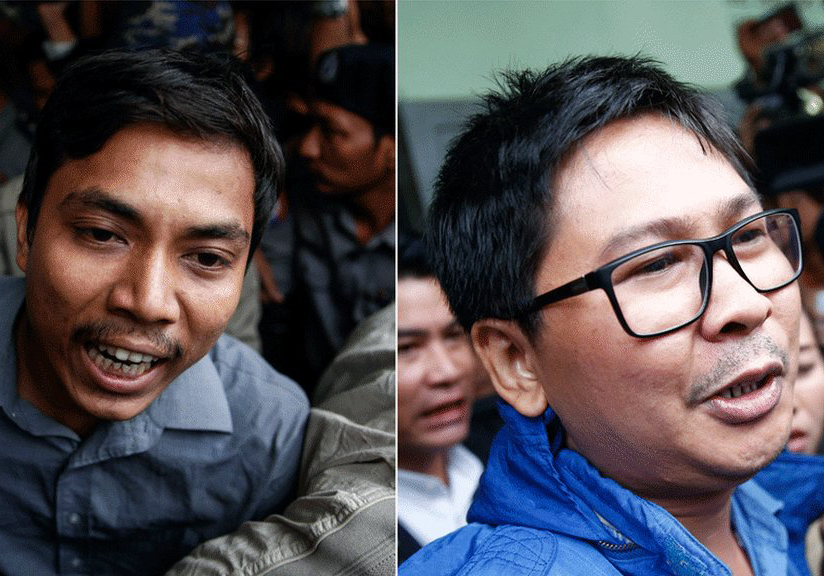
Today the ICJ called on Myanmar’s prosecutorial authorities to immediately end the prosecution of Reuters journalists Wa Lone and Kyaw Soe Oo.
The two have been subject to prosecution solely for doing their job as journalists and for exposing human rights violations in Rakhine State, including unlawful killings in Inn Dinn Village admitted to by the military.
In Yangon this morning a Northern District Court Judge accepted charges filed under the 1923 Official Secrets Act.
This decision permits ongoing prosecution of the journalists and extends their detention.
“The prosecution has failed to provide credible evidence of any wrongdoing throughout six months of hearings. It is therefore hard to imagine a valid legal rationale for allowing ongoing prosecution of the journalists,” said Mr Sean Bain, legal adviser for the ICJ in Yangon.
Section 253(1) of Myanmar’s Code of Criminal Procedure requires a judge to dismiss charges against accused persons if the evidence presented fails to warrant a conviction.
A motion for charges to be dismissed on this basis, submitted by defense lawyers, was effectively rejected by the decision today.
“Today’s decision raises real concerns about the independence and impartiality of the judiciary and prosecution when confronted with politically sensitive cases,” Bain said.
“The case significantly undermines the government’s stated commitments to reforming and building public confidence in judicial process,” he added.
ICJ legal advisers have monitored the case and were present in Court today. The journalists were first detained on 12 December 2017 and had no access to legal representation for almost two weeks.
“The case is also emblematic of the lack of adherence to fair trial rights in Myanmar,” Bain said.
“Their confinement remains unlawful given an initial period of incommunicado detention without access to lawyers, and other flagrant violations of the fair trial rights guaranteed in the Constitution, statues and international law.”
“Authorities should immediately end criminal proceedings against these men who appear to have been lawfully doing their job as investigative journalists,” he added.
The detention and prosecution of anyone, including journalists, based solely on the collection and publication of evidence relevant to serious human rights violations, is inconsistent with international law and standards on freedom of expression and on human rights defenders.
Article 14 of the 1990 UN Guidelines on the Role of Prosecutors states that prosecutors are obliged to discontinue prosecution when the investigation shows the charges to be unfounded.
Myanmar’s new Code of Ethics for Law Officers, launched in 2017, requires prosecutors to protect rights enshrined in the Constitution and to “provide a proper and fair administration of justice.”
The right to legal counsel is a bedrock rule of law principle that is set out in a range of international human rights laws and standards, including in article 11 of the Universal Declaration of Human Rights. Sections 19 and 375 of the Myanmar Constitution guarantee the right of legal defense, as does Myanmar’s Code of Criminal Procedure (section 340), Courts Manual (section 455(1)), the Police Manual (section 1198c) and the Prisons Act (section 40).
Fair trial rights, freedom of expression, and the right to liberty are also recognised by the Universal Declaration of Human Rights.
Also relevant are the UN Declaration on Human Rights Defenders, and the Global Principles on National Security and the Right to Information (The Tshwane Principles).
Contact:
Sean Bain, ICJ legal adviser, e: sean.bain(a)icj.org
Read also:
ICJ (May 2016), Handbook on Habeas Corpus in Myanmar – English and Burmese
ICJ (December 2017), Reuters Journalists in Myanmar: respect their rights, end their incommunicado detention – English and Burmese
Full text in Burmese (PDF): Myanmar-drop-charges-against-Reuters-journalists-News-Press-releases-2018-BUR
Jul 9, 2018 | News
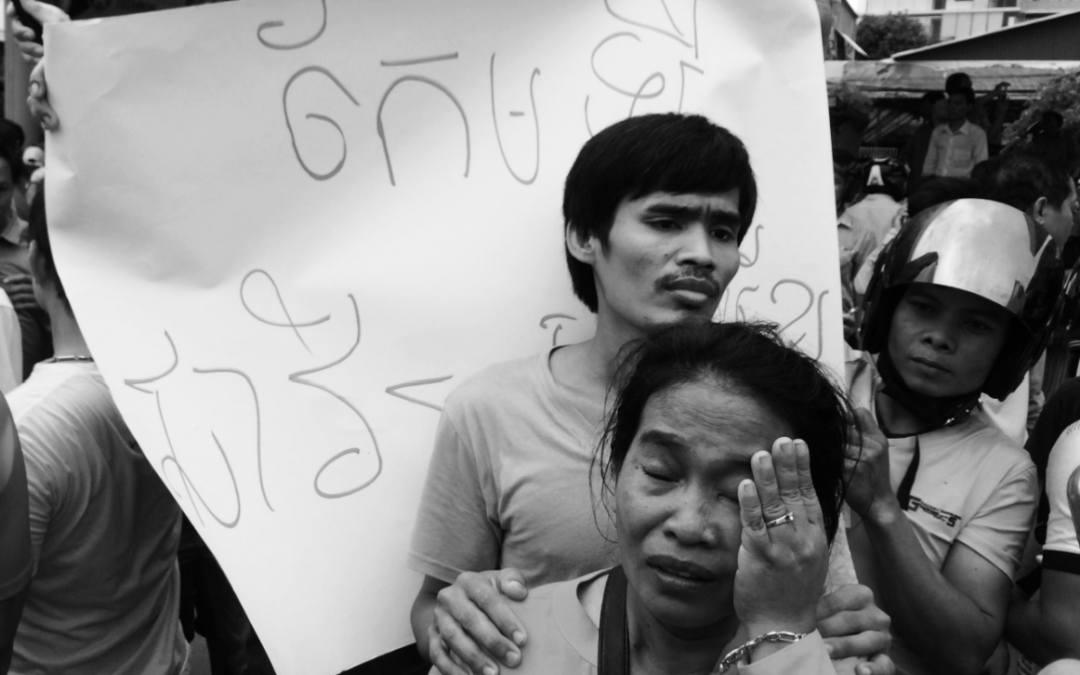
Today, in advance of the second anniversary of the killing of political commentator and human rights defender, Kem Ley, the ICJ reiterates its call for the creation of a independent and impartial Commission of Inquiry to investigate his killing.
The ICJ remains deeply concerned at the apparent lack of progress in investigating the case, as well as the inadequacy of the investigation and prosecution of Oeuth Ang, the only person yet charged or convicted in relation to Kem Ley’s killing.
“The trial of Oeuth Ang left many unanswered questions about the investigation and the killing itself which Cambodia has an duty to resolve as part of the family and public’s right to know the truth,” said Kingsley Abbott, Senior Legal Adviser at the ICJ, who attended the trial.
“The fact that the killing occurred against the backdrop of escalating attacks against human rights defenders and the political opposition and in the context of a history of well-documented apparent extra-judicial killings makes the establishment of an independent and impartial Commission of Inquiry all the more pressing.”
On 7 July 2017, ahead of the one-year anniversary of Kem Ley’s killing, the ICJ and other organizations released a joint letter highlighting crucial concerns about the lack of progress in the investigation of his case, and calling on the Cambodian Government to establish a Commission of Inquiry to carry out an independent, impartial, effective and transparent investigation in line with international law and standards.
These include the International Covenant on Civil and Political Rights and the revised Minnesota Protocol on the Investigation of Potentially Unlawful Death (2016).
Background
At approximately 08:30 on 10 July 2016, Kem Ley, a prominent political commentator and human rights defender, was shot and killed at a petrol station on Monivong Boulevard in Phnom Penh.
Soon afterwards, Cambodian police arrested a suspect approximately two kilometers from the crime scene. The suspect identified himself as “Chuob Samlab”, from Banteay Meanchey province. “Chuob Samlab” means “Meet to Kill” in Khmer.
In a leaked video, “Chuob Samlab” reportedly “confessed” to shooting Kem Ley over a debt the political commentator allegedly owed him – a fact reportedly disputed by Kem Ley’s widow and “Chuob Samlab”’s own wife.
“Chuob Samlab” was later identified as Oeuth Ang from Siam Reap province, according to identity records.
On 23 March 2017, the Phnom Penh Municipal Court found Oeuth Ang guilty of the premeditated murder of Kem Ley on 10 July 2016 and sentenced him to life imprisonment.
The ICJ observed the trial which took place on 1 March 2017, following which it identified eight significant gaps in the investigation which had not been adequately addressed at trial.
Following the verdict, Oeuth Ang’s lawyer told journalists the court had created a new case-file to investigate two men named Pou Lis and Chak who may be relevant to the killing of Kem Ley.
Very little information has been revealed publicly about these possible new case-files.
Oeuth Ang appealed his sentence and, on 4 May 2018, the Court of Appeal reportedly heard the appeal.
There are no reports yet of a judgment being delivered.
Pursuant to international law binding on Cambodia, including the International Covenant on Civil and Political Rights (ICCPR) to which Cambodia is a State Party, Cambodia has a duty to promptly, independently, impartially, and effectively investigate all deaths suspected of being unlawful.
Investigations must seek to identify not only direct perpetrators but also all others who may have been responsible for criminal conduct in connection with the death.
Principle 11 of the UN Principles on the Effective Prevention and Investigation of Extralegal, Arbitrary and Summary Executions calls for the establishment of a Commission of Inquiry when ‘the established investigative procedures are inadequate because of lack of expertise or impartiality, because of the importance of the matter or because of the apparent existence of a pattern of abuse, and in cases where there are complaints from the family of the victim about these inadequacies.’
Read also
ICJ et al, ‘Cambodia: request to create a commission of inquiry into the killing of Kem Ley’
ICJ, HRW, Amnesty International, ‘Cambodia: Significant Questions Remain After Guilty Verdict in Kem Ley Trial’
ICJ, ‘Cambodia: Kem Ley’s killing demands immediate credible and impartial investigation’
Contact
Kingsley Abbott, ICJ Senior Legal Adviser, e: kingsley.abbott(a)icj.org