Mar 27, 2018 | News
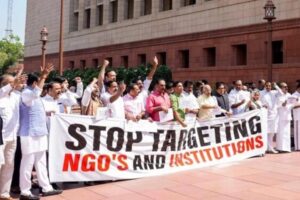
The ICJ and Suara Rakyat Malaysia (SUARAM) today urged Malaysia’s Parliament not to pass the Anti-Fake News Bill 2018.
The two organizations are concerned that the bill will unduly limit freedom of opinion or expression in Malaysia, and could be used to suppress legitimate criticism of the government.
“The bill is flawed in its design and will be open to abuse by the Malaysian government which maintains a poor track record in upholding freedom of expression,” said Sevan Doraisamy, SUARAM’s Executive Director.
“The term ‘fake news’ is in itself problematic. It is defined in an overbroad manner in the draft law, and therefore vulnerable to arbitrary interpretation and enforcement,” said Emerlynne Gil, ICJ’s Senior International Legal Adviser.
“Given past experience in Malaysia, it is highly likely to be used to suppress legitimate criticism of the government on matters of opinion or where the facts are contested,” she added.
The right to freedom of opinion and expression is guaranteed by the Federal Constitution of Malaysia, as well as the Universal Declaration of Human Rights.
The bill makes no provision for exceptions or defences such as honest mistake, parody, artistic merit, or public interest. The bill would allow up to ten years imprisonment.
“The penalties are wildly disproportionate,” said Gil. “Indeed, under international standards, imprisonment is never an appropriate penalty for such offences.”
On 3 March 2017, the UN Special Rapporteur on Freedom of Opinion and Expression, together with his counterparts from the Organization for Security and Cooperation in Europe (OSCE), the Organization of American States (OAS), and the African Commission on Human and People’s Rights (ACHPR), issued a joint declaration on ‘fake news’, disinformation, and propaganda.
The joint declaration emphasized that “the human right to impart information and ideas is not limited to ‘correct’ statements, that the right to also protects information and ideas that may shock, offend and disturb.”
It also said that “general prohibitions on the dissemination of information based on vague and ambiguous ideas, including ‘false news’ or ‘non-objective information’ are incompatible with international standards for restrictions on freedom of expression.”
The ICJ and SUARAM also note that the timing and the lack of transparent consultation on how it was developed raise concerns about the government’s motivation behind the introduction of this bill.
The bill has been introduced during the final days of Parliament sitting and is expected to be voted on within this week, leaving little time for deliberation or consultation.
“Allowing this bill to be passed would only serve as an affront to democratic values. It will be another strike on Malaysia’s already shoddy human rights record,” Doraisamy said.
“Adopting a law that would unduly limit the right to freedom of opinion and expression is not the optimal way to counter disinformation and propaganda,” said Gil.
“The best way is to disseminate accurate information and to make such information accessible to everyone,” she added.
The ICJ and SUARAM strongly urge the Malaysian parliament not to pass the Anti-Fake News Bill 2018 and uphold the right to freedom of opinion and expression in the country.
Contact
Emerlynne Gil, Senior International Legal Adviser for Southeast Asia of ICJ, t: + 662 619 8477 (ext. 206) ; e: emerlynne.gil@icj.org
Background
The Anti-Fake News Bill 2018 has been tabled for first reading at the Malaysian Parliament on 26 March 2018 and may be voted on this week or early next week.
The bill defines ‘fake news’, without any defences or exceptions, as including “any news, information, data and reports” which are “wholly or partly false”.
Furthermore, the bill states that ‘fake news’ may be “in the form of features, visuals or audio recordings or in any other form capable of suggesting words or ideas.”
If passed, any person may be subject to a penalty of up to ten (10) years imprisonment and/or a fine amounting to MYR 500,000 (approximately USD 127,681) if convicted of knowingly creating, offering, publishing, printing, distributing, circulating, or disseminating any ‘fake news’ or publication of ‘fake news’.
The bill also seeks to penalize both Malaysians and foreigners alike, even if they are outside of Malaysia, as long as the fake news concerns Malaysia or a Malaysian citizen.
Mar 27, 2018 | Advocacy, News
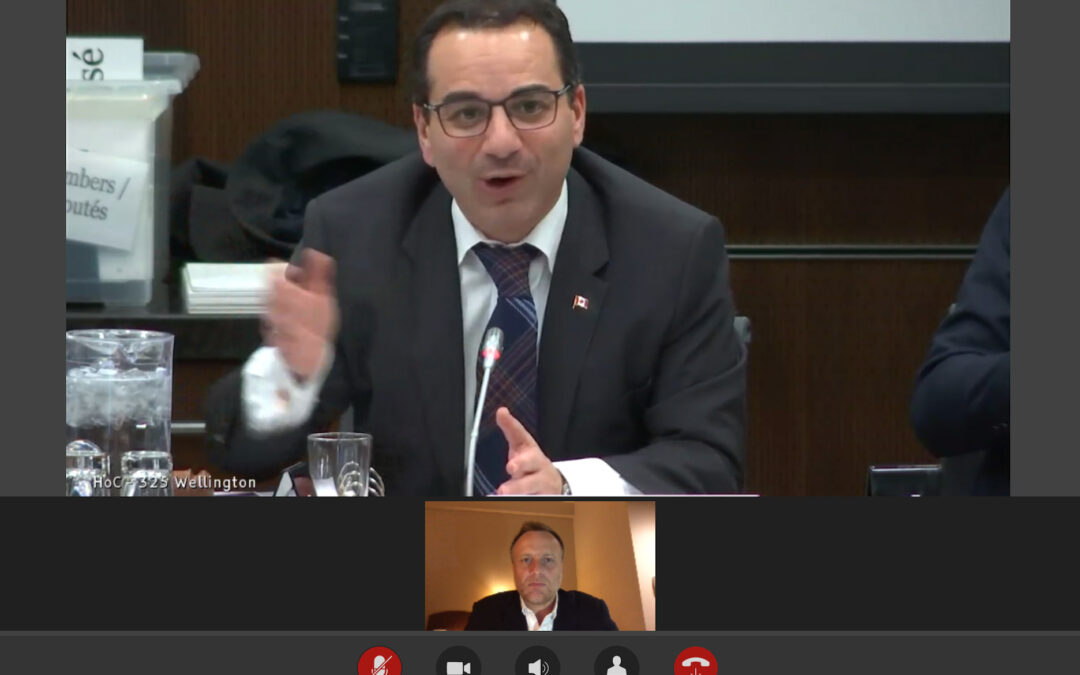
Today, the ICJ testified before the Canadian House of Commons Subcommittee on International Human Rights on the human rights and rule of law crisis in Cambodia.
Kingsley Abbott, ICJ Senior International Legal Adviser, addressed the Subcommittee on two key issues:
- The misuse of the law in Cambodia under the pretext of the “Rule of Law”; and
- The lack of an independent and impartial judiciary.
Other witnesses were former members of the Cambodian Parliament for the main opposition party, the CNRP, before its dissolution in November 2017, Mu Sochua and Kong Sophea.
Kingsley Abbott also requested that the ICJ’s October 2017 Baseline Study on the state of the rule of law and human rights in Cambodia be added to the record.
Contact:
Kingsley Abbott, ICJ Senior International Legal Adviser for Southeast Asia, e: kingsley.abbott(a)icj.org
Thailand-SDIR-Statement-ABBOTT-Advocacy-2018-ENG (Full opening statement ENG, PDF)
Mar 16, 2018 | News
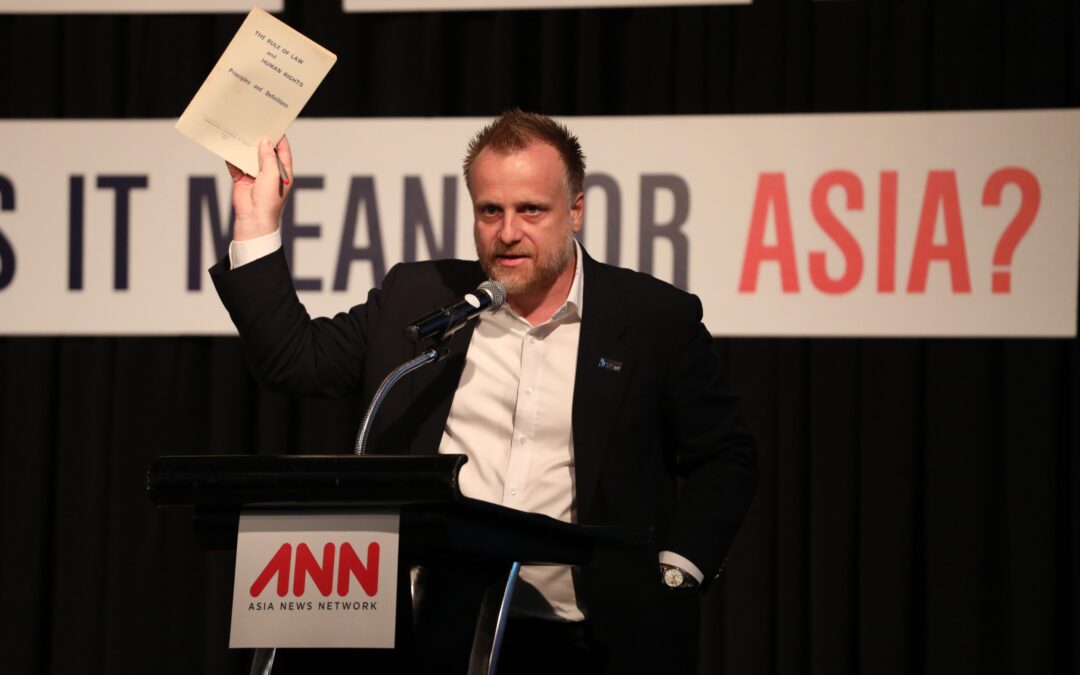
Today, Kingsley Abbott, ICJ’s Senior International Legal Adviser, gave the keynote address on the human rights and rule of law situation in Asia at the Asia News Network’s (ANN) international symposium on upcoming elections in Asia.
The event, held at a hotel in Bangkok, Thailand, was attended by nearly 300 diplomats, business leaders, academics and members of civil society.
ANN is an alliance of 24 leading media in 20 Asian countries.
The full speech can be downloaded here:
Asia-ANN Speech-News-web story-2018-ENG

Mar 15, 2018 | News
The ICJ called on the Government of Singapore to halt the impending execution of Hishamrudin bin Mohd, and take immediate steps to impose a moratorium on executions, with a view towards the abolition of the death penalty in the near future.
Hishamrudin bin Mohd, a Singaporean national, was sentenced to death in 2016, under mandatory sentencing laws, after being convicted of possessing drugs for the purpose of trafficking.
His execution is scheduled to take place on 16 March 2018.
The ICJ opposes the death penalty in all circumstances as a denial of the right to life and a form of cruel, inhuman and degrading punishment.
“Singapore, as this year’s Chair of the Association of Southeast Asian Nations, must use this opportunity to lead the way in the region in recognizing that the death penalty is inherently incompatible with human dignity and a violation of human rights,” Sam Zarifi, ICJ Secretary General said.
“Singapore should set an example to other ASEAN Member States in upholding the rule of law and protecting human rights,” he added.
Furthermore, the ICJ expressed serious concern that Singapore still applies the mandatory death penalty, including for drug offenses which, according to international standards does not the meet the threshold of “most serious crimes” to which the death penalty must be confined.
“States that have not yet abolished the death penalty should never apply them for drug offenses nor make them automatic,” Zarifi said.
The UN Special Rapporteurs on extrajudicial, summary or arbitrary executions have stated that under no circumstances should death penalty be mandatory.
International human rights law is undermined when mandatory death penalty is imposed since sentencing must reflect assessment of the factors in each case to ensure that the defendant’s human rights and the narrow limits on the use of death penalty have been respected.
The ICJ notes that the UN General Assembly has adopted repeated resolutions with the support of the overwhelming majority of States, most recently in December 2016 calling for an international moratorium on the use of death penalty with a view to abolition.
Presently, some 170 States around the world have either abolished the death penalty or put a moratorium to its use.
The UN Secretary General Antonio Guterres emphasized that “the death penalty has no place in the 21st century.”
Contact
Emerlynne Gil, Senior International Legal Adviser for Southeast Asia, t: +662 619 8477 (ext. 206); e: emerlynne.gil(a)icj.org
Background
Hishamrudin bin Mohd, a Singaporean national, was found guilty of possessing 34.94 grams of diamorphine, allegedly for the purpose of trafficking. His appeal was rejected on 3 July 2017 and his execution was scheduled on 16 March 2018.
The ICJ received information that Hishamrudin bin Mohd filed a last-minute application for judicial review on 12 March 2018 and a closed-door hearing was set on 14 March 2018. However, on 15 March 2018, the Court of Appeal denied his appeal.
Mar 14, 2018 | News
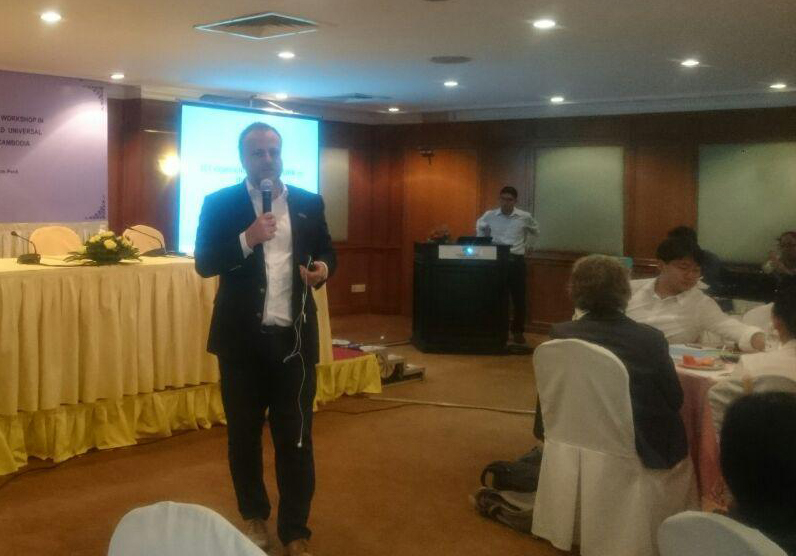
On 12 and 13 March 2018, the ICJ participated in and presented at a workshop for Cambodian civil society on the Universal Periodic Review (UPR).
The workshop was organized by the Cambodian Center for Human Rights (CCHR), UPR Info and the Cambodia Country Office of the United Nations Office of the High Commissioner for Human Rights (OHCHR).
This workshop aimed to prepare participants ahead of the deadline for civil society submissions to the UPR in July 2018.
The Royal Government of Cambodia (RGC) will undergo the third cycle of its UPR in January 2019.
The objectives of the workshop were to:
- 1. Introduce the UPR to newcomers, identifying where the UPR fits within the UN’s human rights framework and demonstrating how civil society organizations (CSOs) can utilize the UPR to further their human rights objectives;
- 2. Share experiences of national stakeholders in the UPR process and discuss developments since the second cycle and priorities for the third cycle;
- 3. Learn from the experiences of CSOs in the region on developing UPR CSO submissions;
- 4. Provide technical training regarding the drafting of UPR CSO submissions;
- 5. Establish thematic groups to begin developing joint submissions and establish a timeline for the drafting process.
On 12 March 2018, Kingsley Abbott, Senior International Legal Adviser for Southeast Asia for the ICJ, delivered a presentation on submissions drafting and advocacy techniques for the UPR and also spoke about the experiences of CSOs in Thailand in developing UPR CSO submissions.
Contact
Kingsley Abbott, ICJ Senior International Legal Adviser for Southeast Asia, e: kingsley.abbott(a)icj.org
Mar 13, 2018 | News
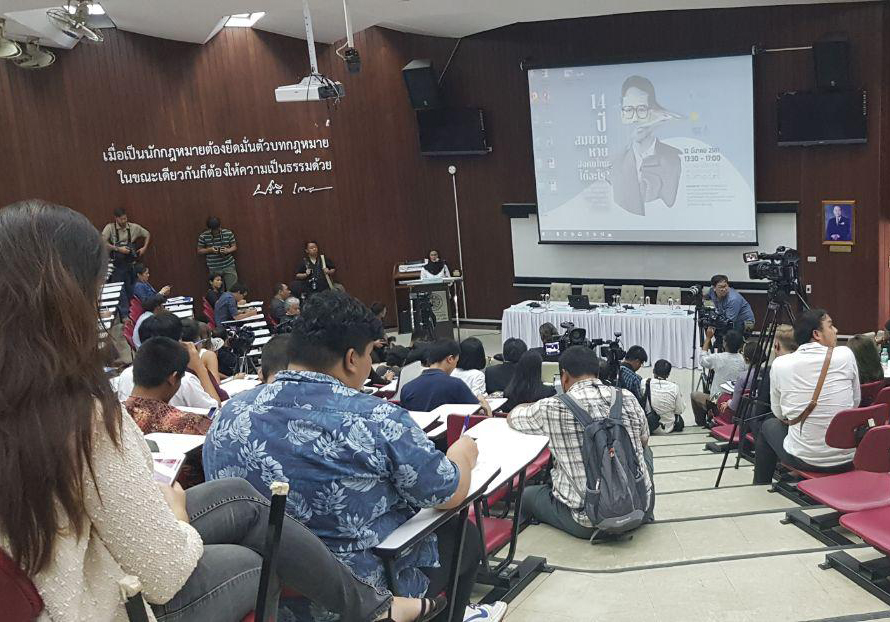
On 12 March 2018, the ICJ co-hosted the forum “14 Years after Somchai’s Disappearance, What Have We Learned?” to commemorate the 14th anniversary of the enforced disappearance of prominent lawyer and human rights defender Somchai Neelapaijit.
The forum was held at the Faculty of Law in Thammasat University’s Tha Pra Chan campus.
More than 80 participants attended the event, including alleged torture victims, family victims of torture and enforced disappearance, students, lecturers, lawyers, civil society organizations, diplomats, members of the Thai authorities and media.
The objectives of the forum were to (i) mark the 14th anniversary of the enforced disappearance of Somchai Neelapaijit and the lack of progress in the investigation (ii) raise awareness and discuss the latest amendments to the Draft Prevention and Suppression of Torture and Enforced Disappearances Act (‘Draft Act’) and its deficiencies; and (iii) discuss the newly constituted Committee managing complaints of torture and enforced disappearance, which was established by the Prime Minister on 23 May 2017.
Opening remarks were delivered by Angkhana Neelapaijit, wife of Somchai Neelapaijit, and Laurent Meillan, OHCHR’s Deputy Regional Representative.
Sanhawan Srisod, the ICJ’s National Legal Advisor, spoke during the first panel discussion on recent amendments to the Draft Act, which was moderated by Poonsuk Poonsukcharoen from Thai Lawyers for Human Rights (TLHR) and also included the following panelists:
- Nongporn Rungpetchwong, Human Rights Expert, Rights and Liberties Protection Department, Ministry of Justice
- Assistant Professor Dr. Ronnakorn Bunmee, Faculty of Law, Thammasat University
- Somchai Homlaor, Lawyer and Senior Advisor to Cross Cultural Foundation (CrCF)
The second panel discussion on the roles and duties of the Committee Managing Complaints for Torture and Enforced Disappearance Cases was moderated by. Yingcheep Atchanont from Internet Law Reform Dialogue (iLaw) and included the following speakers:
- Manunpan Rattanacharoen, Office of Foreign Affairs and International Crimes, Department of Special Investigation (DSI), Ministry of Justice
- Professor Narong Jaihan, Chair, Sub-committee on Prevention of Torture and Enforced Disappearance Cases
- Angkhana Neelapaijit, Family of “disappeared” person
- Isma-ae Tae, Alleged victim of torture and ill-treatment
During the event, the ICJ also highlighted its open letter to Thailand’s Minister of Justice, dated 12 March 2018, on the recent amendments to the Draft Act, which sets out concerns that the recent amendments would, if adopted, fail to bring the law into compliance with Thailand’s international human rights obligations.
The forum was co-organized with the Neelapaijit family, Thammasart University’s Faculty of Law, Amnesty International Thailand, Cross Cultural Foundation (CrCF), together with the United Nations’ Office of the High Commissioner for Human Rights (OHCHR) Regional Office for South East Asia.
Read also
ICJ and Amnesty International, Open letter to Thailand’s Minister of Justice on the amendments to the Draft Prevention and Suppression of Torture and Enforced Disappearances Act, 12 March 2018
English
Thai
ICJ and Thai Lawyers for Human Rights, Joint submission to the UN Committee against Torture, 29 January 2018
ICJ and Amnesty International, Recommendations to Thailand’s Ministry of Justice on the Draft Prevention and Suppression of Torture and Enforced Disappearances Act, 23 November 2017
To mark the 10-year anniversary of Somchai Neelapaijit’s ‘disappearance’, the ICJ released a report documenting the tortuous legal history of the case, Ten Years Without Truth: Somchai Neelapaijit and Enforced Disappearances in Thailand, 7 March 2014
Contact
Kingsley Abbott, ICJ Senior International Legal Adviser for Southeast Asia, e: kingsley.abbott(a)icj.org
Thailand-Amendments-to-Prevention-and-Suppression-of-Torture-2018-ENG (Full text in ENG, PDF)
Thailand-Amendments-to-Prevention-Suppression-of-Torture-2018-THA (Full text in THA, PDF)