Feb 6, 2018 | News
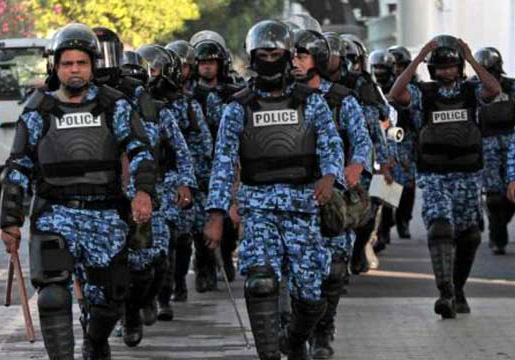
The ICJ today condemned the Maldivian Government’s assault on the Supreme Court and its judges and the suspension of human rights protections under the state of emergency.
“President Yameen and his Government have dealt a grave blow to the rule of law and independence of the judiciary in the Maldives,” said Ian Seiderman, ICJ’s Legal and Policy Director.
“The actions by the government are a wildly unjustifiable and disproportionate response to the decision of the Supreme Court”, he added.
On 5 February, the Maldivian Government declared a 15-day state of emergency under Article 253 of the Constitution, suspending a range of human rights protections.
The declaration of emergency followed a Supreme Court judgment on 1 February that ordered the release of at least nine members of opposition parties, who were in detention on a number of charges.
The Government, however, refused to implement the Supreme Court’s judgment, which resulted in the outbreak of protests in the country.
The national defense forces also reportedly entered the premises of the Supreme Court and arrested at least two senior judges, including Chief Justice Abdulla Saeed.
“Summarily suspending basic rights protections and arresting judges whose decisions the President disagrees with is itself a display of sweeping lawlessness in the country,” Seiderman said.
According to the President’s office, the state of emergency was imposed because the Supreme Court order resulted in “disruption of the functions of the executive power, disruption of the functions of the state institutions…and infringement of national security and public interest.”
According to an unofficial translation of the emergency decree received by the ICJ, the constitutionally and internationally protected rights that have been suspended in part or in full during the state of emergency include, among others, the right to liberty; the right to freedom of assembly; the right to privacy; and the right to obtain remedy from the courts.
Basic safeguards surrounding arrest, detention, search and seizures have also been suspended.
In addition, laws providing certain immunities to judges and the right of judges to be informed if any action is taken against them have also been suspended.
“The complete suspension of constitutional protections for human rights such as the right to liberty and right to free assembly goes far beyond anything that could be justified by the alleged grounds cited by the government,” Seiderman added.
The ICJ notes that international law strictly regulates attempts by governments to suspend or otherwise derogate from human rights on the grounds of emergency.
The International Covenant on Civil and Political Rights (ICCPR), to which the Maldives is a State Party, expressly permits derogations only for certain human rights, and then only ‘in time of public emergency which threatens the life of the nation’.
Measures of derogation may only be taken to the extent necessary to meet a specific threat to the life of the nation.
“Maldivian authorities have not even come close to explaining how the current situation constitutes a threat to the ‘life of the nation’, the high threshold set by international law for the derogation of rights in times of emergency,” Seiderman said.
The ICJ urges the Government to immediately lift the state of emergency, release judges of the Supreme Court, implement the ruling of the Supreme Court and ensure the independence of the judiciary.
Contact
Ian Seiderman, ICJ Legal and Policy Director, T: +41 22 979 38 37 ; e: ian.seiderman@icj.org
Reema Omer, ICJ International Legal Adviser for South Asia (London), t: +447889565691; e: reema.omer@icj.org
Additional information
Under international standards, including the UN Basic Principles on the Independence of the Judiciary, it is the duty of all governmental and other institutions to respect and observe the independence of the judiciary.
This means that there shall not be any inappropriate or unwarranted interference with the judicial process and judges shall be free to decide cases without any restrictions, pressures, threats or interferences.
In August 2015, following a joint fact-finding mission to the Maldives, the ICJ and South Asians for Human Rights (SAHR) documented the breakdown of the rule of law and human rights in the Maldives in a 35-page report, Justice Adrift: Rule of Law and the Political Crisis in the Maldives.
Feb 2, 2018 | News
Cambodia should halt efforts to radically limit the right to freedom of expression through adoption of lèse-majesté legislation which would criminalize the exercise of some expression, said the ICJ today.
The Spokesperson for the Cambodian Council of Ministers, Phay Siphan, reportedly announced on Facebook today that the Council of Ministers had approved an amendment to the Cambodian Criminal Code which would make it a crime to insult the Cambodian King, carrying a penalty of one to five years imprisonment and/or a fine of two million Riel (USD 500) to ten million Riel (USD 2,500).
“The Cabinet’s approval of a lèse-majesté law appears to be a further attempt by the Government to ‘weaponize’ the country’s legislation against its perceived opponents,” said Kingsley Abbott, ICJ’s Senior International Legal Adviser.
“The Government’s ongoing misuse of the law is particularly concerning given the lack of independent and impartial judges to provide appropriate checks and balances on its power,” he added.
The ICJ has previously raised concerns about abuses arising from the lèse-majesté law in neighboring Thailand to curb freedom of expression.
Exercises of expression which are critical to a democratic society under the rule of law, including commenting on public policy and political questions, are sometimes stifled and punished under these laws.
The right to freedom of expression is protected under international law and should never be subject to criminal penalties, let alone imprisonment, which is a manifestly disproportionate penalty for the exercise of the fundamental right to free expression, the ICJ said.
Contact
Kingsley Abbott, Senior International Legal Adviser, ICJ Asia Pacific Regional Office, t: +66 94 470 1345, e: kingsley.abbott(a)icj.org
Background
Article 19 of the International Covenant on Civil and Political Rights (ICCPR), to which Cambodia is a State party, protects the right to freedom of expression. This right includes the “freedom to seek, receive, and impart information and ideas of all kinds.”
In its General Comment No. 34 on article 19, the United Nations Human Rights Committee (HRC), the body that monitors compliance of State parties with the ICCPR, expressed concern about the use of lèse-majesté laws and asserted that “imprisonment is never an appropriate penalty” for defamation.
The HRC further clarified that “all public figures, including those exercising the highest political authority such as heads of state and government, are legitimately subject to criticism and political opposition” and that “laws should not provide for more severe penalties solely on the basis of the identity of the person that may have been impugned”.
In February 2017, the United Nations Special Rapporteur on the promotion of freedom of opinion and expression, David Kaye, urged Thailand to refrain from using the lèse-majesté law as a “political tool to stifle critical speech” and asserted that “(l)esè-majesté provisions have no place in a democratic country”.
The legislative amendments ratified by the Council of Ministers will now be sent to the National Assembly, the lower house of the Parliament of Cambodia, for approval.
Upon approval by Parliament, the amendments would come into force when signed by the King.
At the same time as approving a lèse-majesté law, the Council of Ministers reportedly approved other constitutional amendments which appear to impose impermissible restrictions on the rights to free association and freedom of assembly, also protected under the ICCPR.
These legislative amendments reportedly include provisions that (i) the right to vote or the right to stand as an election candidate can be restricted by domestic legislation, (ii) the right to form a political party would require “placing the nation’s interests first”, (iii) prohibit individuals from “undermining the interests of the nation” and (iv) allow Secretaries of the State to be appointed by Royal Decree rather than by Parliamentary vote.
Read also
ICJ’s October 2017 Report: Achieving Justice for Gross Human Rights Violations in Cambodia

Jan 25, 2018 | News
Myanmar’s publication in state media of lists with the names and accompanying photographs of more than 1,400 men, women and children under the heading “Members of ARSA Terrorist Group” constitutes an assault on human rights and contravenes key principles of the rule of law.
Authorities have not explained why or how listed persons were identified, if they are currently in detention, or if they are wanted for prosecution or for questioning pursuant to criminal investigations. Some or all persons listed appear to have been “accused” outside any formal judicial process.
Given the lack of publicly available information as to the basis of ascribing membership of a prescribed terrorist organization to the persons in the photos, and the manner in which their information has been publicized, the ICJ is concerned that the stated accusations may be arbitrary.
To the extent that there may be any credible basis for ascribing criminal conduct, the authorities have an obligation to administer justice through due process and fair trials, and not name calling and public shaming.
Authorities should cease publishing such material and take effective protective measures to ensure the safety and security of the people named in these publications and their families.
Serious crimes, including alleged acts of terrorism as well as human rights violations, necessitate investigations that are prompt, independent, impartial, effective and transparent in line with international standards.
As with other crimes, the investigation and prosecution of alleged acts of terrorism should conform to applicable national laws, including Myanmar’s Code of Criminal Procedure, to the extent these do not violate applicable international standards.
If any of the listed individuals have been detained, they must be brought promptly before a judge and charged with a cognizable offense or else released.
Accused persons must be afforded legal protections, and if properly charged, they must be brought to justice through fair trials.
State authorities have a duty to respect and ensure the presumption of innocence.
Authorities must refrain from making public statements that are defamatory in nature, that violate fair trial rights by affirming or implying the guilt of persons accused of crimes, and that violate the principle of judicial independence and the separation of powers, all of which are recognized in national and international law.
Particularly given the heightened tensions prevailing in northern Rakhine State, persons included in these lists and their families are at great risk of extra-judicial reprisals, which violates their right to security of the person.
In addition, the potentially defamatory publication of these photos by the government constitutes a violation of their right to privacy.
It also seriously undermines the government’s stated commitments to facilitating the safe return of refugees, and its responsibility to safeguard the physical security and integrity of all individuals from all communities in Myanmar.
Background
From 17 to 23 January 2018, Myanmar authorities published lists with the names, photos and identifying information of more than 1,400 men, women and children who they summarily accuse in the publications of involvement in or association with terrorism-related acts in Rakhine State.
These lists contain photos accompanied by captions with information variously including the name, age, village, alleged transgression, and other identifying information.
Most individuals are identified as “the terrorist” while others are characterized as a “family member of terrorists” or having “sympathized with the terrorist groups.”
The lists have run as supplements in the daily Burmese-language Myanmar Alinn newspaper and in the daily English-language Global New Light of Myanmar newspaper, published by the Ministry of Information.
Extracts have been published by the Office of the President of the Union, and by the Ministry of Foreign Affairs, which on 16 January requested Bangladesh authorities to extradite “accused” persons to Myanmar.
The ICJ has previously expressed concern that during and following security operations in Rakhine State, authorities have systematically failed to respect the rights of detainees in accordance with national and international law and standards.
Authorities have also so far failed to hold to account members of security forces, including soldiers and police, who appear to have perpetrated crimes against both Rohingya and Rakhine inhabitants of Rakhine State.
More than 650,000 inhabitants of northern Rakhine State, the vast majority of whom are Rohingya Muslims, have been displaced as a result of security operations commanded by Myanmar’s military, the Tatmadaw, following attacks on police posts by the Arakan Rohingya Salvation Army (ARSA) on 25 August 2017.
The government’s Counter-Terrorism Central Committee has declared ARSA as a ‘terrorist organization’ and stated that its supporters would be held responsible for acts of terrorism, pursuant to the 2014 Counter-Terrorism Law.
Myanmar-Terrorist Lists-News-web story-2018-BUR (story in Burmese, PDF)
Jan 18, 2018 | News
The ICJ today expressed concern about the impacts on freedom of expression of a decision by the Securities and Exchange Commission (SEC) that would shut down Rappler, an online news source in the Philippines.
On 11 January, after a year-long investigation, the SEC of the Philippines revoked the Certificate of Incorporation of Rappler, Inc.
The ICJ is concerned that the decision to target Rappler may have been retaliatory and politically motivated.
The investigation was initiated by a letter transmitted by the Solicitor General to the SEC requesting the latter to investigate allegations of foreign ownership of Rappler, Inc.
“The cancellation of the Certificate of Incorporation of Rappler, Inc. constitutes a significant restriction on freedom of expression,” said Emerlynne Gil, ICJ’s Senior International Legal Adviser.
“The Courts must give rigorous scrutiny both to the specific basis the authorities offer for the decision concerning Rappler, Inc., and the scope and application of the foreign equity provision more generally, including an inquiry whether the law is being applied in a proportionate and non-discriminatory manner,” she added.
If such restrictions on freedom of expression are enforced with the actual aim of punishing or preventing critical political expression, or are enforced only against some political or other opinions and not others, this would violate the rights to freedom of expression and non-discrimination under the Philippine Constitution and international human rights law, the ICJ adds.
Further, under international human rights law any restriction on freedom of expression must be limited to what is necessary and proportionate both in relation to the legitimate aim it pursues and in relation to its impacts.
For instance, it would not be consistent with international human rights law to prohibit all foreign ownership of mass media or mass-media-owning entities, unless the government was able to demonstrate that the same legitimate aim could not reasonably be achieved by prohibiting only majority foreign ownership.
Contact
Emerlynne Gil, ICJ Senior International Legal Adviser for Southeast Asia, t: +662 619 8477 (ext. 206) ; e: emerlynne.gil@icj.org
Philippines-Rappler-News-Web stories-2018-ENG (Full text in PDF)
Jan 16, 2018 | News, Publications, Reports, Thematic reports
Myanmar’s government must take concrete action to counteract decades of military impunity for human rights violations, the ICJ concluded in a report published today.
The report Achieving Justice for Gross Human Rights Violations in Myanmar finds that gross human rights violations in Myanmar rarely go punished, particularly in conflict areas.
Justice remains elusive for victims and their families as a result of laws, institutions and investigative practices that protect members of security forces from prosecution, the ICJ says.
“Decades of denial of justice for victims of gross human rights violations in Myanmar, and impunity for the perpetrators, particularly when involving the military, have severely eroded the rule of law,” said Sam Zarifi, the ICJ’s Secretary General.
“The Myanmar government must now take concrete steps to combat impunity, especially for the military,” he added.
The release of the ICJ’s report follows last week’s statement from the Office of the Commander in Chief of the Tatmadaw, Myanmar’s military, acknowledging that security forces had participated in the killing of ten Rohingya Muslims in Rakhine State’s Inn Dinn Village.
It is the Tatmadaw’s first admission of serious crimes perpetrated by security forces during its ‘clearance operations’, which have resulted in mass displacement and human rights violations, following attacks on police posts by the Arakan Rohingya Salvation Army on 25 August 2017.
Military and security personnel in Myanmar seldom face justice for human rights violations, because they are protected by legal provisions of the 2008 Constitution, the 1959 Defence Services Act and the 1995 Police Force Maintenance of Discipline Law, which include immunities and special courts that shield soldiers, police and officials from public criminal prosecutions for serious crimes, the ICJ notes.
The ICJ’s report finds that investigations into allegations of rights violations rarely result in effective prosecutions or redress.
Eight case studies – from Kachin, Karen, Mon and Rakhine states – illustrate how victims and their families, as well as journalists and human rights defenders, lack access to justice and are even harassed for seeking it.
“Admission of culpability for this one incident is an important first step and must be followed by a full and proper investigation, and justice for the victims and their families,” said Zarifi.
“The dire human rights situation in northern Rakhine State, and in conflict areas such as in Shan and Kachin states, necessitates credible, independent and impartial investigations with a view to publicly prosecute those responsible for unlawful acts and their commissioning.”
“Options available to the parliament and to the executive include addressing barriers to accountability, by reforming laws that protect security forces involved in serious crimes, and by aligning investigative procedures with international standards,” he added.
Contact
Alex Conte, ICJ Global Accountability Coordinator (Geneva), t: +41 79 957 2733; e: alex.conte(a)icj.org
Frederick Rawski, ICJ Asia Pacific Regional Director (Bangkok), t: +66 6 4478 1121 ; e: frederick.rawski(a)icj.org
Background
Special inquiries commissioned by the Government of Myanmar into allegations of human rights violations generally fail the test of independence and impartiality, or are severely undermined by inadequate resources and or restricted mandates.
These inquiries rarely result in effective prosecutions or access to remedies and reparation.
Members of security forces, when prosecuted, usually appear in military or special police courts, which generally impose low or meaningless sanctions that are wholly inconsistent with penalties applicable in Myanmar’s Penal Code.
Laws governing military and police acts are inadequate for the victims of human rights violations because they do not contemplate the provision of remedies and reparation.
There is very limited precedent or established practice for the provision of effective remedies or reparation for victims of criminal acts in Myanmar, particularly when such crimes involve human rights violations by State actors.
Wittingly or unwittingly, relevant authorities routinely violate national laws that prescribe procedures for the conduct of criminal investigations and prosecutions, particularly in politically sensitive cases involving human rights violations.
Violations of basic fair trial rights, included in national laws, are commonplace.
State authorities continue to exert improper influence on politically-sensitive court cases including those involving allegations of gross human rights violations.
Courts tend to not intervene where human rights violations are occurring nor do they guarantee non-repetition where they have occurred.
Prosecutors rarely, if ever, accept petitions from victims of gross human rights violations to initiate criminal proceedings.
The judicial harassment of victims of human rights violations is commonplace in Myanmar when victims, their families or lawyers seek remedies or reparation through the courts or other mechanisms.
Defamation and unlawful association are among the criminal charges commonly instituted by authorities, including against journalists investigating human rights violations or working in conflict areas.
Overall, Myanmar’s prosecutors lack the independence to effectively prosecute acts involving human rights violations.
Interference with and intimidation of lawyers, particularly in politically sensitive cases involving human rights violations, undermines their to effectively represent clients and to pursue effective remedies and reparations.
Download
Myanmar-GRA Baseline Study-Publications-Reports-Thematic reports-2018-ENG (full report in English)
Myanmar-GRA-Baseline Study-Publications-Reports-Thematic-reports-2018-BUR (full report in Burmese)
Myanmar-Accountability Baseline report-News-Press releases-2018-BUR (Burmese translation)
Read also
Questions & Answers on Human Rights Law in Rakhine State
Reuters journalists detained in Myanmar: respect their rights, end their incommunicado detention

Jan 9, 2018 | News
The ICJ today called on the Government of Pakistan to take immediate measures against the increasing practice of enforced disappearances in the country.
A significant number of recent victims were said to be human rights defenders and political activists.
The ICJ highlighted the particular case of Raza Mahmood Khan. Raza, a human rights defender and peace activist, has been “missing” since 2 December 2017 after he organized a public event in Lahore to discuss recent political developments, including religious extremism and the role of state institutions.
Raza is known for his work on human rights, building inter-faith harmony, and promoting peace and tolerance between Pakistan and India. His family and friends have appealed to the police and the courts to trace him, but more than a month since his alleged “disappearance”, his whereabouts are still unknown.
“Many of the victims of enforced disappearances in Pakistan have been activists like Raza, which indicates the shrinking space for activism and dissent in the country,” said Frederick Rawski, ICJ’s Asia Director.
Given that circumstances in which Raza went “missing” are very similar to other cases of enforced disappearance reported recently, the ICJ called on Pakistani authorities to conduct a prompt, impartial, and thorough investigation to determine his fate and whereabouts and hold perpetrators criminally responsible.
“It is not enough for the authorities to deny knowledge of the fate or whereabouts of disappeared people. Are they properly questioning eyewitnesses to abductions? Are they looking for forensic evidence or electronic data from mobile phones? There are clear steps that authorities can and should take to investigate such crimes, and they must act immediately to establish the truth about these cases,” added Rawski.
Pakistan’s Supreme Court has, in multiple judgments, acknowledged the role of security and intelligence agencies in enforced disappearances and secret detentions, holding that the practice constitutes a violation of the “fundamental rights” recognized by the Constitution of Pakistan as well as international human rights law.
The State Commission of Inquiry on Enforced Disappearances has more than 1500 unresolved cases of enforced disappearances as of January 2018.
In 2017 alone, the Commission received 868 reports of alleged enforced disappearances – one of the highest since the Commission’s establishment in 2011. The UN Working Group on Enforced or Involuntary Disappearances also has more than 700 pending cases from Pakistan.
“Despite hundreds, if not thousands, of cases of enforced disappearance reported from across Pakistan, not a single perpetrator of the crime has been brought to justice,” added Rawski. “Not only does this impunity deny truth and justice to victims of the crime, it is also eroding the rule of law and emboldening perpetrators of human rights violations.”
The UN Working Group on Enforced or Involuntary Disappearances (WGEID) has on a number of occasions expressed concern about lack of implementation of the recommendations it made following a country visit to Pakistan in 2012, citing among other things continuing impunity arising from failure to diligently investigate allegations.
The UN Human Rights Committee also, in its review of Pakistan’s implementation of the International Covenant on Civil and Political Rights (ICCPR), noted with concern “the high incidence of enforced disappearances and extrajudicial killings allegedly perpetrated by the police and military and security forces.”
Pakistan must ensure all persons held in secret or arbitrary detention are immediately released or charged with a recognizable criminal offence and brought promptly before a competent, independent and impartial tribunal for a trial that meets international standards.
The ICJ called on Pakistan to become a party to the International Convention for the Protection of All Persons from Enforced Disappearance; recognize enforced disappearance as a distinct, autonomous offence; and hold perpetrators of enforced disappearance, including military and intelligence personnel, to account, through fair trials before civilian courts.
Contacts
Frederick Rawski, ICJ Asia Pacific Regional Director, t: +66 64 478 1121, e: frederick.rawski(a)icj.org
Reema Omer, ICJ International Legal Adviser for Pakistan (London), t: +447889565691; e: reema.omer(a)icj.org