Dec 21, 2017 | News
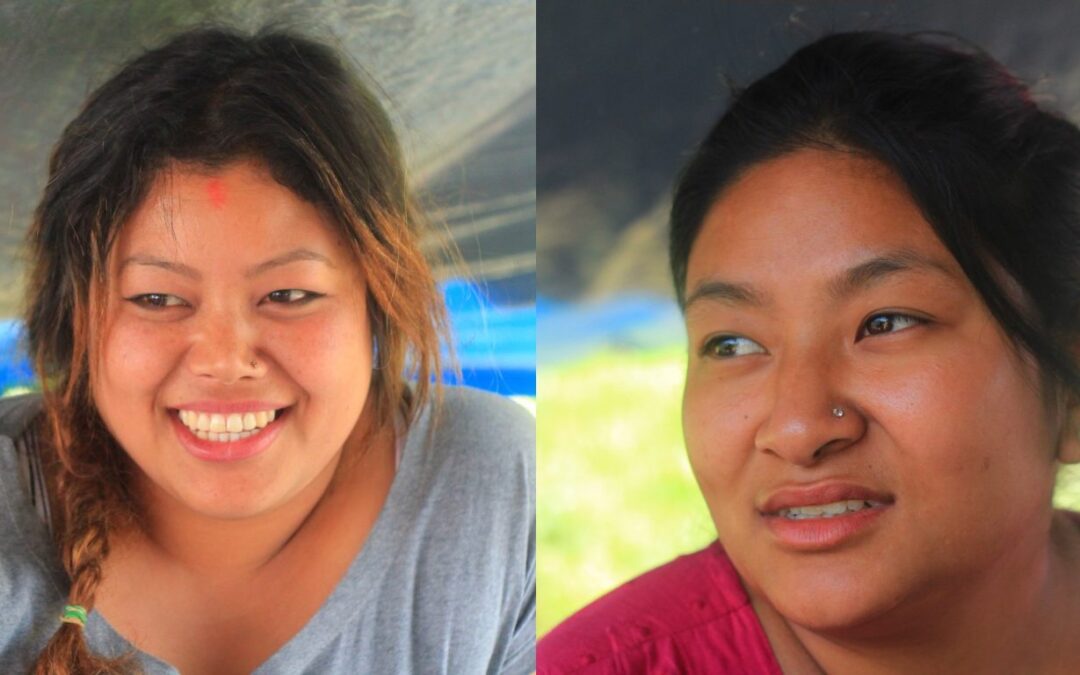
On the 10th anniversary of the Supreme Court’s decision in Sunil Babu Pant on the protection of the rights of lesbian, gay, bisexual, transgender and intersex people (LGBTI), the ICJ calls on the Government of Nepal to fully implement the Court’s ruling.
In 2007, the Supreme Court of Nepal delivered a judgment in Sunil Babu Pant v. the Government of Nepal and others, directing the Government of Nepal to take necessary measures to ensure that people of diverse gender identities and sexual orientations could fully enjoy their rights without discrimination. Such measures were to include the adoption of new laws or amending existing laws.
However, ten years after the judgment, LGBTI persons are denied equal protection of the law, and their rights are still not fully protected.
“The Supreme Court’s 2007 judgment gave hope to LGBTI people in Nepal and inspired judiciaries in the region and the world,” said Frederick Rawski, ICJ’s Asia Director. “Despite some positive measures, the Government has much more work to do to implement the judgment and ensure that the rights of the LGBTI community in Nepal are fully respected.”
The Supreme Court based its findings on international human rights law and standards, particularly in respect of the right to non-discrimination and equality and the right to privacy. The Court relied in particular on Nepal’s legal obligations under the International Covenant on Civil and Political Rights (ICCPR).
The Court strongly rejected arguments that a person’s LGBTI status was the result of “emotional and psychological disorders”, and found that the petitioners faced violence, stigmatization, and discrimination because of their sexual orientation or gender identity. The Court further ordered that a new Constitution under consideration by the Constituent Assembly should guarantee the right to non-discrimination on the grounds of gender identity and sexual orientation.
Since then, some steps have been taken. The 2015 Constitution that was ultimately adopted contains provisions guaranteeing the right to equality for all citizens and establishing special provisions for the protection, empowerment and advancement of gender and “sexual minorities”. Pursuant to a subsequent Supreme Court ruling, transgender men and women can now change their gender markers to “O” on official documents. However, to use “M” or “F”, they still face prohibitive and unclear restrictions. A recently tabled bill would also criminalize unnecessary medical interventions and provide some, though incomplete, protections to intersex children.
Despite these developments, discrimination against LGBTI people remains rampant in the labour market, in schools and in hospitals. LGBTI people are mistreated and sometimes disowned by their families and singled out for physical attack – often beaten, sexually assaulted and subjected to severe physical abuse. Recent revisions to the Civil Code (2017), effective from mid-August 2018, do not recognize equality before the law related to family life.
“These violations continue in the absence of a state strategy or political will to tackle them,” added Rawski. “The Government of Nepal should prioritize enacting reforms to ensure the protection of the rights of LGBTI persons.”
The ICJ calls on the Government of Nepal to fully implement all aspects of the 2007 ruling and subsequent Supreme Court rulings affecting LGBTI communities. This should include, at the minimum:
- Repealing all discriminatory laws, including provisions of the recently introduced Penal and Civil Codes, against sexual orientation and gender identity in line with the principle of equality, equal protection and non-discrimination;
- Enacting legislation that allows same-sex couples full equality before and protection of the law;
- Enacting legislation that removes any prohibitive or unclear restrictions to changing of gender markers on all official documents;
- Enacting legislation that establishes prior, free, full, informed, genuine and consistent consent, and prevents unnecessary medical interventions on intersex persons; and
- Ensuring that the legal protections are given practical effect, including through implementation measures and administrative instructions binding officials at all levels of government.
Contact:
Frederick Rawski, ICJ Asia Pacific Regional Director, t: +66 64 478 1121, e: frederick.rawski@icj.org

Dec 20, 2017 | News
Legal Advisers from the International Commission of Jurists addressed a locally-initiated forum on human rights held in Yangon in December.
Participants who attended from across the country heard from more than twenty presenters and panelists, speaking on topics including: freedom of religion and belief; human rights in armed conflict; freedom of assembly and expression; and economic, social and cultural rights.
The ICJ’s International Legal Adviser Sean Bain joined a panel discussing ongoing human rights violations in areas of conflict and insecurity.
In November the ICJ published a report, “Questions and Answers on Human Rights Law in Rakhine State,” which lays out applicable national and international law in the human rights crisis there, and steps necessary to improve the situation.
Sean Bain emphasized that rights violations against Rohingya Muslims should also be examined with reference to the overall patterns of violations throughout the country, too often perpetrated by security forces with impunity against peoples of many ethnicities and religions, particularly in conflict areas.
On a panel discussion on religious freedom, Advocate Daw Zar Li Aye outlined relevant provisions in national and international law that protect freedom of religion and belief.
She noted, however, that in practice ambiguous and vague provisions of national laws have been applied in a discriminatory manner against members of minority groups.
Zar Li Aye also suggested that any legislative amendments incorporate clearly stated objectives to protect religious freedom, in line with the State’s international law obligations.
Many participants in the forum noted the emergence of a backlash against the language of human rights in recent months, linked to the crisis in northern Rakhine State.
Asked how human rights defenders in Myanmar may continue their work in this context, Sean Bain responded, “To be truly effective in protecting human rights for all we must stay true to our values and not accept violations against any people in any context.”
The ICJ’s involvement in this Forum is part of ongoing engagement with civil society groups in Myanmar.

Dec 18, 2017 | News
The ICJ today called on Myanmar authorities to immediately disclose the whereabouts of two journalists who have been detained incommunicado for nearly one week, and to grant prompt access to lawyers and families.
Reuters reporters Wa Lone and Kyaw Soe Oo have not been heard from since they were arrested by police in Yangon on Tuesday 12 December.
“Fair trial rights violations seriously undermine the rule of law in Myanmar. All detainees must be allowed prompt access to a lawyer and to family members,” said Frederick Rawski, the ICJ’s Asia-Pacific Regional Director.
“Authorities are bound to respect these rights in line with Myanmar law and the State’s international law obligations,” he added.
The right to legal counsel is a bedrock rule of law principle that is set out in a range of international human rights laws and standards, including in article 11 of the Universal Declaration of Human Rights.
Sean Bain, Legal Adviser for the ICJ, said that jurists should assess if the journalists’ detention conforms to applicable laws.
“Their situation appears to constitute arbitrary detention,” he said. “The judiciary should immediately review the lawfulness of detention and demand their release if it is indeed unlawful.”
“Judges and lawyers in Myanmar have an opportunity to assert their independence by challenging the unlawful actions of officials. Such blatant violations of fair trial rights should not go unanswered,” he added.
State media reports the journalists were charged under the 1923 Official Secrets Act in connection with their work investigating actions of security forces in Rakhine State.
More than 650,000 people, mostly Rohingya Muslims, fled to Bangladesh as a result of military operations following attacks on police posts in August by the Arakan Rohingya Salvation Army.
Reuters has reported from both sides of the Myanmar-Bangladesh Border.
“The treatment of these reporters threatens freedom of expression. The harsh penalties they face sends a clear message to other journalists that they could face the same consequences for doing their job,” said Rawski.
In Myanmar, colonial-era laws were invoked to bring criminal charges against journalists in at least three jurisdictions in 2017.
Offences in these laws are often broadly defined, carry harsh penalties, and are open to abuse by authorities.
Journalists who received ten-year jail terms in 2014 under the Official Secrets Act were later released in a Presidential amnesty.
Amendments proposed at the time in parliament were rejected.
“The abuse of archaic laws like the Official Secrets Act must end. It is within the power of the National League for Democracy-dominated legislature to review these laws with a view to aligning them with the rights reflected in Myanmar’s constitution and in international law,” Rawski added.
Contact
Frederick Rawski, ICJ Asia Pacific Regional Director, t: +66 6 4478 1121 ; e: frederick.rawski(a)icj.org
Sean Bain, ICJ International Legal Adviser, e: sean.bain(a)icj.org
Background
The UN Basic Principles on the Role of Lawyers emphasize that, “Governments shall further ensure that all persons arrested or detained, with or without criminal charge, shall have prompt access to a lawyer, and in any case not later than 48 hours from the time of arrest or detention.”
Sections 19 and 375 of the Myanmar Constitution also guarantee the right of legal defense, as does Myanmar’s Code of Criminal Procedure (section 340), Courts Manual (section 455(1)), the Police Manual (section 1198c) and the Prisons Act (section 40).
Sections 21(c) and 376 of the Constitution and section 61 of the Code of Criminal Procedure state that persons cannot be detained for more than 24 hours without a judge’s order.
The right to legal defense implies the right to access legal counsel during this 24-hour period.
Under section 403 of the Courts Manual, a detainee can be remanded only once he or she has appeared before a judge. It is unknown if the two Reuters journalists have appeared in court.
Competent judges are empowered to compel a search for a detainee if they have reason to believe the person is confined unlawfully, as per section 100 of the Criminal Procedure Code.
Lawyers and family members may also request the courts to review the lawfulness of detention, by submitting a habeas corpus petition to the High Court and or to the Supreme Court.
The Tshwane Principles on National Security and the Right to Information, which address the right to access and to share information, as an aspect of freedom of expression in the context of national security, affirm that journalists “should not be prosecuted for receiving, possessing or disclosing classified information to the public, or for conspiracy or other crimes based on their seeking or accessing classified information.”
Read also
Handbook on Habeas Corpus in Myanmar
Right to Counsel: The Independence of Lawyers in Myanmar
Myanmar-Reuters Journos-News-Press releases-2017-BUR (Story in Burmese, PDF)

Dec 13, 2017 | News
The ICJ today urged the Government of Singapore to end the harassment of human rights defender Jolovan Wham and to amend laws used to restrict his work and the work of other human rights defenders.
Jolovan Wham is to appear at a pre-trial conference on seven criminal charges today. Jolovan Wham is a well-known human rights defender in Singapore who previously worked for a group that advocates for the rights of migrant workers and plays a leading role against the death penalty and the promotion of freedom of expression.
“These charges are not only an impermissible attack on Jolovan Wham individually, but human rights work more generally in Singapore,” said Sam Zarifi, Secretary General of ICJ.
“It is an unmistakable message to other human rights defenders that they may face the same harassment and intimidation if they continue their work,” he added.
Jolovan Wham was charged in connection with facilitating a Skype conference with Hong Kong human rights defender, Joshua Wong Chi-Fung, on “civil disobedience and democracy in social change”.
Other charges relate to his organizing peaceful public assemblies, allegedly without permits, to protest the death penalty and to commemorate the day when 16 individuals were arrested by Singapore authorities in 1987 and detained without trial under the country’s Internal Security Act (ISA).
He was also charged for refusing to sign statements prepared by police authorities when he was taken in for investigation on 28 November 2017.
Most of the charges against Jolovan Wham were for alleged violations of Section 7 of the Public Order Act, which makes an offence the holding of a public assembly or public procession without a permit.
The ICJ considers that aspects of Section 7, particularly as applied to the charges against Jolvan Wham, may serve to impermissibly restrict the exercise of the right to freedom of peaceful assembly in Singapore, which is protected under international standards.
“Singapore should immediately act to amend the Public Order Act with a view to ensuring that it is consistent with international human rights law and standards, particularly as they relate to the exercise freedoms of expression and assembly,” Zarifi said.
Under international law and standards, prior authorization of assemblies is generally inconsistent with the right to freedom of peaceful assembly, except for narrow exceptions.
The UN Special Rapporteur on the rights to freedom of peaceful assembly and association, in a 2012 report, clarified that prior authorization should generally not be necessary.
At most, it should require notification that is not unduly burdensome, so as allow the authorities to facilitate the exercise of the right to peaceful assembly and to take measures to protect public safety and public order and the rights and freedoms of others.
The Declaration on the Right and Responsibility of Individuals, Groups and Organs of Society to Promote and Protect Universally Recognized Human Rights and Fundamental Freedoms (Declaration on Human Rights Defenders), emphasizes the right of human rights defenders “to meet or assemble peacefully” and “to study, discuss, form and hold opinions on the observance, both in law and in practice, of all human rights and fundamental freedoms, and through these and other appropriate means, to draft public attention to those matters
Contact:
Emerlynne Gil, ICJ Senior International Legal Adviser, t: +66 840923575 ; e: emerlynne.gil(a)icj.org
Singapore-Wham harrassment-News-Press releases-2017-ENG (full story with additional info, in PDF)
Dec 8, 2017 | News
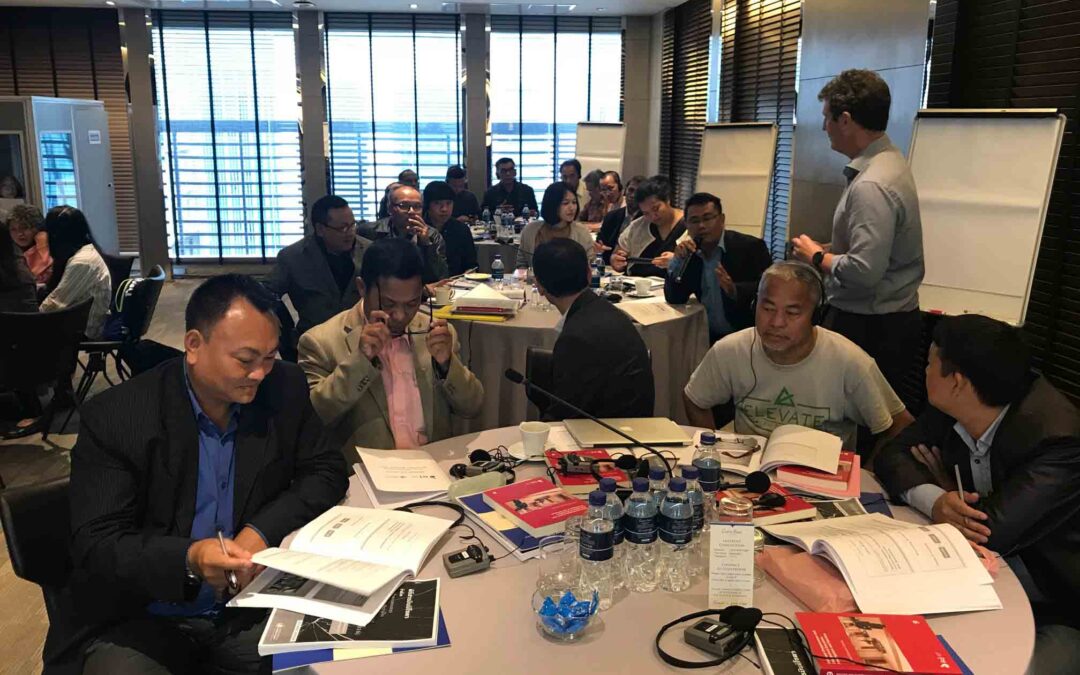
From 5 to 8 December 2017, the ICJ co-hosted two workshops – the first one for lawyers with the UN Office of the High Commissioner for Human Rights (OHCHR) and the second one for authorities in Thailand – on the investigation of potentially unlawful deaths and enforced disappearance.
The first workshop’s attendees included 17 lawyers and academics from Thailand and eight lawyers from India.
Participants in the second workshop included 26 participants from Thailand’s Ministry of Justice, Department of Special Investigation (DSI), Royal Thai Police, Office of the Attorney-General, Ministry of Defence, Ministry of Interior, Southern Border Province Administration Centre and the National Human Rights Commission of Thailand.
The first event commenced with opening remarks by OHCHR Human Rights Officer and Thailand team coordinator, Imesh Pokharel, and Frederick Rawski, the ICJ’s Regional Director for Asia and the Pacific.
Aem-on Siang-Yai, Director of the Office of Rights and Freedoms Protection from the Rights and Liberties Protection Department of Thailand’s Ministry of Justice made additional opening remarks in the second event.
In both workshops, Kingsley Abbott, Senior International Legal Adviser for Southeast Asia at the ICJ provided an introduction to the revised Minnesota Protocol on the Investigation of Potentially Unlawful Death (2016), which was launched in Thailand on 25 May 2017; ICJ Practitioners Guide No 9 – Enforced Disappearance and Extrajudicial Execution: Investigation and Sanction (2015, in English, Spanish and Thai); and the international legal framework governing investigations into unlawful deaths, noting that Thailand has legal obligations including under its Constitution and the International Covenant on Civil and Political Rights (ICCPR), to which it is a State Party, to respect, protect and fulfil the right to life.
These obligations entail a duty to ensure investigations into potentially unlawful deaths are independent, impartial, effective, thorough and transparent.
Sean Buckley of OSACO Group, former New Zealand Police Detective and now an independent, international, investigative specialist with more than 20 years of investigations experience including more than seven years with the United Nations (including at the Special Tribunal for Lebanon and the United Nations High Commissioner for Refugees), provided in both events a technical training on a range of topics relevant to investigations using the revised Minnesota Protocol as a guide.
Kingsley Abbott was a member of the Forensics and Legal Working Groups which assisted with the revision of the Minnesota Protocol, while Sean Buckley was a member of the Advisory Panel.
The workshops focused on investigation techniques of potentially unlawful deaths, including controlling the crime scene, preserving the security of evidence and ensuring the safety of all parties involved in investigations, including witnesses, investigators and family members of victims.
The workshops also covered witness identification and interview techniques, collection of DNA evidence, drafting of investigation reports and crime file management.
Sean Buckley shared with participants different means of international assistance available for investigations of potentially unlawful deaths.
The Workshop also covered the collection and potential use of telecommunications evidence.
Sean Buckley and Imesh Pokharel presented on the interview and protection of witnesses.
Thailand and India are both state parties to the ICCPR.
Contact
Kingsley Abbott, ICJ Senior International Legal Adviser for Southeast Asia, kingsley.abbott(a)icj.org
Nov 30, 2017 | News
The ICJ addressed representatives of over 400 civil society organizations from all 14 states and regions of Myanmar at the MATA Forum held in the township of Pyin Oo Lwin, close to Mandalay.
Hosted from 28 to 30 November by the Myanmar Alliance for Transparency and Accountability (MATA), the Forum featured seminars and discussions on the ‘The Role of Civil Society Organizations related to Democracy, Federalism, Human Rights and Natural Resource Governance.’
MATA facilitated presentations and discussions by a range of actors on these topics – including by Sean Bain, an International Legal Adviser from the ICJ.
The ICJ’s presentation began with a reflection about key legal concepts, noting the differences between ‘rule by law’ and ‘rule of law’ as understood in the Myanmar context.
MATA members helped facilitate discussion on the application of law in Myanmar, and on key rule of law principles of democracy, human rights, accountability, transparency and justice.
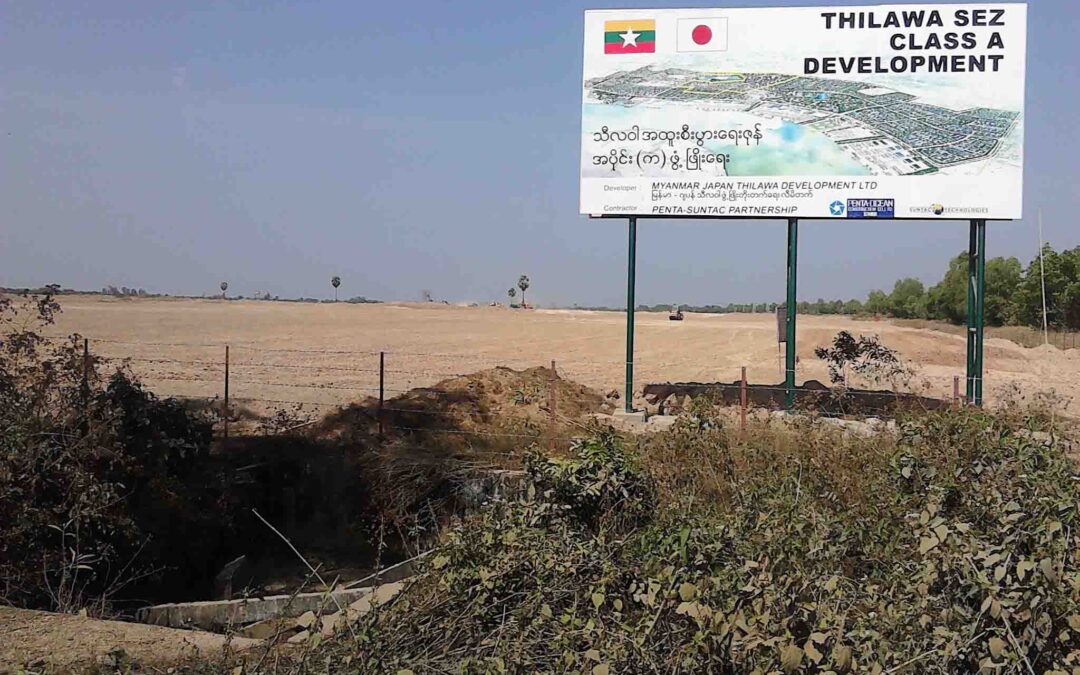
Participants in the Forum were presented with an overview of Myanmar’s laws governing land and investment, assessed in relation to the State’s international legal obligations to respect and to protect human rights.
In particular, Myanmar ratified the International Covenant on Economic, Social and Cultural Rights in October 2017 and its obligations under this treaty will enter into force on 6 January 2018.
It was noted that many national laws – including a proposed new Land Acquisition Bill – fall short on fulfilling the State’s international human rights law obligations.
There was also discussion about how applying the principle of non-discrimination in law and practice is critical for Myanmar’s NLD-led government to meet its international obligations and fulfill its stated commitment to rule of law.
Historical examples were given of legal regimes in South Africa and Australia that legalized discriminatory practices of apartheid and the dehumanization of indigenous peoples. The law must no longer be used in Myanmar as a justification for discrimination.
The ICJ’s involvement in this Forum is part of ongoing engagement with civil society groups in Myanmar.