Nov 27, 2017 | News
Today, the ICJ called on the Royal Government of Cambodia (RGC) to end the escalating repression of civil society in Cambodia and reverse the rapidly deteriorating rule of law and human rights crisis in the country.
Yesterday, it was reported that Prime Minister Hun Sen called for the shut down of one of Cambodia’s leading, independent NGOs, Cambodian Centre for Human Rights (CCHR), and directed the Ministry of Interior to investigate CCHR for its alleged engagement with “foreigners”.
The Prime Minister’s statement appeared to allude to alleged involvement of CCHR in a supposed foreign-backed “colour revolution” to overthrow the government.
“The Cambodian Center for Human Rights plays an essential, independent role in promoting and protecting human rights in Cambodia and must be able to continue its important work without fear of retaliation, reprisal or other unjustified interference,” said Kingsley Abbott, the ICJ’s Senior International Legal Adviser for Southeast Asia.
“Everyone has the right to form and participate in organizations established to work on human rights, and States have a corresponding duty to protect the ability of such organizations and their participants to carry out their work to promote and defend human rights,” he added.
This latest development comes amidst a severe clampdown by the RGC on perceived dissenting voices including civil society, activists, the independent media and political opposition including through the recent dissolution of the major opposition party, the Cambodia National Rescue Party (CNRP), in what appeared to be a highly politicized Supreme Court proceeding, and the arrest and detention of its leader, Kem Sokha.
“This new, targeted focus on the Cambodian Center for Human Rights by the Government should make it clear that the human rights and rule of law crisis gripping Cambodia is not showing any signs of abating and requires the urgent attention of the international community,” said Abbott.
“All legal, political and economic options should be on the table,” he added.
Contact
Kingsley Abbott, Senior International Legal Adviser, ICJ Asia Pacific Regional Office, t: +66 94 470 1345, e: kingsley.abbott(a)icj.org
Background
CCHR was founded by Kem Sokha in 2002 before he left the organization in 2007 to pursue a career in politics.
Yesterday, CCHR released a statement “reaffirming its absolute non-partisanship and independence from all political parties” and emphasizing “strict independence” as a core value of its organization. CCHR also asserted in its statement that an “independent and impartial investigation would find no wrongdoing whatsoever on the part of the organization” and called for “meaningful dialogue” with the RGC.
Articles 19 and 22 of the International Covenant on Civil and Political Rights (ICCPR), to which Cambodia is a State Party, guarantees the rights of all persons to freedom of expression and opinion and to freedom of association with others.
The UN Declaration on Human Rights Defenders, adopted by a consensus of States at the UN General Assembly, including Cambodia, affirms the right of everyone to form and participate in NGOs to promote and protect human rights. The Declaration further dictates that states should take all necessary measures to protect human rights defenders from retaliation and other forms of arbitrary action as a consequence of their legitimate work.
On 18 October 2017, the ICJ released a report which found that the RGC was increasingly “weaponizing” the law to restrict dissent and attack democracy. The report recorded that the “single largest problem facing the Cambodian justice system is the lack of independent and impartial judges and prosecutors,” which includes “an endemic system of political interference in high-profile cases and an equally entrenched system of corruption in all others”.
On 23 October 2017, the 26th anniversary of the 1991 Paris Peace Conference on Cambodia, the ICJ, together with 54 other organizations, issued an open letter to the United Nations Secretary-General and the Conference’s co-chairs calling for the reconvening of the members of the Conference and other concerned stakeholders for an emergency summit to address the human rights crisis in the country.
Nov 23, 2017 | News
Today, the ICJ and Amnesty International submitted recommendations to the Ministry of Justice that changes be made to a new law under consideration by the Cabinet, in order to bring it in line with Thailand’s international legal obligations.
The submission came in response to a request by the Ministry for feedback on the Draft Prevention and Suppression of Torture and Enforced Disappearances Act (‘Draft Act’).
The ICJ and Amnesty International welcome the Thai government’s commitment to criminalize torture and enforced disappearances.
The Draft Act currently addresses many existing gaps in Thailand’s current legal framework.
However, the organizations consider that further amendments are needed to address significant shortcomings in the Draft Act and ensure Thailand’s compliance with international treaties on torture and enforced disappearance and international standards.
Recommendations by the ICJ and Amnesty International addressed the following concerns:
- The absence within the Draft Act of key elements of the crimes of torture and enforced disappearance, as defined by international law;
- The absence of provisions concerning cruel, inhuman and degrading treatment or punishment (CIDT/P);
- The inadequacy of provisions establishing the inadmissibility of statements and other information obtained by torture, CIDT/P and enforced disappearance as evidence in legal proceedings;
- The inadequacy of provisions relating to modes of liability for crimes described in the Draft Act; and
- The shortcoming of provisions concerning safeguards against torture, CIDT/P and enforced disappearances.
The ICJ and Amnesty International urge Thailand to make it a top priority to address these and other concerns, and once they are addressed, to enact the law as soon as possible.
The urgent need to amend and enact the Draft Act is underscored by several NGO reports documenting the persistent use of torture and other ill-treatment by state security forces and the continued failure of the Thai authorities to hold accountable perpetrators of torture, other ill-treatment and enforced disappearances.
The ICJ and Amnesty International remain committed to providing any necessary assistance to the Thai government in amending the Draft Act or otherwise acting to prevent torture and enforced disappearances in Thailand.
In a letter accompanying the submission, the ICJ and Amnesty International also emphasized the crucial importance of maintaining sections within the current Draft Act providing that the prohibitions on torture and enforced disappearances apply in all circumstances, including states of emergency, and prohibiting the forcible transfer of persons to territories where they would face a real risk of torture or enforced disappearances (refoulement).
Background
Thailand is a state party to the International Covenant on Civil and Political Rights and the Convention against Torture and other Cruel, Inhuman or Degrading Treatment or Punishment, and has signed, but not yet ratified, the International Convention for the Protection of All Persons from Enforced Disappearance.
The UN expert bodies overseeing the implementation of these treaties have consistently called upon states parties to criminalize torture and enforced disappearance as specific crimes.
On 15 November 2016, Thailand replied to a List of Issues, identified by the UN Human Rights Committee’s noting that it was in the process of passing the Draft Act which would “provide clear definition and set up specific offence on torture to be in line with the terms set forth under CAT” and “serve as an implementing legislation for ICPPED.”
It also asserted that the Draft Act “aims to strengthen the prevention, suppression, and prosecution mechanism and to ensure remedy for victims as well as address the problem of misuse, and abuses of power by government authorities with regard to torture and enforced disappearances.”
In February 2017, the National Legislative Assembly (NLA) announced it would not enact the Draft Act, which was produced by the Ministry of Justice in consultation with non-governmental organizations and other civil society actors.
In March 2017, at the UN Human Rights Committee’s review of Thailand’s compliance with the ICCPR, Thailand confirmed that the Draft Act “had been submitted to the National Legislative Assembly, which had requested the Cabinet to further review the bill, with a view to introducing amendments and launching a public consultation process.”
Contact:
Kingsley Abbott, ICJ Senior International Legal Adviser for Southeast Asia, t: +66 94 470 1345 e: kingsley.abbott@icj.org
Read also
Joint Letter to the Thai Government
Download
Thailand-Torture and ED-Advocacy-nonlegal submission-ENG (Submission in English, pdf)
Thailand-Torture ED Bill-News-THA (statement in Thai, pdf)
Thailand-Torture and ED-Advocacy-nonlegal submission-THA (Submission in Thai, pdf)
Nov 22, 2017 | News
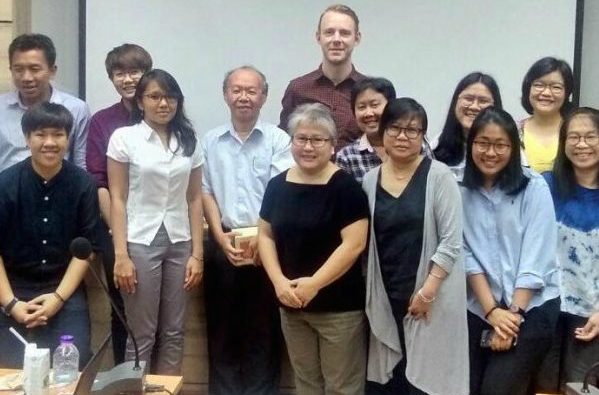
On 22 November, the ICJ, in collaboration with the Legal Research and Development Center under Chiang Mai University’s Faculty of Law, held a roundtable discussion on “Human Rights Litigation concerning the Special Economic Zones in Myanmar and Thailand”.
The objective of the discussion, held on campus at Chiang Mai University, was to identify legal issues and to share experiences regarding strategic litigation and advocacy strategies concerning human rights violations associated with the development of Special Economic Zones (SEZs) in Thailand and Myanmar.
In recent years, both the Thai and Myanmar governments have been trying to attract foreign direct investment into their countries by demarcating specific areas where special regulations concerning, inter alia, public administration, the environment, land or labour rights might be applied.
Proponents of SEZs tend to link their development with jobs and economic growth, however, there is generally limited publicly available information about their economic or public purpose rationale.
The development of SEZs, which requires a lot of land, can undermine the protection of human rights and the rule of law by creating governance structures and permitting processes less stringent than that required under national and international law.
Participants at the discussion included postgraduate students and lecturers from Chiang Mai University’s Faculty of Law, lawyers and representatives from Thai civil society organisations.
The ICJ shared with participants its report analysing the legal framework of SEZs in Myanmar and human rights concerns arising from a case study of Kyauk Phyu SEZ, ‘Special Economic Zones in Myanmar and the State Duty to Protect Human Rights’, during the discussion.
The speakers at the discussion were:
· Sean Bain, ICJ International Legal Advisor, Myanmar
· Sumitchai Hattasan, Director, Center for Protection and Revival of Local Community Rights
· Supaporn Malailoy, EEC Watch, Human Rights and Environmental Lawyer
Nov 17, 2017 | News
Pakistan’s third Universal Periodic Review (UPR) has drawn global attention to a number of serious human rights failures in the country, said the ICJ today.
On 16 November, the UPR Working Group of the Human Rights Council adopted a draft UPR outcome report for Pakistan. Pakistan received a total of 289 recommendations – a substantial increase from its previous UPR in 2012, when Pakistan received 167 recommendations. As many as 111 State delegations took the floor to make statements, and 14 States submitted their questions in advance.
“That well over a hundred delegations participated in the review indicates the global community’s interest in Pakistan’s human rights situation,” said Frederick Rawski, ICJ’s Asia Director.
Key recommendations urge Pakistan to:
- Reinstate a moratorium on executions with the view to abolishing the death penalty;
- Repeal or amend “blasphemy laws” to bring them in line with international human rights law;
- Ratify the International Convention for the Protection of All Persons from Enforced Disappearance and a number of other human rights treaties;
- Ensure effective protection of the rights of religious minorities, human rights defenders, journalists and other vulnerable groups;
- Strengthen the National Commission for Human Rights;
- Ensure prompt, impartial and effective investigations of human rights violations and bring perpetrators to justice;
- Set 18 as the minimum legal age for marriage; and
- Ensure effective implementation of laws on violence against women.
“The States’ recommendations echo the concerns of dozens of civil society organizations and even the National Commission of Human Rights – who all agree that the Government must take urgent measures to address the downward spiral of rights in the country”, Rawski said.
Pakistan will now examine the recommendations and respond to the Human Rights Council at latest by the Council’s next session in March 2018.
Pakistan’s review comes at a time of serious concern about the rights situation in the country.
The Government lifted the informal moratorium on the death penalty and carried out nearly 500 executions in less than three years – among the highest execution rates in the world; Parliament enacted laws allowing military courts to try civilians for certain terrorism-related offences in secret trials; and the authorities started a new wave of crackdowns on NGOs, journalists and human rights defenders, including subjecting them to enforced disappearance.
Persecution of religious minority communities also continues despite the Government’s claims that religious minorities “enjoy equal rights as equal citizens of Pakistan”. Last month, three Ahmadi men were sentenced to death for blasphemy for allegedly scratching anti-Ahmadi pamphlets that had the “Mohr-e-Nabbuwat” (seal of the Prophet Muhammad) printed on them. And earlier this week, the Islamabad High Court directed the Government to respond to a petition demanding a separate database for Ahmadis in the civil service to ensure they are not “posted in offices involving sensitive matters”.
“As a member of the Human Rights Council, Pakistan is expected to uphold the highest standards in the promotion and protection of human rights, something it has clearly failed to do,” added Rawski.
“Pakistan should make use of this process by accepting the recommendations made during the review and adopting a concrete, action-based national human rights plan to ensure their effective implementation.”
Contact
Frederick Rawski, ICJ Asia Pacific Regional Director, t: +66 64 478 1121, e: frederick.rawski@icj.org
Reema Omer, ICJ International Legal Adviser for Pakistan (London), t: +447889565691; e: reema.omer(a)icj.org
Pakistan-UPR-PressRelease-2017-eng (download the press release)
Additional information
UN Member States reviewed Pakistan’s human rights record for the third time on Monday, 13 November, through the UPR process.
The UPR is a unique mechanism of the UN Human Rights Council aimed at improving the human rights situation of each of the 193 UN Member States. Under this mechanism, the human rights record of all UN Member States is peer-reviewed every four to five years by the UPR Working Group, consisting of the 47 UN Member States of the Human Rights Council; however, any UN Member State can take part in the discussions and the dialogue during the UPR of the reviewed States. States then make recommendations to the country under review, which has the option of accepting or noting the recommendations.
Nov 16, 2017 | News
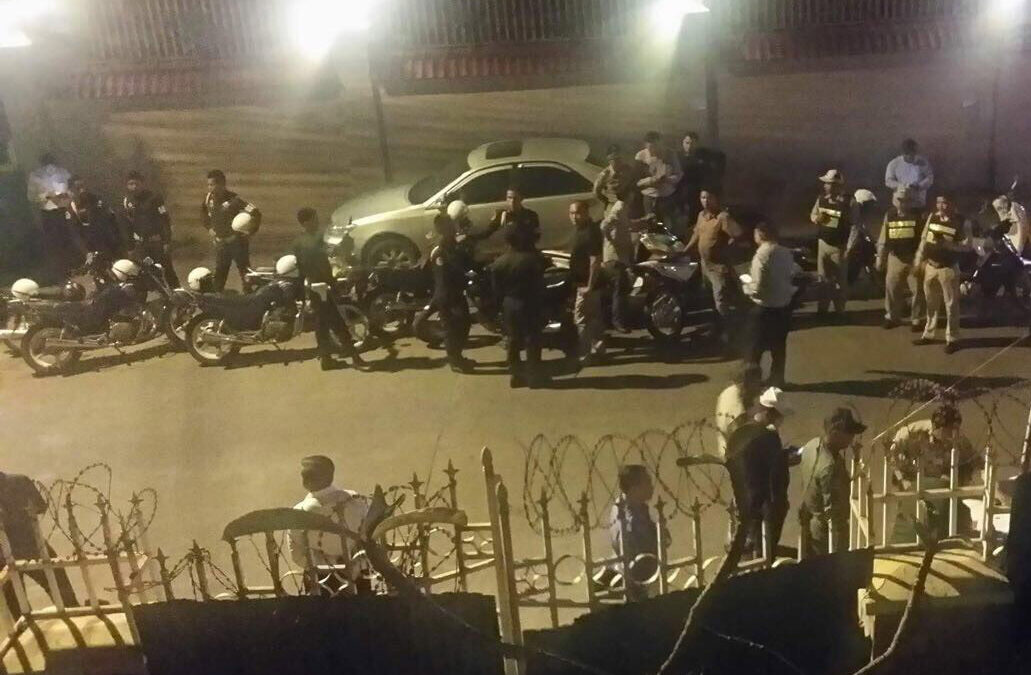
Today’s decision of the Supreme Court to dissolve the main opposition political party, the Cambodia National Rescue Party (CNRP), has significantly heightened the human rights and rule of law crisis within the country, the ICJ said.
The Supreme Court has also banned 118 of CNRP politicians from political activity for five years.
“By dissolving the main opposition party and banning 118 CNRP politicians from political activity for five years, the Supreme Court is irreparably interfering with the rights of potentially millions of Cambodians to freely choose their political representatives and vote for them in the upcoming elections,” said Kingsley Abbott, the ICJ’s Senior International Legal Adviser for Southeast Asia.
“The fact that the Law on Political Parties was amended to enable the Supreme Court to dissolve political parties shortly before it dissolved the CNRP strongly suggests the entire ‘legal process’ was nothing more than political theatre, inconsistent with human rights and the rule of law.”
A full bench of nine judges of the Supreme Court, including the President, unanimously decided to dissolve the CNRP pursuant to powers contained within Article 44 (new) of the Law on Political Parties (LPP), which was controversially amended twice this year, in February and July 2017.
The lawyers representing the CNRP were not present at Court after electing to boycott the proceedings in protest at their legitimacy.
Furthermore, the President of the Supreme Court, Justice Dith Munty, who read out the decision, is reportedly a member of the ruling Cambodian People’s Party (CPP) and sits on both its Standing and Permanent Committees, raising serious doubts about the independence and impartiality of the Court.
“It makes a mockery of fair justice to have someone in a leadership position within one political party sit in judgment on the conduct of that party’s main opposition. There can be no starker example of an inherent conflict of interest,” Abbott said.
“At an absolute minimum, the President should have recused himself from any role in relation to the case, as should have any other judge sitting on the bench if they hold a similar position within the CPP,” he added.
These concerns are consistent with the ICJ’s findings in a report it released last month, in which it found that the “single largest problem facing the Cambodian justice system is the lack of independent and impartial judges and prosecutors.”
“The problem is two-fold: an endemic system of political interference in high-profile cases and an equally entrenched system of corruption in all others.”
On 23 October 2017, the 26th anniversary of the 1991 Paris Peace Conference on Cambodia, the ICJ and 54 other organizations wrote an open letter to the Secretary-General of the United Nations and the Conference’s co-chairs calling on them to reconvene the members of the Conference, along with other concerned stakeholders, for an emergency summit to discuss the human rights crisis within the country.
“The dissolution of the CNRP sends a strong signal to the international community and all Cambodians that a red-line has been crossed, which makes reconvening the Paris Peace Conference to address the human rights and rule of law crisis within the country all the more urgent,” said Kingsley Abbott.
Contact
Kingsley Abbott, Senior International Legal Adviser for Southeast Asia, ICJ, t: +66 94 470 1345 ; e: kingsley.abbott@icj.org
Background
It has been reported that, on 4 and 5 October 2017, the Cambodia Youth Party and the Funcinpec Party, respectively, filed complaints with the Ministry of Interior (MOI) alleging that the CNRP had violated Articles 6 (new) and 7 (new) of the Law on Political Parties, and asked the MOI to file a complaint with the Supreme Court to dissolve the CNRP.
On 6 October 2017, the MOI filed a complaint with the Supreme Court pursuant to Article 38 (new) of the LPP to dissolve the CNRP.
Article 25 of the International Covenant on Civil and Political Rights (ICCPR), to which Cambodia is a State Party, guarantees the rights of all persons, without any unreasonable restrictions, “to take part in the conduct of public affairs, directly or through freely chosen representatives; and to vote and to be elected at genuine periodic elections which shall be by universal and equal suffrage and shall be held by secret ballot, guaranteeing the free expression of the will of the electors.”
Article 14 of the ICCPR affirms the principle that tribunals judging rights and obligations in legal proceedings be independent and impartial.
Detailed international standards on requirements for a court to be independent have been set out in the UN Basic Principles on the Independence of the Judiciary (1985), and requirements for judicial impartiality have been set out in the Bangalore Principles of Judicial Conduct and Commentary (2002/2007), which includes the standard that “All partisan political activity and association should cease upon the assumption of judicial office” (para 75 of the Commentary).
Nov 10, 2017 | News
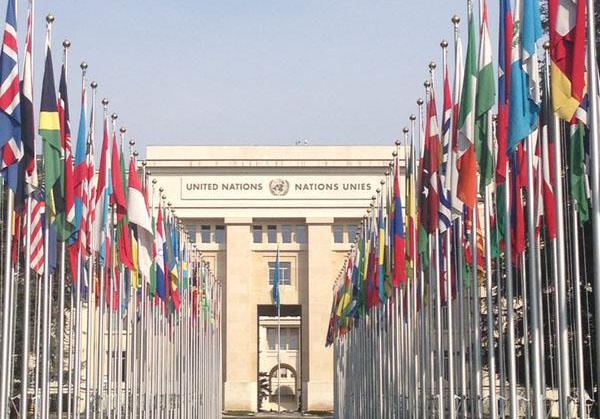
As Pakistan is set to undergo its third Universal Periodic Review (UPR) on 13 November, the ICJ has urged Pakistani authorities to meaningfully engage with the process to improve the human rights situation in the country.
“Pakistan’s past engagement with the UPR has been characterized by denial and defensive posturing,” said Frederick Rawski, ICJ’s Asia Director.
“As a recently-elected member of the UN Human Rights Council, it is more important than ever for the Pakistan to show that it takes its human rights obligations seriously by engaging with the upcoming UPR in its true spirit,” he added.
During its second UPR in 2012, Pakistan received 167 recommendations, of which it rejected seven, noted 34, and accepted 126.
The seven recommendations rejected by Pakistan relate to some of the most serious human rights violations in the country, including recommendations to adopt an official moratorium on the death penalty with a view to abolishing capital punishment in law and practice, repeal blasphemy laws, and decriminalize adultery and non-marital consensual sex.
Even accepted recommendations have been largely ignored in the four years since the previous UPR, the ICJ notes.
Enforced disappearances are still not recognized as a distinct, autonomous crime; perpetrators of gross human rights violations continue to escape justice; there has been complete inaction to prevent abuse of so-called blasphemy laws; and freedom of expression is often restricted on vague grounds such as “national security” and “immorality”.
“Pakistan’s human rights situation has in many ways deteriorated since 2012,” Rawski added.
“Yet – as reflected by Pakistan’s national report for the upcoming UPR – the authorities apparently remain in a state of denial about the dire human rights implications of these new measures,” he said.
These measures include the lifting the informal moratorium on the death penalty and carrying out nearly 500 executions in less than three years – among the highest in the world; passing laws allowing military courts to try civilians for certain terrorism-related offences; and a new wave of crackdowns on NGOs, journalists and human rights defenders, including retaliating against NGOs for presenting “a very bleak picture” of the country’s human rights situation to the UN.
“UN member states on Monday should urge Pakistan to end the dangerous downward spiral on rights by ending repression, respecting fundamental freedoms, and holding perpetrators of violations responsible,” Rawski said.
Contact
Frederick Rawski, ICJ Asia Pacific Regional Director, t: +66 64 478 1121, e: frederick.rawski(a)icj.org
Reema Omer, ICJ International Legal Adviser for Pakistan (London), t: +447889565691; e: reema.omer(a)icj.org
Additional information
The UPR is a unique mechanism of the UN Human Rights Council aimed at improving the human rights situation of each of the 193 UN Member States. Under this mechanism, the human rights record of all UN Member States is peer-reviewed every four to five years by the UPR Working Group, consisting of the 47 UN Member States of the Human Rights Council; however, any UN Member State can take part in the discussions and the dialogue during the UPR of the reviewed States. States then make recommendations to the country under review, which has the option of accepting or noting the recommendations.