May 2, 2017 | News
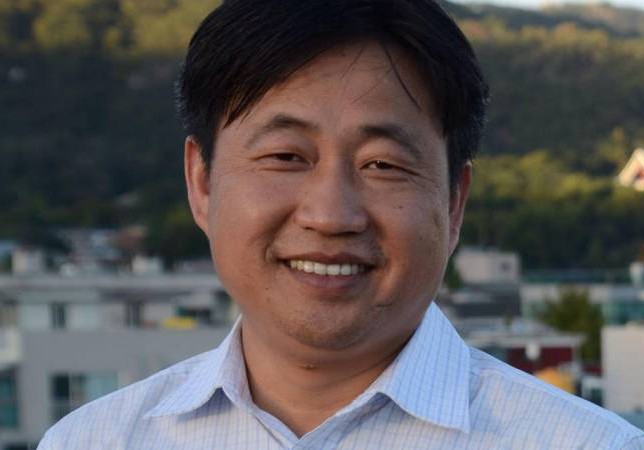
The ICJ today called on the Chinese government to release immediately Xie Yang, a prominent human rights lawyer who was arrested during the crackdown on human rights defenders in July 2015. Authorities have now canceled his scheduled trial without giving a reason.
He was charged on 16 December 2016 with inciting subversion of State power and disrupting court order. He is detained at an undisclosed location.
“Xie Yang’s arrest and prosecution seem to be in connection with his performing legitimate professional functions as a human rights lawyer,” said Sam Zarifi, ICJ’s Secretary General.
“No lawyer should ever be subject to persecution for carrying out their professional duties. Lawyers in China like Xie Yang are indispensable in ensuring human rights protection and upholding the rule of law in China,” he added.
Xie Yang had served as counsel of the family of Xu Chunhe, who was alleged to have been shot dead by police authorities in May 2015 in Heilongjiang Province.
He also acted as counsel for persons alleging religious persecution, alleged victims of unlawful land seizures, and outspoken critics of the government.
The ICJ emphasized that in the absence of evidence that he has committed a cognizable offence, the criminalization of which is consistent with international human rights law, Xie Yang should be immediately released.
In January 2017, the lawyers of Xie Yang alleged that he had been subjected to prolonged sleep deprivation, forced into stress position for more than 20 hours a day, verbally harassed and threatened, and subjected to regular beatings and other forms of torture and ill-treatment.
“The government should release Xie Yang immediately and conduct a prompt, thorough, and impartial investigation on the allegations that he has been subjected to torture,” Zarifi said.
The ICJ received information that Xie Yang has not been able to communicate with his lawyers ever since he reported to them his torture allegations by police authorities.
He has now been assigned State-appointed counsel.
The ICJ further called on the government to bring to justice any persons found to be responsible for the torture of Xie Yang.
Under no circumstances must any statement he may have made during his interrogation under torture or ill-treatment be admitted into evidence at his trial.
Contact:
Emerlynne Gil, ICJ’s Senior International Legal Adviser, t: +66 840923575 ; e: emerlynne.gil(a)icj.org
Additional information
Following his arrest, Xie Yang was detained for the first six months in an undisclosed location, but was subsequently transferred to the Changsa City No. 2nd Detention Center.
He was again transferred to an undisclosed location where he remains detained to this day.
The date and the reason for the transfer are unknown.
Xie Yang’s treatment comes amidst a much wider attack on lawyers and human rights defenders in China.
Since 9 July 2015, the government has launched an unprecedented nationwide crackdown – now commonly referred to as the “709 Crackdown” to mark the start of the crackdown – which resulted in the interrogation, detention, and/or criminal indictment of nearly 250 human rights lawyers and activists.
Photo credit: ChinaChange.com

Apr 28, 2017 | Multimedia items, News, Video clips
Honorary Member of the ICJ, Asma Jahangir, talks of her experiences as part of the ICJ’s ongoing profile series on women human rights defenders.
Asma Jahangir became interested in human rights legal work after having witnessed the frequent arrests of her father, an outspoken critic of military dictatorships, and seeing the courtroom as a place where justice could be accessed. From these early experiences, Asma identified the importance of rule of law but came to understand that this was something that went far beyond the courtrooms of Pakistan.
As a married women, her in-laws had concerns about her practicing law in a mixed firm so she co-founded Pakistan’s first all-female law firm. Initially the firm was viewed as a hobby but Asma and her other co-founders persevered and the firm still thrives today.
Ms Jahangir spoke about the challenges she faced as a female lawyer where courts and judges were at first patronizing towards her and then became angry at her as she continued to present them with cases that were challenging for them. She worked on a number of landmark cases including about whether women could get married without their fathers’ permission, be entitled to family maintenance and whether women should be judged according to religious or codified law.
Women in Pakistan face many issues in accessing justice, Ms Jahangir said. They lack resources, if they are able to access the courts they are frequently exploited by male lawyers and they encounter prejudice in their cases. In addition many laws are simply discriminatory, however women have been challenging these and will continue to do so.
There has been progress in family law in Pakistan, particularly in relation to the procedures if not the substance, yet Pakistan remains a long way from having equality in the family law framework.
Asma noted that it can be hard to engage men in women’s rights issues but commented that many men who had not considered giving certain rights to their wives had become a lot more conscious about women’s rights issues as their daughters had grown up. Many of her colleagues now ask for internships for their daughters at her law firm and admit how narrow-minded they had previously been in relation to women’s rights and equality.
From 2004 to 2010, Ms Jahangir served as the UN Special Rapporteur on Freedom of Religion and explained that she worked with the Special Rapporteur on Freedom of Expression to address the delicate balance in managing freedom of religion and freedom of expression.
Freedom of expression is currently under threat around the world, Asma commented, and is being undermined in the name of a variety of reasons including security, religion and tradition or social norms. Asma said that freedom of expression is fundamental to basic human rights because stopping freedom of expression stops people from thinking.
“Self-censorship is a by-product of undermining freedom of expression and self-censorship by itself dis-informs people, brings out irrelevant issues, and suppresses the more relevant issues.”
Ms Jahangir told the ICJ that in the course of her work as a human rights activist she has been threatened, put under house arrest and imprisoned. However, rather than deterring her, Asma’s experience in jail made her stronger: “It made every woman who went to jail stronger and more resolute that we want rights.”
There was a particular case that had a strong impact on Asma, which was when she worked in defence of a child who had been accused of blasphemy and was sentenced to death. The initial verdict against the boy knocked her confidence as a lawyer, but senior colleagues encouraged her and she continued with the case, taking this to appeal.
This was a very contentious case that attracted a lot of negative attention against Ms Jahanagir. People claimed she was anti-Muslim and, as she argued for the defendant, crowds gathered outside the court calling for her execution. At one point opposing lawyers asked the judges if they could simply close the case but the judges said that if Asma was prepared to keep arguing they were prepared to hear her arguments.
Asma explained that she was inspired to continue by the defendant himself, a boy of around 14 years of age, who, when given the opportunity to run away whilst on bail, decided to stay and continue the trial rather than risk others being harmed in retaliation if he were to flee. She felt that even if she had to give her life to defend this child then it would be worth it. Ultimately the case was decided in the boy’s favour and he was acquitted.
She advised young women interested in a career as a human rights lawyer not to label themselves as ‘human rights lawyers’ rather than simply ‘lawyers’ or they will not be taken seriously. Asma said that “I think that life where you don’t have dignity and where you don’t fight for people’s dignity is a wasted life.”
Watch the interview:
The series of profiles introducing the work of ICJ Commissioners and Honorary Members on women’s rights was launched on 25 November 2016 to coincide with the International Day to Eliminate Violence against Women and the first day of the 16 Days of Activism Against Gender-Based Violence Campaign.

Apr 26, 2017 | News
The ICJ today condemned the conviction and sentencing of Siti Noor Aishah Atam for possessing twelve books allegedly associated with terrorist groups, an act which is criminal under Malaysia’s Penal Code.
The ICJ calls for her immediate release from detention and for the authorities to take steps to quash or reverse her conviction.
The Kuala Lumpur High Court found Siti Noor Aishah Atam guilty under Section 130JB(1)(a) of the Penal Code which prohibits any “possession, custody or control of any item associated with any terrorist group or the commission of a terrorist act” and sentenced her to five years of imprisonment.
Siti Noor Aishah Atam contended that she was using the supposedly proscribed books for her thesis as a graduate student at Universiti Malaya, where she majored in Islamic Studies.
The High Court indicated, however, that they were applying the standard of strict liability to this case, meaning that the particular reason a person may have of possessing the books should not be taken into account.
If a person is found to have these books in their possession, for whatever reason, he or she will be penalized under the provision.
“The prosecution and conviction of Siti Noor Aishah Atam by Malaysian authorities is a violation of her right to freedom of expression, which includes the right to seek, receive, and impart information,” said Emerlynne Gil, ICJ’s Senior International Legal Adviser for Southeast Asia.
The ICJ notes that while the right to freedom of expression is not absolute, any restriction must be provided by law and be strictly necessary for a limited number of purposes, such as national security.
Any restriction must also be formulated with sufficient precision to enable an individual to regulate his or her conduct accordingly.
“The law under which Siti Noor Aishah Atam had been convicted is overly vague, since nobody would know what books or other material would be impermissible. The law is also certainly overbroad – having the effect of preventing potentially important academic research,” said Gil.
The twelve books found in the possession of Siti Noor Aishah Atam have not been specifically banned by the Malaysian government.
Indeed, these books may easily be bought at any number of bookstores in the country.
This unjust verdict illustrates the need for urgent legal reform, including the repeal or modification of Section 130JB(1)(a) of the Penal Code.
The ICJ also noted with profound concern that Siti Noor Aishah Atam has been subjected to prolonged detention under multiple laws, namely the Security Offences (Special Measures) Act 2012 (SOSMA) and Prevention of Crime Act 1959 (POCA).
“The Malaysian authorities appear to be abusing SOSMA and POCA by invoking them alternately to keep Siti Noor Aishah Atam in detention. This constitutes a denial of her right to be free from arbitrary detention,” Gil said.
The ICJ had previously called for the abolition of SOSMA, POCA, and similarly abusive laws.
Contact:
Emerlynne Gil, ICJ’s Senior International Legal Adviser, t: +66 840923575 ; e: emerlynne.gil(a)icj.org
Background
Siti Noor Aishah Atam is a former graduate student at Universiti Malaya, majoring in Usuluddin (Akidah) or Islamic Studies.
On 22 March 2016, the police raided the residence of Siti Noor Aishah Atam and arrested her.
She was taken into custody and detained for 28 days under SOSMA at an undisclosed detention facility while her trial was ongoing.
On 25 July 2016, she pleaded not guilty and stated that the books were used for her thesis on terrorism.
On 29 September 2016, the Kuala Lumpur High Court acquitted Siti Noor Aishah Atam.
The High Court had pointed to the Ministry of Home Affairs’ failure to ban the twelve books as one of the key reasons behind the acquittal.
On the day of her acquittal, she was again arrested and detained under POCA for 60 days and was subsequently ordered to be put under house arrest for two years.
In March 2017, the prosecution appealed the High Court’s decision. This allowed authorities to subject Siti Noor Aishah Atam to continued remand under SOSMA.
She was then detained in Kajang Prison until her conviction and sentencing today.

Apr 20, 2017 | News
Nepali authorities should immediately take effective steps to enforce the landmark Kavre district court murder verdict for the 2004 torture and killing of teenage Maina Sunuwar, the ICJ, Amnesty International, and Human Rights Watch said today.
On 16 April 2017, the Kavre district court sentenced three army officers to life imprisonment for the murder of Maina Sunuwar, a 15-year-old girl (photo) who was tortured in army custody and died as a result in February 2004.
Maina’s killing took place during the decade-long armed conflict between the Maoists and government forces that ended in 2006.
A court martial in 2005 found that Maina had died in army custody, convicted the three officers of torture and murder, but only sentenced the three perpetrators to six months’ imprisonment for minor offences, and promptly released them on grounds that they had already served the six months while confined to army barracks during the period of investigation.
“These convictions are an important development in Nepal’s slow-paced justice system’s ability to deal with grave conflict-era human rights abuses,” said Sam Zarifi, the ICJ’s Secretary General.
“What we need now is for the government to demonstrate its commitment to the rule of law and enforce them,” he added.
The trial before the Kavre district court took place in the absence of any of the four accused, despite repeated court summonses, including an arrest warrant, to notify them of the charges and compel them to appear in court.
The three accused army officers who were convicted of Maina Sunuwar’s murder, Bobi Khatri, Amit Pun and Sunil Adhikari, are no longer in the army and are believed to have fled abroad after the court martial proceedings.
The fourth accused, who was acquitted, Major Niranjan Basnet, is still in the army and was repatriated to Nepal from a UN peacekeeping assignment in Chad in 2009 due to the indictment against him.
Maina Sunuwar’s case has become emblematic of the shortcomings in Nepal’s justice system that have repeatedly frustrated efforts of Nepali conflict victims to secure justice for wartime abuses.
Maina Sunuwar’s mother first filed a report with the police in November 2005.
Since then, there have been numerous procedural and political hurdles, and a lack of cooperation by the military as it sought to protect its own.
An arrest warrant issued in 2008 was never enforced by Nepali authorities, with the police telling the court they were unable to trace them.
“Maina Sunuwar’s case was a true test case for the Nepal criminal justice system, but the government has a habit of simply ignoring court orders,” said Brad Adams, Asia director of Human Rights Watch. “This is the first sign of hope for victims after more than ten years since the end of the conflict—and now we need to see all those convicted of murder behind bars.”
The human rights organizations expressed concern that the government might refuse to seek to take measures to enforce the Kavre court’s verdict given its prior record on this and thousands of other conflict-era cases.
In a disturbing example, the police have yet to implement a 13 April 2017 Supreme Court order to arrest Bal Krishna Dhungel, a Maoist politician convicted of a 1998 murder.
Dhungel has yet to serve out his life sentence handed down by the courts.
The court gave the police a week to execute its order and present Dhungel before it.
“The Kavre district court has done its job, reaffirming the independence of the judiciary from political and military pressure, and holding perpetrators of serious crimes committed during the conflict to account,” said Biraj Patnaik, Amnesty International South Asia Regional Office Director. “Now the authorities must do their job by breaking with the practice of successive past governments that ignore and undermine the courts’ decisions. We expect the government to promptly implement this week’s ruling.”
Contact
Nikhil Narayan, ICJ’s South Asia Senior International Legal Adviser, e: Nikhil.narayan@icj.org
Sam Zarifi, ICJ’s Secretery General, e: sam.zarifi@icj.org

Mar 28, 2017 | News
Legislation adopted today by the Pakistani Parliament allowing civilians to be tried by military tribunals in secret proceedings is a serious blow to human rights and rule of law in the country, the ICJ said.
“The nationwide concern at a number of recent attacks in the country seems to have once again been misdirected toward a seriously flawed counter terrorism strategy that weakens the rule of law and the struggle for justice,” said Sam Zarifi, ICJ’s Asia director.
“Pakistan must reject this counter productive strategy and instead strengthen its judicial process and law enforcement in line with its domestic law and international obligations,” he added.
The Pakistani Parliament voted to amend the 1973 Constitution and the Army Act, 1952, to again allow military tribunals to try civilians who allegedly belong to “a terrorist group or organization misusing the name of religion or a sect” and are suspected of committing a number of offences, including: abducting any person for ransom; raising arms of waging war against Pakistan; causing any person injury of death; using or designing vehicles for terrorist attacks; creating terror or insecurity in Pakistan; and attempting, aiding or abetting any of these acts.
The use of military courts to try civilians is inconsistent with international standards.
The ICJ has also documented serious fair trials violations in the operation of military courts from January 2015 to January 2017, including: denial of the right to counsel of choice; failure to disclose the charges against the accused; denial of a public hearing; failure to give convicts copies of a judgment with evidence and reasons for the verdict; and a very high number of convictions based on “confessions” without adequate safeguards against torture and ill treatment.
“Militarizing the judicial process will not lead to justice and it will not effectively counter terrorism; this is the lesson from around the world,” Zarifi said. “It has not proven to do so in Pakistan in the past, and there is nothing to indicate that it will do so now.”
“Instead, secret military trials of civilians that flout even basic fair trial guarantees will further erode the rule of law and weaken the government’s role in providing justice and protecting the rights of people in Pakistan,” he added.
Contact
Sam Zarifi, ICJ Asia Pacific Regional Director (Bangkok), t: +66 807819002; e: sam.zarifi(a)icj.org
Reema Omer, ICJ International Legal Adviser for Pakistan (London), t: +447889565691; e: reema.omer(a)icj.org
Background
Military courts constituted under the 21st Amendment convicted 274 people in the two years during which they were in operation, from 7 January 2015 to 6 January 2017.
Of those 274 convictions, 161 people were sentenced to death and 113 people were given prison sentences. At least 21 people given death sentences have been executed by hanging.
The enabling legislation for these courts lapsed on 6 January 2017 pursuant to a two-year sunset clause.
The ICJ opposes the use of the death penalty under any circumstances as a violation of the right to life and freedom from cruel, inhuman or degrading treatment.
Mar 27, 2017 | Multimedia items, News, Video clips
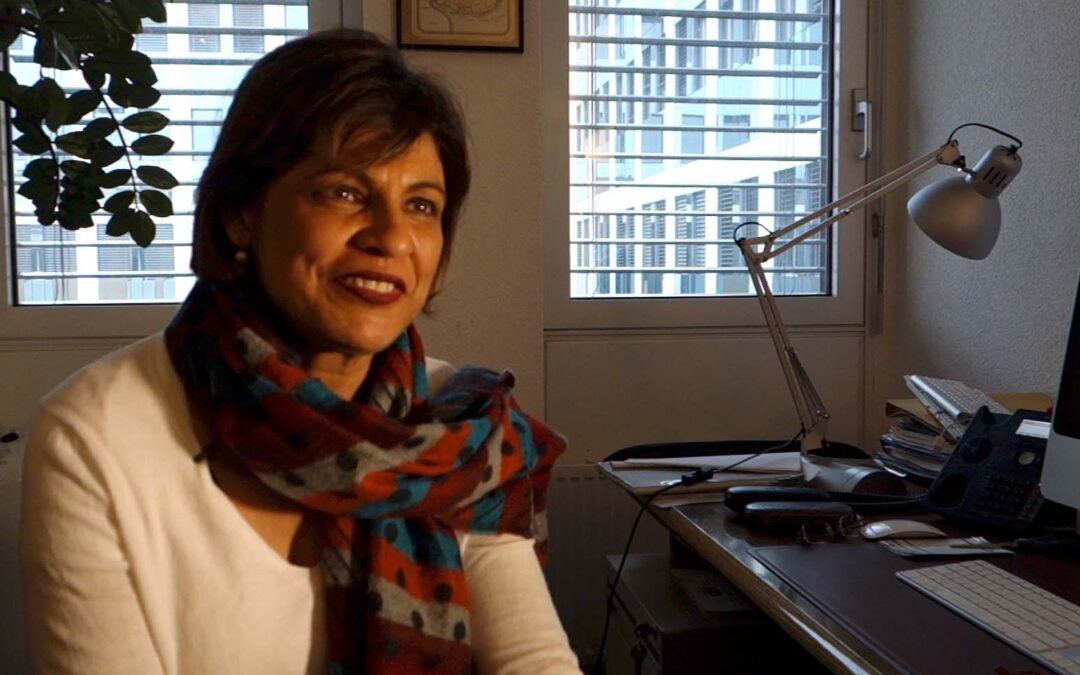
The ICJ continues its series of women’s rights defender profiles with an interview with Imrana Jalal, an ICJ Executive Committee member, focussing on her motivations for women’s rights work.