Sep 15, 2017 | News, Publications, Reports, Thematic reports
Failure to assert the rule of law in the transfer of suspects across borders perpetuates violations of human rights in cases where national security is invoked, a new ICJ report finds.
Released today, the ICJ report Transnational Injustices – National Security Transfers and International Law documents laws and practices in the OSCE region involving transfer of national security suspects by all possible means without regard to national law or States’ international legal obligations.
“This report demonstrates that, under different guises, some States still continue to abuse extradition and expulsion procedures and sometimes even to resort to abductions and renditions in cases related to counter-terrorism or national security,” said Róisín Pillay, Director of the ICJ Europe and CIS Programme.
“This has pernicious consequences for the respect of human rights and the rule of law,” she added.
“In some states, such as in Russia and Central Asia, existing national legal procedures to protect against abusive transfers have been bypassed or ineffective,” Pillay said.
She added: “We need to put judges and human rights law at the heart of extradition procedures to ensure their effectiveness and to prevent arbitrary and extra-legal transfers of suspects.”
Lack of accountability in cases where suspects’ human rights have been violated fuels further abuses, the report finds.
“With the closure of the US programmes, renditions were thought to be over,” said Massimo Frigo, Legal Adviser at the ICJ.
“The almost complete lack of accountability for US renditions has provided a blank check of legitimacy to any countries trying to bend or break the rules at the expenses of the basic safeguards of one’s human rights,” he added.
Background
Practices in a number of States in recent years have highlighted the serious implications for human rights and the rule of law of transfers of people based on national security and criminal cooperation grounds in the Russian Federation, Central Asia and beyond.
Extraditions, expulsions and, sometimes, transfers occurring outside of the legal framework have triggered international reactions and rulings of international courts and quasi-judicial bodies.
The ICJ report Transnational Injustices – National Security Transfers and International Law is based on research of these practices, documenting illustrative cases, and the applicable legal framework.
The report analyses extradition, expulsion and informal transfers in the Russian Federation, Central Asian countries and EU Member States, as well as the rendition practices in the United States and assesses the situation against international human rights law.
The report offers concrete recommendations for change based on the comparative experiences of selected EU member States.
Contact:
Róisín Pillay, ICJ Europe Programme Director, t: +32 2 734 84 46 ; e: roisin.pillay(a)icj.org
Massimo Frigo, ICJ Legal Adviser, t: +41 22 979 3805 ; e: massimo.frigo(a)icj.org
Europe-Transnational Injustices-Publications-Reports-Thematic reports-2017-ENG (Full report in English, PDF)
Europe-Transnational Injustices-Publications-Reports-Thematic reports-2017-RUS (Full report in Russian, PDF)
Europe-Transnational Injustices-ExecSummary-Publications-Reports-Thematic reports-2017-ENG (Executive Summary in English, PDF)
Europe-Translational Injustices-ExecSummary-Publications-Reports-Thematic reports-2017-RUS (Executive Summary in Russian, PDF)

Sep 12, 2017 | News, Publications, Reports, Thematic reports
The Venezuelan Supreme Court has ceased to act as an independent court upholding the rule of law, but has become an arm of an authoritarian executive, the ICJ said in a new report released today.
The ICJ report The Supreme Court of Justice: an instrument of executive power says that through a series of rulings issued since December 2015, the Venezuelan Supreme Court has progressively dismantled the rule of law, undermined human rights and failed to faithfully apply key elements of the country’s Constitution.
In rulings on 27 and 28 March 2017 (Sentencias 155 and 156), the Supreme Court of Justice (SCJ) delivered a blow to the rule of law, effectively claiming legislative powers for itself, depriving the National Assembly of its Constitutional powers and granting sweeping arbitrary powers to the executive, the ICJ notes.
“These decisions amount to a coup d’état against the Constitutional order and have ushered in a new reign of arbitrary rule,” said Sam Zarifi, the ICJ Secretary General.
The report analyses SCJ jurisprudence issued since December 2015 in the light of international law and standards, rule of law principles and the Venezuelan Constitution, and in relation to the Constitutional functions and faculties of the legislative power, parliamentary oversight, states of emergency and the amnesty.
It finds that:
- The SCJ has been decisively co-opted by the Venezuelan executive;
- The Court’s members are mainly from the United Socialist Party of Venezuela (Partido Socialista Unido de Venezuela) and/or ex-Government officials; and
- It has become a political instrument increasingly used against the political and social opposition.
The report also says the Court has interpreted the Constitution in an arbitrary manner, omitting to analyse key Constitutional standards while granting a supra-Constitutional status to standards of lesser rank.
It has abrogated due process and judicial review and so stripped the National Assembly of its Constitutionally mandated functions with regard to legislative matters, parliamentary oversight, regulation and internal administration in order to benefit the government politically, the ICJ adds.
“The rulings have not been issued with impartiality on the basis of facts and in accordance with law, as required under rule of standards,” Zarifi said.
“They are in flagrant violation of the Venezuelan Constitution. The SCJ has issued its decisions based on political considerations and ideological and party loyalties to the executive power,” he added.
The report also outlines key recommendations on the administration of justice which various UN and Inter-American procedures and bodies have made to Venezuela going back a number of years.
None of these recommendations appear to have been taken into account by the Venezuelan authorities. These include reparations ordered by the Inter-American Court of Human Rights, which are binding on Venezuela as a matter of law.
“The Venezuelan authorities are in breach of its international obligation to cooperate in good faith with international human rights bodies and procedures,” Zarifi said.
Finally, the report concludes that the SCJ has undermined the rule of law by violating the principle of the separation of powers and infringing upon the Constitutional functions and autonomy of the legislative power.
As a consequence of its decisions based on the political interests of the executive power, the SCJ has lost the essential attributes of an authentic judicial power, such as independence, impartiality, autonomy and legitimacy.
“The SCJ has assumed the role of giving an appearance of judicial legitimacy to the arbitrary political actions of the executive thus abandoning the exercise of its Constitutional function as the guarantor of the rule of law, human rights and fundamental freedoms,” Zarifi added.
Contact:
Sam Zarifi, ICJ Secretary General, t +41 79 726 44 15 ; e sam.zarifi@icj.org
Federico Andreu-Guzman, ICJ South America Representative, t +57 311 481 8094 ; e federico.andreu@icj.org
Download the report:
Venezuela-Suprem Court-Publications-Reports-Thematic reports-2017-ENG (in PDF)
Further readings:
Venezuela: rule of law and impunity crisis deepens
Venezuela: dismissal of Attorney General a further blow to the rule of law and accountability
Venezuela: Human rights and Rule of Law in deep crisis
Strengthening the Rule of Law in Venezuela

Aug 29, 2017 | News, Publications, Reports, Thematic reports
South Asian states can only address the tens of thousands of cases of enforced disappearances by recognizing enforced disappearance as a serious crime in domestic law, said the ICJ today.
On the eve of the International Day of the Victims of Enforced Disappearances, the ICJ 58-page report No more ‘missing persons’: the criminalization of enforced disappearance in South Asia analyzes States’ obligations to ensure that enforced disappearance constitutes a distinct, autonomous crime under national law.
It also provides an overview of the practice of enforced disappearance, focusing specifically on the status of the criminalization of the practice, in five South Asian countries: India, Pakistan, Bangladesh, Sri Lanka and Nepal.
For each State, the report briefly examines the national context in which enforced disappearances are reported, the existing legal framework, the role of the courts; and the international commitments and responses to recommendations concerning criminalization.
“It is alarming that despite the region having some of the highest numbers of reported cases of disappearances in the world, enforced disappearance is not presently a distinct crime in any South Asian country,” said Frederick Rawski, ICJ’s Asia Director.
“This shows the lack of political will to hold perpetrators to account and complete apathy towards victims and their right to truth, justice and reparation,” he added.
In Nepal and Sri Lanka, draft legislation to criminalize enforced disappearance is under consideration.
Though the initiatives are welcome, the draft bills in both countries are flawed and require substantial improvements to meet international standards.
In the absence of a clear national legal framework specifically criminalizing enforced disappearance, unacknowledged detentions by law enforcement agencies are often treated by national authorities as “missing persons” cases.
On the rare occasions where criminal complaints are registered against alleged perpetrators, complainants are forced to categorize the crime as “abduction”, “kidnapping” or “unlawful confinement”.
These categories do not recognize the complexity and the particularly serious nature of enforced disappearance, and often do not provide for penalties commensurate to the gravity of the crime.
They also fail to recognize as victims relatives of the “disappeared” person and others suffering harm as a result of the enforced disappearance, as required under international law.
“Like torture and extrajudicial execution, enforced disappearance is a gross human rights violation and a crime under international law,” said Rawski.
“South Asian States must recognize that they have an obligation to criminalize the practice with penalties commensurate with the seriousness of the crime–filing “missing” person” complaints in cases of disappearance is not enough, and in fact, it trivializes the gravity of the crime,” he added.
Other barriers to bringing perpetrators to account are also similar across South Asian countries: military and intelligence agencies have extensive and unaccountable powers, including for arrest and detention, often in the name of “national security”; members of law enforcement and security forces enjoy broad legal immunities, shielding them from prosecution; and military courts have jurisdiction over crimes committed by members of the military, even where these crimes are human rights violations, and proceedings before such courts are compromised by their lack of independence and impartiality.
Victims’ groups, lawyers, and activists who work on enforced disappearance also face security risks including attacks, harassment, surveillance, and intimidation.
A comprehensive set of reforms, both in law and policy, is required to end the entrenched impunity for enforced disappearances in the region – criminalizing the practice would be a significant first step, said the ICJ.
Contacts:
Frederick Rawski (Bangkok), ICJ Asia Pacific Regional Director, e: frederick.rawski(a)icj.org
Reema Omer, ICJ International Legal Advisor (South Asia) t: +923214968434; e: reema.omer(a)icj.org
Thyagi Ruwanpathirana, ICJ National Legal Advisor (Sri Lanka), e: thyagi.ruwanpathirana(a)icj.org
Background
Under international law, an enforced disappearance is the arrest, abduction or detention by State agents, or by people acting with the authorization, support or acquiescence of the State, followed by a refusal to acknowledge the detention or by concealing the fate or whereabouts of the “disappeared” person which places the person outside the protection of the law.
The UN General Assembly has repeatedly described enforced disappearance as “an offence to human dignity”.
South Asia-Enforced Disappearance-Publications-Reports-Thematic Reports-2017-ENG (full report in PDF)
Aug 22, 2017 | News, Publications, Reports, Thematic reports, Video clips
The institutional political crisis in Venezuela has brought the rule of law to near collapse and severely obstructed accountability for those responsible for gross human rights violations, the ICJ concluded in a report released today.
The ICJ’s report Achieving Justice for Gross Human Rights Violations in Venezuela found that the authorities led by President Nicolás Maduro have undertaken a sustained campaign to take control of the Supreme Court of Justice and, with the Supreme Court’s support, suspend the constitutional powers of the former National Assembly and subvert efforts to hold the executive to account within a rule of law framework.
“Rule of law in Venezuela has been replaced by rule of arbitrary executive power,” said Alex Conte, ICJ’s Global Accountability coordinator.
“The Constitution is disregarded, the judiciary cannot exercise its independent function, and the separation of powers is non-existent,” he added.
The ICJ’s report concludes that the human rights situation in Venezuela has deteriorated rapidly in recent years, particularly since 2014.
Extrajudicial and arbitrary executions, the practices of torture and ill-treatment, arbitrary detention, the trial of civilians by military courts and the criminalization and prosecution of political and social dissent have only increased.
“The political context of extreme polarization and the breakdown of the rule of law, along with the judiciary’s lack of independence, have severely obstructed accountability for those responsible for gross human rights violations,” said Conte.
“Victims and their families are left without justice.”
This situation has been further exacerbated by the recent dismissal of Venezuela’s Attorney General, described by the ICJ as a politically motivated act that violates international standards and removes one of the last institutional checks on executive authority and destroys one of the few glimmers of hope for an end to impunity for human rights violations.
Also troubling is the establishment by the new Consituent National Assembly of a ‘Truth Commission’, which the ICJ fears will be a politically manipulated instrument aimed at entrenching impunity for the executive and, when combined with President Maduro’s declaration that legal immunity will be stripped from National Assembly members that have opposed him, a tool to silence Government opposition, rather than to help discharge Venezuela’s duty to promptly, independently and effectively investigate allegations of gross human rights violations.
“Venezuela’s situation of entrenched impunity cannot be resolved without the establishment of an independent judicial authority that can address human rights violations, deter further violations and help bring back the rule of law,” Conte added.
Contact:
Alex Conte, ICJ Global Redress and Accountability Initiative, t: +41 79 957 27 33; e: alex.conte(a)icj.org
Federico Andreu Guzman, ICJ Senior Legal Adviser, Americas, e: Federico.andreu(a)icj.org
Venezuela-GRA Baseline Study-Publications-Reports-Thematic reports-2017-ENG (full report, PDF)
Read also:
ICJ Position Paper on the Dismissal of the Attorney General of Venezuela (August 2017)
ICJ Report, Venezuela: The Sunset of the Rule of Law (October 2015)
ICJ Report, Strengthening the Rule of Law in Venezuela (November 2014)
May 5, 2017 | Advocacy, News, Publications
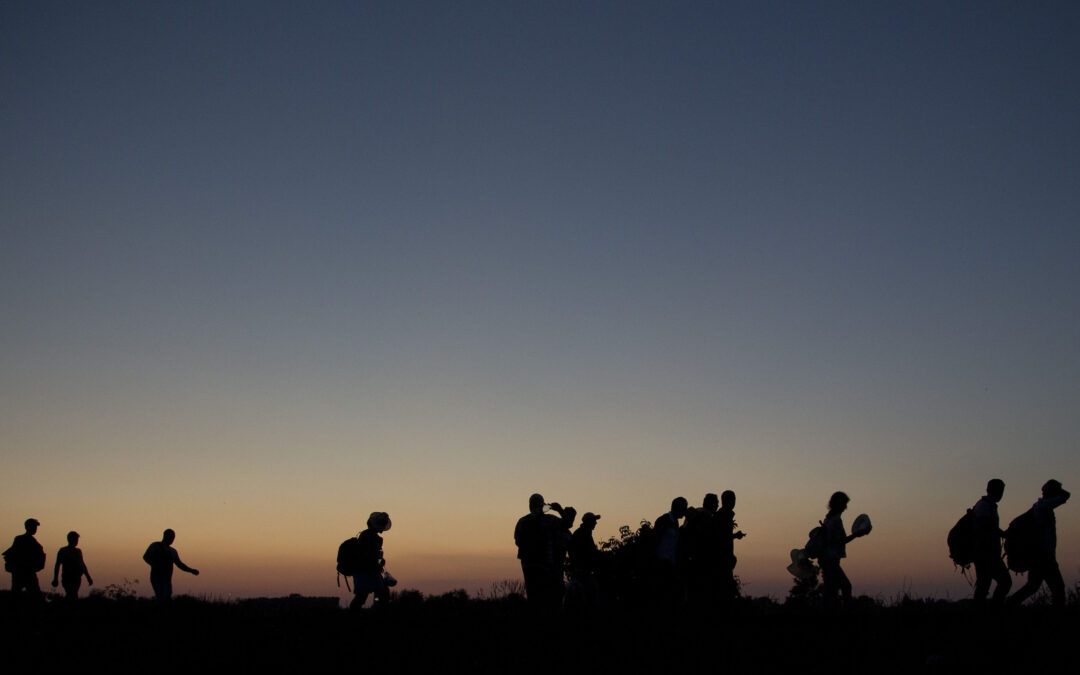
The ICJ has published a set of Principles on the Role of Judges and Lawyers in relation to Refugees and Migrants.
The Principles were developed by the ICJ on the basis of consultations with senior judges, lawyers, and legal scholars working in the field of international refugee and migration law (including at the 2016 Geneva Forum of Judges & Lawyers), as well consultations with States and other stakeholders on a draft version during the March 2017 Human Rights Council session, and other feedback.
The Principles seek to help judges and lawyers, as well as legislators and other government officials, better secure human rights and the rule of law in the context of large movements of refugees and migrants. They are intended to complement existing relevant legal and other international instruments, including the New York Declaration, as well as the Principles and practical guidance on the protection of the human rights of migrants in vulnerable situations within large and/or mixed movements being developed by the OHCHR.
The Principles address the role of judges and lawyers in relation to, among other aspects:
- determinations of entitlement to international protection;
- deprivation of liberty;
- removals;
- effective remedy and access to justice;
- independence, impartiality, and equality before the law;
- conflicts between national and international law.
The Principles, together with commentary, can be downloaded in PDF format by clicking here: ICJ Refugee Migrant Principles 2017.
They are also available in Spanish, French and Arabic.
The ICJ formally launched the published version of the Principles at a side event to the June 2017 session of the Human Rights Council (click here for details), where their importance and utility were recognised by the UN Special Rapporteur on the human rights of migrants, as well as representatives of UNHCR and the OHCHR.
The ICJ had earlier released the final text in connection with the Thematic Session on “Human rights of all migrants” for the UN General Assembly Preparatory Process for the Global Compact for Safe, Orderly and Regular Migration to be held in Geneva 8-9 May 2017, where in an oral statement the ICJ was able to highlight the potential utility of the Principles in the development of the Compact.
The ICJ further promoted consideration of the Principle, in an oral statement to the Human Rights Council.
More information about the process of development of the Principles, including the list of participants to the 2016 Geneva Forum, is available here.
The consultations, preparation and publication of the Principles was made possible with the financial support of the Genève Internationale office of the Republic and Canton of Geneva, for which the ICJ is grateful.
For further information, please contact ICJ Senior Legal Adviser Matt Pollard, matt.pollard(a)icj.org

Feb 27, 2017 | News, Publications, Reports, Thematic reports
The Government of Myanmar should impose a moratorium on the development of Special Economic Zones (SEZs) until it can ensure SEZs can be developed inline with international human rights laws and standards, said the ICJ at a report launch held today in Yangon.
The 88-page report, entitled Special Economic Zones in Myanmar and the State Duty to Protect Human rights, assesses the laws governing Myanmar’s SEZs and finds that the legal framework is not consistent with the State’s duty to protect human rights.
For example, a case study examining the Kyauk Phyu SEZ in Rakhine State shows that the land acquisition process initiated in early 2016 lacks transparency, does not comply with national laws on land acquisition, and risks violating the rights of 20,000 residents facing displacement.
“The SEZ Law undermines the protection of human rights, and critical legal procedures are often poorly implemented, so the Kyauk Phyu project risks repeating the rights violations that have been associated with SEZs in the past,” said Sam Zarifi, the ICJ’s Asia Director.
“The NLD-led Government can make a break from the past by ensuring economic development projects benefit Myanmar’s people, rather than rushing to facilitate projects which result in human rights violations and ultimately undermine sustainable development,” he added.
Myanmar’s legal framework for SEZs is based on the 2014 SEZ Law and incorporating national laws governing land, labour and the environment.
The report shows that while national laws require Environmental Impact Assessments and the application of international standards on involuntary resettlement, the SEZ Law does not establish clear accountabilities for the implementation of these procedures.
This has contributed to human rights violations and abuses in each of Myanmar’s three SEZs, the report says.
“It has been encouraging that government officials have emphasized their commitment to protecting human rights in SEZs in line with the rule of law,” said Sean Bain, the ICJ’s Legal Consultant in Myanmar and lead author of the report.
“The legal reforms recommended in this report will be critical to meet these commitments while fulfilling the State’s duty to protect human rights in SEZs. We also suggest that investors take heightened due diligence measures to ensure they are not complicit in rights violations,” he added.
The report was based on extensive legal research as well as interviews with over 100 people, from affected communities to investors and government officials, during 2016.
Key recommendations to the Government of Myanmar
- Protect human rights in Myanmar’s SEZs by amending the SEZ Law, through meaningful public consultation in accordance with international standards.
- Order a moratorium on the development of SEZs, and on entering related investment agreements, until the SEZ Law has been amended to ensure conformity with international human rights law and standards.
- Commission a Strategic Environmental Assessment for the Kyauk Phyu SEZ, in line with Myanmar’s environmental conservation laws. This would involve consultation to inform decision-making on the Kyauk Phyu SEZ and related projects, by identifying cumulative environmental and social impacts of all the developments in Kyauk Phyu, while considering conflict dynamics and economic development in Rakhine State.
- Suspend land acquisition in Kyauk Phyu until after the completion of a resettlement plan that is in line with international standards, as required in the EIA Procedure.
Contact
Sean Bain, ICJ Legal Consultant in Myanmar, t: +95 9263533230 ; e: sean.bain(a)icj.org
Myanmar-SEZ assessment-Publications-Reports-Thematic reports-2017-ENG (full report, in PDF)
Myanmar-SEZ assessment SUMMARY-Publications-Reports-Thematic reports-2017-ENG (executive summary of the report, in PDF)
Myanmar-SEZ assessment full-Publications-Reports-Thematic reports-2017-BUR (Burmese version of full report, in PDF)
Myanmar-SEZ assessment-Publications-Reports-Thematic reports-2017-BUR (Burmese version of the executive summary, in PDF)