Jun 23, 2021 | Human Rights Council, News, Work with the UN
The Egyptian authorities systematically abuse “counter-terrorism” laws against human rights defenders, setting a dangerous model for other countries around the world to follow.
On 23 June, the International Commission of Jurists (ICJ) and the Cairo Institute for Human Rights Studies (CIHRS) jointly organized an online event on the sidelines of 47th session of the United Nations Human Rights Council to denounce Egypt’s targeting of human rights defenders through the country’s “counter-terrorism” laws.
Titled ‘Weaponizing Counter Terrorism Laws to Silence Human Rights Defenders’, the interactive online webinar aimed to highlight how the Egyptian authorities use “counter-terrorism” laws to target human rights defenders, including by placing lawyers and human rights activists on Egypt’s “terrorist list”, a recent practice resulting in serious human rights violations.
The event was moderated by Bahey Eldin Hassan, CIHRS Director, who stressed that the abuse of the “counter-terrorism” laws was not only employed against human rights defenders, and is not a phenomenon limited to Egypt.
The United Nations Special Rapporteur on Human Rights and Counter-Terrorism, Fionnuala Ní Aoláin, pointed out that repressive regimes take advantage of the lack of a globally agreed definition of terrorism when legislating for counter terrorism purposes. As a result, they get to place whomever they like under the “terrorism label” at the national level, with no meaningful oversight or penalties.
“The United Nations Security Council has taken on a massive legislative role on counter terrorism, which has given cover to and enabled State repression at the national level,” Ní Aoláin noted addressing the role of the international community.
“This is not an accident or a ‘bad apple’ problem, the misuse of counter-terrorism is embedded in the practised national legal systems,” Ní Aoláin added. “That abuse is part of the DNA of State practice in many countries.”
“We are at a pivotal moment. States must ask themselves what 20 years of abuse of counter terrorism laws have done,” Ní Aoláin urged. “It has weakened protections and made us less safe in many ways. This is a time for States to stand up and ensure pressure for change of this situation.”
Brian Dooley, Senior Advisor to the UN Special Rapporteur on Human Rights Defenders, noted that for authorities to imprison a human rights defender “with a straight face” for a long period of time, they have to use major accusations such as terrorism.
“The Egyptian authorities know that these human rights defenders are not terrorists,” Dooley said. “In most of the cases we have seen, where defenders were sentenced to ten years or more in prison, the relevant authorities use some sort of anti-terrorism, national security, or treason laws to justify putting a human rights defender away in prison for 10 or more years.”
Said Benarbia, ICJ Middle East and North Africa Director, began by naming some of the most prominent human rights defenders who remain in pre-trial detention facing “terrorism-related charges” in Egypt.
Among those Benarbia mentioned are: Alaa Abdelfattah, a blogger and a human rights activist; Mahienour al-Masri, a human rights lawyer; Mohammad al-Baqer, a lawyer and the director of the independent NGO, Adalah; and Amr Imam, a lawyer at the Arabic Network for Human Rights Information.
“In most of the cases the ICJ documented human rights defenders face charges of ‘joining a terrorist group’,” but the State security prosecution has consistently failed to even name the terrorist organization or group concerned,” Benarbia said. “In most of the cases, prosecutions were initiated with the sole purpose of intimidating and silencing human rights defenders.”
Benarbia emphasized that prosecuting individuals despite a total lack of evidence to support the charges is contrary to both the Egyptian and international law and standards.
“Any country that, like Egypt, uses ‘counter terrorism’ legislation to clamp down on basic freedoms and retaliate against human rights defenders and create open-air prisons should not have a say in setting international standards on terrorism,” Benarbia added.
Human Rights Defender, Celine Lebrun Shaath, delivered a passionate statement about her husband, Ramy Shaath, an Egyptian Palestinian human rights defender who has been detained since July 2019. Shaath, who herself was deported from Egypt in the wake of her husband’s arrest, mentioned that the online event was taking place on Ramy Shaath’s birthday; the second since his imprisonment. “I would rather not be here today,” she added, lamenting what had happened to her husband.
“We do not know to what terrorist group Ramy is supposed to be belonging,” Shaath said. “He is accused of spreading ‘fake news’, but we don’t know which news or where he had spread them.”
Shaath expressed her hope that the Egyptian government would heed the call for her husband’s release and free Ramy and all the political prisoners.
“[Human Rights Defenders] should be looked at as a wealth for this country. They are the future, they are not a threat, dissent is not terrorism, dissent is a vibrant part of democracy that should be cherished and protected,” Shaath underscored.
On 12 March 2021, 31 UN Member States signed a joint declaration condemning the human rights situation in Egypt, which Finland delivered on their behalf at the Human Rights Council’s 46th session. The joint letter focused primarily on “the restrictions on freedom of expression and the right to peaceful assembly, the constrained space for civil society and political opposition, and the application of terrorism legislation against peaceful critics.”
The event was cosponsored by Human Rights Watch, Amnesty International, the International Service for Human Rights and the International Federation for Human Rights.
You can watch the entire event here.
Contact:
Said Benarbia, Director, ICJ Middle East and North Africa Programme, t: +41-22-979-3817; e: said.benarbia(a)icj.org
Asser Khattab, Research and Communications Officer, ICJ Middle East and North Africa Programme, e: asser.khattab(a)icj.org
Jun 22, 2021 | News
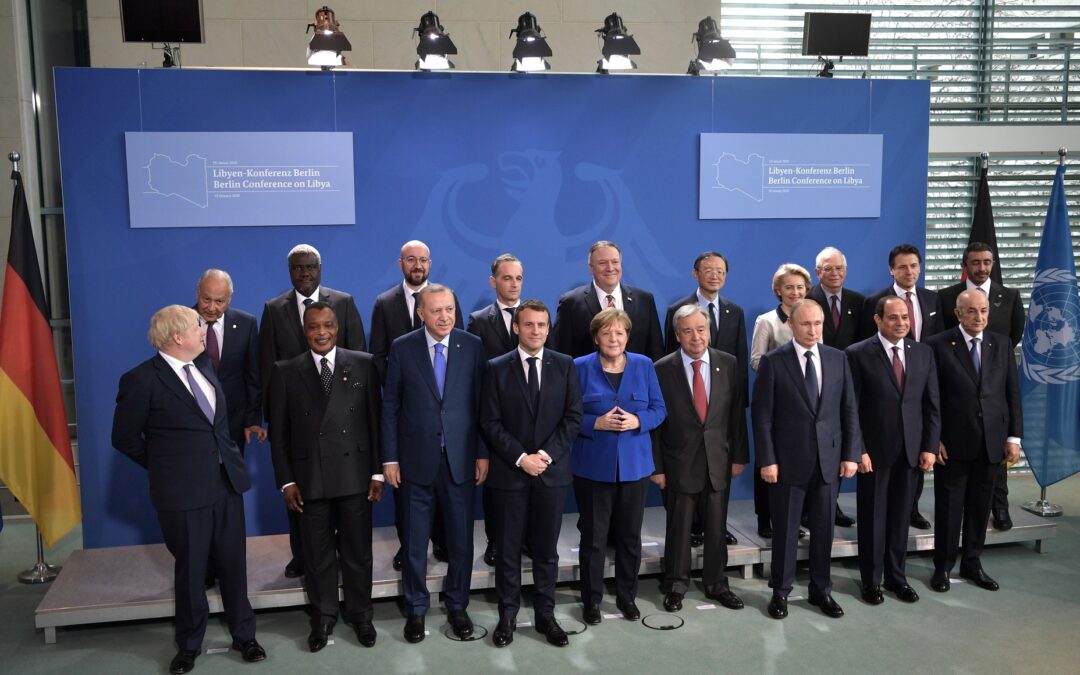
The Second Berlin Conference on Libya, taking place on 23 June, should focus on ensuring accountability for crimes under international law and guaranteeing that the transitional justice process is fully consistent with international law and standards as its key priorities, the ICJ said today.
هذا البيان الصحفي متوفر باللغة العربية أيضاً
“The Berlin II Conference must bring accountability to the top of the political agenda in Libya”, said Saïd Bernarbia, the ICJ MENA Director.
“The necessity to hold the 24 December elections cannot sideline the need for the Libyan authorities to hold perpetrators of crimes under international law to account and to end impunity for past and ongoing human rights abuses. Time and again experience from around the world has shown that accountability is crucial for a sustainable political solution.”
The 19 January 2020 Berlin Conference Conclusions stressed “the need to hold accountable all those who have violated provisions of international law”, and encouraged the Libyan authorities to strengthen “transitional justice institutions, including prosecution initiatives, reparations, truth-seeking and institutional reform.” A dedicated Working Group on human rights and international humanitarian law was created to implement such conclusions.
The Berlin II Conference must follow up on these commitments and give priority to ensuring that crimes under international law committed by all parties in Libya be effectively investigated with a view to holding perpetrators to account.
“The transitional justice process must be prioritized with a view to establishing the truth about past and ongoing gross human rights violations and abuses, upholding victims’ right to remedies and reparations, including by providing guarantees of non-repetition”, Benarbia said.
The Berlin II Conference should also support the work and mandate the UN Independent Fact-Finding Mission on Libya established by the Human Rights Council in June 2020.
Download this press release in PDF form here.
Contact
Said Benarbia, Director, ICJ Middle East and North Africa Programme, t: +41-22-979-3817; e: said.benarbia(a)icj.org
Asser Khattab, Research and Communications Officer, ICJ Middle East and North Africa Programme, e: asser.khattab(a)icj.org
Jun 20, 2021 | News
On 19-20 June, the ICJ, in partnership with the Tunisian Association of Judges (AMT), organised a workshop on ‘Legal reasoning and judgment drafting in the cases before the Specialized Criminal Chambers (SCC)’ in Tunis, Tunisia.
Twenty-five SCC judges and prosecutors from across the country participated in the two-day workshop.
Said Benarbia, ICJ’s Middle East and North Africa Programme Director; Anas Hmedi, AMT’s President; and Martine Comte and Philippe Texier, ICJ Commissioners, were the main speakers.
On the first day, speakers and participants focused on legal reasoning and interpretation challenges before the SCC.
ICJ Commissioner Philippe Texier spoke about the principles of legality and non-retroactivity, res judicata and the non-applicability of statutes of limitations, which are all recognised under Tunisian law.
Texier underlined that, when properly understood and applied, both the principle of non-retroactivity of the criminal law and the non-applicability of statutes of limitations would not necessarily be a bar to the prosecution of crimes and gross human rights violations within the jurisdiction of the SCC, since international law, including customary international law, already proscribed them at the time of their commission.
Said Benarbia stressed the importance of applying international law and standards, especially with regard to international crimes that Tunisian domestic penal law does not proscribe yet, such as the crime under international law of enforced disappearance. With respect to the hierarchy of norms, he underscored that the Tunisian Constitution clearly recognises that international law and treaties are superior to national law.
As a result, SCC judges are required to have regard to and apply relevant international law and treaties ratified by Tunisia in adjudicating the cases before them. Judges have the power and the responsibility to interpret Tunisian law in light of international law, including, whenever necessary, by filling certain gaps in domestic legislation.
ICJ Commissioner Martine Comte then spoke about the attribution of individual criminal responsibility and modes of liability, procedural guarantees and the rights of victims and the accused, as well as reparations and guarantees of non-repetition. She emphasised that, under the 2013 Tunisian law on Transitional Justice, guarantees of non-repetition are a constitutive and fundamental element of the transitional justice process.
Comte also explained that the doctrine of command responsibility is a well-recognised general principle of international law, established and applied in many jurisdictions, and therefore to be applied, as relevant, in cases before the SCC.
Comte underlined the importance of enforcing and monitoring the respect of procedural guarantees and the rights of both the victims and the accused, including the right to the presumption of innocence, the principle of equality of arms and the right to adversarial proceedings.
She added that the first reparation of all is the establishment of the truth and of the facts of each case, which, in turn, aims to restore the dignity of victims and their families by recognizing the harm they suffered.
Finally, Comte and the other speakers talked about conviction and sentencing and the challenges faced by SCC judges when the sentence is not defined in nor international law nor Tunisian law.
On the second day, expert speakers and participants discussed judgment drafting in cases before the SCC. They discussed how SCC judges, while addressing the challenges related to the complexity of the cases at hand, can ensure organized, clear, and effective judgment drafting, including through the establishment of a coherent judgment outline; and by providing a clear analysis of factual issues and how they should be resolved.
Texier stressed that the SCC are not exceptional in their nature: they are composed of ordinary judges and have to adhere to the standards of fair trial. SCC judgments differ from ordinary judgments in that they carry a historic significance, by establishing a negated truth and contributing to the duty of remembrance, both of which are crucial elements of the transitional justice process.
Said Benarbia spoke of one of the main challenges facing the work of the SCC, namely, the voluntary absence of the accused who do not appear before court despite being summoned. Drawing on examples from other transitional justice contexts, he concluded that in this respect Tunisia is an exception, as the transitional justice process is typically accompanied by a political will that ensures the presence of the accused.
Benarbia also stressed the importance of the presence of the accused before the Court as one of the fundamental guarantees of the right to a fair trial.
Comte underscored the need to comply with the law regarding the admissibility of evidence (e.g., ensuring that a confession has not been obtained by torture or other cruel, inhuman or degrading treatment or by any other coercive means).
She then addressed the need for the judgment to provide a thorough analysis of the admissible evidence presented at trial on which the ultimate decision is rendered in light of the applicable law and stated that, under Tunisian law, the judges’ decision must be based on firm conviction, beyond any reasonable doubt.
Finally, Benarbia presented an outline for judges to rely upon when drafting the first SCC judgments, based on several judgments rendered by international tribunals. He underscored that such a structured and comprehensive outline would help judges in drafting coherent and exhaustive judgements.
Contact:
Said Benarbia, Director of the ICJ’s Middle East and North Africa programme, email: said.benarbia@icj.org phone number: +41 79 878 35 46
Asser Khattab, Research and Communications Officer at the ICJ’s Middle East and North Africa programme, email: Asser.khattab(a)icj.org

Jun 4, 2021 | Advocacy, Open letters
In May 2021 the ICJ wrote to The MultiChoice Group in South Africa urging it to suspend Emmanuel TV on any of the DSTV platforms for broadcasting televangelist Pastor TB Joshua’s multiple video clips ostensibly depicting violent ‘conversion therapy’ and hate speech against LGBT persons amounting to discrimination and human rights abuses. MultiChoice responded that it has “no editorial control or oversight” over Emmanuel TV as it is a “third-party channel” and therefore MultiChoice cannot investigate the incident further or take any remedial action.
MultiChoice claims on their website to “entertain, inform and empower African communities”. In addition to this, their entertainment platforms are a hub for approximately 14 million people across 50 countries. MultiChoice has a huge reach into African countries and in the homes of millions of people living in Africa. As a result, they have a responsibility to act in a way which does not promote harmful practises.
In response to ICJ’s letter, MultiChoice stated that it does not review the content broadcast on third-party channels such as Emmanuel TV prior to its broadcast. In place of a thorough investigation, the entertainment group said that it contacted Emmanuel TV and the latter stated that the ‘conversion therapy’ clips were not broadcast in April 2021. It is significant to note that Emmanuel TV did not deny that the clips were aired at all. Rather, MultiChoice alleged that it was simply “unable” to independently verify that the clip was broadcasted in April 2021 or at all.
Contrary to the impression given in its letter to the ICJ, MultiChoice is not limited to investigating offensive broadcasts that are aired within a specific time period. Additionally, while the ICJ notes MultiChoice’s assertion that Emmanuel TV is a third-party channel and consequently MultiChoice has no editorial control or oversight over the content of the channel, the ICJ believes that MultiChoice has a duty to not broadcast material that is discriminatory and in contravention of the South African Constitution.
MultiChoice has a responsibility to conduct a serious investigation into this matter and take the necessary remedial action. Consequently, we do not find that Emmanuel TV’s confirmation to MultiChoice, that the clip was not broadcast during April 2021 is sufficient; and MultiChoice’s inability to verify whether this program was broadcast at all, is unsatisfactory.
The UN Independent Expert on protection against violence and discrimination based on sexual orientation and gender identity, under the umbrella of the United Nations Human Rights Commission, has concluded in May 2020, that conversion therapy amounts to torture and ill-treatment and has called for a global ban on such practices.
In light of this, the ICJ is of the view that MultiChoice has a greater responsibility to the African audience to refrain from participating in the broadcast of such harmful practices, and must publicly take a stance against facilitating the airing of such broadcasts. The ICJ believes that MultiChoice’s responsibility as Africa’s “leading entertainment company” is not to pay “lip service” to the values of the South African Constitution, but rather to hold itself to higher thresholds of accountability.
ICJ has consequently urged MultiChoice to:
- Independently investigate this and other discriminatory and potentially unlawful broadcasts by Emmanuel TV and take appropriate remedial measures.
- Undertake to exclude Emmanuel TV as part of MultiChoice’s package to the public, or alternatively, to heavily condition its contract with Emmanuel TV to disallow the broadcast of offensive materials; should the investigation lead to the conclusion that the clip was broadcasted by them.
- Ensure that such offensive materials are not broadcast on any MultiChoice channels, irrespective of their status as third-party channels.
- Offer an apology from Multichoice Group to the LGBT persons, unless MultiChoice is able to demonstrate independently that the clip was not broadcast at all on their platform, neither by Emmanuel TV nor by any other third-party channel.
- Undertake an updating of the MultiChoice Group’s internal policies to bring them in line with human rights standards, the South African Constitution, and local laws on non-discrimination. This includes contractual arrangements with third party channels like Emmanuel TV which may broadcast discriminatory content.
Contact
Kaajal Ramjathan-Keogh, ICJ Africa Director, Kaajal.Keogh(a)icj.org
Tanveer Jeewa, Legal and Communications Officer, Tanveer.Jeewa(a)icj.org
Jun 1, 2021 | News
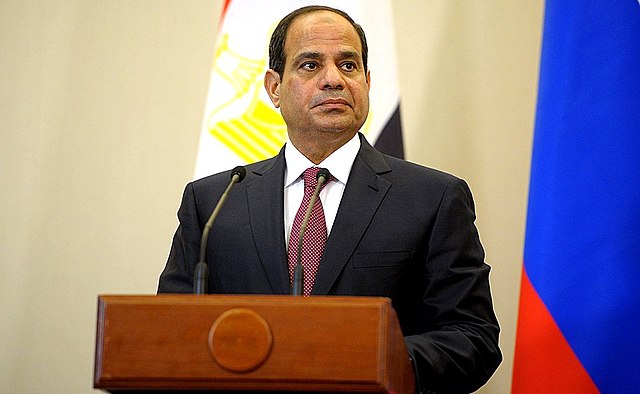
President Abdel Fattah al-Sisi of Egypt should immediately end a crackdown on freedom of association, independent groups, and peaceful dissent, 63 organizations, including the ICJ, said today.
هذا البيان الصحفي متوفر باللغة العربية أيضاً
The groups issued the following public statement recommending a series of actions Egypt should take to make tangible improvements in the human rights situation in Egypt and to ensure that Egypt complies with its international obligations:
We the undersigned 63 organizations call on the Egyptian authorities, including President Abdel Fattah al-Sisi, to take immediate action to end the Egyptian authorities’ wholesale crackdown on independent organizations and peaceful dissent.
More than 30 countries at the United Nations Human Rights Council issued a joint statement on 12 March 2021 expressing their deep alarm over “the trajectory of human rights in Egypt and share[d] the concerns expressed by the [UN] High Commissioner for Human Rights and [UN] Special Procedure mandate holders.”
Our organizations have been calling for the establishment of a monitoring and reporting mechanism on Egypt at the Human Rights Council and will continue to do so until there is meaningful and sustained improvement in the country’s human rights situation.
We remain greatly concerned over the arbitrary arrest, detention, and other judicial harassment of human rights defenders. Those held unjustly include NGOs directors Mohamed al-Baqer and Ezzat Ghoniem, human rights researchers Patrick George Zakiand Ibrahim Ezz el-Din, and lawyers Mahienour al-Massry, Haytham Mohamdeen, and Hoda Abdelmoniem. The founder and director of the Cairo Institute for Human Rights Studies (CIHRS) Bahey Eldin Hassan was handed down an outrageous 15-years imprisonment sentence in absentia.
Other attacks against human rights defenders include travel bans, asset freezes, additions to the “terrorists list” in arbitrary proceedings, protracted criminal investigations under case No. 173 of 2011, and reprisals for their engagement with UN mechanisms. We share concerns by seven Special Procedures mandate holders – United Nations experts – about Law No. 149/2019 on Non-Governmental Organizations, as it fails to meet Egypt’s international obligations to ensure the right to freedom of association.
We also have serious concerns over the overly broad definition of terrorism in Law No. 94 of 2015 on counterterrorism and in the Penal Code that contravenes international standards and allows for the criminalization of acts falling within the scope of the rights to freedom of expression, association and peaceful assembly, as well as the misuse of “terrorism circuits” of criminal courts and the Supreme State Security Prosecution to target human rights defenders and other peaceful critics in order to silence dissent.
We are also deeply concerned over the crackdown on independent journalists and media, as hundreds of websites remain blocked and at least 28 journalists remain behind bars for simply doing their work or expressing critical views, including Esraa Abdelfatah and Ismail Iskandarani.
We share the assessment of the UN Working Group on Arbitrary Detention that arbitrary detention is a systematic problem in Egypt. Since President al-Sisi came to power, Egyptian security forces, with the complicity of prosecutors and judges, have arbitrarily arrested and detained thousands of people on the basis of unfounded terrorism-related charges. They include human rights defenders, religious minority rights activists, peaceful protesters, journalists, academics, artists, lawyers, opposition politicians, and relatives of dissidents forced into exile.
Egyptian security forces routinely subject those in custody to enforced disappearance and torture, which the UN Committee against Torture concluded to be “a systematic practice in Egypt.” Those disappeared and tortured are then routinely convicted in grossly unfair mass trials, in some cases before military courts.
Since 2014, hundreds have been sentenced to death and dozens executed after trials that rely on torture-tainted “confessions.” Thousands of others are being held in prolonged pretrial detention without the opportunity to meaningfully challenge the lawfulness of their detention, sometimes for periods exceeding the two-year maximum permissible under Egyptian law.
Even when prosecutors and judges order their release, the National Security Agency (NSA), with prosecutors’ complicity, routinely accuse them of similar charges in new cases to keep them detained indefinitely without trial, in the practice known as ”rotation.”
We also share the UN experts concerns over cruel and inhuman prison conditions, and the deliberate denial of adequate medical care that has led or contributed to preventable deaths in custody and serious damage to prisoners’ health. In 2020 alone, at least 35 people died in custody or shortly after following medical complications. The health and human rights crisis in prisons was further exacerbated by the authorities’ failure to adequately address Covid-19 outbreaks.
We share the High Commissioner’s concerns regarding worrying patterns in the Sinai peninsula of forcible displacement, enforced disappearances, and torture and other ill-treatment of detainees. We note her call to the Egyptian authorities “to recognise that, as in all countries facing security challenges and violent extremism, depriving people of their rights will not make the State safer, but more unstable.”
Discrimination against women and girls remains entrenched in law and practice. The authorities have not only failed to address pervasive sexual and gender-based violence, but have also targeted women’s human rights defenders and campaigners against sexual violence and harassment through arrests, harassment, threats, and other reprisals. The authorities have also used morality and debauchery laws to arbitrarily arrest, detain, and prosecute survivors and witnesses of sexual and other gender-based violence, women social media influencers, and LGBTQI+ people and activists.
This catalog of serious violations continues as a result of endemic impunity that prevails in Egypt, as highlighted by UN experts and the UN Committee against Torture.
We urge President al-Sisi to order and ensure full implementation of the following recommendations in order to secure tangible improvements in the human rights situation in Egypt and to ensure that Egypt complies with its international obligations:
- Immediately and unconditionally release anyone held solely for peacefully exercising their rights to freedom of expression, association and assembly; and release others detained arbitrarily, including those held in prolonged pretrial detention without trial or the possibility to challenge the lawfulness of their detention; cease the practice commonly called “rotation”, and protect those in custody from torture and other ill-treatment and ensure their regular access to their families, lawyers of their choosing, and adequate medical care;
- Publicly condemn and order independent, impartial, thorough, and effective investigations into extrajudicial executions and other unlawful killings, enforced disappearances, torture, and other serious human rights violations and crimes under international law, including those committed in custody and in the context of counterterrorism operations in Sinai, with a view to bringing those responsible to justice; and guarantee the victims’ rights to truth, justice, and reparation;
- Establish a moratorium on executions, pending the abolition of the death penalty;
- Create a safe and enabling environment for human rights defenders, including by effectively protecting them from arbitrary arrest, detention, and other forms of reprisal or harassment; instructing the public prosecution to close Case No. 173 of 2011; removing all arbitrary measures including travel bans and asset freezes against human rights defenders and their families; quashing verdicts against human rights defenders including those sentenced in their absence; and removing human rights defenders from the “terrorists list”;
- Prevent sexual and gender-based violence and prosecute offenders; put a stop to the policing of women’s bodies and behavior as well as prosecutions over vague charges of “indecency”, “violating family principles and values”, and “debauchery”;
- End arbitrary arrests and prosecutions against LGBTQI+ people, including police entrapment of LGBTQI+ through dating apps or social media and quash the verdicts of anyone already convicted; instruct officials to end forced anal examinations and sex determination tests as they can amount to torture; and
- Amend Law No.94 of 2015 on counterterrorism, Law No.8 of 2015 on terrorist entities, Law No.175 of 2018 on cybercrime, and Law No. 149 of 2019 on NGOs to bring them in line with Egypt’s international obligations.
Signatories:
Access Now
Amnesty International
ANKH (Arab Network for Knowledge about Human rights)
Association Beity (Tunisia)
Association for Juridical Studies on Immigration (ASGI)
Association for the Defense of Human Rights in Morocco (ADDHOM)
Baytna
Cairo Institute for Human Rights Studies (CIHRS)
CELS Centro de Estudios Legales y Sociales
Center for Reproductive Rights
Center of Studies and Initiatives for International Solidarity (CEDETIM, France)
CNCD-11.11.11
Committee for Justice
Committee for the Respect of Liberties and Human Rights in Tunisia (CRLDHT)
DefendDefenders (East and Horn of Africa Human Rights Defenders Project)
Democratic Association of Tunisians in France (ADTF)
Democracy for the Arab World Now (DAWN)
Dignity – Danish Institute Against Torture
Egyptian Human Rights Forum
Egyptian Initiative for Personal Rights (EIPR)
EgyptWide (Egyptian-Italian Initiative for Rights and Freedoms)
English PEN
EuroMed Rights
Freedom House
Front Line Defenders
Geneva Bridge Association
Global Voices
Gulf Centre for Human Rights (GCHR)
Hassan Saadaoui Association for the Defense of Democracy and Equality (Tunisia)
humanrights.ch
Human Rights Watch (HRW)
Initiative Franco-égyptienne pour les Droits et les Libertés
International Commission of Jurists (ICJ)
International Federation for Human Rights (FIDH)
International Service for Human Rights (ISHR)
Karapatan Alliance Philippines Inc.
Lawyers for Lawyers (L4L)
Legal Resources Centre
Mawjoudin Initiative (Tunisia)
MENA Rights Group
Minority Rights Group International (MRG)
Mwatana for Human Rights
Nachez (Dissonance), Tunisia
The National Union for Tunisian Journalists (SNJT)
Odhikar, Bangladesh
PEN Norway
People in Need
Project on Middle East Democracy (POMED)
REDRESS
Réseau des Organisations de la Société Civile pour l’Observation et le Suivi des Élections en Guinée (ROSE)
Robert F Kennedy Human Rights
South East Europe Media Organisation (SEEMO)
The Freedom Initiative
Tunisian Association of Democratic Women
Tunisian Association for Democracy and Civic State (AVDDH)
The Tunisian Association for the Defense of Academic Values (ATDVU)
The Tunisian Association for the Defense of Individual Liberties (ATDLI)
Tunisian Center for Press Freedom (CTLP)
Tunisian Coalition Against Death Penalty
The Tunisian Federation for Citizenship on both Shores (FTCR)
The Tunisian Human Rights League (LTDH)
UIA-IROL (Institute for the Rule of Law of the International Association of Lawyers)
Vigilance for Democracy in Tunisia (Belgium)
Contact:
Said Benarbia, Director, ICJ Middle East and North Africa Programme, t: +41-22-979-3817; e: said.benarbia(a)icj.org
Asser Khattab, Research and Communications’ Officer, ICJ Middle East and North Africa Programme, e: asser.khattab(a)icj.org