Feb 13, 2019 | Multimedia items, News, Video clips
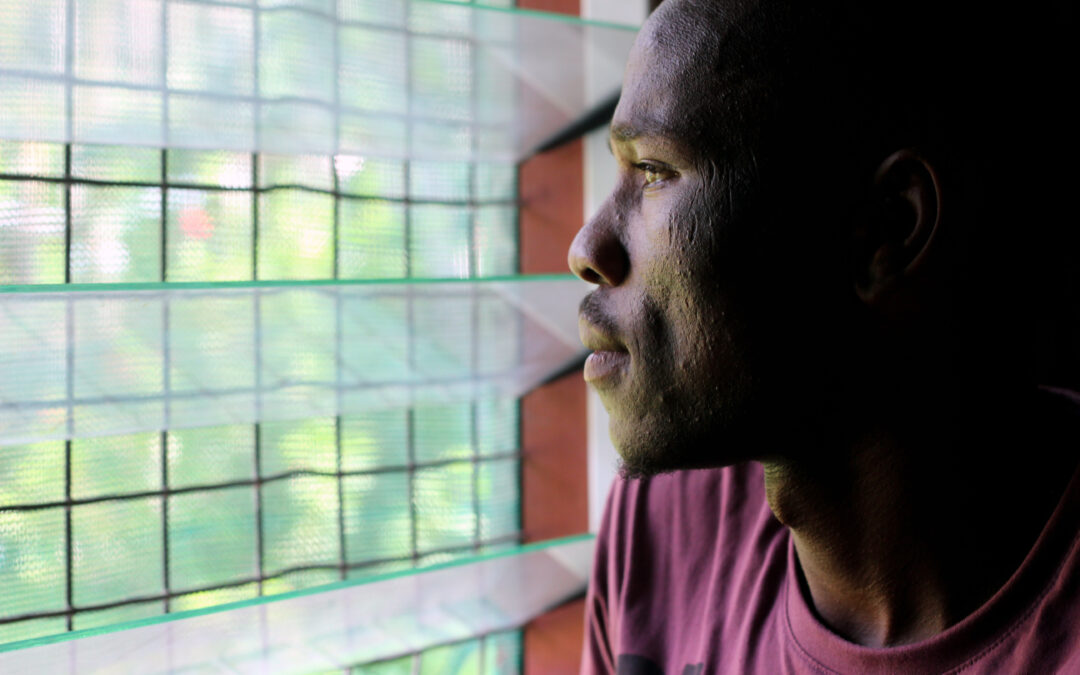
Sudanese refugee activist Abdul Aziz Muhamat is the 2019 Martin Ennals Award Laureate. He was among three finalists, selected last October by a jury of ten of the world’s leading human rights organizations, including the ICJ, together with Marino Cordoba Berrio (Colombia) and Eren Keskin (Turkey).
“This award sheds light on the very cruel refugee policy of the Australian Government. It also brings international attention to the dangers and ill-treatment faced by refugees all over the world, including in countries that claim they uphold the Refugee Convention,” said Abdul Aziz Muhamat.
The 2019 laureate was fleeing war in Darfour. In October 2013, he was forcibly transferred to the island of Manus (Papua New Guinea), as part of Australia’s “offshore” refugee policy, when the boat he was on was intercepted by the authorities.
More than five years on, he is still stranded on the island, like hundreds of refugees and asylum seekers, and subject to deprivation, harassment, humiliation and violence.
“This young man was only 20 when he first arrived on Manus island. Since then, he never stopped raising his voice for those who have been stripped of their most basic rights together with him. He showed extraordinary tenacity and courage, always resisting peacefully even after a police officer shot him in the leg,” said Dick Oosting, Chair of the Martin Ennals Foundation.
“The Australian Government must meet its international obligations and put an end to these inhumane practices,” he added.
Living conditions on Manus island have been denounced by human rights organizations.
“Men are dying, notably for lack of appropriate medical care. Some of them, including children, committed suicide. We need safety, we need freedom, we need hope. Opposing this cruel system helps preserve my self-esteem and my human dignity,” Abdul Aziz Muhamat said.
“I will continue to fight until all of us are safe and free,” he added.
The two other finalists of the 2019 Martin Ennals Award are Eren Kerskin (Turkey) and Marino Cordoba Berrio (Colombia).
A lawyer who has been engaged for over 30 years in advancing the rights of women, Kurds and LGBTI+ notably, Eren Kerskin was recently sentenced to twelve and a half years in prison for supporting the shuttered pro-Kurdish newspaper Özgür Gündem.
She has been accused of denigrating the Nation and insulting the President in her chronicles.
“Freedom of expression and freedom of thought are severely punished in Turkey nowadays. The government tolerates no dissenting voices. I know that by resisting we can change the world. Thank you for not forgetting us. Your solidarity and support give me the courage to continue the struggle,” she said.
Marino Cordoba Berrio is a leading figure within the Afro-Colombian community, which has been repeatedly stripped of its rights and lands.
For two decades, he has been struggling for the rights of his ethnic and other marginalized groups, at the risk of his own life in a country where more than 400 social leaders and human rights defenders have been killed in the past two years.
“Historically, we have suffered from political, economic and social exclusion. To seek and obtain justice for my people is crucial for our survival,” he said.
“Under the peace agreement and thanks to our efforts, ethnic groups’ rights are recognized and so is the need to protect them. It’s high time for the government of Colombia to meet its commitments and put an end to the escalating violence affecting our communities,” he added.
The Martin Ennals Award for human rights defenders is given out since 1994. It honours individuals who have shown outstanding commitment to the promotion and protection of human rights, despite the risks involved.
This award aims at shedding light on their situation and their work. It provides them with international recognition and protection, as well as financial support to pursue their activities.
The three finalists were honoured today during a ceremony organized by the City of Geneva.
The jury of the Martin Ennals Award comprises ten of the world’s leading human rights organizations: the ICJ, Human Rights Watch, Amnesty International, FIDH, Human Rights First, International Service For Human Rights, Brot für die Welt, Front Line Defenders, the World Organization Against Torture and HURIDOCS.
Contact:
Olivier van Bogaert, Director Media & Communications, ICJ representative in the MEA Jury, t: +41 22 979 38 08 ; e: olivier.vanbogaert(a)icj.org
Watch video of MEA Laureate 2019:
Watch the whole MEA 2019 Ceremony in Geneva:
Feb 5, 2019 | News
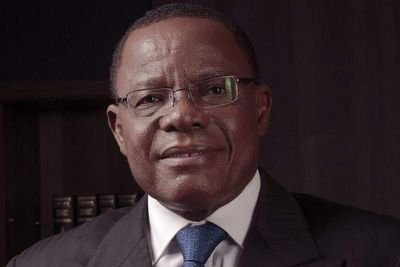
The ICJ expressed its grave concern today at the arrest, detention and criminal charges brought against Maurice Kamto, leader of the opposition party Cameroon Renaissance Movement (CRM), and other CRM activists.
The ICJ called for the immediate release of Maurice Kamto, who is also former Commissioner of the ICJ.
The arrest of Maurice Kamto, on 28 January, came following the violent breakup by the security forces of opposition demonstrations on 26 January.
Maurice Kamto is said to face charges of sedition, insurrection and inciting violence.
There are reports that he and other arrested persons have begun a hunger strike.
The ICJ is concerned that Maurice Kamto and other opposition leaders may be prosecuted for the exercise of rights protected under international law, including the rights to freedom of expression, association, assembly and political participation
The ICJ called on the Cameroon authorities to fully safeguard the human rights of Maurice Kamto and the other detainees, including the rights to liberty, fair trial, and freedom from ill-treatment, guaranteed under Cameroonian and international law.
Contact:
Arnold Tsunga, ICJ Africa Director; t: +27716405926, or +254 746 608 859 ; e: arnold.tsunga(a)icj.org
Solomon Ebobrah, Senior Legal Adviser, ICJ Africa Regional Programme, t: +234 8034927549 ; e: solomon.ebobrah(a)icj.org

Dec 21, 2018 | News
CORE and the ICJ have been granted permission to intervene in an appeal before the United Kingdom Supreme Court (Vedanta Resources PLC and another v. Lungowe and others).
The two organizations will provide evidence on comparative law and international standards regarding the responsibilities of companies in relation to human rights and environmental protection, in particular the recognition of a duty of care of parent companies in relation to the communities living in the surrounding of companies operations.
In August 2015, 1800 Zambian villagers launched a legal action in the UK against mining company Vedanta Resources Plc and its Zambian subsidiary, Konkola Copper Mines, claiming that their water sources and farming land were poisoned from the copper mining operations of both companies.
Last year, the Court of Appeal upheld a High Court ruling that the Zambian claimants had a legal right to bring a claim through the courts in the UK and that a parent company may owe a duty of care to third parties affected by its subsidiary. Vedanta is appealing this ruling in the Supreme Court.
CORE and the ICJ have been lead participants in the elaboration processes of all major international instruments in the field of businesses’ human rights responsibilities in the last decade and are also specially situated to provide information on the state of the law in various jurisdictions.
Our submission is that the Court of Appeal’s conclusion that Vedanta arguably owed a duty of care to the claimants is supported by: international standards regarding the responsibilities of companies in relation to human rights and environmental protection; material published by the UK government with the aim of implementing those international standards; and comparative law jurisprudence.
The hearing will take place on 15-16 January 2019.
Dec 6, 2018 | News
JOHANNESBURG – The ICJ condemns the ongoing violence committed against and intimidation of community members of the Marievale Community Association. Last night a petrol bomb was thrown onto the roof of Chris Koitsioe’s home at approximately 1am while his wife was asleep and alone.
Chris is a community leader and a former SANDF staff sergeant who has consistently opposed the community’s eviction and mistreatment by the SANDF.
The ICJ calls on President Ramaphosa, as Commander in Chief of the SANDF, the Minister of Defence Nosiviwe Mapisa-Nqakula and Lieutenant General Lindile Yam to condemn these outrageous and persistent attacks on members of the community. Furthermore, we call on the SANDF and Minister of Defence and other public officials to comply with and implement all court orders relating to the Marievale community and ensure the safe, expeditious and unimpeded return of community members to their homes. The ICJ further calls for the authorities to openly and transparently investigate this assault on Mr Koitsioe’s home and bring the perpetrators to justice.
The Community was unlawfully evicted from their homes on an abandoned army base near Nigel, Johannesburg South, in late November 2017. They have won repeated court orders from the South and North Gauteng High Courts, ordering the SANDF to return them to their homes and condemning their ill treatment by SANDF members during and after their eviction.
Most recently, with the assistance of Lawyers for Human Rights, the community approached the North Gauteng High Court, seeking the arrest of the Minister of Defence and several army generals involved in the evictions for a failure to comply with orders of the High Court requiring them to be returned to their homes. Though last week, this contempt of court order was denied by the North Gauteng High Court, the court reiterated that the community is to be returned to their homes by Friday 7 December 2018.
Attorney at LHR, Ms. Louise Du Plessis expressed that the “LHR is deeply concerned about the ongoing unlawful conduct taking place at Marievale, especially because of the suspected involvement of the SANDF”. She added: “although, at this stage it is merely an allegation that the SANDF is responsible for the attack on Chris’ family, there is good reason to believe that [Chris] is being targeted for leadership role in the fight to see justice done for the Marievale community, after the appalling and callous eviction at the hands of the SANDF”.
This serious attack on Mr Koitsioe’s home occurred directly in this context.
Mr Koitsioe says “members of the community resisting their eviction in court, feel that the army has encouraged and sown divisions in our midst deliberately”. He adds, “whether this attack was perpetrated with or without the influence and knowledge of the army, it is critical that the SANDF roundly condemn such attacks to prevent further violence against innocent community members seeking only to protect our constitutional rights and internationally recognized human rights”. He concludes “my family and I are traumatised, I have reason to believe that this attack was deliberately perpetrated when it was known that I would be out of town speaking to a group of 25 magistrates in Limpopo about the importance of understanding and protecting communities’ housing rights”.
“While the army should be a source of security for everyone in South Africa, the Marievale community have faced persistent and repetitive violations of their economic, social and cultural rights at the hands of the SANDF. Such conduct is a significant and serious threat to the rule of law” lamented Arnold Tsunga, ICJ Africa Director. “The ICJ is concerned at the pattern of similar attacks against other communities claiming their rights in court such as AbahlaliBaseMjondolo in KwaZulu-Natal and the Amadiba Crisis Committee in Xolobeni who have faced similar harassment, assault and even assassination for claiming their rights” added Tsunga.
Public authorities in South Africa has an obligation under international human rights law and standards to ensure that the bombing of Chris Koitsioe’s home and other such acts of violence and intimidation are promptly, independently and impartially investigated. Those responsible for such attacks must be brought to justice and victims of any human rights violations involved must receive effective redress and remedy.
In October 2018, the UN Committee on Economic, Social and Cultural Rights noted that it was “concerned at reports of human rights defenders, particularly those working to promote and defend the rights under the Covenant in the mining and environmental sectors, being threatened and harassed”. Koitsioe advises that the community has long suspected that part of the motivation for its eviction is the recent initiation of coal mining activities near their homes.
Further comment:
Chris Koitsioe| Marievale Community Association| C: +27738370265
Louise Du Plessis |Attorney | Lawyers for Human Rights C: +27823460744 E: louise(a)communitylaw.co.za
Timothy Fish Hodgson|Legal Adviser on Economic, Social and Cultural Rights| International Commission of Jurists| C: +27828719905 E; timothy.hodgson(a)icj.org
Further Resources:
The judgment handed down on 30 November 2018 is available here.
The judgment handed down in May 2018 is available here.
The judgment handed down in March 2018 is available here.
The judgment handed down in February 2018 is available here.
The South African Constitution is available here.
Nov 25, 2018 | News
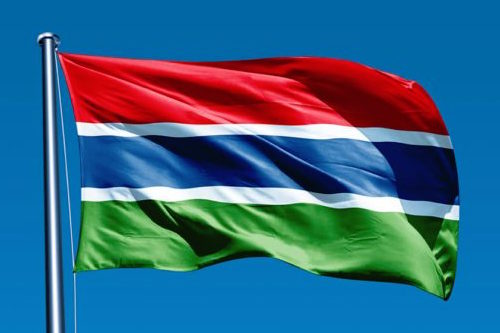
The International Commission of Jurists (ICJ) welcomes the formal declaration of the Gambia to allow individuals and certain non-governmental organizations with observer status access to complain of human rights violations against the Gambian State at the African Court on Human and Peoples Rights.
Gambia became the ninth African State to make the declaration to allow individual access the African Court on Human and Peoples Rights. The ICJ called on other States to follow suit rapidly.
“The Gambian government should be applauded, but more African States need to step up to reinforce their international human rights obligations by allowing victims of violations direct access to the Court and to empower the African Human Rights Court to do the work for which it was set up.” said Arnold Tsunga, Director of the ICJ African Regional Progamme. “It is only through extensive depositing of article 34(6) by the majority of African states that the court can be truly an African Court”.
In addition to granting access to individuals, the Declaration made under article 34(6) of the Protocol to the African Charter on Human and Peoples’ Rights triggers the courts jurisdictional competency under article 5(3) to allow for a limited number of NGOS access.
“The promise of human rights protection under the African human rights system can only be realized when political leaders match rhetoric with such action as allowing individuals to seek an effective remedy by direct access to regional human rights mechanisms like the African Court,” added Arnold Tsunga.
The ICJ emphasized that despite the significant human and material resources invested in the Court since its establishment in 2006, the African Court has been unavailable to great majority of Africans, since very few States had so far entered the declaration recognizing its competency.
Other States that have previously made declarations include Benin, Burkina Faso, Côte d´Ivoire, Ghana, Malawi, Mali, Tanzania and Tunisia.
Although, complaints of human rights violation can only be brought directly before the Court against the nine States that have made the declaration, victims of human rights violation of almost all African States can already bring claims against other states through the non-judicial communication procedure available at the African Commission on Human and Peoples´ Rights.
The ICJ stressed while access to the Commission’s procedures is important, it was not an adequate substitute for the kind of binding legal remedy that can be only ordered by a Court. The ICJ noted poor rate of compliance with decisions of the African Commission.
Contacts:
Arnold Tsunga, Director of the Africa Regional Programme, International Commission of Jurists C: +263 77 728 3248, E: arnold.tsunga(a)icj.org
Solomon Ebobrah, Senior Legal Advisor, Africa Regional Programme, International Commission of Jurists.C: +234 803492 7549, E: solomon.ebobrah(a)icj.org