The ICJ is undertaking today a five-day mission to Uruguay to gather information concerning recent developments affecting the independence of the judiciary in the country.
The mission members will meet with a broad group of stakeholders in Uruguay.
The mission will also look at the impact that these developments have on the exercise of the right of victims to effective remedies for human rights violations.
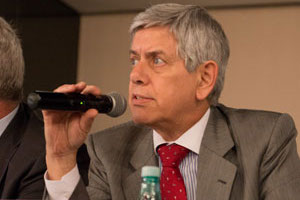
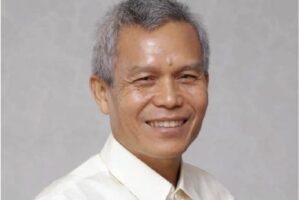
The two-member mission will consist of ICJ Commissioner Belisário dos Santos Junior (picture) and Alejandro E. Salinas Rivera, member of the Advisory Committee of the ICJ Centre for the Independence of Judges and Lawyers.
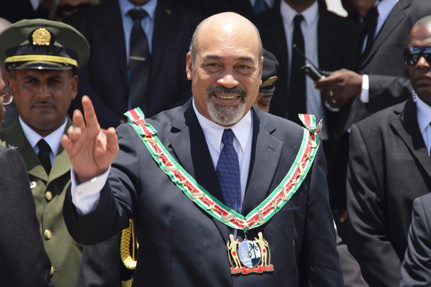
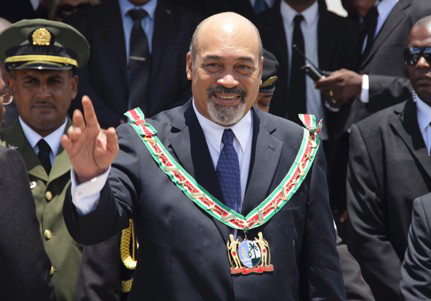
The ICJ today expressed its concern at further delays in the trial of President Desiré Delano Bouterse and 24 others, who are accused of the murder of thirteen civilians and two military personnel in 1982.
The ICJ further expressed its dissatisfaction with the continued uncertainty on the applicability of an Amnesty Law that could threaten the status of the trial.
No public statement has been made by the Suriname Military Court since the judges hearing the matter decided to suspend the trial of President Bouterse in May 2012 and leave it to the public prosecutor and an undesignated court to decide whether President Bouterse and the other accused should benefit from the country’s Amnesty Law.
“It is unacceptable that there have been no pronouncements in this case since the last hearing over eight months ago,” said ICJ Secretary-General Wilder Tayler. “Justice has been denied for more than three decades and it is in everyone’s interests, both the accused and the families of the victims, that this trial should proceed without further delay”.
President Bouterse had been accused of having been present on 8 December 1982 at the military barracks of Fort Zeelandia, where 15 political opponents were allegedly executed.
Reports published by various organizations at the time, including by an ICJ affiliate, indicated that several of the victims had also been subjected to torture. At the time, Bouterse was leading a military government in Suriname.
On 19 July 2010, Desiré Delano Bouterse was elected President of Suriname, taking up office on 12 August 2010. On 4 April 2012, despite some contestation, an amendment to the existing Amnesty Law of 1989 was adopted by the country’s Parliament, purportedly granting amnesty to President Bouterse and others for the murders that allegedly took place in 1982.
As the ICJ noted in its report of 29 May 2012, there are a number of unresolved questions regarding the legality of the Amnesty law.
Following recent attacks against the independence of the judiciary in several Central American countries, the ICJ issued today a strong position statement (in Spanish).
La CIJ ante los últimos acontecimientos que afectan seriamente la independencia de los differentes poderes judiciales en países de la región centroamericana, expresa:
Durante el año 2012, la CIJ ha constatado que los diferentes gobiernos y autoridades de los países de Centroamérica han realizado actos que afectan seriamente la independencia judicial. En Honduras, el miércoles 12 de diciembre, la Asamblea Legislativa procedió a destituir a cuatro magistrados de la Sala Constitucional de la Corte Suprema de Justicia, sin tener facultades o atribuciones para un acto de esta naturaleza. Esta destitución nos sitúa frente a un escenario similar al del Golpe de Estado de junio de 2009;
En El Salvador, se han dado hechos similares; durante todo el año 2012, la Asamblea Legislativa y otros grupos del poder político, han pretendido desarticular la Sala Constitucional de la Corte Suprema de dicho país, debido al contenido de sus sentencias; en Costa Rica hace unas semanas, también la Asamblea Legislativa se negó a ratificar en su cargo a un magistrado de la Sala Constitucional de la Corte Suprema de Justicia, alegando que los fallos de dicha sala creaban una “situación de ingobernabilidad” y que ese acto era un “llamado de atención para el resto de los magistrados”, siendo la primera vez que el Organismo Legislativo se negó a ratificar en su cargo un nuevo mandato de un magistrado del alto Tribunal;
En Guatemala, tanto el Presidente de la Cámara Penal de la Corte Suprema de Justicia como la Fiscal General, vienen siendo objeto de ataques a su independencia por parte de abogados defensores de las personas acusadas, por la función positiva que han cumplido en la lucha contra la impunidad en casos de graves violaciones a los derechos humanos cometidas durante el conflicto armado;
La CIJ considera que todos estos hechos constituyen injerencias y ataques a la independencia del Poder Judicial; tratándose de magistrados de diferentes Cortes Supremas y de una Fiscal General, estos actos evidencian por sí mismos, la precariedad de la garantía de independencia judicial en dichos países. A esta situación, hay que agregar que varios de los países mencionados, carecen de sistemas de carrera judicial y de mecanismos de protección adecuados para garantizar a los funcionarios el ejercicio independiente de la función jurisdiccional; además, en ellos existen fenómenos de impunidad generalizados y de cuerpos ilegales, aparatos clandestinos de seguridad y crimen organizado.
Frente a estos hechos, la CIJ recomienda:
Que las autoridades estatales concernidas con los hechos arriba mencionados, se abstengan de interferir en el ámbito de la independencia de los poderes judiciales, ya que de lo contrario, estarían incumpliendo sus obligaciones internacionales sobre respeto a la independencia de poderes, establecidas en la Convención Americana sobre Derechos Humanos y en el Pacto Internacional de Derechos Civiles y Políticos;
Que se tomen las medidas necesarias para asegurar la independencia de jueces, magistrados y fiscales como corresponde en un Estado de Derecho;
Que los estados relacionados establezcan mecanismos de protección para jueces, magistrados, fiscales y demás operadores de justicia, a fin de salvaguardar su integridad y garantizar el ejercicio de la función jurisdiccional independiente;
Que los estados concernidos impulsen procesos de creación o fortalecimiento de carreras judiciales de conformidad con los estándares internacionales;
Que se fortalezcan los poderes judiciales y otras entidades del sector justicia, a fin de lograr la efectiva protección de los derechos humanos incluida la lucha contra la impunidad.
La CIJ continuará cumpliendo con su mandato de promover y garantizar la independencia de jueces, abogados y fiscales; en ese sentido, le dará seguimiento a estas situaciones y continuará observando y proponiendo soluciones a esta problemática.
Para mayor información :
Ramón Cadena Rámila, Director de la Comisión Internacional de Juristas para Centro América, t + 502 30441818
The ICJ and others argue that Spain should assume jurisdiction, as the US has allowed for impunity of top officials who facilitated torture.
The ICJ joined the Center for Constitutional Rights, the European Centre for Constitutional and Human Rights and other leading organizations and scholars, arguing that the Spanish Supreme Court should reopen the investigations for participation in or aiding and abetting torture and other human rights abuses against six senior legal officials of the Bush Administration.
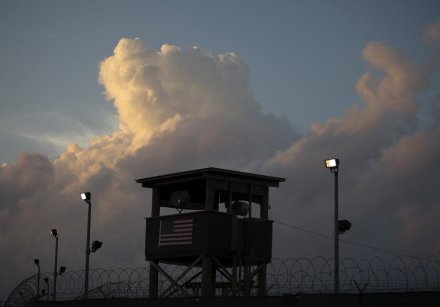
The brief argues that Spain should exercise jurisdiction under Spanish law because the US itself has failed to carry out any meaningful investigations and prosecutions against the officials, who are alleged to have provided legal authorisation for torture practices against “war on terror” detainees.
The officials are David Addington (former Counsel to, and Chief of Staff for, former Vice President Cheney): Jay S. Bybee (former Assistant Attorney General, Office of Legal Counsel (OLC), U.S. Department of Justice (DOJ); Douglas Feith (former Under Secretary of Defense for Policy, Department of Defense (DOD); Alberto R. Gonzales (former Counsel to former President George W. Bush, and former Attorney General of the United States); William J Haynes (former General Counsel, DOD); and John Yoo (former Deputy Assistant Attorney General, OLC, DOJ).
In an interactive dialogue with representatives of its government, the ICJ called on Brazil to bring its legislation and practice in full compliance with its obligation to consult with indigenous peoples. Watch the webcast.
The ICJ also urged Brazil to expedite steps towards ratification of the Optional Protocol to the International Covenant on Economic, Social and Cultural Rights, the International Convention for the Protection of the Rights of All Migrant Workers and ILO Convention 189 on the protection of domestic workers.
The ICJ delivered its statement today during the adoption by the UN Human Rights Council of the Universal Periodic Review outcome document on Brazil, during the course of the 21st regular session of the Council.
🍪 We use cookies on our website to improve your experience. By clicking "Accept all", you consent to the use of all the cookies. If you'd like to control which cookies we use, please visit "Cookie settings". To find out more, read our privacy policy and cookie policy.
Functional
Always active
The technical storage or access is strictly necessary for the legitimate purpose of enabling the use of a specific service explicitly requested by the subscriber or user, or for the sole purpose of carrying out the transmission of a communication over an electronic communications network.
Preferences
The technical storage or access is necessary for the legitimate purpose of storing preferences that are not requested by the subscriber or user.
Statistics
The technical storage or access that is used exclusively for statistical purposes.The technical storage or access that is used exclusively for anonymous statistical purposes. Without a subpoena, voluntary compliance on the part of your Internet Service Provider, or additional records from a third party, information stored or retrieved for this purpose alone cannot usually be used to identify you.
Marketing
The technical storage or access is required to create user profiles to send advertising, or to track the user on a website or across several websites for similar marketing purposes.