Jun 16, 2017 | News
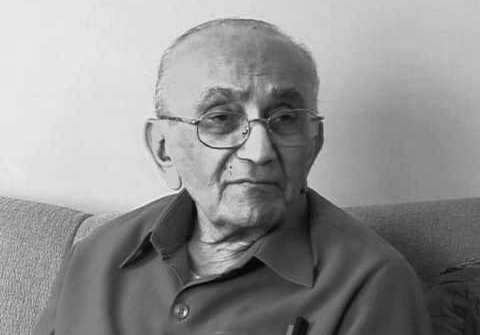
Justice Prafullachandra Natwarlal Bhagwati, former ICJ Commissioner and Honorary Member and Chief Justice of the Supreme Court of India, passed away at the age of 95, on 15 June 2017, following a brief illness.
“The International Commission of Jurists benefited greatly from Justice Bhagwati’s engagement and leadership. He was a giant of the human rights movement, dedicated to enlarging and ensuring access to justice for everyone, including those who couldn’t seek and receive justice due to their economic or social status,” said Sam Zarifi, ICJ’s Secretary-General.
“His dedication and ground-breaking approach to human rights accountability inspired many within and outside of the ICJ, and the values he represented will continue to inspire and inform our work,” he added.
Justice Bhagwati had a long history of promoting and protecting human rights, both at home and on the international stage, particularly for the most marginalized and vulnerable individuals and groups.
Former Chief Justice of India, Justice P.N. Bhagwati held a long and illustrious career within the Indian judiciary.
He introduced many innovative reforms within the Indian judicial system that increased access to justice for the poorest and most disadvantaged, including as a pioneer of public interest litigation and absolute liability.
Outside of India, Justice P.N. Bhagwati played a prominent role in the international human rights movement, for example as a member of the Committee of Experts of the International Labour Organization and Chair of the United Nations Human Rights Committee.
He was also actively involved in a number of non-governmental organizations, including the ICJ, where he committed to a high number of missions, seminars, publications and other activities on behalf of the organization.
He also served as a long-standing Chair of the Advisory Board for the ICJ’s Centre for the Independence of Judges and Lawyers.
Jun 5, 2017 | Advocacy, Non-legal submissions
The ICJ has made a submission to the UN Human Rights Committee in advance of its forthcoming examination of Pakistan’s initial report under International Covenant on Civil and Political Rights (ICCPR).
In its submission, the ICJ has brought to the Committee’s attention concerns in relation to the following issues:
- The compliance of Pakistan’s counter-terrorism laws with the State’s obligations under Articles 6, 9 and 14 of the Covenant, particularly in the context of its “military justice” system;
- Shortcomings in the legal framework relevant to torture and other ill-treatment;
- The continuing practice of enforced disappearances and, in this context, the ongoing impunity of law enforcement and military agencies;
- The compliance of Pakistan’s blasphemy laws with Articles 14, 18, and 19 of the Covenant; and
- The compatibility of Pakistan’s “International Non-Governmental Organizations Policy” with the State’s obligations under Article 22 of the Covenant.
The Human Rights Committee will examine Pakistan’s initial report during its 120th session, which will be held in Geneva from 3-28 July 2017.
Following the review, the Committee will adopt Concluding Observations setting out recommendations to the Pakistani Government.
Pakistan -ICCPR submission-Advocacy-non legal submission-2017-ENG (full text in PDF)
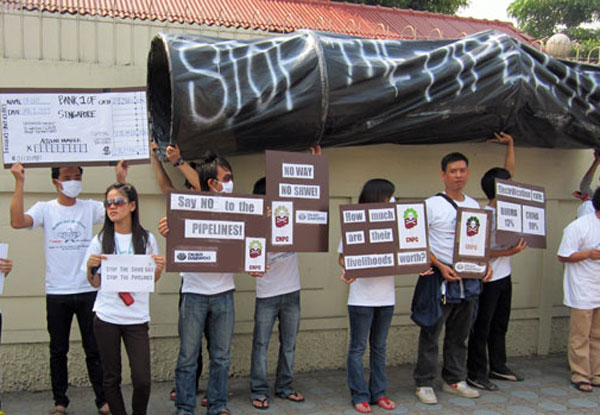
May 30, 2017 | News, Op-eds
An opinion piece by Sean Bain, ICJ legal consultant in Myanmar, and Vicky Bowman, Director of the Myanmar Centre for Responsible Business.
A strategic environmental assessment is needed to enable sustainable development and the fulfilment of human rights for the people of Kyaukphyu, the site of a planned SEZ and deep-sea port.
In its interim report released in March, the Advisory Commission on Rakhine State chaired by former United Nations secretary-general Kofi Annan, called for a comprehensive assessment of the special economic zone in Kyaukphyu Township.
The aim would be to “explore how the SEZ may affect local communities and map how other economic sectors in the state may benefit (or possibly suffer) from the SEZ”.
The State Counsellor’s Office endorsed the commission’s interim recommendations, including for this assessment.
The call for a comprehensive assessment in Kyaukphyu echoes a proposal from our organisations, the Myanmar Centre for Responsible Business and the International Commission of Jurists, for the government to undertake a strategic environmental assessment.
Its purpose would be to address concerns about human rights and to consider the cumulative environmental and social impacts of planned developments. Oxfam has put forward a similar recommendation to the government.
Our recommendation comes as media reports this month suggest that the government is giving renewed attention to the future of the SEZ and related projects in Kyaukphyu.
The SEZ, which has been planned to include industrial parks along with deep-sea ports and transport links to China, would transform the demographic and economic character of Rakhine State’s central coast and hinterlands.
It would have significant impacts for local communities and the state economy, both during and beyond the envisaged 20-year construction period.
Kyaukphyu – already the starting point for oil and gas pipelines to China – would host the largest development project ever undertaken in Rakhine State.
Financed mostly by Chinese investors, with shipping facilities linking Myanmar to international routes through the Bay of Bengal, the project also has national and regional economic significance.
However, to date there has been insufficient consideration of the impacts, either positive or negative, on the livelihoods and human rights of residents and the economy of Rakhine State.
Plans for the SEZ are ambitious yet detailed information is scarce and so far there has been no genuine public participation in planning processes.
While contracts and payments regarding investments are decided in Myanmar’s economic and political capitals, it is at the local level that negative impacts can be felt the most.
It is also at the local level where economic benefits may be enhanced.
To address negative impacts and enable benefits, a joined-up approach that brings together national and local government and local and foreign companies with the people of the area is needed.
At present, a lack of coordination across ministries, and between national and regional governments is limiting the scope to harness opportunities and manage impacts of investments.
Despite their significance, neither the SEZ and deep-sea ports nor the offshore gas projects serviced from Kyaukphyu are included in Rakhine State’s socioeconomic development plan.
We believe a strategic environmental assessment is needed to enable sustainable development and the fulfilment of human rights in the Kyaukphyu area.
Strategic environmental assessments, which are part of Myanmar law, are defined in the 2015 Environmental Impact Procedure as “a range of analytical and participatory approaches that aim to integrate environment into policies, plans and programs and evaluate the inter-linkages with economic and social considerations.
The principle is to integrate environment, alongside economic and social concerns, into a holistic sustainability assessment.”
Unlike an environmental impact assessment, which is a permitting requirement for individual projects, a strategic environmental assessment takes a holistic approach by integrating environmental and social concerns and human rights protection, to produce a big picture view of the impacts of interrelated projects.
At Kyaukphyu, the national and state governments – drawing on financial and technical assistance from development and human rights partners – could commission expert independent consultants to undertake the necessary studies and analysis to produce such an assessment.
The assessment would consider the cumulative human rights and environmental impacts of the SEZ, seaports, pipelines, offshore gas developments and transport and energy infrastructure, including impacts on traditional fishing and farming livelihoods in Kyaukphyu.
It could address how best to avoid or minimise the physical and economic displacement of residents, and how to reduce the potential for local tensions and conflict associated with expected socioeconomic transformations.
A legal framework – based on international law and standards – for protecting human rights during economic displacement and resettlement needs to be put in place. That’s not just for the SEZs, but for all projects.
While insufficient to address the lack of legal accountability in the SEZ Law and the limited access to justice in Myanmar, a strategic environmental assessment could improve transparency and give voice to the views of local communities, businesses, civil society organisations and other stakeholders.
This would help fill major gaps in planning and decision-making processes thus far.
Consultation is critical to the value and legitimacy of any assessment but too often it is tokenistic or minimised to cut costs and time.
Development partners should ensure that they are funding genuine and extensive public participation.
A lesson from Myanmar’s only other assessment of this kind, currently underway with support from the International Finance Corporation focused on the hydropower sector, has been the need to communicate and engage constantly about the purpose and process of the assessment.
Many civil society groups chose not to participate in consultations for the IFC-backed assessment due to scepticism and lack of confidence in the process.
To learn from this experience, international and local NGOs in Kyaukphyu could share information and support communities to make informed decisions about their engagement with a strategic environmental assessment.
Until there is a concrete and transparent plan to manage impacts from development projects in Kyaukphyu, particularly those with negative impacts on human rights, current preparations for the SEZ should be put on hold.
This includes land acquisition that is underway and risks violating the rights of local residents.
The government should also delay entering into investment agreements with the winning consortium of developers, which is led by China’s CITIC Group, until there has been broader multi-stakeholder debate about the SEZ, and how it may develop and interact with other investments in the area.
A strategic environmental assessment in Kyaukphyu could contribute towards correcting a development process that has so far not contributed meaningfully to the realisation of human rights or addressed the economic needs of the population in Kyaukphyu or Rakhine State.
We hope that the Myanmar government at national and state level as well as development partners will take this forward, building on the advisory commission’s recommendation and its endorsement by the state counsellor.
May 26, 2017 | News
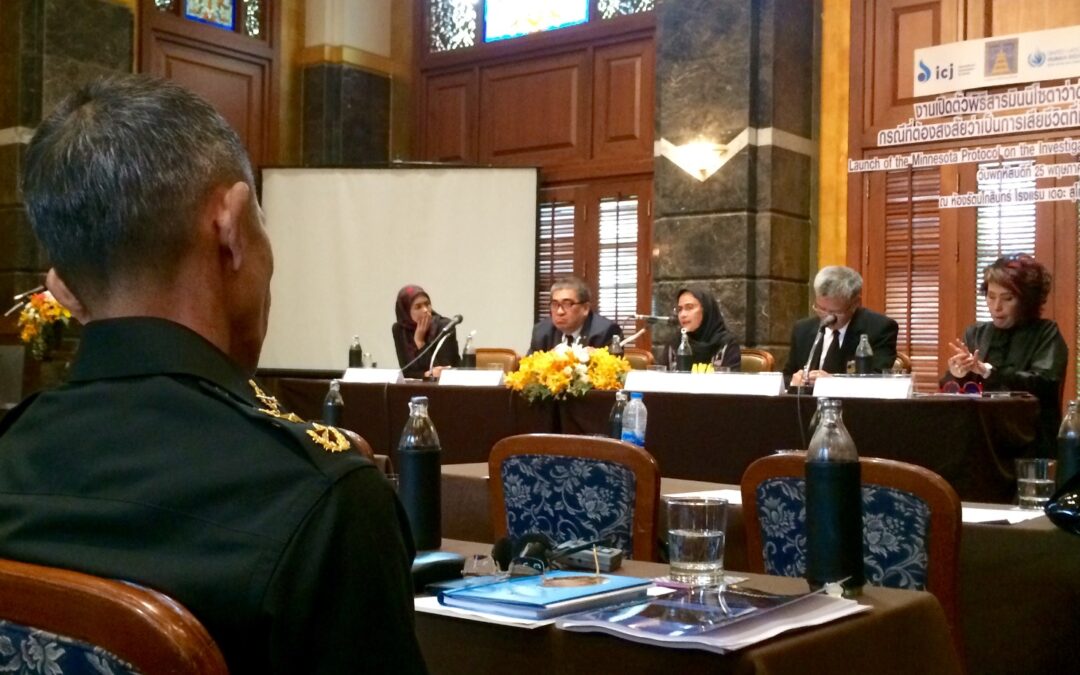
The ICJ has launched the revised Minnesota Protocol on the Investigation of Potentially Unlawful Death (2016) in Thailand, together with the Thai Ministry of Justice, the Office of the High Commissioner for Human Rights and the German Embassy in Bangkok.
The launch on Thursday coincided with a parallel launch of the revised Minnesota Protocol by the Office of the High Commissioner for Human Rights in Geneva.
The Minnesota Protocol is a companion document to the UN Principles on the Effective Prevention and Investigation of Extra-legal, Arbitrary and Summary Executions (1989), and sets a common standard of performance in investigating potentially unlawful death and a shared set of principles and guidelines for States, as well as for institutions and individuals who play a role in death investigations.
The launch was attended by representatives of the Ministry of Justice, Ministry of Foreign Affairs, the Royal Thai Police, the Office of the Attorney General, the Ministry of Defence, and the National Human Rights Commission of Thailand.
Kingsley Abbott, ICJ Senior International Legal Adviser for Southeast Asia and member of the Forensics and Legal Working Groups which assisted with the revision the Minnesota Protocol, opened the event for the ICJ by commending Thailand for hosting the first national launch of the revised Minnesota Protocol.
“Investigations play a key role in accountability by upholding the right to life which is guaranteed by Article 6 of the International Covenant on Civil and Political Rights, to which Thailand is a State Party,” said Abbott. “All over the world we witness impunity in cases of unlawful death because either investigations do not take place or are inadequate and non-compliant with international law and standards.”
“The Minnesota Protocol makes it clear that investigations must be prompt, effective and thorough, as well as independent, impartial and transparent, and we expect that the revised Minnesota Protocol will help Thailand and other States to meet that obligation,” added Abbott. “The ICJ wishes to take this opportunity to reaffirm our long-standing commitment to the Thai authorities to assist them in efforts to implement Thailand’s international human rights obligations.”
The other speakers at the launch were:
- Ms Pitikarn Sitthidech, Director General, Rights and Liberties Protection Department, Ministry of Justice
- Ms Katia Chirizzi, Deputy Head, Office of the High Commissioner for Human Rights (OHCHR), Regional Office for Southeast Asia
- Prof. Stuart Casey-Maslen, Project Manager of the revision of the Minnesota Protocol, University of Pretoria
- Dr Pornthip Rojanasunan, Adviser, Central Institute for Forensic Science (CIFC) and member of the Expert Advisory Panel of the revision of the Minnesota Protocol
- Ms Angkhana Neelapaijit, Commissioner, National Human Rights Commission of Thailand and Victim Representative
- Mr Kittinan Thatpramuk, Deputy Director General, Department of Investigation, Office of the Attorney General
- Pol.Lt.Col. Payao Thongsen, Commander, the Special Criminal Cases Office 1, Department of Special Investigation (DSI)
Contact
Kingsley Abbott, ICJ Senior International Legal Adviser for Southeast Asia, t: +66 94 470 1345; e: kingsley.abbott(a)icj.org
Universal-Minnesota Protocol-Advocacy-2017-ENG (PDF, English)
Universal-Minnesota-Protocol-Advocacy-2017-THA (PDF, Thai)
Universal-Minnesota Protocol-Advocacy-2017-BUR (PDF, Burmese)

May 25, 2017 | News
The Philippine government must ensure that human rights are protected and respected in Mindanao, in light of the yesterday’s declaration of martial law and suspension of the writ of habeas corpus, the ICJ said today.
The ICJ reminds the Philippine government that it remains responsible for upholding its international human rights legal obligations, notwithstanding the imposition of martial law.
The ICJ also calls upon the Congress and, if engaged, the Supreme Court, to exercise their oversight authority to ensure that the declaration is necessary and lawful, and that the activities conducted under martial law respect human rights.
“The suspension of the writ of habeas corpus, which is vital for protecting the right to liberty and preventing torture, ill-treatment and enforced disappearance, must be lifted immediately,” said Frederick Rawski, ICJ’s Regional Director for Asia and the Pacific.
Rawski added, “The provision of the Philippine Constitution providing for the possibility of suspension of the writ of habeas corpus is in contravention of international law, and denying the right to challenge the lawfulness of a detention is incompatible with recognized principles of the rule of law.”
President Rodrigo Duterte declared martial law on the evening of 23 May 2017, covering the island of Mindanao, after Maute, an armed group that had pledged allegiance to the Islamic State of Iraq and the Levant (ISIL), reportedly laid siege on Marawi City. The next day, 24 May 2017, President Duterte suspended the writ of habeas corpus.
The ICJ recalls that the right to challenge the lawfulness of one’s detention through habeas corpus or similar procedures must always be available, even under states of exception like martial law.
The ICJ calls on the Philippine government to establish a clear timetable for an end to martial law, and to ensure in the interim that human rights are fully protected.
Background
Under Article VII, Section 18 of the 1987 Philippine Constitution, the President may declare martial law or suspend the privilege of the writ of habeas corpus in case of invasion or rebellion and only “when the public safety requires it.” However, Article VII, Section 18 of the 1987 Constitution limits a declaration of martial law to 60 days, and imposes other important limitations – including that the President of the Philippines must submit a report to Congress within 48 hours, which may then revoke the suspension or declaration.
Any citizen may petition the Supreme Court to review the sufficiency of the factual basis of the proclamation of martial law, or the suspension of the writ of habeas corpus. Finally, this provision of the Constitution also provides that in the case of a suspension of the writ of habeas corpus, any arrested or detained person must be judicially charged within three days, or be released.
Contact
Emerlynne Gil, ICJ’s Senior International Legal Adviser for Southeast Asia, email: emerlynne.gil(a)icj.org tel: +66 840923575.