Mar 4, 2016 | Advocacy, Non-legal submissions
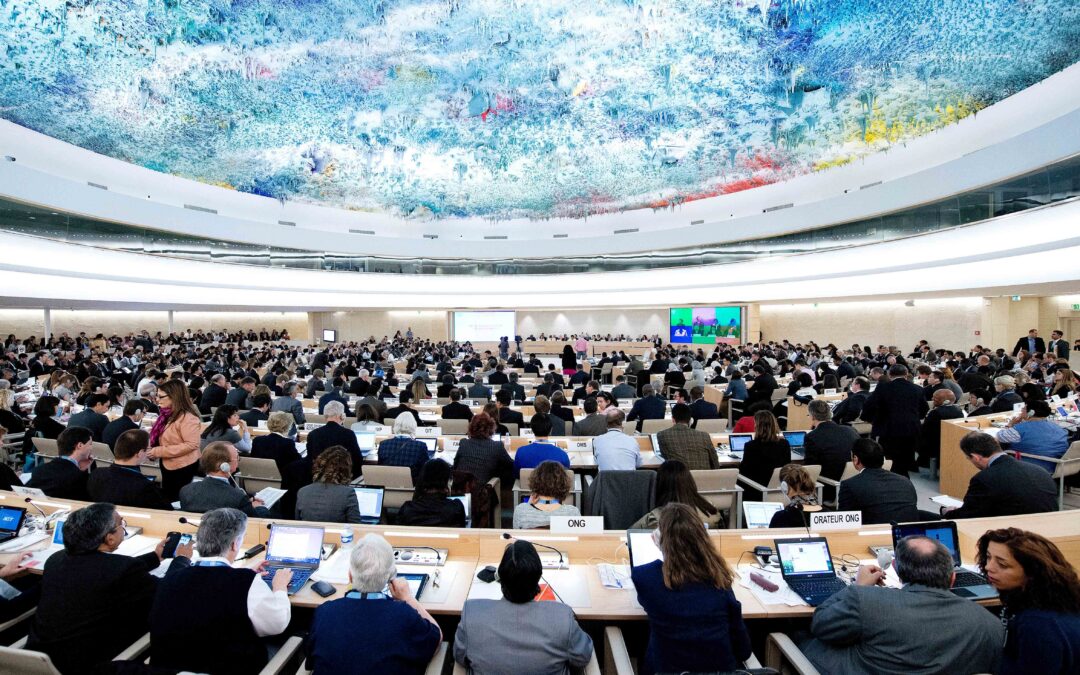
The ICJ prepared an oral statement on the situation of human rights defenders in Malaysia, for today’s interactive dialogue at the Human Rights Council with the UN Special Rapporteur on the situation of human rights defenders.
The statement could not be delivered in the limited time available for civil society statements; its text is set out below:
ICJ Oral Statement in the Interactive Dialogue with the Special Rapporteur on the situation of human rights defenders, Mr. Michel Forst
SITUATION OF HUMAN RIGHTS DEFENDERS IN MALAYSIA
3 March 2016
“The International Commission of Jurists (ICJ) welcomes the report of the Special Rapporteur on the situation of human rights defenders.
The work of human rights defenders is particularly under challenge in States where governments have conferred on themselves sweeping powers to restrict human rights on grounds of national security. One example, as reflected in the Special Rapporteur’s “Observations on communications” (UN Doc A/HRC/31/55/Add.1), is the situation of human rights defenders in Malaysia.
The ICJ welcomes the Attorney General’s decision to drop sedition charges against law lecturer Dr. Azmi Sharom; however, the Sedition Act and the Peaceful Assembly Act are still being abused to harass human rights defenders and others. Most recently, the High Court of Malaysia sentenced activist Hishamuddin Rais to nine months in jail for sedition, for calling for peaceful protest against the results of the 2013 general election on the basis that it was not transparent. Maria Chin Abdullah and Jannie Lasimbang, organizers of the Bersih 4.0 peaceful assembly calling for good governance, were charged under the Peaceful Assembly Act for allegedly omitting to inform the police about the assembly. There have reportedly been at least 91 cases of arrests, charges or investigations for sedition during 2015, and more than 30 cases of arrests under the Peaceful Assembly Act since 2013. Most, if not all, of these people are human rights defenders, including Eric Paulsen, the Director of Lawyers for Liberty, Adam Adli, a human rights activist, and Mandeep Singh, the Secretariat Manager of Bersih.
Unless repealed or drastically revised, these laws will continue to facilitate sweeping and arbitrary repression of freedoms of expression, assembly and association of human rights defenders, under the flag of national security. This contravenes the UN Declaration on Human Rights Defenders and numerous other resolutions of the Human Rights Council and General Assembly, including General Assembly resolution 70/161, adopted by the General Assembly in December with Malaysia voting in favor. Among other things, resolution 70/161 urged States ensure that human rights defenders are able to exercise the rights to freedom of opinion, expression, peaceful assembly and association, which are essential for the promotion and protection of human rights; and it emphasized that national security measures must not hinder the work and safety of individuals engaged in promoting and defending human rights.
In this context, the ICJ would like to ask the Special Rapporteur to comment on the obligations of governments to repeal or amend legislation that allows for abusive arrest or prosecution of human rights defenders on grounds such as “national security”, “sedition” or for not giving prior notice of assemblies.”

Feb 19, 2016 | News
The ongoing incommunicado detention of human rights defenders Nguyễn Văn Đài and Lê Thu Hà must end, said today seven human rights groups, including the ICJ. It violates their right to freedom from torture and other cruel, inhuman or degrading treatment or punishment.
All charges against Nguyễn Văn Đài and Lê Thu Hà, should be withdrawn and they should be immediately and unconditionally released, the organizations added.
An incommunicado detention is one in which a detainee is held without access to the outside world, particularly to family, lawyers, courts and independent doctors. The practice of incommunicado detention violates key rights of persons deprived of liberty and facilitates torture and other ill-treatment. Prolonged periods of incommunicado detention can themselves constitute a violation of the prohibition on torture and other ill-treatment.
Nguyễn Văn Đài and Lê Thu Hà were arrested on 16 December 2015 and charged under Article 88 of the Penal Code, ‘Conducting propaganda against the state’. All efforts by family and legal counsel to visit the pair since their arrests have been denied.
Vietnam-Release prisoners-News-webstory-2016-ENG (full story, in PDF)
Feb 12, 2016 | Advocacy, Non-legal submissions
The ICJ submitted a written statement to the Human Rights Council as a response to the latest report of the Special Rapporteur on freedom of religion or belief.
The written submission recognized the Special Rapporteur’s active participation in the Regional Conference on Freedom of Religion or Belief in Southeast Asia, organized by the ICJ in collaboration with the Asian Forum for Human Rights and Development (FORUM-ASIA) and Boat People-SOS (BPSOS) in Bangkok, Thailand from 30 September to 1 October 2015.
It also highlighted the adoption of the Conference Declaration on Freedom of Religion or Belief in Southeast Asia, a document through which participants expressed their commitment to working to enhance the right to freedom of religion or belief in the region.
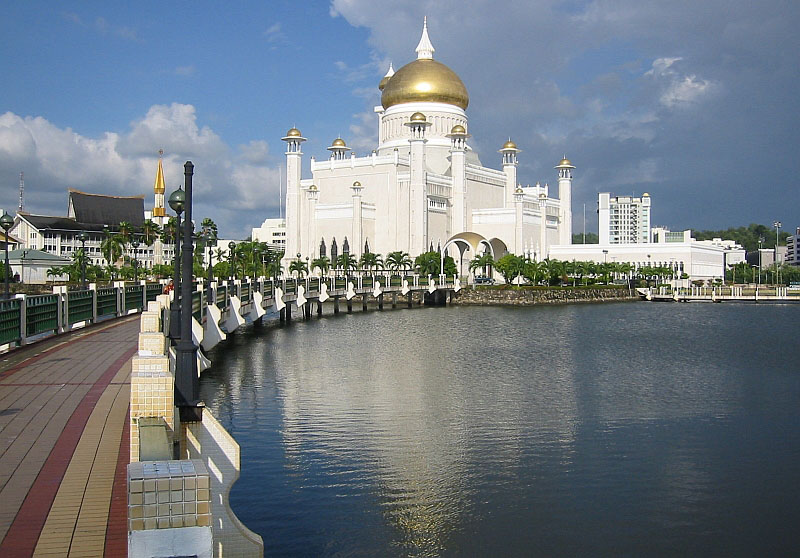
The ICJ expressed its concern regarding the banning of Christmas celebrations in Brunei Darussalam, as the restrictions imposed are inconsistent with international law standards, specifically with the principle of non-discrimination.
Finally, the statement called on Brunei to eliminate the restrictions imposed for celebrating non-Muslim festivities and encouraged the Government of Brunei to implement the measures recommended by the Special Rapporteur in his report.
SouthEast Asia-HRC statement on freedom or belief-Advocacy-Non legal submissions-2016-ENG (full text, in PDF)
Feb 9, 2016 | News
The ICJ today condemned the arrest of Judge Ahmed Nihan and called it a further attack on the independence and integrity of the country’s judiciary.
“President Abdulla Yameen’s Government has dealt another blow to the independence of the judiciary and the rule of law,” said Sam Zarifi, ICJ’s Asia Director.
“The arrest of Judge Ahmed Nihan is another step down in the country’s downward spiral away from democracy and stability, and is squarely at odds with the Maldives’ international obligations,” he added.
Maldivian officials confirmed in a statement that Ahmed Nihan, a magistrate’s court judge, and Muhthaz Muhsin, former Prosecutor General, were arrested on Sunday night on charges of forging a warrant for the arrest of President Abdulla Yameen.
Muhthaz Muhsin was released soon after, but Judge Ahmed Nihan was placed in judicial custody for one week.
“Judge Ahmed Nihan’s arbitrary and seemingly politically motivated arrest is yet another example of executive highhandedness and the corrosion of separation of powers in the Maldives,” said Zarifi.
“Undue interference with the Human Rights Commission, the arbitrary dismissal of the Auditor General, and the unlawful removal of two Supreme Court justices are just a few examples,” he added.
According to the Maldivian media, the arrest warrant, allegedly issued by Judge Ahmed Nihan, related to an on-going investigation against President Abdulla Yameen for embezzlement of state funds.
President Yameen’s spokesperson said in an interview the warrant was “fraudulent” because it “did not originate from any official authority.”
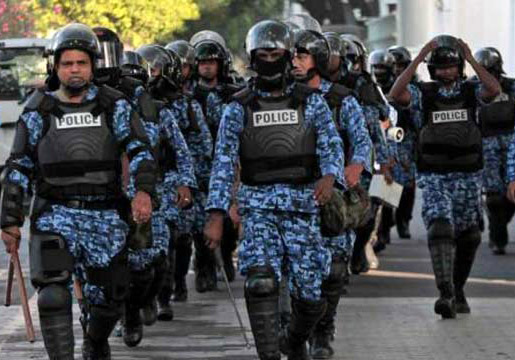
The Maldivian police (photo) claim the arrest warrant was issued using “falsified information”.
The ICJ calls on the authorities to immediately release Judge Ahmed Nihan and allow him to continue his judicial duties.
The ICJ also reiterates its previous calls on the Maldivian Government to implement recommendations on human rights and the rule of law, including the independence of the judiciary, received as part of the UN Universal Periodic Review process.
Contact:
Sam Zarifi, ICJ Asia Pacific Regional Director (Bangkok), t: +66 807819002; e: sam.zarifi(a)icj.org
Additional information:
In a fact-finding report released in August last year, the ICJ noted with concern the serious erosion of the independence, impartiality and integrity of the judiciary, which resulted in the deterioration in the rule of law in the Maldives and the stalling of the country’s transition toward a more representative government.
Article 14 of the International Covenant on Civil and Political Rights (ICCPR), which Maldives acceded to in 2006, safeguards the independence and impartiality of the judiciary.
International standards on judicial independence, including the UN Basic Principles on the Independence of the Judiciary, provide that judges shall be free from any “inappropriate or unwarranted interference with the judicial process”.
The fact that executive or legislative actors may disagree with a judge’s decision or interpretation of the law cannot be a valid ground for removal or punishment of the judge.
The UN Basic Principles on the Independence of the Judiciary further stipulate that judges shall be subject to suspension or removal only through proceedings that guarantee the right to a fair hearing (Principle 17); and then only for reasons of incapacity or behaviour that renders them unfit to discharge their duties (Principle 18); that all disciplinary, suspension or removal proceedings shall be determined in accordance with established standards of judicial conduct (Principle 19), and decisions in disciplinary, suspension or removal proceedings should be subject to an independent review (Principle 20). The Basic Principles elaborate on legal obligations under article 14 of the International Covenant and Civil Rights (ICCPR).
The Commonwealth Latimer House Principles on the Three Branches of Government 2003 contain similar provisions.
Article 154 of the Maldivian Constitution states that a judge may be removed from office only if the Judicial Service Commission finds that the person is grossly incompetent or guilty of gross misconduct.

Feb 5, 2016 | News
The ICJ today called on the Royal Thai Government to immediately drop criminal proceedings against human rights lawyer Sirikan Charoensiri.
On 2 February 2016, Sirikan Charoensiri received two summons to appear at the Chanasongkram Police Station on 9 February 2016 to be charged with two offences under the Criminal Code of Thailand: “giving false information regarding a criminal offence” and “refusing to comply with the order of an official”.
Such charges could result in punishment of up to two years’ imprisonment.
“The charges against Sirikan Charoensiri apparently relate to her efforts to protect the legal and human rights of her clients, students who never should have faced arrest or criminal proceedings for peacefully exercising their freedoms of expression and assembly in the first place,” said Matt Pollard of the ICJ’s Centre for the Independence of Judges and Lawyers.
“Prosecuting Sirikan Charoensiri for her efforts to defend human rights is totally unacceptable and will only put Thailand further in violation of its international obligations,” he added.
The charges appear to relate to the circumstances surrounding Sirikan Charoensiri’s provision of legal aid to 14 students who were arrested on 26 June 2015 after carrying out peaceful protests calling for democracy and an end to military rule.
Although the precise basis for the changes is not set out in the summonses, the complainant is named as Pol. Col. Suriya Chamnongchok, a police officer involved in the investigation of the 14 students.
Sirikan Charoensiri, a lawyer with Thai Lawyers for Human Rights (TLHR), has provided legal aid to many individuals, including activists and human rights defenders, since military rule was imposed in May 2014.
The ICJ first expressed concern about the Government’s targeting of Sirikan Charoensiri on 2 July 2015, after the Royal Thai Police threatened Sirikan Charoensiri with legal action, publically announced they were considering charging her with a crime, and visited her home and questioned her family.
These threats and harassment, like the currently pending charges, appeared to be in retaliation for her having refused consent for police to search her car after the students’ court hearing, and for having filed a complaint with the police when they proceeded to impound it.
The ICJ has brought the case to the attention of the United Nations Special Rapporteurs on the Independence of Judges and Lawyers, and on the Situation of Human Rights Defenders.
The situation of human rights in Thailand will be examined by the UN Human Rights Council in May 2016, as part of the Council’s Universal Periodic Review of all States.
“Ahead of Thailand’s human rights review by the United Nations in May, and against the background of the tabled ‘roadmap’ towards democratic rule, the need for the Royal Thai Government to restore respect for human rights only grows more urgent by the day,” said Pollard.
Contact
In Bangkok: Kingsley Abbott, International Legal Adviser for Southeast Asia, t +66 94 470 1345 ; e: kingsley.abbott(a)icj.org
In Geneva: Matt Pollard, ICJ Senior Legal Adviser, t: +41 22 979 38 12 ; e: matt.pollard(a)icj.org
Background
The International Covenant on Civil and Political Rights (ICCPR), to which Thailand is a Party, guarantees the right to peaceful assembly; the right to freedom of expression; the prohibition of arbitrary arrest or detention; the right to a fair and public hearing by a competent, independent and impartial tribunal established by law (including the right of prompt access to a lawyer and precluding jurisdiction of military courts over civilians in circumstances such as these); and the prohibition of arbitrary or unlawful interference with privacy, family, home and correspondence (which includes arbitrary searches or seizures).
The UN Declaration on Human Rights Defenders affirms the right of everyone peacefully to oppose human rights violations. It prohibits retaliation, threats and other harassment against anyone who takes peaceful action against human rights violations, both within and beyond the exercise of their professional duties. It protects the right of persons to file formal complaints about alleged violations of rights. The UN Basic Principles on the Role of Lawyers provide that governments are to ensure that lawyers are able to perform their professional functions without intimidation, hindrance, harassment or improper interference.
Thailand-Sirikan Charoensiri-News-Press releases-2016-THA (full text in PDF, Thai)