Apr 15, 2016 | News
The Nepal government should immediately stop all intimidation and harassment of the National Human Rights Commission (NHRC) and its staff and respect its independence in line with international standards, the ICJ and other rights groups said today.
The attempts to intimidate the NHRC are a direct contradiction of the United Nation’s Principles relating to the Status of National Institutions (the Paris Principles) as well as Nepal’s constitution, the ICJ Amnesty International and Human Rights Watch said.
According to the commissioners and confirmed by independent media accounts, on April 3, 2016, Prime Minister K.P. Sharma Oli summoned the National Human Rights Commission chair, Anup Raj Sharma, and other commissioners to question them about the NHRC’s statement delivered by Commissioner Mohna Ansari during the Universal Periodic Review (UPR) of the human rights situation in Nepal before the UN Human Rights Council in Geneva in March.
In its statement, the commission highlighted various ongoing human rights concerns, including discriminatory citizenship provisions in the new constitution, the continued failure to properly investigate alleged unlawful killings and excessive use of force during protests in the Terai region in 2015, violations of the economic, social, and cultural rights of earthquake victims (photo), and the need for credible transitional justice for conflict victims.
“As the principal independent constitutional body mandated to promote and protect human rights in the country, the NHRC plays a vital role in ensuring governmental accountability, and was well within its authority under both the Nepali Constitution and international standards when it delivered its submission to the UN Human Rights Council during the UPR,” said Nikhil Narayan, ICJ’s South Asia Senior Legal Adviser.
“The PM’s blatant attempt to intimidate the NHRC members for that submission is a flagrant violation of the government’s basic obligation to ensure the NHRC’s ability to carry out its work independently and without undue interference,” he added.
While it is entirely appropriate for the prime minister, like other stakeholders, to consult with the NHRC, such exchanges should be conducted with due respect for the legitimate exercise of the institution’s constitutional mandate, independently and free of undue interference or intimidation, the rights organizations said.
NHRC members present at the meeting uniformly expressed the sentiment that Oli, through his aggressive questioning and reprimanding of the commissioners over the contents of certain sections of its submission, was trying to intimidate the commission and in particular Commissioner Ansari, at whom the questioning appeared exclusively directed.
“The line and manner of questioning, including insinuations of bias and a lack of neutrality, particularly those aimed at Commissioner Ansari, the public face of the NHRC in Geneva, revealed an intent not of clarification, but intimidation that seeks to limit the role and effectiveness of the NHRC,” said Champa Patel, director of the South Asia Regional Office at Amnesty International.
Based on media accounts, discussions between the commissioners and the prime minister reflected an apparent attempt by the prime minister to discredit the commission’s statement by portraying it as the personal views of Commissioner Ansari alone or those of a nongovernmental organization.
Sharma promptly rebutted this characterization in a public statement on April 10, clarifying that “the statement delivered by NHRC Spokesperson Ansari at the UPR session was that of the commission and not her own,” and that “[i]mpunity has affected the overall promotion and protection of human rights.”
Amnesty International, Human Rights Watch, and the ICJ have consistently and repeatedly highlighted rights concerns similar to those the commission expressed in its UPR submission. The prime minister and government of Nepal should implement without delay the commission’s recommendations concerning discriminatory constitutional provisions, impunity for perpetrators of Terai violence on all sides, ensuring justice in the process of transition, and protecting the rights of earthquake victims.
The prime minister and the government of Nepal must publicly state that they will respect and guarantee the independence and integrity of the National Human Rights Commission, as the principal constitutionally mandated human rights body in the country, in accordance with international standards.
“The prime minister overstepped his authority, and his attempts to intimidate and intervene in the work of the NHRC contravene the Paris Principles, which clearly provide for the establishment of autonomous and independent institutions,” said Meenakshi Ganguly, South Asia director at Human Rights Watch. “The prime minister seems unwilling to recognize that the NHRC acts independently and is not an arm of the executive, subject to governmental dictates.”
Contact:
Nikhil Narayan, ICJ’s South Asia Senior Legal Adviser, t: +97-7-981-318-7821 ; e: nikhil.narayan(a)icj.org
Sam Zarifi, ICJ’s Asia Director, t: +66-807-819-002 ; e: sam.zarifi(a)icj.org
Additional information:
The Paris Principles set out internationally agreed upon standards designed to guide the work of national human rights institutions in a credible, independent and, effective manner. Crucially, the Paris Principles define the role, composition, status, and functions of these bodies, which include engaging with the UN and regional institutions and states’ obligation to ensure their real independence through a broad mandate, adequate funding, and an inclusive and transparent appointment process.
Furthermore, the UN Declaration on the Right and Responsibility of Individuals, Groups and Organs of Society to Promote and Protect Universally Recognized Human Rights and Fundamental Freedoms (Declaration on Human Rights Defenders) reaffirms the right of human rights defenders and institutions to advocate for human rights at the national and international level, including by engaging with the UN and other intergovernmental organizations.

Apr 7, 2016 | News
The Malaysian government should reject a proposal to make the Attorney General automatically the chair of the Bar Council of Malaysia, the ICJ said today.
The Malaysian Bar must remain independent and the government should not entertain this or any other measure that would compromise this independence, the ICJ says.
Yesterday, during the debate session at the Dewan Rakyat (Lower House of the Malaysian Parliament), parliamentarian Datuk Datu Nasrun Datu Mansur suggested that the Attorney General should be automatically appointed as the chairman of the Bar Council of Malaysia.
Datuk Datu Nasrun Datu Mansur made the suggestion while criticizing the Bar Council for its role in demanding greater government accountability.
“This latest proposal is just the most recent attempt by the government to silence all opposition and to weaken the rule of law,” said Emerlynne Gil, ICJ’s Senior Legal Adviser for Southeast Asia.
“First the government weakened the independence of the judiciary, and now it is going after the lawyers who are standing up for justice and accountability,” she added.
Responding to the suggestion, Law Minister Nancy Shukri said that the government will look into this, noting that amendments need to be made to the Legal Profession Act 1976 for this measure to be adopted.
“International standards on the independence of lawyers state very clearly that governments should not interfere with the work of professional associations of lawyers like the Malaysia Bar,” said Gil.
The United Nations Basic Principles on the Role of Lawyers stipulate that lawyers have the right “to form and join self-governing professional associations to represent their interests, promote their continuing education and training, and protect their professional integrity,” the ICJ reminds.
Furthermore, the Basic Principles distinctly state that “the executive body of the professional associations shall be elected by its members and shall exercise its functions without external interference.”
“An independent and self-regulated bar association is important to safeguard the professional interests and integrity of lawyers in Malaysia,” Gil said.
“It acquires specific importance especially now in Malaysia where there have been questions regarding the way justice is being administered in the country,” she added.
The Malaysia Bar is an essential agent in the administration of justice and hence, the lawyers belonging to it play a key role in supporting and calling for law and justice sector reform in the country, the ICJ further says.
Contact:
Emerlynne Gil, Senior International Legal Adviser for Southeast Asia, t: +66 840923575 ; e: emerlynne.gil(a)icj.org
Background:
The Malaysia Bar passed a motion last month during its 70th Annual General Assembly calling for the resignation of Attorney-General Tan Sri Mohamed Apandi Ali because he summarily ended the investigation of alleged corruption by Prime Minister Najib Razak.
The Prime Minister appointed Attorney-General Apandi on 27 July 2015, in the midst of the corruption investigation.
Attorney General Apandi subsequently cleared Prime Minister Najib Razak of any criminal wrongdoing and instructed the Malaysian Anti-Corruption Commission to close the investigations.
According to the ICJ, the motion passed by the Malaysia Bar calling for the resignation of the Attorney General was within its mandate as an independent professional association of lawyers, seeking as it did to draw attention to how administration of justice is being jeopardized right now.
The UN Basic Principles specifically recognize the right of lawyers to take part in public discussion of matters concerning the law, the administration of justice and the promotion and protection of human rights.
The UN Human Rights Council has unanimously affirmed that “an independent legal profession” is among the “essential prerequisites for the protection of human rights, the rule of law, good governance and democracy, and for ensuring that there is no discrimination in the administration of justice”. Such independence should be respected in all circumstances.
Apr 6, 2016 | News
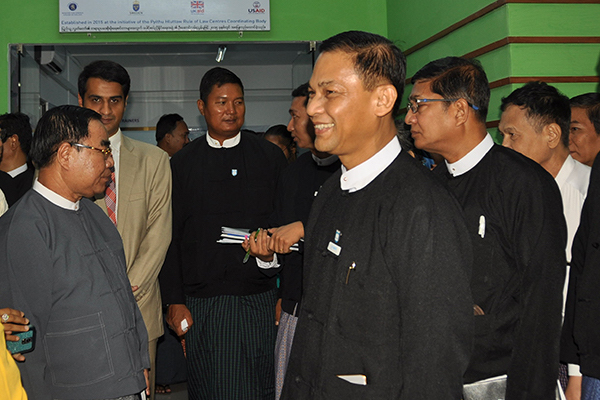
Newly appointed Myanmar Attorney General U Tun Tun Oo must commit to strengthening the rule of law and respect for human rights in the country, said the ICJ today.
U Tun Tun Oo (photo) has been one of the Deputy Attorney-Generals in the Union Attorney General’s Office since 2006.
“U Tun Tun Oo is taking over a post that is Myanmar’s most powerful legal officer. He plays a complex role, at once a member of the Executive, adviser to the President and the Hluttaw, the authority drafting and amending laws,” said Sam Zarifi, ICJ’s Asia Director. “As an immediate matter, he should review all political cases and stop the harassment of human rights defenders.”
The Attorney General represents the government in judicial proceedings and advises the cabinet on the legality of its actions.
He also leads Prosecutors in the country, and thus has the authority to select, initiate and undertake investigations into criminal and politically sensitive cases.
The Attorney General is also the president of the country’s only officially recognized Bar Association.
The Attorney General is, in effect, the minister of justice, and as such has controlled much of the work of the judiciary, too.
The Union Attorney General’s Office has historically followed the interests of the military and impeded an independent judiciary, the ICJ notes.
It has been criticized for failing to tackle major problems such as corruption and human rights abuses while continuing to prosecute human rights defenders and political opponents.
“Within the Union Attorney General’s Office, prosecutors must act with integrity in an independent, impartial and objective manner and in the protection of the public interest”, said Zarifi.
“Prosecutors must exercise sound discretion in the performance of their functions. They must seek justice, without fear of favour, not merely convict.”
“The Attorney-General’s Office must not shy away from prosecutions that will combat impunity,” he added.
The Union Attorney General’s Office launched its Strategic Plan for 2015-2019, establishing important benchmarks for measuring the institution’s development.
The Strategic Plan acknowledges the public’s low confidence in the office and commits the office to the rule of law, human rights, fair trials, prosecutorial ethics and accountability, in accordance with international standards.
“The Union Attorney General’s Office must investigate and prosecute criminal offences, including gross human rights violations and abuses, with impartiality. The Union Attorney General’s Office must be free from unwarranted interference from the legislative and the executive branches of government. Likewise, it must not interfere with judges or lawyers in an independent judiciary,” Zarifi said.
Contact:
Sam Zarifi, ICJ Regional Director for Asia and the Pacific, t: +66807819002; e: sam.zarifi@icj.org
Vani Sathisan, ICJ International Legal Adviser for Myanmar, t: +95(0)9250800301; e: vani.sathisan@icj.org
Additional information:
Under international standards, prosecutors are required to “respect and protect human dignity and uphold human rights” and “give due attention to the prosecution of crimes committed by public officials, particularly corruption, abuse of power, grave violations of human rights and other crimes recognized by international law.” These principles are set out in the United Nations Guidelines on the Role of Prosecutors.
An exposition and analysis of international law and standards are available in English and Myanmar language in the ICJ’s authoritative Practitioners’ Guide on the Independence and Accountability of Judges, Lawyers and Prosecutors.
Apr 5, 2016 | News
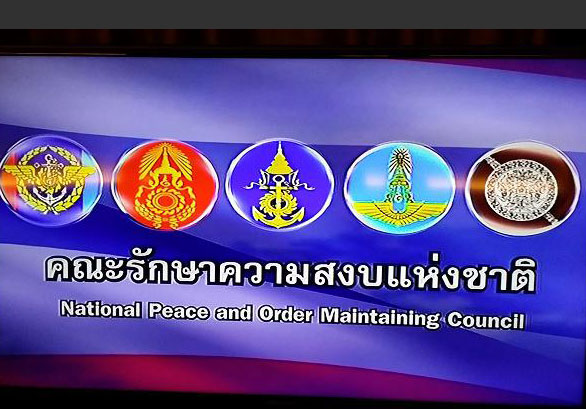
Thailand must immediately revoke National Council for Peace and Order (NCPO) Order 13/2016 which confers sweeping powers on the Royal Thai Armed Forces in contravention of human rights and the rule of law, said today the ICJ and other human rights groups.
On 29 March 2016, pursuant to Article 44 of the Interim Constitution, General Prayuth Chan-o-cha, Head of the NCPO, issued Order 13/2016 which provides appointed “Prevention and Suppression Officers” and their assistants, drawn from the commissioned ranks of the Armed Forces, including the paramilitary Ranger Volunteers, with wide-ranging powers to prevent and suppress 27 categories of crimes including against public peace, liberty and reputation, immigration, human trafficking, narcotics, and weapons.
“The implementation of Order 13/2016 will almost certainly lead to violations of Thailand’s international human rights obligations and the rule of law and must be revoked immediately,” said Wilder Tayler, ICJ’s Secretary General.
“We have observed a steady erosion of human rights protections in Thailand since the military coup of 22 May 2014 and this Order signifies another, jarring, movement in the same direction,” he added.
The Order raises numerous human rights concerns say the ICJ, Human Rights Watch (HRW), Amnesty International (AI), Asian Forum for Human Rights and Development (FORUM-ASIA), FIDH (International Federation for Human Rights), and Fortify Rights (FR). These concerns include:
1. Grants a form of immunity from prosecution to those acting under the Order, leading to impunity contrary to the principle of accountability required by the rule of law.
“Instead of paving the way for a return to democratic rule, the Thai junta has broadened its powers to do almost anything it wants, including committing abuses with total impunity,” said Brad Adams, Asia Director at Human Rights Watch. “Repression becomes a daily reality as Thailand descends further into military dictatorship.”
2. Actions taken under the Order are not subject to judicial review, contrary to the rights to effective remedy, to judicial control of deprivation of liberty, and to a fair trial, as for instance recognized under Articles 2, 9 and 14 of the International Covenant on Civil and Political Rights (ICCPR).
“The Order is yet another example of the pernicious removal of powers from the judicial system to review the military’s actions, to the detriment of rights protection and the rule of law,” said Champa Patel, Interim Director, South East Asia and Pacific Regional Office, Amnesty International.
3. Provides untrained military officials with broadly and ambiguously worded powers of law enforcement likely to lead to abuse, inconsistent with human rights standards including the UN Code of Conduct for Law Enforcement Officials and the UN Basic Principles on the Use of Force and Firearms by Law Enforcement Officials.
“The Order provides law enforcement powers to military officials who do not have law enforcement experience or protocols to summon, search, and arrest persons,” said Evelyn Balais-Serrano, the Executive Director of FORUM-ASIA.
“This makes the absence of judicial oversight all the more concerning. The fact that this may lead to an abuse of power and the disproportionate use of force by military officials in violation of international laws and standards including the UN Code of Conduct for Law Enforcement Officials and the UN Basic Principles on the Use of Force and Firearms by Law Enforcement Officials is very worrying. There is a real risk the Order may be used to restrict the legitimate rights of people such as the rights to freedom of expression, assembly and association,” she added.
4. Authorizes the deprivation of liberty of persons for up to seven days in unrecognized places of detention, without judicial oversight, which increases the risk of further human rights abuses, including torture and enforced disappearance.
“Despite its pretense to suppress criminal activities, this Order is likely to result in the commission of very serious crimes that are prohibited under human rights instruments that Thailand has either signed or ratified,” said FIDH President Karim Lahidji.
5. In practice, the Order is open to abuse to repress and silence those perceived as dissenters, including human rights defenders, in violation of international human rights law and standards.
“This Order stands to fuel the fire of retaliation against human rights defenders in Thailand,” said Amy Smith, Executive Director of Fortify Rights. “Thailand has an obligation to protect human rights defenders, but this Order could easily be used to target and obstruct their legitimate work.”
Contact
Wilder Tayler, ICJ’s Secretary General, t: +41 (0) 229793800 ; e: wilder.tayler(a)icj.org
Thailand-NCPO Order-News-Press releases-2016-THA (full text, in PDF, Thai version)
Thailand-NCPO Order unof trsl-Advocacy-2016-ENG (unofficial translation of the Order, PDF)

Apr 5, 2016 | News
The Court of Appeal’s decision to lift the stay of execution of Kho Jabing is a serious blow to human rights in Singapore, the International Commission of Jurists (ICJ) said today.
The ICJ urges the Government of Singapore to grant Kho Jabing clemency and immediately impose a moratorium on executions, with a view towards abolishing the death penalty in the near future.
“The death penalty is never justifiable,” said Sam Zarifi, ICJ’s Regional Director for Asia and the Pacific. “If Singapore goes through with the execution of Kho Jabing, it will go against the growing international consensus to abolish the death penalty.”
Currently, 117 member states of the United Nations support the General Assembly resolution passed in December 2014 calling for an international moratorium on the use of death penalty, the ICJ reminds.
The Geneva-based organization opposes the death penalty in all circumstances and considers the imposition of the death penalty to constitute a denial of the right to life and a form of cruel, inhuman and degrading punishment.
The ICJ has received information that there are nine other individuals currently on death row in Singapore.
Authorities have not yet released the date of Kho Jabing’s execution.
The lawyers of Kho Jabing will be filing a petition for clemency in the next few days.
The ICJ urges the Government of Singapore to halt the imminent execution of Kho Jabing, grant the petition for clemency and commute his death sentence.
Background
Kho Jabing, a Malaysian national, was convicted of murder and sentenced to death in Singapore in 2010. After amendments were made in 2012 on the laws on the death penalty in Singapore, Kho Jabing was re-sentenced to life imprisonment and 24 strokes of the cane. The prosecution, however, appealed the re-sentencing and the case was brought to the Court of Appeal.
The court rejected his application for clemency in October 2015. On 23 November 2015, he was granted a temporary reprieve pending the outcome of a petition filed by his lawyers, which raised questions of fact and law.
The decision of the Court of Appeal this morning lifted the temporary reprieve and upheld its decision to impose the death penalty on Kho Jabing.
Contact
Emerlynne Gil, ICJ’s Senior International Legal Advisor, tel. no. +66840923575, email: emerlynne.gil(a)icj.org