CANADA/THAILAND/MYANMAR – Two hundred thousand people in Rakhine State, Myanmar, live in the direct path of a major infrastructure project being built under the control of a military junta that Canada has sanctioned for crimes against humanity. Yet, a Canadian company is overseeing the environmental impact assessment for the project’s deep sea port, without meaningful consultations with the communities who stand to lose their homes and their livelihoods, according to a recent complaint filed with Canada’s National Contact Point.
Today, a community member from Kyauk Phyu, together with three human rights organisations filed a complaint with the Canada National Contact Point (NCP) alleging that Canadian company Hatch Associates Ltd. (Hatch) breached guidelines established by the Organization for Economic Co-operation and Development (OECD) through its role in a major development project located within a conflict zone, under the authority of a military junta that the United Nations does not recognize as Myanmar’s legitimate government.
The complaint was submitted by a community member from the project area, EarthRights International (EarthRights), the International Human Rights Program (IHRP) at the University of Toronto Henry N.R. Jackman Faculty of Law, and the International Commission of Jurists (ICJ). The OECD Guidelines, together with the UN Guiding Principles on Business and Human Rights, are leading global standards on how to conduct business responsibly, and the Canadian NCP was established in 2000 to accept complaints about breaches of the Guidelines.
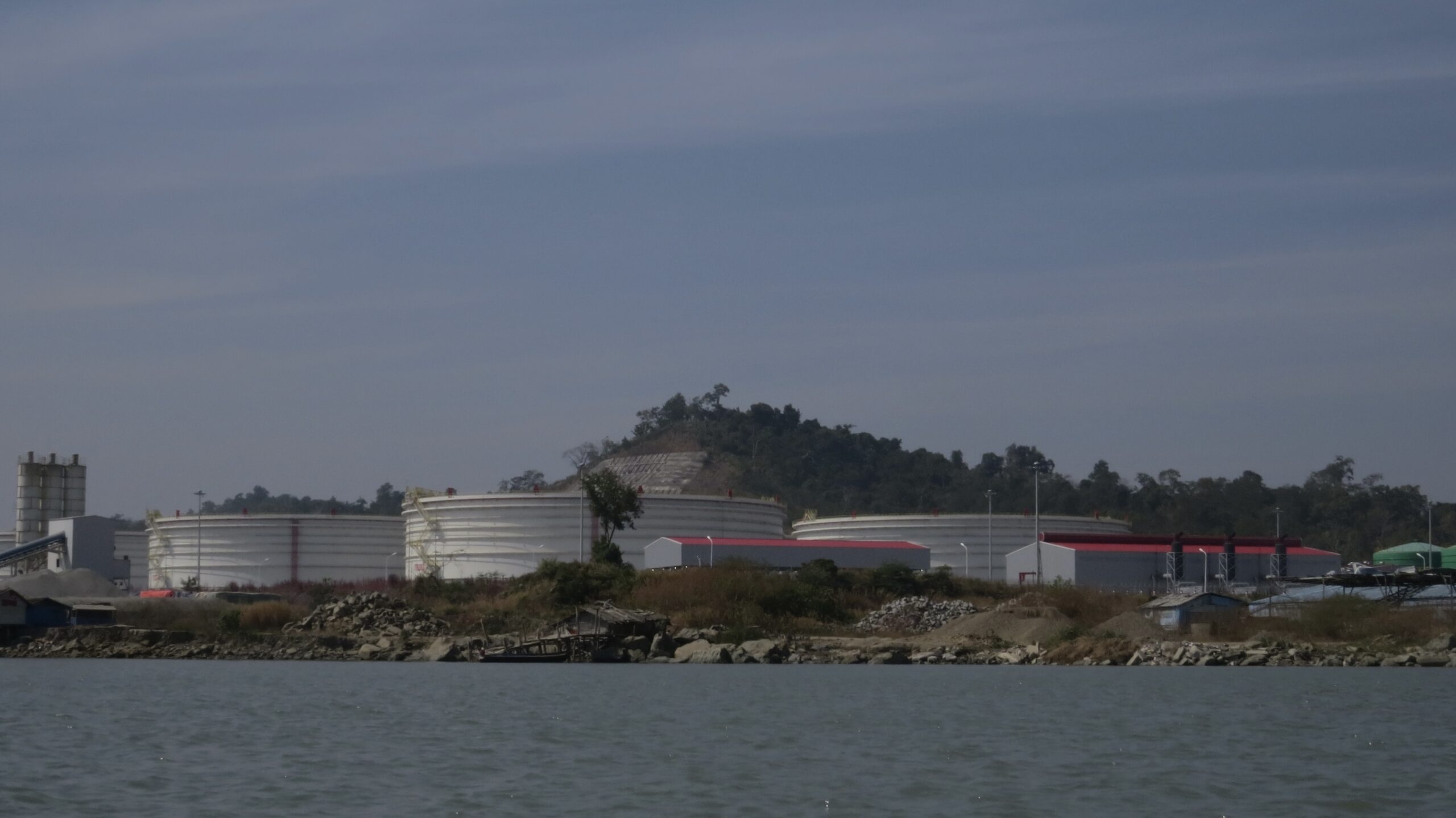
According to the Environmental Impact Assessment (EIA) scoping report, 16 villages in the Kyauk Phyu Township, are within the “Direct Impact Zone” of the development of the Kyauk Phyu Special Economic Zone Deep Sea Port Project, which includes a deep sea port over two islands and 15-kilometre road connecting the port to the industrial zone.
“Hatch has a supervisory role over a project that, in EarthRights’ view, is already encouraging land grabs and poses a high risk of forced relocations, destruction of traditional ways of life, and permanent alteration of the environment,” said Ben Hardman, EarthRights’ Mekong Legal Director.
“They have blanked requests for dialogue from civil society and, rather than publicly calling for the suspension of the project, they appear to be enabling so-called consultations in a war zone.”
Since the illegal coup of 2021, there have been numerous reports by several United Nations agencies and experts, and others, documenting the Myanmar military’s campaign of terror against civilians – mass extrajudicial killings, torture including rape and other sexual violence, airstrikes, and the burning of entire villages. The junta’s attacks have destroyed villages where parts of the project will be constructed, including the Yanbye Island terminal and the access road. Many countries, including Canada, have enacted strict sanctions against the military junta. NCPs in Norway and Denmark have acknowledged the severity of the situation in Myanmar and called on companies to apply enhanced due diligence.
“In a context where an illegitimate military junta is committing mass criminal atrocities and already systematically denying economic and social rights, this project, far from improving the lives of affected people, risks exacerbating an already intolerable situation,” said Mandira Sharma, Director of ICJ’s Asia-Pacific Programme.
While the junta claims that the project is progressing, the EIA remains incomplete. The complaint alleges that the process so far has failed to ensure informed and meaningful consultation with local communities and has not adequately assessed the project’s human rights and environmental impacts. With Kyauk Phyu Township now an active conflict zone and fighting between the junta’s forces and the Arakan Army escalating, meaningful consultation is impossible.
“I was born in this township. My family farmed this land for generations. No one ever asked us what we want for our future, and now a major port and industrial zone will be built here, in the middle of a war. We were not consulted. We are filing this complaint because I want the world to know that we are here and we matter,” said a community member from Kyauk Phyu and co-complainant, whose name is withheld for security reasons.
Against this backdrop, the complaint calls on Hatch, as a technical advisor and the project management consultant overseeing the EIA, to take the following immediate steps:
- Seek to suspend the EIA process and ensure improvements when it can restart. No legitimate EIA can be conducted while a civil war is being fought across the project area. The EIA must not resume until conditions exist for meaningful consultation and the free, prior and informed consent of affected communities.
- If Hatch is unable to suspend the EIA process, consider disengaging responsibly – and in doing so, consult directly and transparently with civil society about whether and how it should disengage.
Under the OECD Guidelines and the UN Guiding Principles, a business that is aware of ongoing human rights violations linked to its operations and fails to take reasonable steps to prevent or mitigate them, is in breach of its responsibilities. The longer a company fails to act, the greater its culpability becomes.
“Any failure to discharge appropriate due diligence obligations would risk significant and widespread harm to a region already devastated by civil war,” said Sandra Wisner, Director of the IHRP. “Canadian companies must bear their due responsibilities to human rights at home and abroad. We urge the NCP to use this chance to examine this matter thoroughly.”
Previous Special Economic Zone projects in Myanmar that failed to follow the OECD Guidelines have resulted in numerous human rights and environmental violations on residents and the surrounding environment.
Read the full complaint here.
Contact
Sandra Wisner, Director, International Human Rights Program
University of Toronto Henry N.R. Jackman Faculty of Law
sandra.wisner@utoronto.ca / + 1 416 946 8229
Daniela Colaiacovo, Global Communications Director
EarthRights International
daniela.colaiacovo@earthrights.org
Chalefun Ditphudee, Mekong Communications Manager
EarthRights International
chale@earthrights.org / + 66 9 1858 3381
Mandira Sharma, Regional Director, Asia and the Pacific Programme
International Commission of Jurists
###
EarthRights International is a non-governmental, non-profit organization that specializes in fact-finding, legal actions against perpetrators of environmental and human rights abuses and advocacy campaigns. EarthRights has been working in Myanmar since its founding in 1995 and has supported communities affected by the KPSEZ since 2016, building on earlier work.
Established in 1987, the International Human Rights Program (IHRP) at the University of Toronto Henry N.R. Jackman Faculty of Law serves as the centre for international human rights work through which experienced lawyers, Faculty, and law students engage in meaningful social change.
Composed of 60 eminent judges and lawyers from all regions of the world, the International Commission of Jurists (ICJ) promotes and protects human rights through the Rule of Law by using its unique legal expertise to develop and strengthen national and international justice systems.
Download
The full press release can be downloaded in English and Burmese.