
Pakistan: resumption of death penalty ‘major step back’
 The ICJ condemned Pakistan’s execution of a former soldier and called on the government to reinstate the moratorium on the death penalty that had been observed for the past four years.

The ICJ condemned Pakistan’s execution of a former soldier and called on the government to reinstate the moratorium on the death penalty that had been observed for the past four years.
The ICJ is organizing this workshop in collaboration with Cross Cultural Foundation (CrCF) and the Association for the Prevention of Torture (APT) from 17 – 18 November 2012 in Bangkok, Thailand.
The workshop is aimed at supporting and strengthening civil society groups in Thailand in their engagement at the international level to address key issues in the implementation of the UNCAT.
This is a follow-up to a previous workshop held by the ICJ together with the APT and OHCHR last January 2012 where Thai groups decided to submit an alternative report to the UN Committee against Torture.
The November workshop will have discussions on the role of the UN Committee against Torture, as well as key provisions of the UNCAT.
A representative from the Commission on Human Rights of the Philippines will be sharing to Thai groups on the Commission’s experience on drafting an alternative report on the Philippines.

 The impeachment process against Sri Lankan Chief Justice Shirani Bandaranayake must follow international standards of due process says the ICJ.

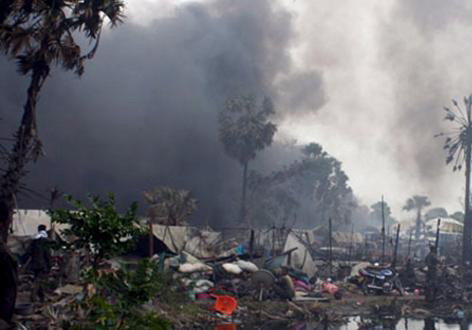 The Sri Lankan government must immediately cease its assault on the independence of the judiciary, the ICJ said in a new report.
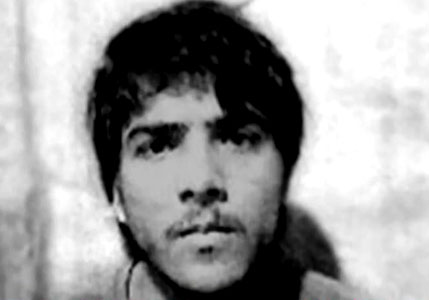
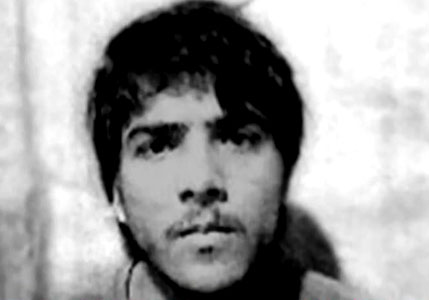 On the tenth annual World Day against the Death Penalty, the ICJ urges the President of India to grant clemency to Mohammed Ajmal Amir Kasab.
“There is no doubt that Kasab’s crimes were heinous causing immeasurable suffering but execution is not the answer,” said Sam Zarifi, ICJ Asia Pacific Regional Director. “Putting him to death would be a significant step backwards for India. It would end the eight-year hiatus on executions and disregard the call in repeated UN General Assembly Resolutions that all States should observe an immediate moratorium on the death penalty with a view towards full abolition.”
October 10, 2012 is the World Day against the Death Penalty. The ICJ considers the death penalty to constitute a violation of the right to life and a form of cruel and inhuman punishment.
The ICJ calls on all countries to abolish the death penalty.
“The death penalty violates the inherent dignity of the person,” Zarifi added. “And as we have seen in India as well as all over the world, it is not possible to administer capital punishment without some degree of inconsistency, subjectivity and arbitrariness.”
More than 150 of 192 United Nations member states have either abolished the death penalty or do not practice it.
In South Asia, Nepal abolished the death penalty in its 1997 Constitution and Sri Lanka has not carried out an execution since 1976.
Kasab, a 25-year old Pakistani national, was sentenced to the death for his role in the Mumbai terrorist attack in 2008.
The Supreme Court confirmed Kasab’s death sentence on 29 August 2012, upholding the judgment of the Bombay High Court on 21 February 2011 and the sentence handed down by a lower court in May 2010. On 18 September 2012, Kasab sent a four-line handwritten mercy plea to the President of India.
The Maharashtra Home Ministry recommended rejecting the mercy plea on 24 September 2012 and Governor of Maharashtra, K Sankaranarayan, advised the same on 29 September 2012. The petition has now been forwarded to the Union Government.
CONTACT:
Sam Zarifi, ICJ Asia-Pacific Regional Director, t: +41(0)22 979 38 00; sam.zarifi(at)icj.org
Sheila Varadan, ICJ Legal Advisor, South Asia Programme, t: +66 857200723; sheila.varadan(at)icj.org
 Tunisia: Quash sham conviction and sentence of judges’ association President, Anas Hmedi
 The UN Human Rights Council makes significant but limited progress in addressing human rights around the world, as atrocities multiply in the Middle East and elsewhere
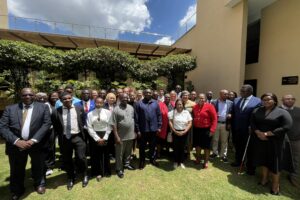 ICJ hosts an African Regional Convening in Kenya on Transformative Equality Jurisprudence
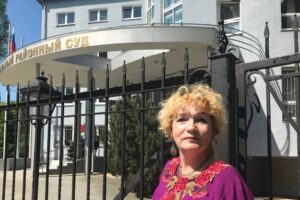 Russian Federation: Arbitrarily detained human rights lawyer Maria Bontsler must be released