Feb 3, 2021 | News
The Pakistani authorities must end their ongoing persecution of the Ahmadiyya religious minority, which is now extending across borders, said Amnesty International, Human Rights Watch and the ICJ, following an attempt by the Pakistan Telecommunications Authority (PTA) to shut down the website of the Ahmadis’ US-based community.
On 24 December 2020, the PTA sent a legal notice to the administrators of trueislam.com, stating that the site was in violation of Pakistan’s Constitution, and warning they could be charged with blasphemy – a charge potentially carrying the death penalty – for referring to themselves as Muslims. The site’s administrators have also been threatened with a fine of 500 million PKR (US$3.1 million) if they fail to take the website down.
The trueislam.com website provides general information about Ahmadi history and beliefs, details the work carried out by the Ahmadi community in the US, including blood drives and veterans’ support, and features interviews with prominent community members such as the actor Mahershala Ali.
“Ahmadis in Pakistan have long been the target of systematic attacks, and successive Pakistani governments have failed to respect, protect and promote their human rights, forcing many to flee to other countries. The PTA’s efforts to close down their US website shows that even then, a life free from discrimination can be out of reach,” said Samira Hamidi, Deputy Regional Director at Amnesty International.
“Digitally policing Ahmadis on what they can or can’t preach, no matter where they are, is a flagrant violation of Pakistan’s legal obligations under the International Covenant on Civil and Political Rights to which the country is a state party. We urge the PTA to desist from its targeted campaign against Ahmadis and to ensure that everyone in Pakistan is able to express themselves and profess their religion freely, without fear of reprisals or discrimination.”
According to a PTA press release on 22 January 2021, access to trueislam.com has now been blocked in Pakistan. Amnesty International has been shown an email sent by the head of the PTA on 27 December 2020 to various servers in the country, instructing them to remove access to the website, along with three others related to the Ahmadi community.
“Pakistan has an obligation to protect the rights to freedom of expression and religion online every bit as much as in places of worship or in public spaces. Far from facilitating such protection, the PTA is extending its long arm to violate the rights of persons well beyond Pakistan’s own borders,” said Ian Seiderman, ICJ Legal and Policy Director.
The administrators of the website told Amnesty International that prior to receiving the notice, they received emails from various sources filled with hate speech.
“I was suddenly inundated with hate-filled messages from extremists on my email. And then a few days later, on December 24, the PTA emailed me a notice threatening criminal prosecution and fines for blasphemy and giving 24 hours to remove the trueislam.com website,” said Amjad Mahmood Khan, a US-based Ahmadi lawyer who was targeted.
“It’s obvious the PTA seeks to prosecute US citizens operating a US-based website. This is an unprecedented act to extend the reach of Pakistan’s abominable blasphemy laws to US citizens, and it’s a new frontier in persecution for Ahmadis worldwide,” Khan said.
The legal notice to trueislam.com is part of a broader pattern of state overreach by the PTA in recent months, which has included issuing notices to Google and Wikipedia to remove “sacrilegious content”.
“The attempt to extend Pakistan’s persecution of Ahmadis to other jurisdictions is a dangerous escalation. The Pakistani government should end its policing of Ahmadi speech outside the country and focus on providing an enabling environment for free speech, expression, and freedom of religion inside Pakistan,” said Brad Adams, Asia director at Human Rights Watch.
Background
The Pakistani penal code explicitly discriminates against religious minorities and targets Ahmadis by prohibiting them from “indirectly or directly posing as a Muslim.” Ahmadis are banned from declaring or propagating their faith publicly, building mosques, or making the Muslim call for prayer. For more information on the persecution of the Ahmadiyya community in Pakistan, see here.
On 25 December 2020, the Pakistan Telecommunications Authority issued a press release saying that Google and Wikipedia had been issued notices. On 28 December 2020, the Lahore High Court Chief Justice Qasim Khan ordered the Federal Investigative Agency to issue notices to Google, stating that shutting down websites was not enough.
For more information about the law on blasphemy in Pakistan, see here.
Contact
Reema Omer, ICJ’s Senior International Legal Advisor (South Asia), reema.omer(a)icj.org
Feb 2, 2021 | News
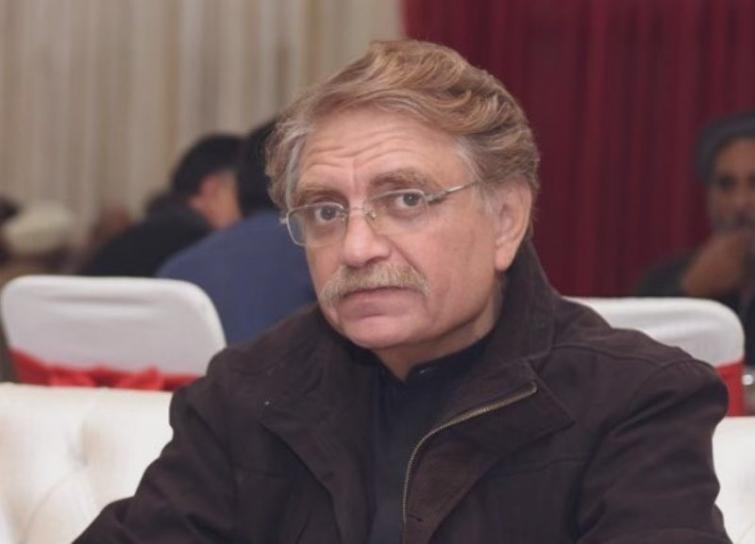
The ICJ today denounced the decision by Pakistani authorities to conduct the trial of Idrees Khattak, a leading human rights defender, in a military court.
Idrees Khattak is charged with “spying” among other offenses, related to his monitoring of violations by military forces in 2009. He was forcibly disappeared by the Pakistani Military Intelligence in November 2019. His whereabouts remained unknown until June 2020, when military authorities informed the Commission of Inquiry on Enforced Disappearances that he was being tried under the Official Secrets Act, 1923.
The Peshawar High Court yesterday dismissed a petition challenging the jurisdiction of the military courts in this case. Under international standards, including the International Covenant on Civil and Political Rights to which Pakistan is a party, civilians such as Idrees Khattak must not be subject to the jurisdiction of military tribunals.
“Idrees Khattak was subjected to the serious crime of enforced disappearance and instead of bringing the perpetrators of this violation to account, the Pakistani military has kept him arbitrarily detained and is now violating his rights further by subjecting him to a military court,” said Sam Zarifi, ICJ’s Secretary General.
“The Pakistan government must immediately release Idrees Khattak. If there is real and credible evidence implicating him in a cognizable crime, he should be tried by a civilian court and his right to a fair trial should be fully respected,” said Zarifi
The ICJ has found proceedings before Pakistani military courts fall well short of national and international laws requiring fair trials before independent and impartial courts:
- Judges are part of the executive branch of the State and continue to be subjected to military command;
- The right to appeal to civilian courts is not available;
- The right to a public hearing is not guaranteed;
- A duly reasoned, written judgment, including the essential findings, evidence and legal reasoning, is denied; and
- The death penalty may be implemented after unfair trials.
Idrees Khattak has been charged on multiple counts related to spying and other conduct “prejudicial to the safety or the interests of the State” under Section 3 of the Official Secrets Act as well as section 59 of the Pakistan Army Act, 1952. The Pakistan Army Act gives military courts jurisdiction to try civilians for certain offences under the Official Secrets Act.
The alleged conduct for which Idrees Khattak has been charged dates back to July 2009 – ten years before his enforced disappearance.
A group of 10 independent experts appointed by the UN Human Rights Council have characterized Idreek Khattak’s case as “emblematic of a series of documented enforced disappearances in Pakistan, where many human rights defenders are similarly silenced for their legitimate work of monitoring, documenting and advocating against a range of human rights violations and attacks against minorities.”
The ICJ calls on Pakistani authorities to immediately release Idrees Khattak.
The ICJ also calls on Pakistani authorities to ensure military courts only have jurisdiction to try military personnel for military offences and to bring procedures of military courts in conformity with international standards.
Contact
Sam Zarifi, ICJ’s Secretary General, sam.zarifi(a)icj.org
Reema Omer, ICJ’s Senior International Legal Advisor (South Asia), reema.omer(a)icj.org
Additional information
In July 2017, in its Concluding Observations after Pakistan’s first periodic review under the International Covenant on Civil and Political Rights (ICCPR), the UN Human Rights Committee stated that it was concerned by the jurisdiction of military courts over civilians and allegations of fair trial violations in military courts’ proceedings.
The Human Rights Committee recommended that Pakistan “review the legislation relating to the military courts with a view to abrogating their jurisdiction over civilians and their authority to impose the death penalty” and “reform the military courts to bring their proceedings into full conformity with articles 14 and 15 of the Covenant in order to ensure a fair trial.”
Jan 23, 2021 | News
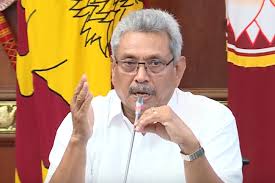
The ICJ stated today that a newly appointed Commission of Inquiry tasked to review reports on past human rights and humanitarian law violations was unlikely to bring justice to victims of conflict era atrocities.
On 21 January 2021, Sri Lankan President Gotabaya Rajapaksa appointed a three-member Commission of Inquiry (CoI), headed by sitting Supreme Court Judge A.H.M. Nawaz to assess the findings and recommendations of preceding CoIs and Committees on human rights violations, serious violations of international humanitarian law and other such serious offences.
“Sri Lanka has an appalling track record on accountability in relation to toothless inquiry mechanisms.” said Ian Seiderman, ICJ’s Legal and Policy Director. “the tendency to set up these kinds of processes just ahead of sessions the UN Human Rights Council raises the suspicion that the announcement is targeted to deflect robust action by the Council beginning next month”
Sri Lanka is due to be taken up at the 46th session of the UN Human Rights Council on 24 February 2021, where the UN High Commissioner for Human Rights will present her report on Sri Lanka’s implementation of Council Resolution 30/1.
The decision to set up this COI was first announced in February 2020, by the Minister of Foreign Affairs at the 43rd Session of the UN Human Rights Council when he declared the Government’s withdrawal of support for the process under Resolutions 30/1, 34/1 and 40/1.
The Commission is tasked with the responsibility of identifying the “manner in which the recommendations have been implemented so far in terms of the existing law and what steps need to be taken to implement those recommendations further in line with the present Government policy.” It has been given a six-month mandate.
COIs and similar bodies established by successive Sri Lankan governments have been ineffective and deeply deficient in terms of their mandate, functions and independence. As the ICJ has previously documented, such mechanisms have largely been partisan mechanisms for punishing political opponents or for shielding perpetrators and institutions from responsibility.
The ICJ called upon the UN High Commissioner for Human Rights and the Member States to acknowledge the Sri Lankan Government’s categorical inability and unwillingness to ensure accountability domestically and urges the Council to explore viable international alternatives to ensure justice for victims of gross human rights violations.
Contact
For questions and clarifications, please contact Osama Motiwala, Communications Officer – osama.motiwala(a)icj.org

Jan 18, 2021 | News
Soltan Achilova, Loujain AlHathloul and Yu Wensheng, three outstanding human rights defenders based in authoritarian states are nominated for the 2021 Martin Ennals Award for Human Rights Defenders. The ICJ is member of the MEA Jury.
In isolated Turkmenistan, Soltan Achilova documents human rights violations and abuses through photojournalism.
Imprisoned in Saudi Arabia, Loujain AlHathloul is a leading advocate for gender equality and women’s rights.
A lawyer, Yu Wensheng defended human rights cases and activists before his conviction and imprisonment in China.
The Finalists distinguish themselves by their bravery and deep commitment to the issues they defend, despite the many attempts to silence them by respective governmental authorities.
“Every year thousands of human rights defenders are persecuted, harassed, imprisoned, even killed. The Martin Ennals Foundation is honored to celebrate the 2021 Finalists, who have done so much for others and whose stories of adversity are emblematic of the precarity faced by the human rights movement today,” said Isabel de Sola, Director of the Martin Ennals Foundation.
“Authoritarian states tend to believe that by jailing or censoring human rights defenders, the world will forget about them. During the COVID-pandemic, it seemed like lockdowns would successfully keep people from speaking out. This year’s Finalists are a testament to the fact that nothing could be further from the truth,” added Hans Thoolen, Chair of the Jury.
Nothing can stop us from celebrating human rights defenders
Each year, the Martin Ennals Award honors human rights defenders from around the world who distinguish themselves by their strong commitment to promoting our fundamental rights – often at the risk of their own lives.
The 2021 Martin Ennals Award Ceremony will celebrate their courage on 11 February during an online ceremony hosted jointly with the City of Geneva which, as part of its commitment to human rights, has for many years supported the Award.
The 2021 Finalists
In Turkmenistan, one of the world’s most isolated countries, freedom of speech is inexistant and independent journalists work at their own peril. Soltan Achilova (71), a photojournalist, documents the human rights abuses and social issues affecting Turkmen people in their daily lives. Despite the repressive environment and personal hardships, she is one of the very few reporters in the country daring to sign independent
In Saudi Arabia, women still face several forms of gender discrimination, so much so, that the Kingdom ranks in the bottom 10 places according to the World Economic Forum’s Global Gender Gap Report 2020. Loujain AlHathloul (31) was one of the leading figures of the Women to drive movement and advocated for the end of the male guardianship system. She was imprisoned in 2018 on charges related to national security together with several other women activists. Tortured, denied medical care, and subjected to solitary confinement, Loujain was sentenced to 5 years and 8 months in prison on 28 December 2020.
In China, more than 300 human rights activists and lawyers disappeared or were arrested in 2015 during the so called 709 Crackdown. A successful business lawyer, Yu Wensheng (54) gave up his career to defend one of these detained lawyers, before being arrested himself. Detained for almost three years now, Yu Wensheng’s right hand was crushed in jail and his health is failing.
Contact
Olivier van Bogaert, Director Media & Communications, ICJ representative in the MEA Jury, t: +41 22 979 38 08 ; e: olivier.vanbogaert(a)icj.org
Chloé Bitton, Communications Manager, Martin Ennals Foundation, t +41 22 809 49 25 e: cbitton(a)martinennalsaward.org
MEA Finalists Bios-2020-ENG (full bios of finalists, in PDF)
MEA Finalists Bios-2020-ARA (full story and bios of finalists in Arabic, PDF)
Jan 14, 2021 | News
The ICJ today deplored the comprehensive failure of the Sri Lankan authorities to ensure accountability for conflict-era crimes, marked by the dropping of charges and release of all five accused in the Joseph Pararajasingham murder trial.
Parliamentarian Joseph Pararajasingham was killed by unidentified gunmen on 25 December 2005 while he attended Christmas mass at the Batticaloa St. Mary’s Cathedral, in the Eastern Province of Sri Lanka. Eight other people, including his wife, were injured during the firing.
Yesterday, the Batticaloa High Court acquitted and ordered the released of all five accused, including former-LTTE cadre and now-Member of Parliament, Sivanesathurai Chandrakanthan alias ‘Pillaiyaan’, in the trial of Pararajasingham, a former Tamil National Alliance Parliamentarian. The judgment was delivered after the Attorney General’s Department (AG) informed the Court that it would not proceed with the prosecution. The AG provided no reason publicly for this decision.
“The shelving of this case five years after it began, is a blow to the victims of this serious human rights atrocity.” said Ian Seiderman, ICJ’s Legal and Policy Director.
“This constitutes yet another marker of Sri Lanka’s consistent failure to hold accountable perpetrators of serious conflict-era crimes,” he added.
In November 2020, the AG had informed the Batticaloa High Court that he intended to proceed with the case, notwithstanding the Court of Appeal deemed inadmissible important evidence of the prosecution’s case.
The UN Office of the High Commissioner on Human Rights Investigation on Sri Lanka (2015) had already concluded that “there are reasonable grounds to believe that the Karuna Group (of which Chandrakanthan was a member) killed Joseph Pararajasingham, and that it was aided and abetted by security and army personnel.”
The acquittal in Pararajasingham’s murder case follows that of another Tamil Parliamentarian Nadarajah Raviraj, where an all-Sinhalese jury acquitted five persons including three Navy intelligence officers in December 2016, a decade after his murder.
The UN High Commissioner for Human Rights identified both these cases, in which no progress had been made, emblematic of Sri Lanka’s dismal record on accountability.
The ICJ called on the Attorney General’s Department to reopen fresh investigations into the murder of the deceased legislator so as to ensure justice and justice for the victims of this atrocity.
The ICJ notes that the Attorney General maintains the dual role of public prosecutor and as attorney for the State, positions which are prone to come into tension. The former UN Special Rapporteur on the Independence of Judges and Lawyers, Monica Pinto, following her mission to Sri Lanka in 2016 observed that “there is a general perception that, first and foremost, the [Attorney General’s] department defends the interests of the government and not the public’s interest.”
Background
Sivanesathurai Chandrakanthan who broke away from the Liberation Tigers of Tamil Eelam (LTTE) in 2004, functioned as a paramilitary, in support of the then-Rajapaksa Government. He is presently the leader of Tamil Makkal Viduthalai Pulikal (TMVP), a political party aligned to the Government and was voted into Parliament at the 2020 General Elections.
Investigation into the killing only began in 2015, after a new government was formed following elections which saw the defeat of Rajapaksa. Chandrakanthan was taken into remand custody on 11 October 2015 when he arrived at the Criminal Investigation Department to record a statement in relation to the assassination of the late Tamil politician. The Attorney General indicted that Chandrakanthan (who was 3rd accused) in the High Court of Batticaloa for offences committed under the Penal Code and the Prevention of Terrorism Act. He was granted bail for the first time in November 2020 after the primary evidence against the accused was deemed inadmissible by the Court of Appeal. The case was fixed for January 11 only after the AG informed courts he intended proceeding with the case notwithstanding the Appeal Court ruling.
Contact
Osama Motiwala, ICJ Communications Officer, Asia & Pacific programme, e: osama.motiwala(a)icj.org