Mar 30, 2020 | News
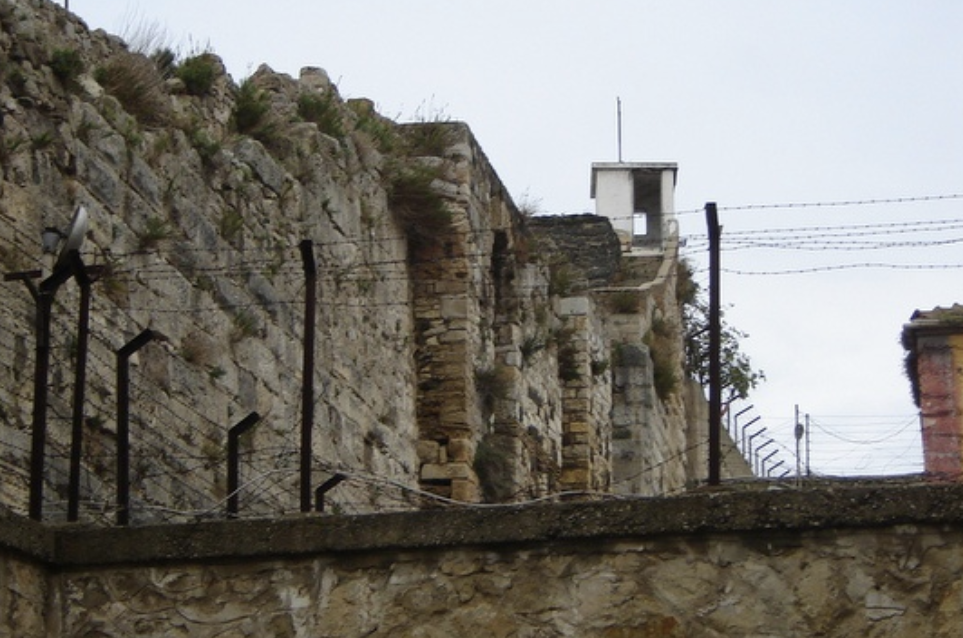
The ICJ is calling on the Turkish Parliament to extend the planned provision of alternatives to detention in response to the COVID-19 crisis to all those imprisoned for non-violent crimes who do not pose a current threat to members of the public, regardless of the nature of the offences for which they have been charged.
In particular, alternatives to detention should apply to all those detainees who are particularly at risk at losing their life or suffering severe health effects from COVID-19.
Measures to protect the right to life, the right to health and other human rights must apply equally and without discrimination in line with Turkey’s international legal obligations.
The government have announced the tabling of a draft law to reduce the prison population that has been under discussion in recent months. The process has been accelerated with the purported aim of addressing the serious health risk that an outbreak of COVID-19 contagion would pose to the prison population. However, the draft law has not been adapted to address the health crisis and contains several shortcomings.
The new measures would grant alternatives to detention, including house arrest or early parole to an estimated one-third of the prison population.
This welcome move is however limited by the exclusion of those convicted or under trial for terrorism offences or offences against the State.
“In Turkey, terrorism offences and offences against the State have long been abused to arrest, try and jail human rights defenders, lawyers, judges and political opponents,” said Massimo Frigo, Senior Legal Adviser for the ICJ Europe and Central Asia Programme. “The rights to life and health of these groups are now at particular risk.”
The ICJ considers that it is also essential that all detainees who are members of a group whose life or health may be at risk because of COVID-19 have either access to alternatives to detention, if they do not pose a current threat to public safety, or, otherwise, to detention conditions that may preserve them as far as possible from such risk.
“The State has a non-derogable obligation to protect the right to life of all its prison population, without discrimination of any sort,” Massimo Frigo added.
Mar 26, 2020 | News
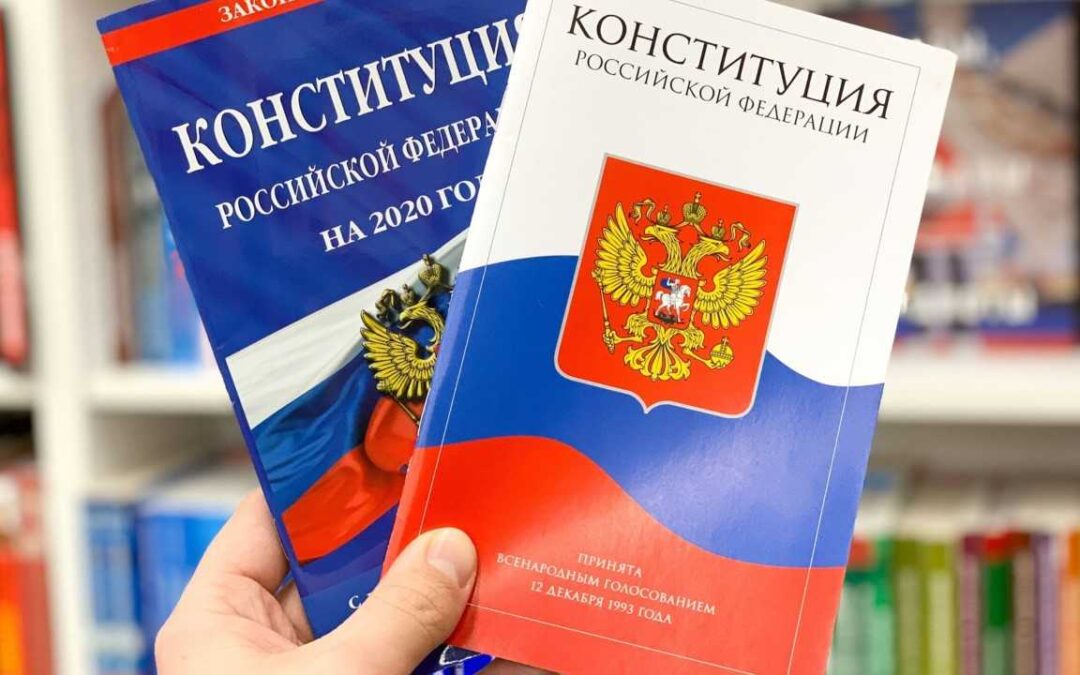
Following the decision to postpone a referendum on amendments to the Russian Constitution, the ICJ calls on the authorities of the Russian Federation to refrain from adoption of the amendments or revise those amendments which are likely to have a detrimental effect on the rule of law and human rights protection.
“Amongst the wide range of amendments proposed, are some that would restrict the implementation of international human rights law, and in particular the decisions of international human rights courts, in the Russian Federation,” said Róisín Pillay, Director of the Europe and Central Asia Programme of the ICJ.
“Other amendments would damage the independence of the Russian judiciary through changes to judicial appointments and dismissal procedures.”
The ICJ draws attention to these issues in a briefing paper on certain amendments to the Constitution of the Russian Federation, published today.
“We urge the Russian authorities to use the opportunity presented by the postponement of the referendum, to reconsider amendments that would damage the ability of the justice system to provide an effective remedy to people whose human rights have been violated,” added Pillay.
Background
On 15 January 2020 the President of the Russian Federation announced a decision to introduce more than forty amendments to the Constitution adopted in 1993. They are to be adopted through an extraordinary procedure which includes public vote, organised specifically for these amendments.
The amendments touch upon a range of issues not necessarily connected with each other. They among other things erode the role of international law and tribunals as well as weaken the independence of the national judiciary.
On 25 March, Russian Federation President Vladimir Putin announced that a planned referendum on the constitutional amendments would be postponed due to COVID-19.
This ICJ briefing paper analyses how these amendments may run contrary to international commitments of the Russian Federation and further impede the judicial independence. The briefing paper addresses three particular changes proposed to the 1993 Constitution:
- The role of international law and of decisions of international courts or other mechanisms (Article 125 of the Constitution)
- Appointment of judges (Article 83 of the Constitution)
- Procedures of appointment and removal for judges (Articles 83, 102 and 128 of the Constitution).
Full Briefing Paper (in PDF): Russia-constitution changes-Advocacy-Analysis Brief-2020-ENG
Mar 23, 2020 | News
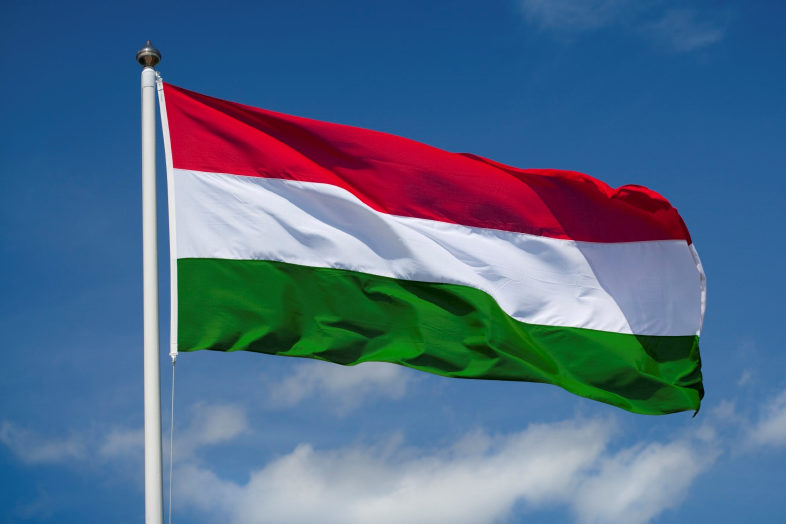
The ICJ called today on the Parliament of Hungary not to approve a Government bill that would extend indefinitely the emergency powers of the executive to counter the Covid-19 pandemic.
The proposed legislation would enable executive rule by decree, without parliamentary approval, and would impose harsh restrictions on freedom of expression.
“States of emergency, whatever the reason to invoke them, must never be allowed to become permanent,” said Róisín Pillay, Director of the ICJ Europe and Central Asia Programme.
“Emergency measures that restrict human rights must be constantly reassessed to ensure that they remain necessary and proportionate. And even where measures are temporarily necessary, they should be subject to a “sunset clause” that ensure that it can be reviewed and will lapse if no longer justified ”.
The Hungarian emergency legislation includes offences of publishing false or distorted facts that interfere with protection of the public or cause public alarm – offences which have the potential to significantly and unduly restrict freedom of expression.
International human rights law requires that any interference with freedom of expression must be in sufficiently clear terms to be adequately prescribed by law and must be necessary and proportionate to the legitimate aim that it serves.
“This legislation is particularly worrying in a context where the Hungarian government has systematically undermined the rule of law and protection of human rights, including freedom of the media and civil society, and the independence of the judiciary in recent years,” Róisín Pillay added.
“The emergency powers are therefore particularly open to arbitrary or abusive application, without effective scrutiny by parliament or an independent judiciary.”
Background
The Bill on Protection against the Coronavirus (Bill T/9790) in the form of tabled by the Government will extend the state of danger that it had ordered by government decree from 11 March 2020.
The ICJ understands that the Bill will allow the government to rule by decree without Parliamentary scrutiny. The legislation would make it a criminal offence, punishable by imprisonment, to publish false or distorted facts that interfere with protection of the public or that alarm or agitate the public, or to interfere with a quarantine or isolation order.
Under international treaties to which Hungary is a party, including the European Convention on Human Rights and the International Covenant on Civil and Political Rights, States may take emergency measures to derogate from their international human rights law obligations in times of crisis, only the extent strictly necessary to protect the life of the nation. Derogating measures may only limit the scope of certain rights to the extent strictly necessary to meet a threat to the life of the nation, but they do not entirely suspend the applicability of any right in its entirety.
This necessity must be continually re-assessed so that the derogating measures apply for the shortest time possible. Certain human rights, including the right to life, the prohibition of torture or ill-treatment, and the essential elements of arbitrary deprivation of liberty and to a fair trial and the right to an effective remedy can never be restricted even in a state of emergency.
Mar 12, 2020 | Advocacy, Non-legal submissions
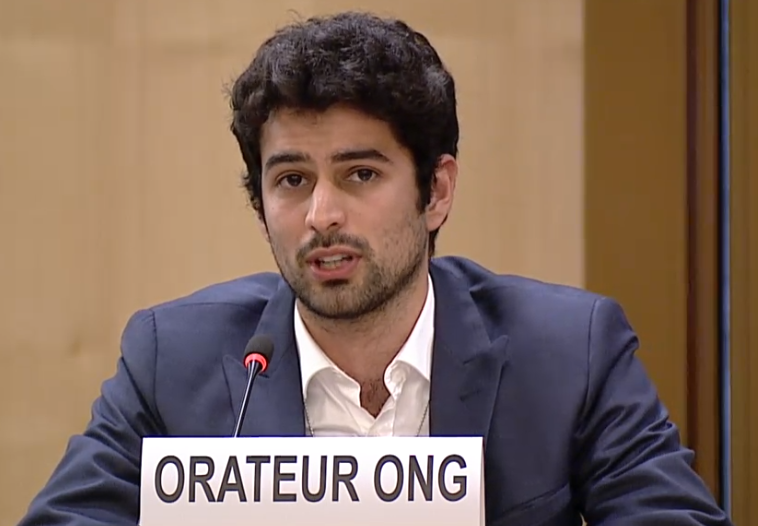
At the UN, the ICJ today highlighted the need for Kazakhstan to ensure the independence of the legal profession and the judiciary, in particular by ending the arbitrary disbarment of lawyers.
The statement, delivered during the adoption of the outcome of the Universal Periodic Review of Kazakhstan by the Human Rights Council in Geneva. The statement read as follows:
“The International Commission of Jurists (ICJ) welcomes the acceptance by Kazakhstan of the recommendations by Denmark (138.83), France (139.85), Mexico (139.86) and Austria (139.113) to uphold the rule of law and to protect the independence of the legal profession and the judiciary.
The ICJ however regrets that Kazakhstan only noted and did not explicitly support the recommendation by Czechia to “take immediate measures to ensure the effective protection of lawyers, media workers, bloggers and human rights defenders against any form of harassment” (139.114).
Furthermore, based on ICJ research, we regret to report that Kazakhstan’s assertion that the accepted recommendations are “in the process of implementation” (A/HRC/43/10/Add.1, para. 4) is simply not correct.
On the contrary, the ICJ considers that the independence of the legal profession is being actively undermined in the country.
The ICJ expresses particular concern at disbarment proceedings initiated by the Ministry of Justice, including the recent disbarment of Amanzhol Mukhamediarov and Yerlan Gazymzhanov.[1]
Finally, the situation is exacerbated by a Law on Advokatura that does not require the Bar Association’s authorisation to initiate disbarment proceedings.
To actually implement the recommendations accepted by Kazakhstan, ICJ calls on Kazakh authorities to stop all harassment of lawyers through disciplinary proceedings, readmit the lawyers unduly disbarred and reform its Law on Advokatura in line with international standards on independence of the legal profession.”
[1] See ICJ statement at https://www.icj.org/kazakhstan-disbarment-of-erlan-gazymzhanov-and-amanzhol-mukhamediarov-undermines-the-independence-of-the-legal-profession-icj-says/ .
Mar 6, 2020 | Advocacy, Non-legal submissions
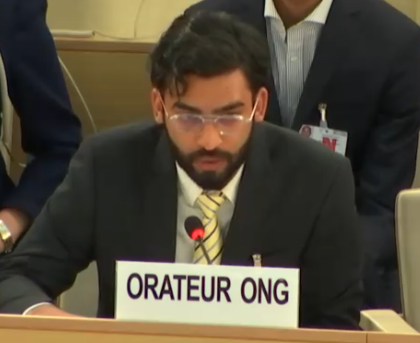
The ICJ, speaking in a general debate at the UN Human Rights Council in Geneva, urged all States to work together towards adoption of a treaty on business and human rights, and highlighted threats to the independence of the judiciary in Europe.
The statement, delivered in the general thematic debate at the Council, read as follows:
“The International Commission of Jurists (ICJ) welcomes the report of the 5th session of the Intergovernmental Working Group (A/HRC/43/55) in charge of the elaboration of a treaty on business and human rights and notes the consensual nature of its conclusions and recommendations. Abuses of human rights and environmental degradation caused with the involvement of business enterprises have so far been met with very limited action by businesses and States.
The ICJ considers that the revised draft treaty is a serious and advanced proposal that is suitable for negotiations and thanks the Chair-Rapporteur for its efforts and leadership in this process.
The ICJ urges States that are not yet actively involved in the negotiations to join the growing number of States that are active for a final push.
The ICJ also draws the attention of the Council to serious threats to independence of judges and lawyers in European countries.
In Poland, judges are being disciplined merely for applying EU law, under legislation curtailing their freedom of expression and independence.
In Turkey, independence of lawyers and judges continues to be seriously compromised, as demonstrated by the disciplinary proceedings against the Gezi trial judges launched after critical comments by the President of Turkey.
The ICJ urges the Council to give attention to these developments of extreme concern.”