Jul 25, 2017 | News
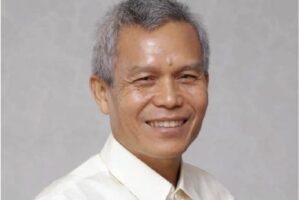
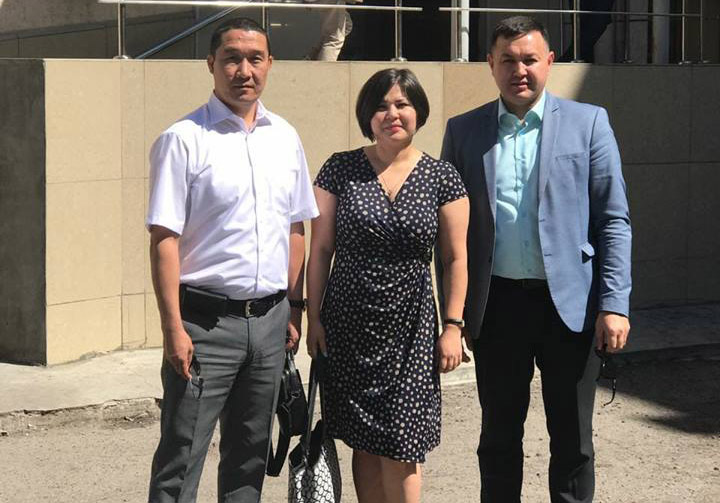
Today the ICJ expressed concern about the real threat of criminal prosecution against lawyers Yerlan Gazimzhanov, Amanzhol Mukhamedyarov and Assel Tokayeva (photo) in Kazakhstan.
The ICJ said the action against lawyers was aimed at their discharging of their professional functions on behalf of clients, and not for any genuine criminal misconduct.
The ICJ called on the responsible authorities of Kazakhstan to discontinue the proceedings against the lawyers, which are contrary to international law and standards on the role of lawyers and the rule of law in the administration of justice.
On 22 June, in a court hearing in the criminal case, judge Ubasheva issued interim rulings against the lawyers seeking their prosecution for a number of acts, which on their face do not consist of criminal misconduct. The conduct for which prosecution is sought includes lodging a complaint alleging unethical conduct by the judge with the Commission on Judicial Ethics and Judicial Jury of the Supreme Court of the Republic; filing a motion for recusal of the judge; stating that the crime for which their clients had been accused had in fact been committed by another defendant; and participating in an international conference, rather than attending a court hearing to defend clients.
The various legal procedures used by the lawyers, including their complaint against the judge and the request for the judge’s recusal, are not prohibited by law. On the contrary, acts such as filing motions for recusal, lodging ethics complaints through officially prescribed channels, and performing standard criminal defence functions they constitute regular procedures prescribed in legislation Kazakhstan. They are also fundamental pursuant to the proper administration of justice under the rule of law.
The interim rulings of the court did not provide an analysis of the legal provisions allegedly violated by the lawyers. Certain of the lawyers were said by the court to have “demonstrated superiority over other actors in criminal proceedings.” It was also alleged that the information posted on a Facebook page about the proceedings in which one of the lawyers took part was false. However, the ruling failed to cite any specific details or conduct of the lawyers which would support these conclusions.
Regarding the charge that two of the lawyers had chosen to participate in an international conference rather than appear at the court hearing, this at most would fall under disciplinary procedures governing the conduct of members of the bar, and not the criminal law. The ICJ notes these charges should normally be made to competent disciplinary body, the Collegium of Lawyers, and not the Ministry of Justice through the request of the judge.
In addition to the criminal prosecution, judge Ubasheva asked the Ministry of Justice to take measures against the lawyers for a breach of professional ethics, causing unjustified delays in criminal trial, and contempt of court, and asked the Ministry of Interior to undertake an inquiry to determine whether the conduct of the lawyers constituted an offence punishable under Article 407 of the Criminal Code of Kazakhstan (obstruction of justice).
On 20-21 July 2017, the Criminal Chamber of Appeals examined the lawyers’ appeals against the conviction and interim appeals against the interim rulings.
The appeal proceedings before the Astana City Court were attended by Gulnora Ishankhanova, ICJ Commissioner acting as an ICJ observer.
Kazhakstan-Trial observation 3 lawyers-News-web story-2017-RUS (story in Russian, PDF)

Jul 24, 2017 | Advocacy, Legal submissions
The AIRE Centre, ICJ, ILGA-EUROPE and ECRE have submitted a third party intervention in case O.S. v. Switzerland (no. 43987/16).
This intervention addresses the following points:
i) enforced concealment of one’s same-sex sexual orientation constitutes persecution under refugee law and is incompatible with the Convention, in particular, Article 3
ii) the criminalisation of consensual same-sex sexual conduct gives rise to a real risk of Article 3 prohibited treatment, thus triggering non-refoulement obligations under the Convention
iii) the risk of persecution based on sexual orientation in Gambia.
Universal-SexualOrientationRefugee-Advocacy-LegalSubmissions-2017-ENG (full legal submission)

Jul 12, 2017 | News
The ICJ is alarmed at ongoing attacks on the rule of law in Poland.
On 12 July 2017, the Government tabled in Parliament draft bill no. 1727, that, if approved, would automatically dismiss all judges of the Supreme Court and let the Minister of Justice decide which judges are to be reinstated or newly appointed.
“This draft law is a direct blow to the principle of separation of powers, the bedrock of the rule of law,” said Massimo Frigo, Legal Adviser with the ICJ Europe Programme.
“The security of tenure and conditions of service of individual judges are essential to judicial independence,” he added.
Draft bill no. 1727 follows another piece of legislation, recently approved by Parliament, by which the Parliament empowered itself to appoint the majority of the members of the National Council of the Judiciary, the body which selects and governs the judiciary.
That law gives political powers in the Polish legislature and executive, which have increasingly demonstrated deep disregard for human rights and the rule of law, undue influence over the judiciary.
Such deficiencies were also highlighted by the Office for Democratic Institutions and Human Rights of the OSCE in May 2017.
“These series of legislative attacks to the independence of the judiciary in Poland must stop. These actions are inconsistent with the international obligations of Poland to ensure the independence of judges,” said Massimo Frigo.
“The European Union must intervene. A EU Member State that directly undermines the checks and balances of its own legal system threatens the founding values of the EU of the rule of law and respect for human rights,” he added.
Contact
Massimo Frigo, ICJ Legal Adviser, t: +41 22 979 3805 ; e: massimo.frigo(a)icj.org
International standards
Particularly in a context like present day Poland, mass removal of all judges from a court, by another branch of government, without a fair and evidence-based individual process for each judge, is incompatible with international standards such as the UN Basic Principles on the Independence of the Judiciary (See, ICJ Practitioners Guide no 13 on Judicial Accountability, pp. 99-104). The UN Basic Principles affirm, among other things, that:
1. The independence of the judiciary shall be guaranteed by the State and enshrined in the Constitution or the law of the country. It is the duty of all governmental and other institutions to respect and observe the independence of the judiciary.
2. The judiciary shall decide matters before them impartially, on the basis of facts and in accordance with the law, without any restrictions, improper influences, inducements, pressures, threats or interferences, direct or indirect, from any quarter or for any reason.
10. …Any method of judicial selection shall safeguard against judicial appointments for improper motives. …
12. Judges, whether appointed or elected, shall have guaranteed tenure until a mandatory retirement age or the expiry of their term of office, where such exists.
18. Judges shall be subject to suspension or removal only for reasons of incapacity or behaviour that renders them unfit to discharge their duties.
19. All disciplinary, suspension or removal proceedings shall be determined in accordance with established standards of judicial conduct.
20. Decisions in disciplinary, suspension or removal proceedings should be subject to an independent review. This principle may not apply to the decisions of the highest court and those of the legislature in impeachment or similar proceedings.
Similar mass removals with politicization of the procedure for reinstatement and new appointments have been condemned as violations of States’ international human rights obligations by, for instance, the UN Human Rights Committee acting under the International Covenant on Civil and Political Rights, to which Poland is also party (see Busyo, Wongodi, Matubaka et al v. Democratic Republic of the Congo, UN Doc CCPR/C/7878/D/933/2000 (2003), and the Inter-American Court of Human Rights (see e.g. Supreme Court of Justice (Quintana Coelle et al) v. Ecuador, Series C No. 266 (2013) and Constitutional Tribunal (Camba Campos et al) v. Ecuador, Series C No. 268 (2013).
Council of Europe standards, in the form of Recommendation CM/Rec(2010)12 of the Committee of Ministers to member states on judges: independence, efficiency and responsibilities, provide among other things as follows:
26. Councils for the judiciary are independent bodies, established by law or under the constitution, that seek to safeguard the independence of the judiciary and of individual judges and thereby to promote the efficient functioning of the judicial system.
27. Not less than half the members of such councils should be judges chosen by their peers from all levels of the judiciary and with respect for pluralism inside the judiciary.
44. Decisions concerning the selection and career of judges should be based on objective criteria pre-established by law or by the competent authorities. Such decisions should be based on merit, having regard to the qualifications, skills and capacity required to adjudicate cases by applying the law while respecting human dignity.
45. There should be no discrimination against judges or candidates for judicial office on any ground such as sex, race, colour, language, religion, political or other opinion, national or social origin, association with a national minority, property, disability, birth, sexual orientation or other status. A requirement that a judge or a candidate for judicial office must be a national of the state concerned should not be considered discriminatory.
46. The authority taking decisions on the selection and career of judges should be independent of the executive and legislative powers. With a view to guaranteeing its independence, at least half of the members of the authority should be judges chosen by their peers.
47. However, where the constitutional or other legal provisions prescribe that the head of state, the government or the legislative power take decisions concerning the selection and career of judges, an independent and competent authority drawn in substantial part from the judiciary (without prejudice to the rules applicable to councils for the judiciary contained in Chapter IV) should be authorised to make recommendations or express opinions which the relevant appointing authority follows in practice.
48. The membership of the independent authorities referred to in paragraphs 46 and 47 should ensure the widest possible representation. Their procedures should be transparent with reasons for decisions being made available to applicants on request. An unsuccessful candidate should have the right to challenge the decision, or at least the procedure under which the decision was made.
49. Security of tenure and irremovability are key elements of the independence of judges. Accordingly, judges should have guaranteed tenure until a mandatory retirement age, where such exists.
50. The terms of office of judges should be established by law. A permanent appointment should only be terminated in cases of serious breaches of disciplinary or criminal provisions established by law, or where the judge can no longer perform judicial functions. Early retirement should be possible only at the request of the judge concerned or on medical grounds.
69. Disciplinary proceedings may follow where judges fail to carry out their duties in an efficient and proper manner. Such proceedings should be conducted by an independent authority or a court with all the guarantees of a fair trial and provide the judge with the right to challenge the decision and sanction. Disciplinary sanctions should be proportionate.
Jul 6, 2017 | News
The Turkish government should immediately release 11 people, including eight Turkish human rights defenders, who were detained yesterday in Istanbul, said the ICJ today.
The human rights defenders were arrested on unknown charges while attending a training in Istanbul on digital security and information management; also reported arrested were two trainers (reportedly a German and a Swedish national) and the owner of the training venue.
Amnesty International has reported that they were denied access to family members and lawyers, contrary to existing regulations.
“These arrests are an alarming setback to efforts to restore the rule of law in Turkey,” said ICJ Secretary General Sam Zarifi.
“Arrest and harassment of human rights defenders violates Turkey’s international legal obligations. Turkish authorities should be protecting human rights and supporting the important work of human rights defenders, but instead we have witnessed a continuing pattern of arrests on human rights defenders in the country,” he added.
On 6 June, Taner Kiliç, the President of Amnesty International Turkey was arrested.
He is currently detained on remand in what several international observers have qualified as baseless charges.
Turkey is currently under a State of Emergency enacted after the attempted coup d’etat of 15 July 2016.
While recognizing the serious attack suffered by Turkish institutions, the ICJ has repeatedly called for an end to this year-long state of emergency under which sweeping measures have been enacted that continue to erode human rights, including rights of fair trial, the right to liberty, and freedoms of expression and association.
“It is time to turn the page of the emergency and return to the rule of law,” said Sam Zarifi. “The work of human rights defenders, judges and lawyers is essential to a democratic society that upholds human rights.”
Background
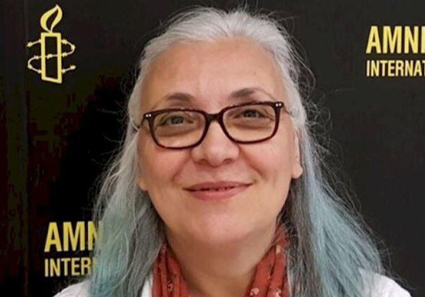
The human rights defenders arrested are Idil Eser (current Director of Amnesty International Turkey, photo), İlknur Üstün (Women’s Coalition), Günal Kurşun (Human Rights Agenda Association), Nalan Erkem (Citizens Assembly), Nejat Taştan (Equal Rights Watch Association) , Özlem Dalkıran (Citizens’ Assembly), Şeyhmuz Özbekli, and Veli Acu (Human Rights Agenda Association).
Contact
Olivier van Bogaert, ICJ Director of Media & Communications, t: +41 22 979 3808 ; e: olivier.vanbogaert(a)icj.org

Jun 30, 2017 | Multimedia items, News, Video clips
ICJ Commissioner Karinna Moskalenko talks about the vulnerabilities of human rights defenders in Russia, as part of the ICJ’s ongoing women profiles series.
Ms Moskalenko is a Russian lawyer who has been a Commissioner of the ICJ since 2003. In the early 1990s she founded, and was the former Director of, the International Protection Centre based in Moscow.
The Centre was founded after Russia had ratified the Human Rights Committee Mechanism with the Optional Protocol to the International Covenant on Civil and Political Rights. This provided an opportunity to be able to use international mechanisms to appeal against injustices.
Once Russia had ratified the European Convention it was also possible to use the European Court of Human Rights as another means to challenge incidences where domestic remedies were failing to protect the rights of people in Russia.
The Centre pursued many cases successfully and the credibility of the organization grew, which also increased demands for help. Karinna said that women have a strong role to play in human rights defence work in Russia and form the majority of the human rights community where they are well respected.
However, this is not reflected elsewhere in Russian society where, although women are visible in senior roles within the judiciary and the executive, they do not often play an important role in leadership positions or decision-making.
“Women in Russia are sometimes much more vulnerable than other groups of the population,” said Karinna. She identified the particular problem of domestic violence as one where women are unable to obtain legal protections because police are not very interested in the problem. In addition many people within society think that women already have enough protections so there is little public opposition for reducing protections and no support for enhancing these.
Karinna felt compelled to work as a human rights defender to protect the most vulnerable people but commented that many lawyers are not interested in this field of law. Instead, they prefer to build careers within official bodies of the judiciary or the government. Human rights activities are no longer very popular, she said.
Members of non-governmental organizations are often accused of being ‘foreign agents’ or ‘enemies of the State’. As many people do not understand the nature of human rights defence work, Ms Moskalenko said it can be frustrating and hurtful to have to defend yourself against these accusations. However, Karinna thinks that those working in human rights are the most patriotic people she knows because they care about the rights of each and every member of society.
Fortunately, the International Protection Centre has won so many cases for ordinary people that they have a very good reputation in society, but they do not have enough funding for their activities. They cannot accept international funds and domestically no funding is available. Many lawyers take on unpaid cases, but not everyone can afford to do so. The defence of human rights is a very difficult career.
“I cannot say that there is no fear. There is, of course. Some of my friends were killed because of their human rights activity.”
Ms Moskalenko said that human rights defence work is very important but in Russia defenders are not protected financially, legally, morally or physically. They are frequently threatened, persecuted and even killed.
However, although working as a human rights defender is difficult, Karinna says that “when you somehow help people, you want to continue that, you think that you believe that you must do that, you cannot stop and people come to you, how can you refuse?”
Watch the interview:
The series of profiles introducing the work of ICJ Commissioners and Honorary Members on women’s rights was launched on 25 November 2016 to coincide with the International Day to Eliminate Violence against Women and the first day of the 16 Days of Activism Against Gender-Based Violence Campaign.