Oct 4, 2017 | News
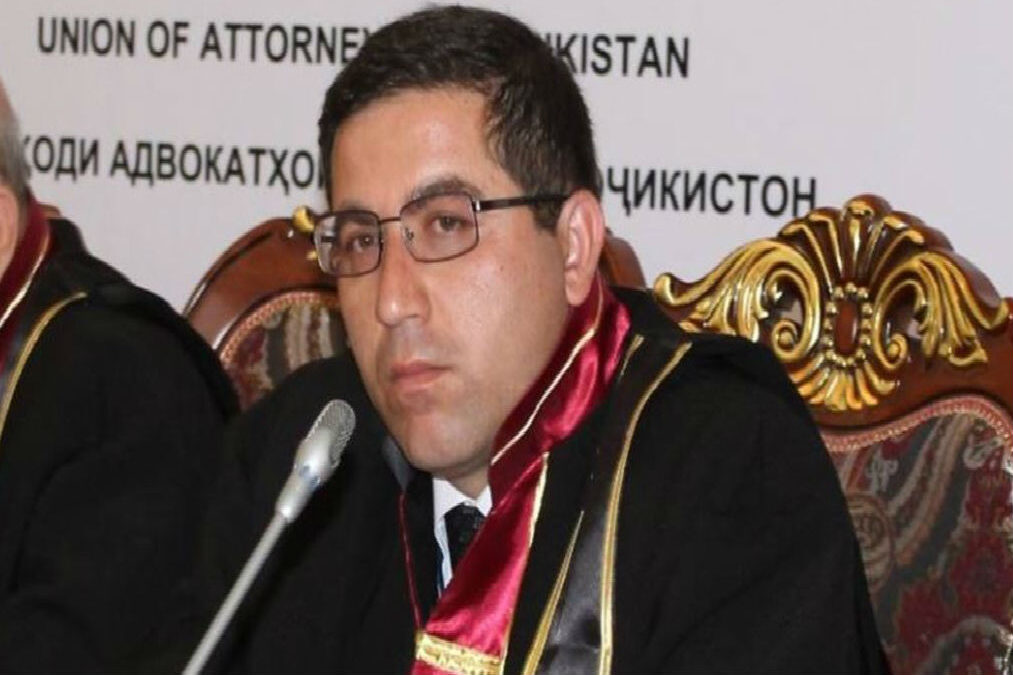
Tajikistan should take urgent action to ensure the protection of Buzurgmehr Yorov, a lawyer serving a 28-year sentence in prison, following his conviction being based on clearly improper charges related to the defense of his clients, the ICJ said today.
The ICJ is aware that Bugurgmehr Yorov has been subjected to acts amounting to torture or other ill-treatment.
The responsible authorities must ensure that such ill-treatment immediately ceases and that allegations that Buzurgmehr Yorov’s rights that have been violated are promptly and thoroughly investigated by an independent body.
Anyone responsible for violations of his rights must be held accountable and brought to justice, as required under Tajikistan law as well as international human rights treaties to which Tajikistan is a party.
Buzurgmekhr Yorov was arrested two years ago on 28 September 2015, on charges of “fraud” and “forgery of documents.”
Later, he was accused of violating three more articles of the Criminal Code, including in relation to alleged “public calls for extremist activity.”
On 6 October 2016, The Dushanbe City Court sentenced Yorov to 23 years imprisonment in a strict regime prison.
In March this year, Yorov was sentenced to an additional two years’ deprivation of liberty for “contempt of court and insulting the representative of power.”
In August 2017, he received a further three years sentence on charges of “insulting the president.”
On 27 September 27 2017, Hurinniso Ishokova, mother of Buzurgmehr Yorov, obtained permission to visit her son in a pre-trial detention facility, for the first time in nine months.
Following the visit, she alleged that her son had been systematically beaten by prison staff during the whole period of his detention, and that in the last month the beatings had intensified.
She also said that at an unspecified time during his detention Buzurgmehr Yorov had been admitted to the hospital at the pre-trial facility.
After several days of treatment, he was again sent back and the beatings by prison staff resumed.
According to his mother, these beatings were accompanied by insults, humiliation and threats. Reportedly, on three recent occasions Buzurgmkhar Yorov was placed in a punishment cell for several days.
On September 28, 2017 the head of the pre-trial facility rejected all claims that Buzurgmkhar Yorov had been subjected to torture or other ill-treatment.
Background:
The ICJ has, on a number of occasions, expressed its serious concerns over the arrest and conviction of Buzurgmehr Yorov and other lawyers in Tajikistan.
The ICJ is concerned that Buzurgmehr Yorov’s conviction may constitute a reprisal for his defense work in high-profile political trials in connection with his representation of thirteen leaders of the Islamic Renaissance Party of Tajikistan (IRPT).
See:
https://www.icj.org/tajikistan-long-prison-sentences-for-lawyers-endangers-the-fairness-of-the-justice-system/
https://www.icj.org/tajikistan-arrest-of-lawyer-raises-concern-over-reprisals-for-defense-of-clients/
https://www.icj.org/tajikistan-icj-concerned-at-arrest-of-lawyer/
Tajikistan is a party to the International Covenant on Civil and Political Rights (ICCPR) and the UN Convention against Torture (CAT) both of which enshrine the absolute prohibition on torture or other cruel inhuman and degrading treatment, and require that allegations of such ill-treatment should be subject to independent, thorough and prompt investigation, and that perpetrators of crimes of torture should be brought to justice.
According to UN Basic Principles on the Role of Lawyers, lawyers “shall not suffer, or be threatened with, prosecution or administrative, economic or other sanctions for any action taken in accordance with recognized professional duties, standards and ethics.” (Principle 16(c)).
Yorov_statement_rus (Russian translation – pdf)
Oct 4, 2017 | Agendas, Events, News
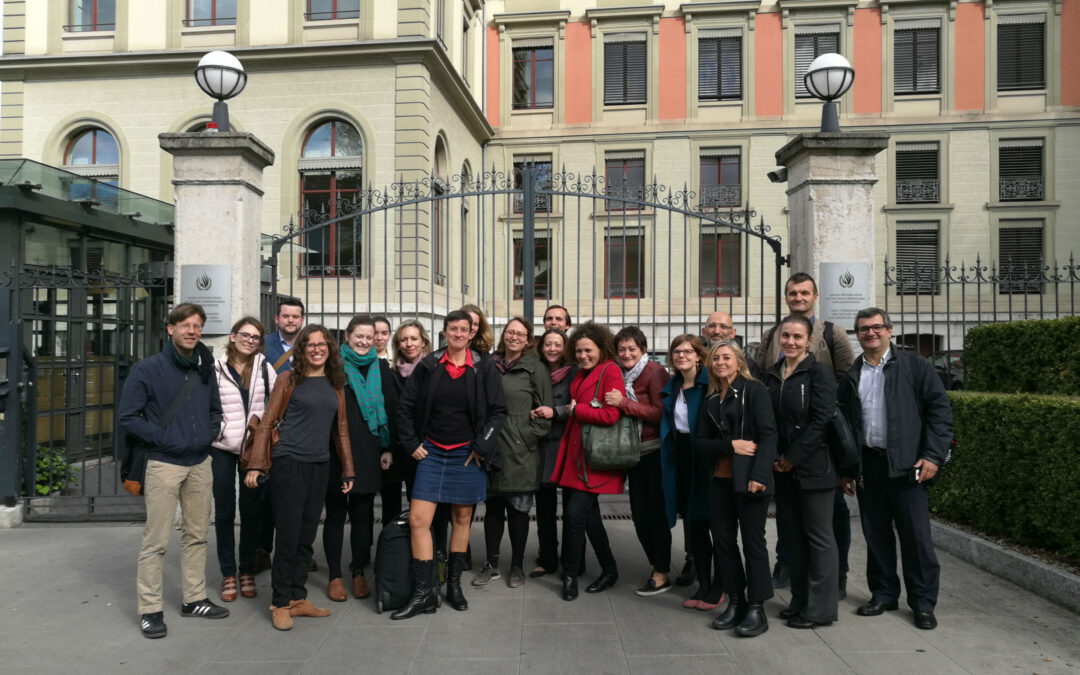
Today starts a five-day Strategic Litigation Retreat for lawyers in Ferney-Voltaire, France organized by the ICJ-EI as part of the EU and OSI funded FAIR project.
Twenty lawyers from Bulgaria, Germany, Greece, Italy, Ireland, Malta and Spain will be meeting with experts and among themselves in order to strategize about their cases of access to justice for migrant children and on accessing international human rights mechanisms.
The retreat is taking place from 4 to 8 October in a close proximity to Geneva, which allows for access to UN treaty bodies experts.
The group will meet with Members of the UN Committee on the rights of the child and the UN Committee on Economic, Social and Cultural Rights and experts from the treaty bodies’ secretariat on individual complaints and on inquiries.
The participants will also have a chance to discuss litigation strategies with experts from the European Court for Human Rights, experts from civil society organizations with long-standing experience in strategic litigation, such as the AIRE Center, ICJ, DCI Belgium or Child Rights Connect.
All the participating lawyers took part in the national trainings organized, through 2016 and 2017, by the ICJ and its national partners.
The trainings were focused on the right to be heard and procedural rights of migrant children, the right to family life, economic, social and cultural rights, detention and on how to access international human rights mechanisms in order to allow for effective access to justice for migrant children.
Out of all the participants, this Strategic Litigation Retreat, brings together three selected lawyers from each of the national trainings.
In the same time, the project management group of the FAIR project, composed of national partners and Child Rights Connect will meet and will contribute to some parts of the Retreat.
The Retreat will use as a basis the draft training materials prepared by the ICJ (to be published an the end of 2017) and the ICJ Practitioners Guide no. 6: Migration and International Human Rights Law.
The FAIR project co-funded by the Rights, Equality and Citizenship Programme of the European Union and OSIFE.
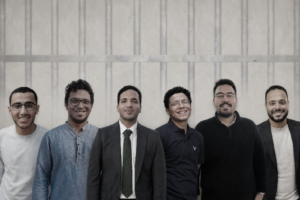
See more information about the national trainings on the rights of migrant children within the FAIR project here: Spain, Italy, Bulgaria, Malta, Greece, Ireland, Germany (photo)
Download the agenda here: Universal-StrategicLitigationRetreat-News-Events-Agendas-2017-ENG
Oct 3, 2017 | Advocacy, Cases, Legal submissions
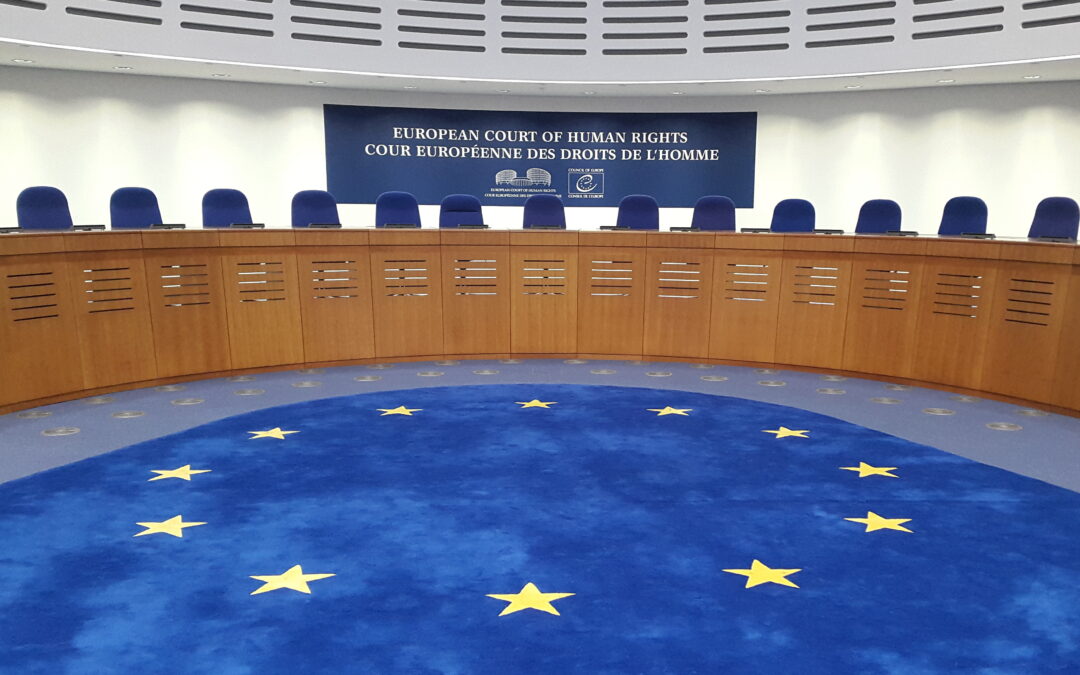
On 2 October, the ICJ and Amnesty International submitted an intervention before the European Court of Human Rights in the case Ecodefence and others v the Russian Federation, Application no. 9988/13 and 48 other applications, which concern labeling NGOs as foreign agents.
In this submission, the applicants provided the Court with an analysis, based on international law sources, of:
a) the scope of application of rights to freedom of expression and association guaranteed under Articles 10 and 11 of the European Convention on Human Rights (ECHR or the Convention) to restrictions on the activity of non-governmental organisations (NGOs);
b) application of the principle of legality to such restrictions;
c) the legitimacy of the aim, necessity and proportionality of measures regulating NGOs, including restrictions on funding, burdensome reporting requirements, sanctions and the stigmatizing effect of labelling NGOs as “foreign agents”; and
d) the scope of permissible restrictions under Article 18 of the ECHR, particularly the question of interferences used for purposes other than those which fall under Articles 10 and 11 of the Convention.
The submission addresses the obligations of State parties to the ECHR with account taken of the other international law obligations, such as those under the International Covenant on Civil and Political Rights (ICCPR) as well as other relevant standards under international law.
Russia-ECtHR-AmicusBrief-Ecodefence-legalsubmissions-2017-ENG (download the third party intervention)
Oct 2, 2017 | News
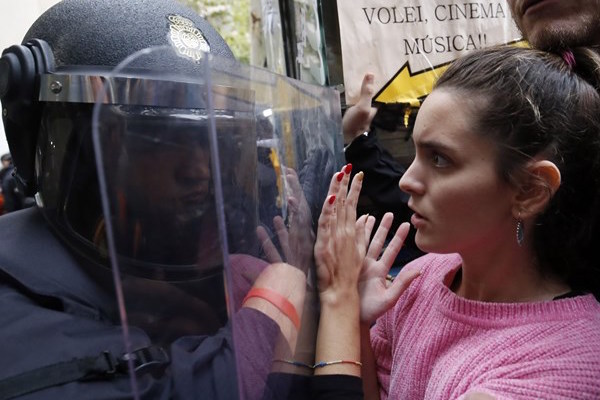
The ICJ today expressed concern at the apparently unlawful violence surrounding yesterday’s referendum in Catalonia, as Catalan authorities sought to hold a vote on the independence of the region. The Spanish Constitutional Court had ruled that the referendum was illegal.
The ICJ calls on all parties concerned to resolve the current crisis in accordance with international human rights law and in the framework of the rule of law.
The ICJ is particularly concerned at allegations of excessive use of force during police operations aimed at enforcing court orders to prevent the referendum being held.
International human rights obligations binding on Spain require that any use of force by agents of the State must be no more than is strictly necessary in the circumstances to meet a grave threat .
All aspects of police operations, including their planning and co-ordination, and the training, guidance and orders given to police officers on the ground, must be designed to minimize the use of physical force.
The ICJ calls for a thorough, prompt and independent investigation into the violence surrounding the referendum, and for those responsible for acts of violence in violation of human rights to be brought to justice.
Background
Spain has obligations to respect the right to life and the right to physical integrity of any person under its jurisdiction under articles 6 and 7 of the International Covenant on Civil and Political Rights, and articles 2, 3 and 8 of the European Convention on Human Rights.
Standards in this regard are re-enforced by the UN Code of Conduct for Law Enforcement Officials and the UN Basic Principles on the Use of Force and Firearms by Law Enforcement Officials.
Positive obligations under these provisions require that allegations of lethal or potentially lethal force, or force that could amount to cruel inhuman or degrading treatment or torture, be the subject of investigation that is independent and impartial, thorough and prompt.
The violence surrounding the referendum on Catalonia’s independence reportedly resulted in injuries to at least 844 civilians and 33 police offices.
Contacts:
Róisín Pillay, ICJ Europe Programme Director, t: +32 2 734 84 46 ; e: roisin.pillay(a)icj.org
Massimo Frigo, ICJ Senior Legal Adviser, t: +41 22 979 3805 ; e: massimo.frigo(a)icj.org
Sep 25, 2017 | Events, News
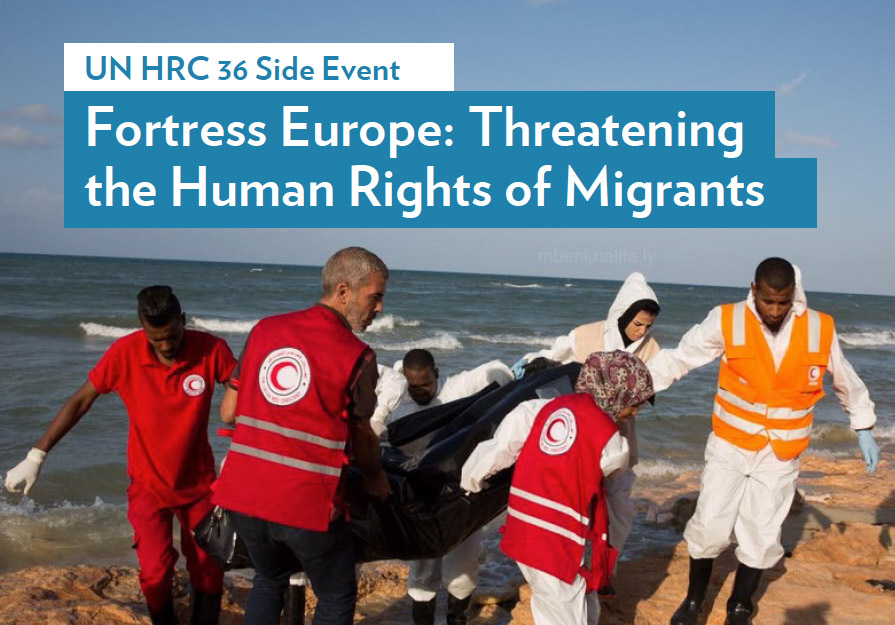
This side event at UN HRC 36 will take place on 26 September 2017, 11.00-12:30, Room XV, Palais des Nations, Geneva.
The side event, hosted by Lawyers for Justice in Libya and the Cairo Institute for Human Rights Studies, will discuss the role of European Union (EU) Member States in the migration crisis and how their policy on migration is threatening the human rights of migrants. The panel will discuss and make recommendations to EU Member States, Libya and the Human Rights Council to ensure accountability for human rights violations being committed against thousands of migrants.
Speakers:
Conor Kenny Doctors Without Borders
Elham Saudi Lawyers for Justice in Libya
Matteo De Bellis Amnesty International
Tareg Ben Ramadan Coalition of Libyan Human Rights Organisations
Chair:
Massimo Frigo International Commission of Jurists
Europe-Flyer side event-News-Event-2017-ENG (Flyer in PDF)