
Apr 22, 2016 | News
The ICJ welcomes the decision of the Almaty City Court in favour of Ayman Umarova, a lawyer who received repetitive demands from the investigative authorities to testify as a witness in a case in which she represented a client.
The Court decided that those demands were contrary to the law of the Republic of Kazakhstan.
Earlier this month, on 8 April, Umarova (photo) had challenged the official summons of Baurzhan Muzhikov, the head of an investigative group of the Anti-Corruption Service of Almaty, to testify as a witness.
The Medeu Regional Court confirmed the lawfulness of such demands, concluding that it was not related to her professional activity.
On 18 April, the Appeals Collegium of the Almaty City Court overturned the decision of the Medeu Regional Court.
Umarova was represented in the case by 28 lawyers as a demonstration of solidarity by the profession.
“The matter concerns not only Ayman Umarova but the entire legal community. If the case sets a precedent, the rights of our citizens will be in jeopardy,” Anuar Tugel, the President of the Republican Collegium of Lawyers, was reported to have said.
“The decision of the Almaty City Court is an important step in protecting the independence of the legal profession,” said Temur Shakirov, Legal Adviser of the ICJ Europe Programmme.
“While it is welcome that the Court remedied the practice of a forced testimony contrary to the international standards on the role of lawyers, it is worrying that such instances of obstruction of the work of lawyers continue to occur,” he added.
The UN Basic Principles on the Role of Lawyers, in Principle 22, stipulate that: “Governments shall recognize and respect that all communications and consultations between lawyers and their clients within their professional relationship are confidential”.
The UN Human Rights Committee has expressed concerns where “lawyers are released from their obligation of professional confidentiality and obliged to testify or face the risk of imprisonment” (UN Doc CCPR/C/TUN/CO/5 (2008), para. 15).
The ICJ recalls that, in accordance with of the UN Basic Principles, lawyers should be able to perform their professional duties without intimidation, hindrance, harassment or improper interference (Principle 16) and should never be identified with their clients’ causes (Principle 18).
Contact:
Róisín Pillay, Director, Europe Programme, roisin.pillay(a)icj.org
Temur Shakirov, Legal Adviser, Europe Programme, temur.shakirov(a)icj.org
Additional information:
On 28 March 2016, Ayman Umarova started her representation of Sayat Nadirbayev in a criminal case related to Talgat Ermegiyaev, former head of the Astana EKSPO-2017 company, accused of embezzlement.
On 2 April, after a request on the phone by the head of the Investigative Department of the Anti-Corruption Service of Almaty Baurzhan Muzhikov, Ayman Umarova received an official demand to appear and testify as a witness in the case. Since then she was required to appear and testify several times.
On 6 April, the Chair of the Almaty Collegium of Lawyers received a letter signed by Baurzhan Muzhikov, the head of an investigative group of the Anti-Corruption Service of Almaty, asking it to “facilitate the appearance of lawyer Umarova Ayman … to question her as a witness”.
On the same day, the Republican Collegium of Lawyers issued a statement where it qualified this request as a “violation of the guarantees of advocates’ activities” and urged that “appropriate measures [be taken] in regard to the officers of the Anti-Corruption Service”.
Kazakhstan-Landmark decision-News-Web Stories-2016-RUS (full text in Russian, PDF)
Apr 21, 2016 | News
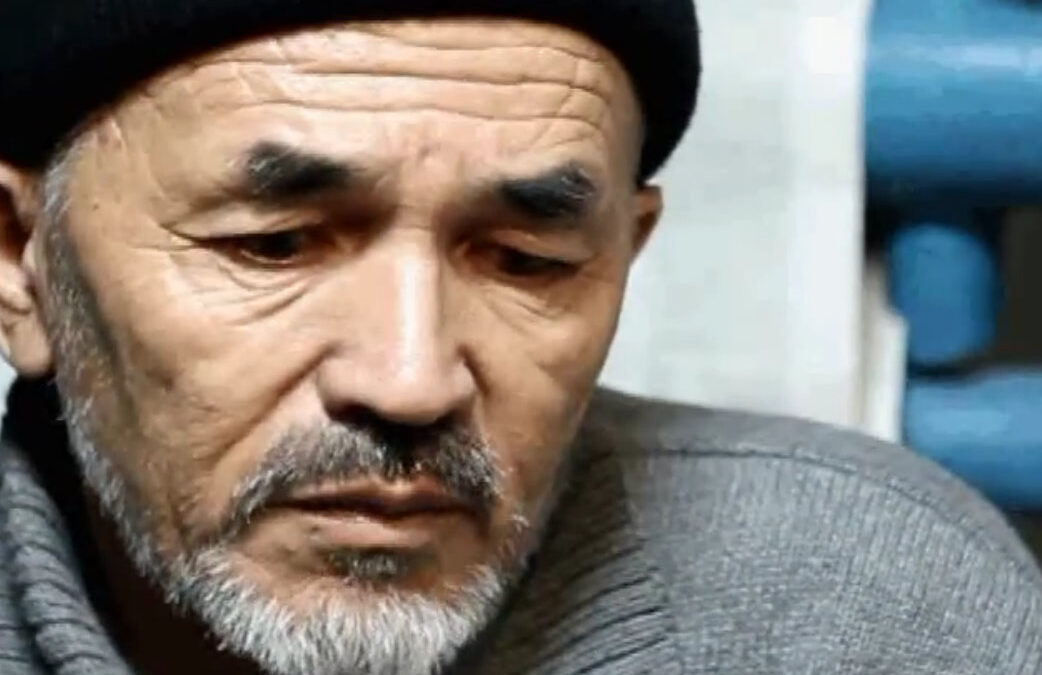
The ICJ welcomed today’s decision of the UN Human Rights Committee in the case of Azimzhan Askarov, a Kyrgyz human rights activist, sentenced to life imprisonment in Kyrgyzstan.
The Committee found multiple violations of Azimzhan Askarov’s human rights related to his arrest, detention and trial, including violations of Articles 7 (freedom from torture), Article 9 (prohibition of arbitrary detention); Article 10 (right to humane treatment in detention), Article 14 (right to a fair trial) of the International Covenant on Civil and Political Rights.
Azimzhan Askarov, a prominent human rights defender working in the South of Kyrgyzstan, was convicted in December 2015 of serious crimes, including the murder of a police officer, which took place during the violent ethnic clashes in the South of Kyrgyzstan in June 2010.
The ICJ observed the appeal hearing in the case before the Supreme Court on 20 December 2011. Based on the results of the mission as well as the documents of the case, the ICJ published a detailed Report on the arrest, detention and trial of Azimzhan Askarov.
The report established multiple violations of human rights in the arrest and trial of Azimzhan Askarov.
The decision of the UN Committee is an important step in providing a legal framework to remedy the violations in the case.
The ICJ calls on the relevant authorities of the Kyrgyz Republic to take urgent measures to implement the decision of the Human Rights Committee.
In particular, in accordance with the decision of the Committee, the Kyrgyz Republic must now immediately release Azimzhan Askarov; quash his conviction and provide him with adequate compensation.
Kyrgyzstan-Askarov-CCPR-Statement-2016-RUS (download the statement in Russian)

Mar 29, 2016 | News
Today, the ICJ expressed serious concern at the apparent murder of lawyer Yury Grabovsky who was found dead on 25 March. The lawyer had been missing for two weeks and was reportedly found shot and buried near the Kiev-Odessa main route.
“The death of lawyer Yury Grabovsky must be investigated in a prompt, impartial and effective manner. Other lawyers who may be under threat should be urgently granted the necessary measures of protection”, said Temur Shakirov, ICJ Legal Adivser.
Yury Grabovsky was the managing partner of law firm “Garbovsky and Co”, as well as Deputy Chair of the High Qualification Disciplinary Commission.
He represented Aleksandr Aleksandrov, who along with Evgeniy Yerofeyev, was detained last May in the Lugansk Region in Eastern Ukraine and accused of terrorism and a number of other crimes.
The lawyer’s whereabouts had been unknown since 5 March after he had left for Odessa to stay at “Arkadiya” hotel.
He was apparently supposed to leave the hotel on 7 March but he never took his belongings from there.
On 9 March, a court hearing did not take place because the lawyer was missing.
Garbovsky’s colleagues reportedly doubted the authenticity of a post on his facebook account stated that he had left Ukraine.
On 10 March, the National Association of Lawyers of Ukraine informed the National Police that the lawyer had been missing.
The same day, the Odessa police opened a criminal case on “intentional murder”.
On 20 March, the Chief Military Prosecutor of Ukraine, Anatoly Matios, stated that a suspect in the organization of the disappearance of Grabovsky had been apprehended.
On Friday, 25 March, Prosecutor Matios said that Grabovsky “was killed in a violent way and finished off with a firearm” which according to the Prosecutor was a “specially planned operation.”
The lawyer’s body was found shot and buried 138 km south of Kiev after one of the suspects had reportedly disclosed the place of burial.
The lawyer is said to have had an explosive bracelet on his leg, apparently intended to prevent him from escaping. The names of the suspects have not been made public.
It is the second killing of a lawyer in Ukraine this month, and the fourth such killing since January 2015, including, lawyers Alexandr Gruzkov, Yury Ignatenko, Viktor Loiko, and now Yuri Grabovskiy.
Temur Shakirov stressed that “in order to fulfil their function lawyers must be able to act without fear and free from fear of reprisals of any kind”.
The UN Basic Principles on the Role of Lawyers affirm that“[w]here the security of lawyers is threatened as a result of discharging their functions, they shall be adequately safeguarded by the authorities.”
The ICJ calls on the Government of Ukraine to investigate the case and bring those responsible to justice, including both anyone who directly carried out the killing and anyone who ordered the crime.
Urgent measures to guarantee the security of lawyers should be taken, which should include effective security measures against attempts on their lives and lives of their family members.
Contact:
Róisín Pillay, Director, Europe Programme, roisin.pillay(a)icj.org
Temur Shakirov, Legal Adviser, Europe Programme, temur.shakirov(a)icj.org
Mar 28, 2016 | News
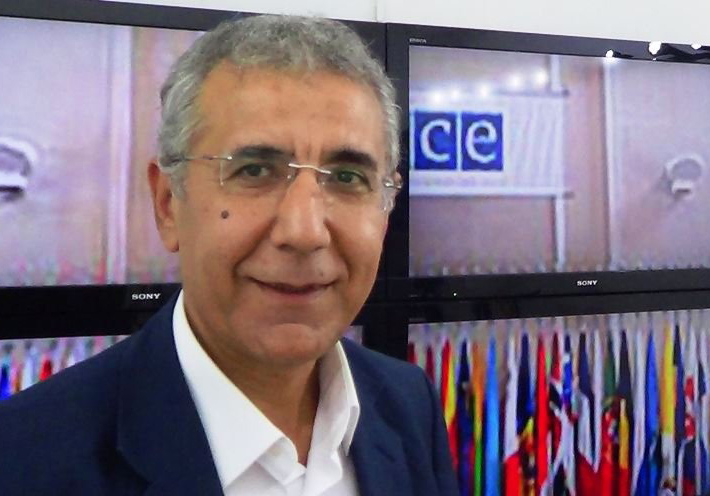
The ICJ welcomes the release of human rights lawyer Intigam Aliyev today after the Supreme Court reduced and suspended his sentence and ordered his immediate release.
Intigam Aliyev, a prominent human rights lawyer and the head of the NGO Legal Education Society, had been convicted on 22 April 2015 of tax avoidance, illegal entrepreneurship and abuse of power and sentenced to seven and a half years of imprisonment by a Baku Court.
A number of credible human rights organizations and international observers who have closely followed the case have stated that they consider the charges he was tried on to have been politically motivated, and that the real reason for his prosecution and conviction was repression by the Government of critical voices in civil society.
In a closed hearing, the Supreme Court reduced his sentence to five years of imprisonment and suspended its execution, after a request to this effect was made by Azerbaijan’s Prosecutor General, Zakir Garalov.
This unusual initiative follows the rejection, on 24 February, by the same Supreme Court of Intigam Aliyev’s complaint against his sentence.
“While the release of Intigam Aliyev is a positive step, the ICJ remains concerned that this decision appears to leave the underlying conviction in place despite credible reports that the charges were politically motivated,” said Massimo Frigo, ICJ Legal Adviser.
“If, as these allegations would suggest, Intigam Aliyev was targeted for his work as a lawyer, this would clearly violate international standards on the independence of lawyers”, said Temur Shakirov, another ICJ Legal Adviser.
Contact
Temur Shakirov, Legal Adviser, Europe Programme, temur.shakirov(a)icj.org
Massimo Frigo, Legal Adviser, Europe Programme, masimo.frigo(a)icj.org
Mar 24, 2016 | Advocacy, News
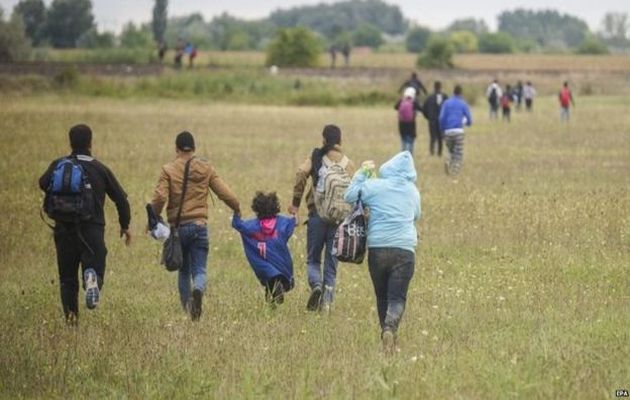
The ICJ and ECRE presented today a joint submission on the situation of the asylum and reception systems in Greece to the Committee of Ministers of the Council of Europe.
The submission was presented in view of a meeting of the Committee of Ministers of the Council of Europe on the implementation by Greece of the European Court of Human Rights’ judgment in the case of M.S.S. v Belgium and Greece that will take place next June.
The submission refers to the previous detailed joint submissions of ICJ and ECRE and provides recent information on the state of the asylum procedure, reception conditions and detention practices, which are likely to be of importance to the supervision of the execution of the M.S.S. v. Belgium and Greece ruling. It focuses on:
- ongoing obstacles to accessing the asylum procedure, namely concerning registration before the Asylum Service, the operation of appeals bodies, as well as the likely application of the “safe third country” concept regarding Turkey;
- the state of Greece’s reception system, with a view to properly assessing its capacity to accommodate asylum seekers and migrants on its territory; and
- updated information on the lawfulness and conditions of immigration detention, including new risks of detention stemming from nationality-profiling and the establishment of “hotspots” at points of arrival.
Greece-ICJECRE-MSS-CommitteeMinisters-5thsubmission-legal submission-2016-ENG (download the joint submission)