
Oct 21, 2013 | News
The ICJ welcomes today’s ruling by the Grand Chamber of the European Court of Human Rights in the case of Inés Del Rio Prada, affirming that changes made retroactively to the remission of her sentence violated her rights.
The ICJ, which intervened as third-party in the case, says the judgment reinforces and makes effective the principle of non-retroactivity of criminal law, an essential element of the rule of law.
“This is a highly significant judgment that affirms and strengthens the rule of law in criminal sentencing,” said Róisín Pillay, Director of the ICJ Europe Programme. “Rules and practices that have a significant impact on the calculation and remission of sentences must not be applied retroactively to the detriment of a convicted person.”
“The key principle that the Grand Chamber has upheld today is that the rules that apply to the calculation of the sentence to be served, must be clear and foreseeable under the law at the time of conviction. Subsequent re-interpretation by the courts cannot fundamentally revise the principles that apply to a sentence already handed down. While States have the responsibility for setting sentencing rules for crimes, any changes to those rules which would result in an increased penalty must not applied retroactively in breach of (Article 7 of) the European Convention on Human Rights,” she added.
BACKGROUND:
Inés Del Rio Prada had been convicted of terrorism offences and sentenced to a total of over 3,000 years of imprisonment.
According to Spanish sentencing rules in force at the time, this theoretical sentence was tantamount to an effective sentence of 30 years imprisonment.
While at that time, the benefit of sentence reduction for work performed in prison was applied to the 30-year period, in 2008 the Spanish courts decided to deduct such benefits from the 3,000 years of nominal imprisonment instead, thereby significantly reducing their impact, and leading to a considerably longer sentence in the case of the applicant.
In its judgment, the Grand Chamber held that the application of changes to Spanish sentencing rules as applied to applicant Inés Del Rio Prada had violated the prohibition on retroactive penalties guaranteed in Article 7 of the European Convention on Human Rights.
It held that a 2006 decision of the Spanish Supreme Court, which altered the system of calculation of maximum terms of sentences, leading to reduced remission of sentences for work done in prison, constituted a retroactive redefinition of the sentence previously imposed, which could not have been foreseen.
As such, the Court held that Spain had violated its obligations under article 7 of the European Convention on Human Rights (ECHR).
The Court also found that the applicant’s continued detention violated the right to liberty under Article 5(1) ECHR, and required her release at the earliest possible date.
Contact:
Róisín Pillay, Director, ICJ Europe Programme, t +32 2 734 8446; e-mail : roísín.pillay(a)icj.org
Read also:
Third Party Intervention in Del Rio Prada v. Spain

Oct 17, 2013 | Events
The ICJ participated in a meeting of experts within the Council of Europe’s Steering Committee on Human Rights (CDDH) in Strasbourg on 14-16 October 2013.
The Drafting Group on Human Rights and Business of the Steering Committee on Human Rights (CDDH-CORP) has drafted a Declaration of support to the Guiding Principles on Human Rights and Business for consideration by the Committee of Ministers. The ICJ expresses satisfaction at the progress made during the meeting and hopes that the draft declaration will be finally approved by Ministers and that this expert group will be able to move on to drafting a non-binding instrument on access to justice in the context of business activities.
Steering Committee meeting page (for agenda and report, including the draft Declaration)
Photo credit: © notfrancois (the author has no involvement in nor does support this submission)
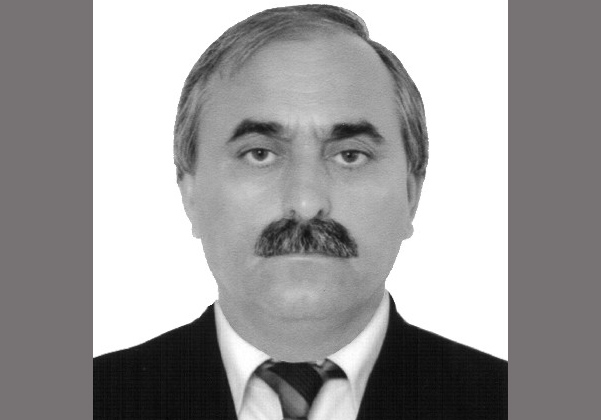
Sep 26, 2013 | News
The ICJ today expressed grave concern over the shooting of a Supreme Court judge of Dagestan and his son.
The ICJ calls on the federal and local authorities to ensure prompt, independent, impartial and thorough investigation of the shooting of Judge Mukhtar Shapiyev (photo) and his son.
Those reasonably suspected of responsibility for this crime should be identified and brought to justice in fair and transparent proceedings, where the rights of all the parties, including the victims and the accused are respected.
The ICJ recalls that Mukhtar Shapiyev is the third judge to be killed in Dagestan this year.
On 15 January, Magomed Magomedov, a Supreme Court judge of Dagestan, was shot and died as a result of the attack and, on 9 March, federal judge Akhmed Radzhabov, was shot to death near his house.
“When judges’ security is not guaranteed, and when they face a real and constant risk to their lives, the justice system and the very rule of law are undermined,” Temur Shakirov, Legal Adviser of the ICJ Europe Programme, said. “The UN Basic Principles on the Independence of the Judiciary clarify that it is the obligation of the State to ensure that those who are entrusted with the power to take judicial decisions are effectively protected.”
Reports indicate that Mukhtar Shapiyev and his son, Kamil Shapiyev, were shot at by at least two persons near their home in the capital Makhachkala at about 20:45 on Wednesday 25 September. Both victims later died in hospital.
Judge Shapiyev previously worked as the Prosecutor of one of the districts in Dagestan. In January 2012, he was appointed as a Supreme Court judge of Dagestan and worked in the collegium on civil cases.
Urgent measures, which the ICJ calls for to guarantee that the security of judges in Dagestan is effectively protected, include ensuring effective security against attempts on their lives and lives of their family members.
CONTACTS
Róisín Pillay, Director, ICJ Europe Programme, roisin.pillay(a)icj.org
Temur Shakirov, Legal Adviser, ICJ Europe Programme, temur.shakirov(a)icj.org
Russia-Judge killed in Dagestan-news-web story-2013-rus (full text in pdf)

Sep 13, 2013 | News
The ICJ welcomes the decision of the Osh Regional Court to overturn an intermediate ruling to initiate disciplinary proceedings against two lawyers representing the interests of a victim of sexual assault.
The ICJ sent a mission to observe today’s hearing. The mission raised no issues of concern regarding the conduct of the proceedings observed.
On 3 July 2013, the Osh City Court issued an intermediate ruling to initiate disciplinary proceedings against two lawyers, Valerian Vakhitov, Khusanbai Saliyev, for taking procedural steps provided for under Kyrgyzstan law, including filing motions to the upper judicial instances or filing motions to recuse the judge during and not before the trial.
Today, the Osh Regional Court upheld lawyers’ appeal and overturned the decision to initiate disciplinary proceedings against the lawyers.
The case concerns charges against a teacher in a religious institution for sexual acts with one of his students, a nine-year-old boy.
The representatives of the defendant alleged that he is not criminally responsible by reason of insanity – a proposition contested by the lawyers of the victim. The main trial is ongoing.
The trial was observed by an ICJ trial observation mission: Oleg Levytskyy (Ukraine) and Almaza Osmanova (Kyrgyz Republic).
The observers met with the court, the prosecutor, representatives of the victims and the defendant.
“We welcome the decision to overturn the ruling to initiate disciplinary proceedings against these lawyers,” said Róisín Pillay, Director of the ICJ Europe Regional Programme. “In accordance with international standards, it is the lawyers’ duty to assist their clients in every appropriate way and take legal action to protect their interests. Therefore punishing lawyers for their diligent work would run contrary to the obligation of the state to guarantee that lawyers can carry out their functions without intimidation, hindrance, harassment or improper interference.”
Contacts
Róisín Pillay, Director, ICJ Europe Programme, roisin.pillay(a)icj.org
Temur Shakirov, Legal Adviser, ICJ Europe Programme, temur.shakirov(a)icj.org
Kyrgyzstan-Osh_Lawyers_Trial Observation-news-web story-2013-rus (full text in pdf)

Sep 3, 2013 | News
The ICJ today expressed its serious concern at the continued detention of lawyer Zinaida Mukhtorova in a psychiatric facility.
In its statement, the ICJ expressed concern that this detention may amount to an act of harassment or reprisal for Zinaida Mukhtorova’s legitimate exercise of her professional functions. Furthermore, the ICJ is concerned at reports that her detention may have been extended today as a reprisal for her challenging the detention through the courts.