Aug 21, 2013 | News
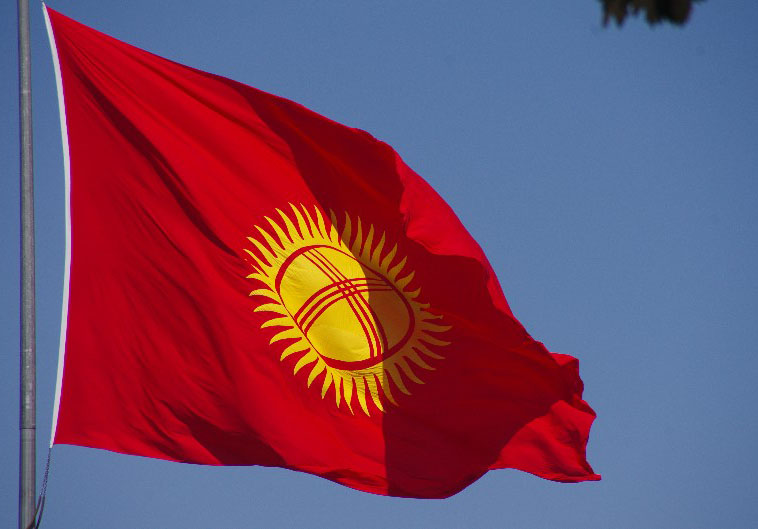
The ICJ today called on the government of the Kyrgyz Republic to take urgent measures to prevent repeated attacks on lawyers.
The call followed reliable reports of an assault on two lawyers in a court in the south of the country.
On 20 August 2013, lawyers Dinara Medetova and Kubanychbek Zhoroyev were physically attacked following a hearing in the Osh Regional Court.
This is the latest in a series of such attacks, which have threatened the lives and safety of lawyers, have hindered lawyers in defending the rights of their clients, and have undermined the fairness of trials.
The ICJ understands that the Ministry of Interior has denied that the attack on the lawyers took place. However this attack is confirmed by the accounts of reliable witnesses.
The ICJ is concerned that, in the face of repeated attacks of this kind, the government and law enforcement authorities have consistently failed to take effective measures to prevent them, or to ensure that they are effectively investigated and the perpetrators brought to justice.
“Denying that these attacks take place can only perpetuate the problem,” said Róisín Pillay, Director of the ICJ Europe Regional Programme. “What is needed is an independent, impartial and thorough investigation into the incident.”
“The government must work with the law enforcement authorities to ensure that the safety of lawyers, witnesses and defendants in criminal trials is ensured throughout the country, and that the Krygyz Republic protects the right to a fair trial, as required by its international legal obligations,” she added.
The two lawyers were defending Makhamatkir Bizurukov, an ethnic Uzbek, in a trial related to the 2010 ethnic clashes in the south of the country.
According to information available to the ICJ, the lawyers were repeatedly interrupted, insulted and threatened by members of the public in the course of the hearing, creating an atmosphere of intimidation which prevented the lawyers from effectively defending their client.
During the hearing, the lawyers also received death threats to which the judge did not respond.
After the hearing, reports indicate that around ten women, supporters of the victims in the case, physically attacked the lawyers.
“If it hadn’t been for my colleague who helped me to escape, I could have been very seriously injured or even dead”, lawyer Medetova told the ICJ. The lawyer later returned to Bishkek due to her fear of further attacks.
This attack took place despite an earlier written request by the defence lawyers in the case submitted to the local Police Department, President of the Court and the Osh Regional Prosecutor that security measures be taken during the hearing, in light of attacks on the accused, witnesses and lawyers at a previous hearing in the same case.
The ICJ understands that the head of the Police Department and the Prosecutor had assured lawyer Medetova that measures would be taken to guarantee the safety of the lawyers.
In the event however, the police took no action to prevent or halt the attacks on the lawyers in the courtroom.
Following the attack, the police reportedly told the lawyers that they could not protect them, as the supporters of the victim would consider such protection as bias in favour of the accused.
The ICJ recalls that international standards, including the UN Basic Principles on the Role of Lawyers, require that “where the security of lawyers is threatened as a result of discharging their functions, they shall be adequately safeguarded by the authorities”.
The ICJ urges the government to unequivocally and publicly condemn these attacks and to ensure that effective measures are taken to investigate them and bring those responsible to justice.
CONTACTS:
Róisín Pillay, Director, ICJ Europe Programme, roisin.pillay(a)icj.org
Temur Shakirov, Legal Adviser, ICJ Europe Programme, temur.shakirov(a)icj.org
Kyrgyzstan-Attack on lawyers-news-press release-2013-ENG (full text in pdf)
Kyrgyzstan-Attack on lawyers-news-press release-2013-RUS (full text in pdf)
Jul 9, 2013 | News
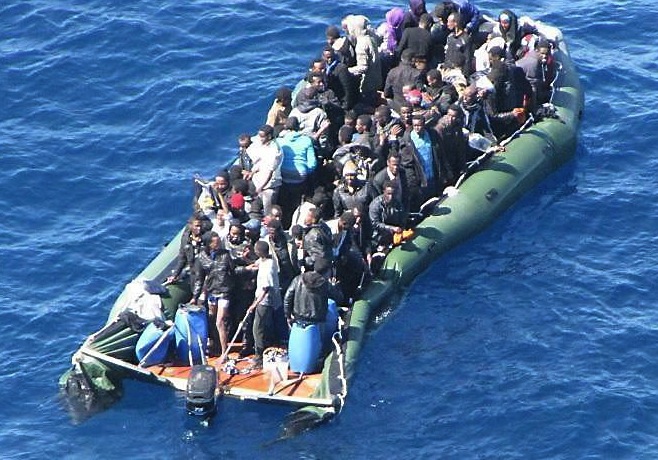
The International Commission of Jurists (ICJ) today called on the Government of Malta to refrain from forcibly transferring a number of Somali nationals to Libya, where they are alleged to be at real risk of human rights violations and further transfer to Somalia.
According to media reports, the persons at risk of transfer are part of a group of some 102 persons, including 41 women and two babies, who arrived in Malta this morning.
The ICJ expresses its grave concern at the possibility that Somali nationals, who are alleged to be considered at risk of being subject to ill-treatment or persecution if sent back to Somalia, would first be sent back to Libya. According to the office of the United Nations High Commissioner for Refugees, in Libya, migrants face a “constant risk of exploitation, arrest and indefinite detention”.
The ICJ stresses that the European Court of Human Rights has ruled, in the judgment Hirsi Jamaa and others v. Italy, that sending back potential asylum seekers, including of Somali origin, to Libya, without individual assessment of their situation and access to asylum procedures, violates the European Convention on Human Rights, in particular the principle of non-refoulement, the prohibition of collective expulsion and the right to an effective remedy for violations of human rights.
The ICJ therefore calls on the Maltese Government to refrain from expelling or otherwise transferring to Libya any of the Somali citizens who arrived on Maltese shores today. The migrants must be fully informed of their right to apply for international or humanitarian protection under EU and Maltese law; and each of their cases must be examined on its individual merits.
Statement-ExpulsionSomalis-2013-Malta (download the statement)
Contact:
Massimo Frigo, ICJ Legal Adviser of the Europe Programme, tel: 41 22 979 38 05, e-mail: massimo.frigo(a)icj.org
Róisín Pillay, ICJ Director of the Europe Programme, e-mail : roisin.pillay(a)icj.org
Jun 27, 2013 | News
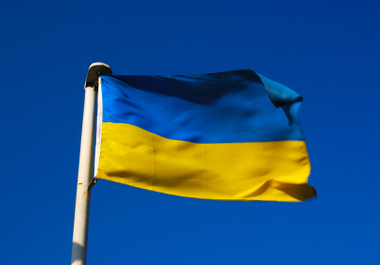
The ICJ welcomes the decision of Ukraine’s High Qualification-Disciplinary Commission to reinstate Larisa Gerasko, a lawyer previously disbarred because of her involvement in seeking to register a local lawyers’ association.
Following a hearing on 21 June, which was attended by ICJ Commissioner Gulnora Ishankhanova, the High Qualification-Disciplinary Commission (HQDC) found that there were no valid grounds for disbarment.
The decision of the HQDC came in the context of a series of disciplinary proceedings against lawyers in Ukraine, which followed a law on “Advokatura and Lawyers’ Activities” adopted in 2012.
“Following the enactment of the new law, two parallel structures of self-governance of the legal profession were established, only one of which was registered,” said Gulnora Ishankhanova. “As a result of the conflict, disciplinary sanctions have been initiated against a number of lawyers on the grounds of organization and participation in ‘an alternative congress’ as well as other related and unrelated grounds.”
The ICJ commissioner visited Kiev on 20-22 June to examine the situation and meet with the main stakeholders including lawyers subjected to disciplinary action, relevant bodies of the Association of Lawyers and the HQDC and NGO representatives.
On 21 June, she observed disciplinary hearings against several lawyers including Larisa Gerasko, who had been disbarred on the grounds of submitting documents for state registration of a lawyers’ association of Zakarpatk Region, and Roman Martynovsky, a member of the HQDC, whose status as a lawyer was suspended for a period of six months for non-attendance of one meeting of this body.
The decision regarding lawyer Martynovsky was postponed until the following meeting of the HQDC.
“We are concerned that disciplinary action remains pending in a number of cases against lawyers involved in the creation of the unregistered lawyers’ association, the National Association of Lawyers,” Gulnora Ishankhanova added.
The ICJ recalls that, according to the UN Basic Principles on the Role of Lawyers, “all disciplinary proceedings shall be determined in accordance with the code of professional conduct and other recognized standards and ethics of the legal profession and in the light of these principles”.
Disciplinary action against a lawyer may only be initiated for violations of published standards of professional conduct, and any disciplinary sanctions must be proportionate to the offence committed.
Where a disciplinary system allows for practically any form of conduct to be construed by the responsible disciplinary body as grounds sufficient for disbarment, the sanction is likely to be arbitrary and to violate international human rights law.
The ICJ expresses its gratitude to the Ukrainian Helsinki Human Rights Union, the HQDC and others who facilitated or co-operated with the mission.
The ICJ will continue to monitor developments in the ongoing disciplinary action against lawyers in Ukraine and will in due course publish a more detailed report on the visit to Ukraine with recommendations.
Contact:
Róisín Pillay, Director, ICJ Europe Programme: +41 22 979 3830; e-mail: roisin.pillay(a)icj.org
Ukraine-ICJ welcomes decision to reinstate disbarred lawyer-press release-2013-rus (full text in pdf)
Photo by Serdar Yagci
Jun 7, 2013 | News
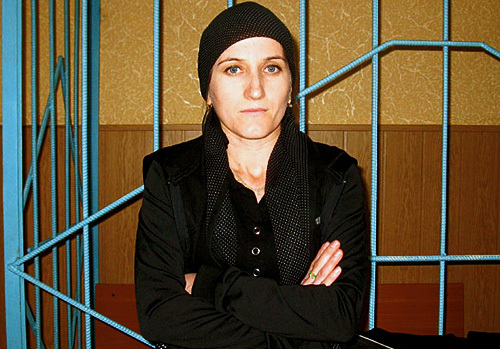
The ICJ today expressed its grave concern at death threats received by lawyers Sapiyat Magomedova and Musa Suslanov.
The authors of the threats demanded that the lawyers cease their involvement in a case alleging the murder of five individuals.
The ICJ called on the authorities to take urgent protective measures to ensure the safety of lawyers who received these threats.
On 8 May, Sapiyat Magomedova and Musa Suslanov took on a case to represent relatives of a local parliamentarian, Magomed Gamzatov, his brothers Osman, Yusup and Gazidibir and their cousin Magomed Omarov. The men were killed by firearms in the city of Kizlyar, Dagestan, on 18 March.
According to relatives, the shootings resulted from a conflict of a personal nature. A criminal case was opened and several people arrested in relation to the killing.
However, the relatives of the victims have alleged that they have been subjected to continuous surveillance and pressure. Witnesses reportedly now fear to testify in the case.
From the start the lawyers began to be subject to intimidation, which included threats that their professional offices would be set on fire or blown up with the lawyers inside. Such threats were delivered through acquaintances of the lawyers.
On 19 and 20 may, after the two lawyers had announced a more proactive intervention in the case, including by inviting information from additional witnesses, the lawyers received text messages warning them that they should drop the case which was “their chance to stay alive”.
Another message demanded that they drop their involvement in the case and “not butt into something they should not do”.
The ICJ considers that there is an imminent risk to the lives and physical security of lawyers, especially taking into account the recent case of murder of a lawyer in Dagestan.
On 20 January 2012, a lawyer in Dagestan was shot to death with the alleged involvement of security forces. According to the information received by the ICJ, the case has still not been properly investigated and no one has been held accountable.
The ICJ recalls that under international law and standards, Russia has an obligation to protect the right to life of individuals where there is a real and immediate risk to the life of an individual from the criminal acts of a third party.
The UN Basic Principles on the Role of Lawyers provide that “where the security of lawyers is threatened as a result of discharging their functions, they shall be adequately safeguarded by the authorities”.
Effective measures to protect the lawyers should include security measures as necessary, such as police monitoring and guards. This issuance of death threats constitutes criminal conduct.
The ICJ called on the Russian authorities to promptly and thoroughly investigate these threats and to bring the perpetrators to justice in fair trials.
Lawyer-deaththreats-Russia-eng (download the statement in English)
Lawyer-deaththreats-Russia-rus (download the statement in Russian)
Contact:
Róisín Pillay, Director, ICJ Europe Programme, t +41 22 979 38 30; e-mail: roisin.pillay(a)icj.org
Temur Shakirov, Legal Adviser, ICJ Europe Programme, t +41 22 979 38 32: e-mail: temur.shakirov(a)icj.org
Jun 3, 2013
B. Central and South-Eastern Europe and Baltics Consultation 3. Law, policy and institutional responses 18. There are specialist laws addressing domestic violence in most States. All States have some provision by which a protection order can be granted by the courts....