Sep 25, 2017 | News
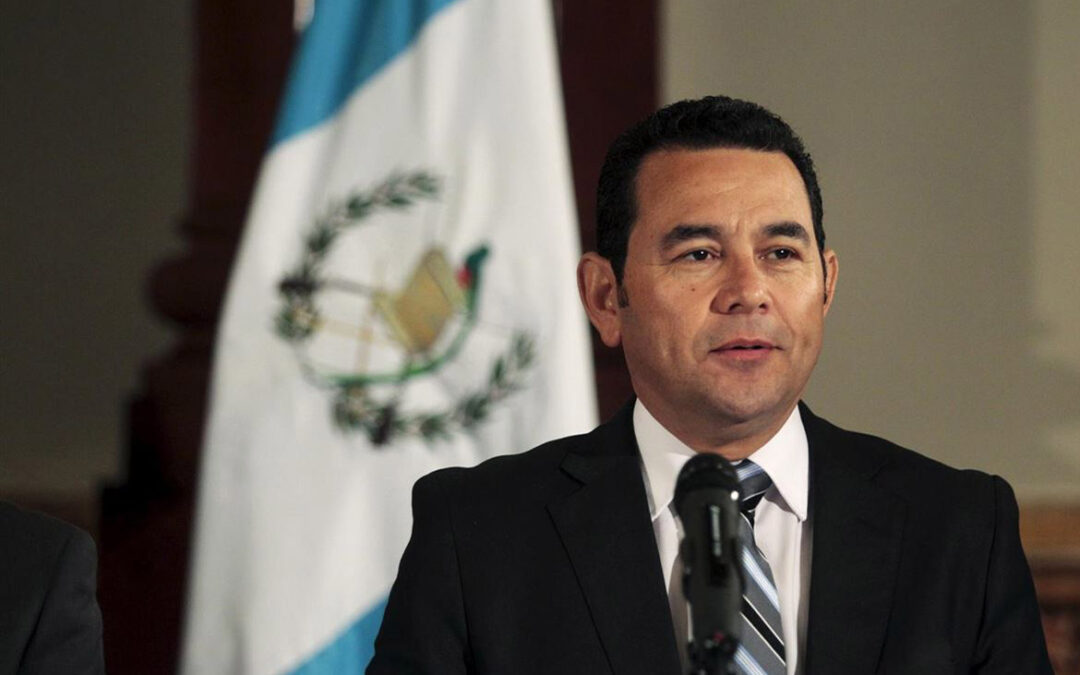
Guatemala’s Congress should immediately remove obstacles to investigation and accountability of President Jimmy Morales (photo) and other public officials for alleged violations of campaign finance rules and corruption, the ICJ said today.
The ICJ also called on President Morales to cease efforts to impede the effective functioning of the United Nations mandated International Commission against Impunity in Guatemala (CICIG).
“Guatemala’s president and some members of Congress are obstructing justice by abusing their authority to avoid investigations for corruption and block the important work carried out by the Attorney General, with CICIG’s assistance,” said Sam Zarifi, ICJ’s Secretary General, just returned from a visit to the country.
“Guatemala, with CICIG’s assistance, has witnessed important progress in the fight against corruption and impunity in recent years, and Congress should be making sure that this trend continues,” he added.
The Congress voted on September 21 to reject the request by Attorney General Thelma Aldana and Ivan Velasquez, Commissioner of CICIG, to strip President Morales of Constitutional immunity he enjoys as president, in connection to allegations that his political party failed to report more than $800,000 in campaign financing.
But the Congressional vote fell short of the threshold of 105 votes needed to reach the necessary two-thirds of Congress needed to reach a final decision and thus can be reconsidered.
On September 13, Congress voted to revise the country’s criminal code by removing Secretary Generals of political parties from accountability for violations of electoral laws (instead limiting accountability to accountants) and to commute the sentences of those already convicted of a number of serious crimes, including corruption, trafficking of persons, and sexual abuse.
The legislators rescinded the vote after two days of nationwide public demonstrations and a decision of the country’s Constitutional Court to suspend the law’s application.
The Guatemalan Constitutional Court suspended the revisions in response to a writ of amparo and characterized Congress’ revisions to the criminal code as “a threat that, in case of being implemented, could cause irreparable damage to the judicial system”.
“The Constitutional Court’s speedy action avoided a massive blow to the fight for accountability in Guatemala, because if the law had gone into effect for even one hour, it would have provided a legal basis for politicians convicted on corruption charges to demand release or commutation of their sentences,” Zarifi said.
Congress’s actions followed an attempt by President Morales to expel CICIG’s Commissioner Velasquez, as persona non grata and to revise CICIG’s mandate, in an apparent bid to block investigations into his alleged wrongdoing.
“Since CICIG was formed in December 2006 at the request of the Guatemalan government, it has worked closely with the country’s Attorney General to improve accountability, and its impact has been undeniably positive,” Zarifi said.
“This is a model of international support for national accountability mechanisms that should be studied and emulated around the world; its continued operation is therefore of interest not just to Guatemala and the region but to global efforts to combat impunity,” he added.
The ICJ called on the Guatemalan government to comply with its international legal obligations as a State party to the 2004 United Nations Convention Against Corruption and the 1996 Inter-American Convention Against Corruption.
Background
Article 30(2) of the UN Convention Against Corruption calls on State Party to strike “an appropriate balance between any immunities or jurisdictional privileges accorded to its public officials for the performance of their functions and the possibility, when necessary, of effectively investigating, prosecuting and adjudicating offences established in accordance with this Convention.”
Article 30(3) demands States “to ensure that any discretionary legal powers under its domestic law relating to the prosecution of persons for offences established in accordance with this Convention are exercised to maximize the effectiveness of law enforcement measures in respect of those offences and with due regard to the need to deter the commission of such offences.”
Contact:
Sam Zarifi, ICJ Secretary General, t: +41 79 726 44 15 ; e: sam.zarifi@icj.org
Jun 5, 2017 | News
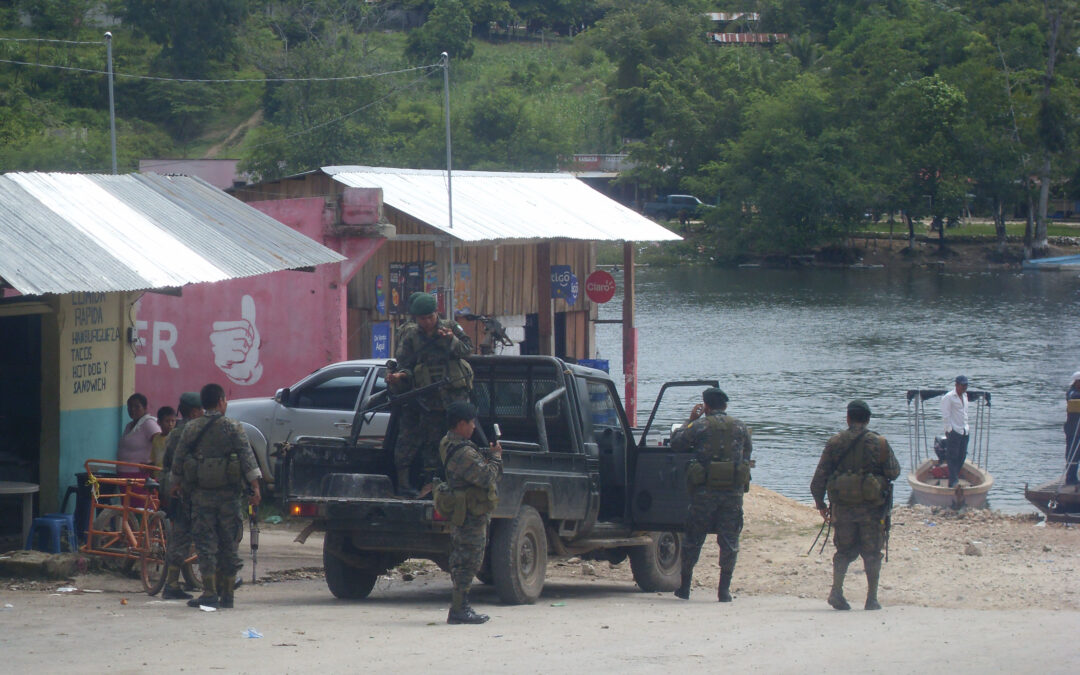
La CIJ espresa su más honda preocupación por los desalojos forzosos de las comunidasdes de Laguna Larga y la Mestiza, del Departamento de El Petén.
El pasado viernes 2 de junio, el Gobierno de Guatemala llevó a cabo un operativo militar en el Departamento de El Petén de desalojo forzoso de la comunidad Laguna Larga, situada en Laguna del Tigre en el municipio de San Andres, y tiene programado llevar a cabo otro de la comunidad La Mestiza, del mismo municipio, para el 14 de junio.
Como consecuencia de este operativo militar, la comunidad de Laguna Larga – alrededor de 600 o 700 personas, incluidos niños, mujeres y ancianos- decidió desplazarse en condiciones deplorables hacia territorio mexicano, en búsqueda de refugio y protección.
El sábado 3 de junio los miembros de la comunidad de Laguna Larga cruzaron la frontera y se encuentran actualmente en el municipio de La Candelaria, Campeche, México, en condiciones sumamente adversas. Varios niños y niñas muestran signos de enfermedades respiratorias.
Preocupa particularmente a la CIJ la situación física y mental de un niño que fuera perseguido por las fuerzas militares, durante el operativo de desalojo.
En repetidas ocasiones, la CIJ ha expresado que las comunidades que viven en los municipios de San Andrés y La Libertad en el departamento de El Petén, siguen enfrentando la exclusión sistemática por parte de las instituciones del Estado, así como violaciones graves a los derechos humanos, en particular violaciones a los derechos económicos, sociales y culturales.
Por el hecho de vivir en una zona protegida de conformidad con la Ley de Áreas Protegidas, el Estado guatemalteco considera a estas poblaciones como “ilegales” y las acusa de cometer el delito de “usurpación” de áreas protegidas, prohibiendo el ingreso de materiales de construcción, herramientas o cualquier bien que pueda garantizar o significar la más mínima “permanencia” en dichas comunidades o en la zona.
Recientemente fue detenido arbitrariamente el señor Jovel Tovar, acusado del delito de usurpación de áreas protegidas, quien se encuentra detenido en la cárcel de San Benito, en el Departamento de El Petén.
Paradójicamente, el Estado guatemalteco permite y facilita la explotación petrolera en dicha zona, de la compañía PERENCO, a pesar de que los derrames petroleros y otras actividades relacionadas con esa actividad, producen un serio deterioro a las reservas de agua dulce, las cuales son las más importantes de Mesoamérica.
La CIJ considera que esta política afecta seriamente los derechos de la población asentada en la zona.
En repetidas ocasiones, la CIJ ha podido observar que el Ejército de Guatemala, conjuntamente con la Comisión Nacional de Áreas Protegidas (CONAP), implementa operativos por medio de los cuales se lleva a cabo un acoso permanente a las comunidades que viven en las zonas protegidas.
La presencia del Ejército de Guatemala en la zona y la existencia de diferentes “retenes” militares son parte de la estrategia de acoso permanente a las poblaciones asentadas en la región, las cuales llegaron allí en el marco de un programa estatal en los años setenta, antes de la declaración de zona protegida.
Según la Constitución Política de la República de Guatemala, el Estado se organiza para proteger a la persona y no para perseguirla.
El acoso permanente a las comunidades, así como las políticas de Estado contra las personas que viven en las zonas protegidas, estableciendo “cercos de presión psicológica, material y militar”, constituye una política de Estado que contradice la Constitución Política de Guatemala, así como convenios y tratados en materia de derechos humanos – especialmente el Pacto Internacional de Derechos Económicos, Sociales y Culturales (PIDESC) de las Naciones Unidas-, que imponen la obligación al Estado de garantizar los derechos económicos, sociales y culturales y que toda persona disfrute del más alto nivel posible de salud física y mental.
Ramón Cadena, Director de la CIJ para Centro América expresó: “Esta política del Estado de Guatemala de desalojar a las comunidades de cualquier región del país en forma violenta, contraviene el Derecho Internacional de los Derechos Humanos y los estándares internacionales y el Estado de Guatemala debe ser declarado responsable y reparar los daños y perjuicios causados.”
Para mayor información:
Ramón Cadena, director CIJ C.A. al correo ramon.cadena(a)icj.org o a los telefonos +502 23601919; +502 23610538.
Leer más aqui:
Guatemala-Desalojo Peten-News-2017-SPA (en PDF)
Feb 27, 2017 | News
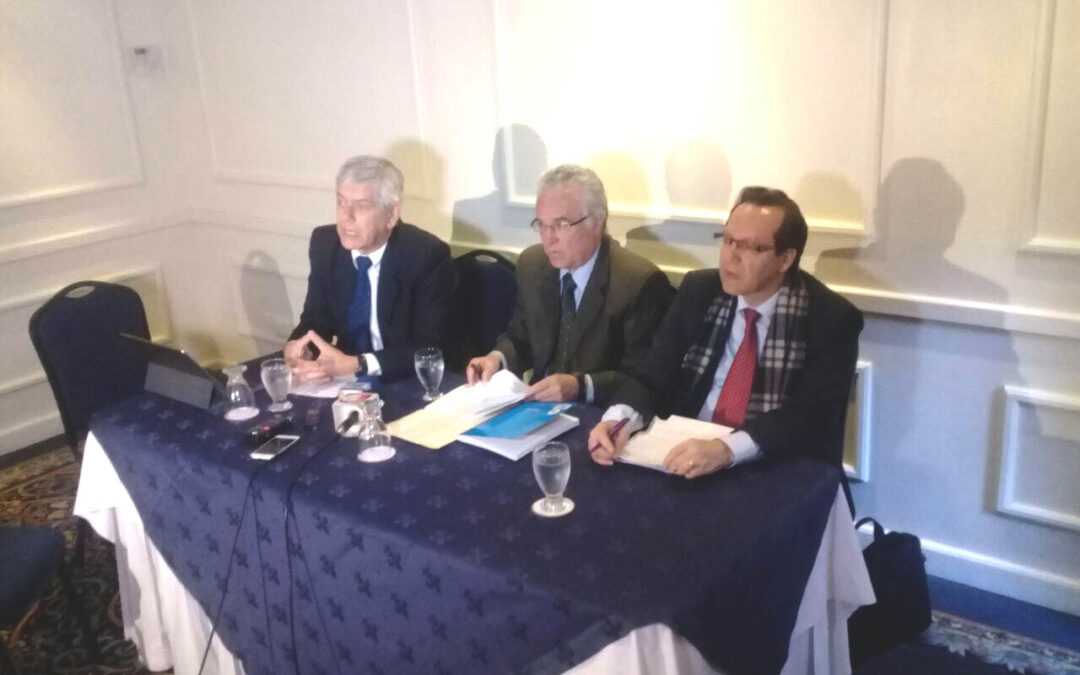
La visita se enmarcó dentro de los esfuerzos que la CIJ lleva a cabo en distintos países para acompañar procesos de fortalecimiento del Estado de Derecho y respeto de los derechos humanos.
Guatemala-Conclusions of Mission-News-web story-2017-SPA (informe completo, PDF)
Feb 20, 2017 | News
On Monday 20 February 2017, the ICJ Commissioner Belisário Dos Santos Júnior and the lawyer, Jaime Araíújo Rentería commenced an international mission in Guatemala.
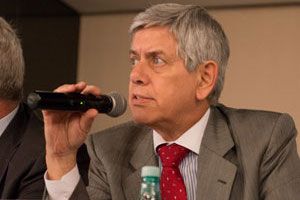
The ICJ Commissioner Belisário Dos Santos Júnior (photo) is the former representative of the Brazilian lawyers’ association at the São Paulo Human Rights Commission, who has acted as the legal representative for political detainees. Jaime Araújo Rentería, former President of the Colombian Constitutional Court is a practicing lawyer and university professor.
The objective of the mission is to evaluate the situation of the legal profession in the country, identify obstacles and challenges, and offer perspectives about ways in which the State can provide better protection for lawyers so they can carry out their functions in an independent and safe manner.
The two mission members will be in Guatemala for a week and will interview the President and Executive Committee of the Bar Association, human rights lawyers, and high-level officials from the three branches of the State, members of the international community and representatives of human rights organizations.
On Friday 24 February, the two lawyers will hold a press conference to present the conclusions and recommendations of the mission to the press and general public.
Aug 16, 2016 | News
The ICJ said today that the attack on Ramón Cadena, its director in Central America, is deplorable evidence that human rights lawyers in Guatemala cannot carry out their activities without fear of reprisal.
Around a dozen armed men ransacked Ramón Cadena’s house in Guatemala City on Monday morning while he was attending a workshop elsewhere in the country.
The ICJ regional director for Central America is the latest victim of a recent wave of harassment and intimidation against human rights defenders and legal and environmental activists in Guatemala and neighboring Honduras.
“The ICJ strongly condemns the attack against Ramón Cadena, which is most likely linked to his activities as a human rights lawyer,” said Wilder Tayler, ICJ Secretary General.
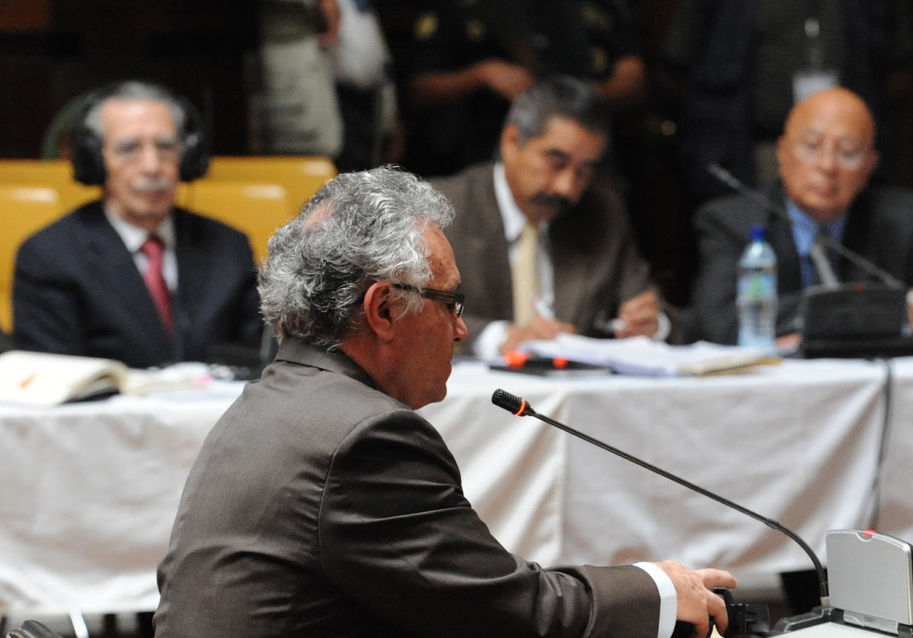
Ramón Cadena, a highly prominent human rights lawyer in the region, was a key witness in the trial of former President Efrain Rios Montt for his role in the alleged genocide and other atrocities committed during the civil war of the 1970s and 80s.
Ramón Cadena has also been providing legal advice and support (on behalf of the ICJ) to the communities fighting against mining projects in Guatemala.
“We urge the Guatemalan authorities to provide the much needed protection to Ramón Cadena and promptly and thoroughly investigate the attack to find the culprits. They must also combat the increasing threats and growing insecurity faced by human rights defenders in the country, which is a clear assault on human rights,” Tayler added.
Contact
Wilder Tayler, ICJ Secretary General, t +41 76 562 38 10 ; e: wilder.tayler(a)icj.org
Several organizations have also condemned the attack on Ramón Cadena and issued a statement in Spanish which can be read here.