Feb 18, 2021 | Advocacy, News, Publications
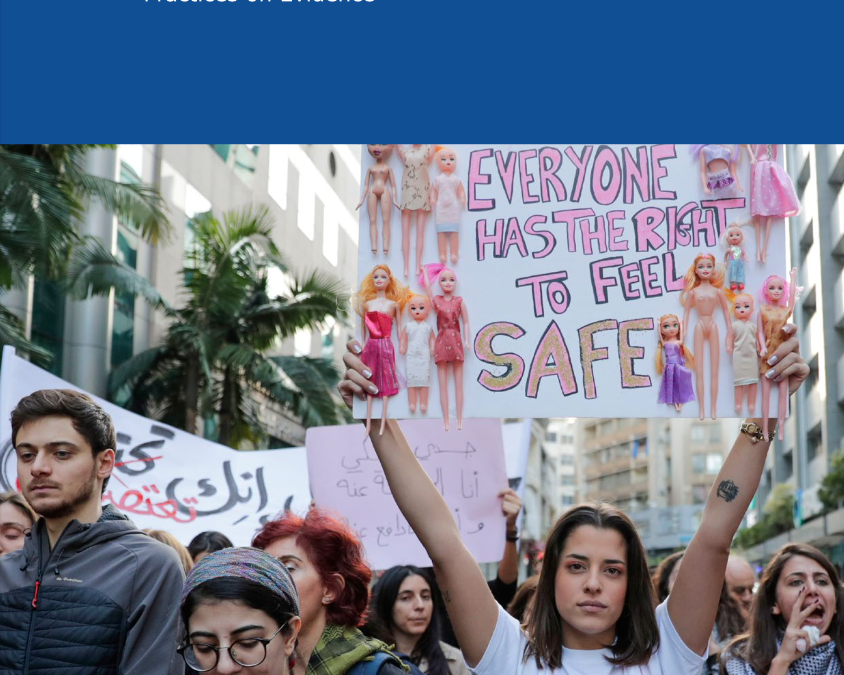
In a memorandum released today, the ICJ published guidance and recommendations aimed at assisting Lebanon’s criminal justice actors in addressing significant gaps in evidentiary rules, practice and procedures undermining the investigation, prosecution and adjudication of sexual and gender-based violence (SGBV) crimes in the country.
The 42-page memorandum, Sexual and Gender-based Violence Offences in Lebanon: Principles and Recommended Practices on Evidence (available in English and Arabic), aims to advance accountability and justice for SGBV, and is especially designed for investigators, prosecutors, judges and forensic practitioners.
“Criminal justice actors are indispensable to eradicating harmful practices and curbing entrenched impunity for SGBV in Lebanon,” said Said Benarbia, Director of the ICJ’s Middle East and North Africa Programme.
“Rather than buying into false, stereotyped narratives that impugn survivors’ credibility and call into question their sexual history, the criminal justice system must adopt and enforce gender-sensitive, victim-centric evidence-gathering procedures that put the well-being of SGBV survivors at the forefront.”
The memorandum provides criminal justice actors with guidance and recommendations on the identification, gathering, storing, admissibility, exclusion and evaluation of evidence in SGBV cases, as well as on their immediate applicability in practice, pending consolidation and reform of Lebanon’s existing legal framework and procedures for the investigation, prosecution and adjudication of SGBV offences.
“Lebanon’s legal framework fosters and perpetuates a systematic denial of effective legal protection and access to justice for women survivors of SGBV,” said Benarbia. “The justice system must counter harmful gender stereotypes and attitudes rooted in patriarchy, which continue to undermine survivors’ right to effective remedies.”
The memorandum’s release is particularly timely given the escalation of SGBV witnessed since the outbreak of the COVID-19 pandemic.
The memorandum builds on previous research undertaken by the ICJ in this area, including Gender-based violence in Lebanon: Inadequate Framework, Ineffective Remedies and Accountability for Sexual and Gender-based Violence in Lebanon: Guidance and Recommendations for Criminal Justice Actors.
Download
Lebanon-GBV-Memorandum-2021-ENG (Memorandum in English)
Lebanon-GBV-Memorandum-2021-ARA (Memorandum in Arabic)
Lebanon-GBV-Web-Story-2021-ARA (Web story in Arabic)
Lebanon-GBV-Web-Story-2021-ENG (Web story in English)
Contact:
Said Benarbia, Director, ICJ Middle East and North Africa Programme, t: +41-22-979-3817; e: said.benarbia(a)icj.org
Asser Khattab, Research and Communications’ Officer, ICJ Middle East and North Africa Programme, e: asser.khattab(a)icj.org
Feb 10, 2021 | News
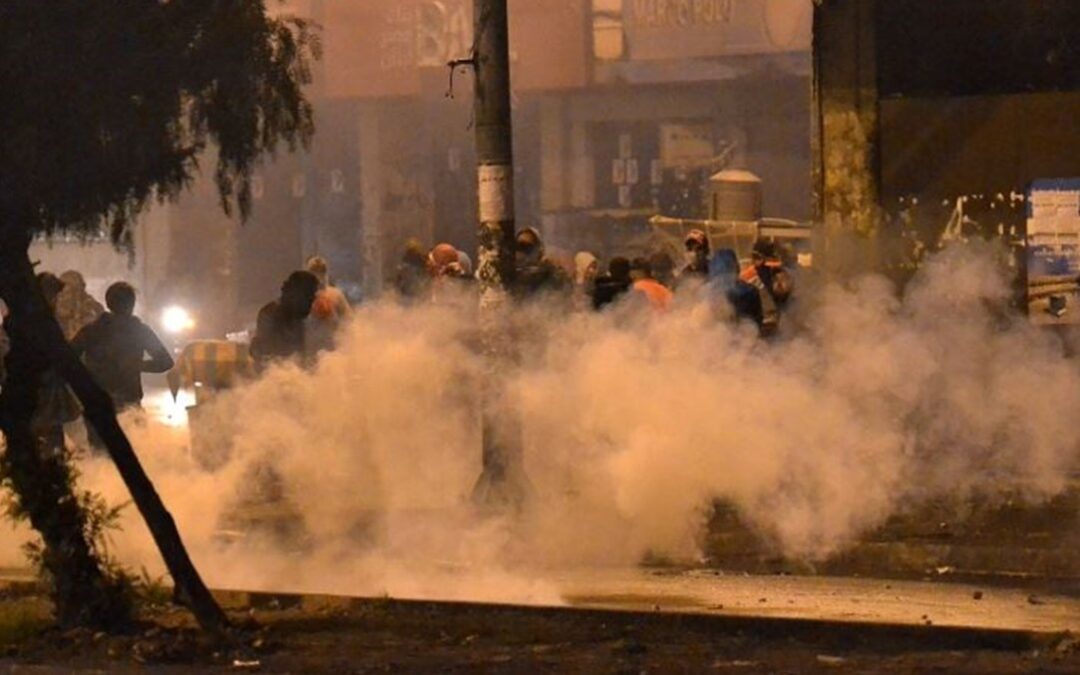
The ICJ and the Lebanese Center for Human Rights (CLDH) are deeply concerned about the role of the military in the arrest, detention and referral for prosecution by military courts of dozens of civilians in Tripoli.
The military’s crackdown has taken place in the context of ongoing protests in the city against a dire economic situation exacerbated by the nation-wide lockdown imposed by the government with the stated intention of combatting the COVID-19 pandemic.
“Under the Rule of Law, the military has no business policing demonstrations, detaining protesters or prosecuting civilians,” said Said Benarbia, the ICJ’s Middle East and North Africa Programme Director. “Instead of addressing the legitimate grievances of those protesting, the Lebanese government is using the military to silence dissenting voices by arresting and sending protestors for trial before military tribunals.”
While the military reported the arrest of five individuals on 27 January, five on 29 January and another 17 on 31 January, for, among other things, allegedly engaging in “rioting,” “vandalism” and “obstruction of civil defence,” other sources suggest at least 58 civilians were arrested by the military in connection with the above-mentioned protests in Tripoli. The whereabouts of many detainees remained undisclosed for days following their arrest. According to lawyers, the military’s Office of Public Prosecution has referred at least 14 individuals to a military Investigating Judge.
The ICJ and CLDH call on the Lebanese authorities to ensure that the military plays no role in policing the ongoing protests and in other law enforcement functions that are properly the sole responsibility of civilian law enforcement agencies. The military courts’ jurisdiction, in particular, must be confined exclusively to the commission of military offences by military personnel and, in turn, totally exclude the possibility of prosecuting civilians, as well as cases involving the perpetration of human rights violations by military personnel.
Referrals by the military’s Office of Public Prosecution follow an increasing, worrying trend of trying those involved in anti-government protests before military courts, which are neither independent nor impartial, and whose procedures do not comply with international fair trial standards.
“Lebanon’s military tribunals have a grim history of unfair trials and politicized proceedings against those suspected of opposing the government,” said Fadel Fakih, CLDH’s Executive Director. “If faith in the Lebanese justice system is to be restored, the jurisdiction of military tribunals must be fully reformed,” he added.
In a 2018 briefing paper entitled “The Jurisdiction and Independence of the Military Courts System in Lebanon in Light of International Standards,” the ICJ called on the Lebanese authorities to enhance the independence and impartiality of military courts, ensure the fairness of their procedures, and restrict their jurisdiction to cases involving members of the military for military offences.
Contact
Said Benarbia, Director of the ICJ Middle East and North Africa Programme, t: +41 22 979 38 17; e: said.benarbia(a)icj.org.
Fadel Fakih, Director of the Lebanese Center for Human Rights, t +961 81 065 041; e: ffakih(a)cldh-lebanon.org
Download
Lebanon-Military-Courts-COVID19-Press-Release-2021-ENG.pdf (English)
Lebanon-Military-Courts-COVID19-Press-Release-2021-ARB.pdf (Arabic)
Dec 21, 2020 | News
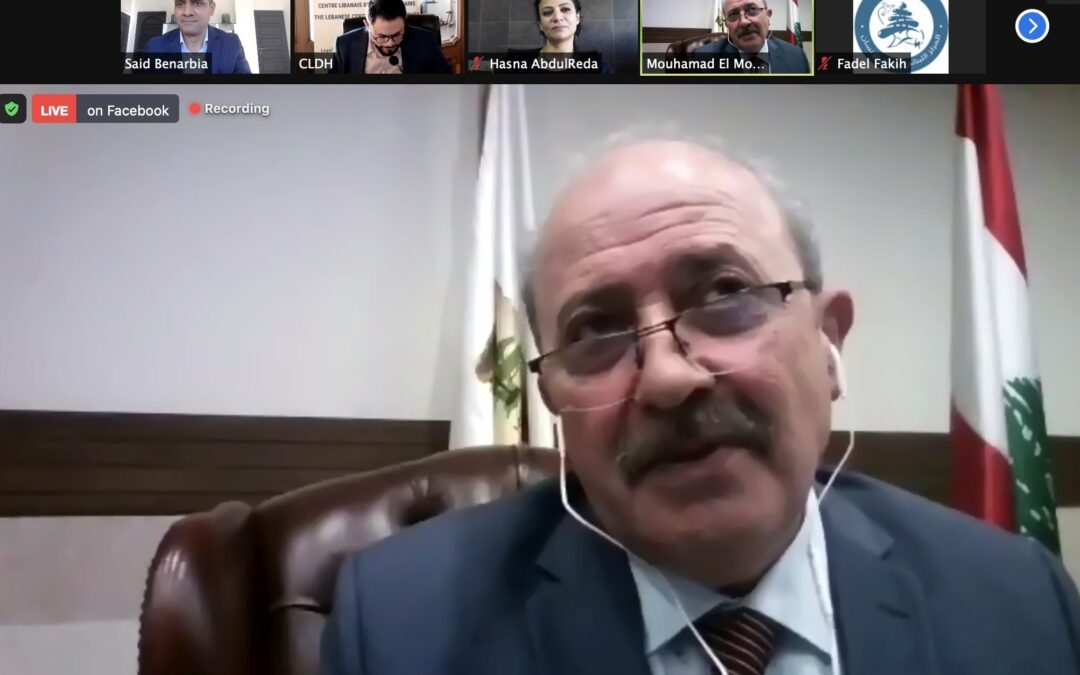
Today, the Lebanese Center for Human Rights (CLDH) and the ICJ held a joint webinar on migrants and refugees in Lebanon. The organizations addressed the situation of migrant workers and refugees including their legal and social status and the violations to which they are exposed.
The ICJ and CLDH called on the Lebanese authorities to adopt and enforce just, fair and effective legal and policy frameworks to address the entry and stay of refugees and migrants in Lebanon, and ensure the protection of their human rights in full compliance with Lebanon’s obligations under international law, particularly their non-refoulement obligations.
The ICJ launched its recent report Unrecognized and Unprotected: The Treatment of Refugees and Migrants in Lebanon, which undertakes an assessment of the Lebanese legal framework governing the treatment of migrants and refugees in the country, including their entry and stay.
The report concludes that the legal and policy gaps, together with the executive’s excessive and unchecked powers in shaping and implementing migration-related policies, have led to serious violations to refugees’ and migrants’ human rights in Lebanon.
The ICJ presented the findings and key recommendations of its report, which included urging the Lebanese government to ensure that no individual is transferred to a country where he or she faces a real risk of persecution or other forms of serious harm, such as torture or other cruel, inhuman or degrading treatment or punishment.
Procedural obstacles preventing migrant workers and refugees from accessing justice, such as lacking residency papers, were examined by CLDH.
The webinar, facilitated by CLDH’s Executive Director Fadel Fakih, commenced with opening remarks from Said Benarbia, Director of the ICJ’s Middle East and North Africa Programme, and Wadih Al-Asmar, President of CLDH. Attendees included civil society, lawyers, and members of the Lebanese Bar association.
Underscoring that Lebanon is obligated to protect the rights of refugees and asylum seekers despite not being a State party to the 1951 Refugee Convention, as these rights are guaranteed by other international conventions ratified by Lebanon including the International Covenant on Civil and Political Rights (ICCPR) and the UN Convention against Torture and other Cruel, Inhuman and Degrading Treatment or Punishment (UNCAT), Al-Asmar called on the Lebanese State to abandon its repressive security approach towards refugee populations, and to abolish the exploitative Kafala sponsorship system.
Benarbia addressed how normative gaps, together with restrictive provisions of the 1962 Law of Entry and Exit, including those criminalizing “irregular entry,” undermine the right of refugees to an individual examination of their asylum claim, their right to liberty and security of person, and their right to an effective legal remedy for human rights violations.
He pointed out that laws and policies impacting on migrants and refugees should be adopted and implemented by legally constituted civilian authorities, subject to legislative oversight and judicial review.
CLDH members Hasna Abdul Reda and Rabih Keyrouz focused on the obstacles that continue to impede migrant workers and refugees from accessing justice in Lebanon. CLDH Programme Manager, Josiane Noun, presented CLDH’s Legal Aid Programme and support services that the organization has made available to migrant workers and refugees.
Kouakou Adjo Delphine, representing the Alliance of Migrant Domestic Workers in Lebanon, discussed the challenges domestic migrants face in accessing justice for human rights violations.
The conference concluded with an open discussion between panelists and participants where possible solutions to enhance the protection afforded to migrant workers and refugees in Lebanon were discussed.
Oct 30, 2020 | Agendas, Events, News
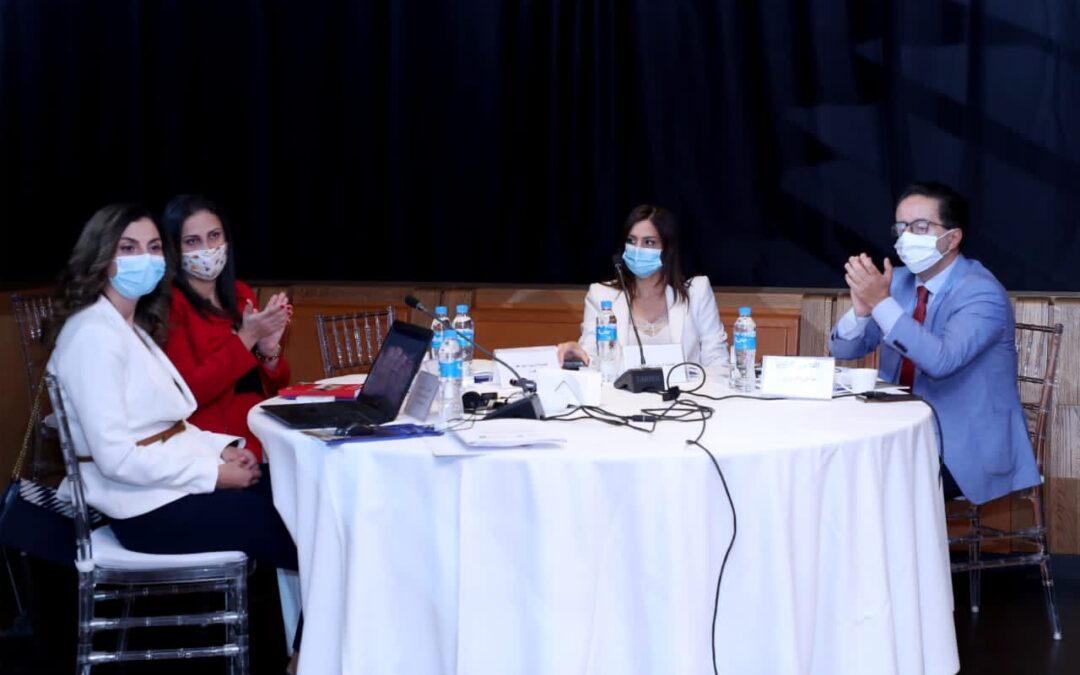
From 27 to 28 October 2020, the ICJ, in collaboration with the National Commission for Lebanese Women (NCLW), held a seminar on recommended practice with respect to evidentiary standards in the investigation, prosecution and adjudication of sexual and gender-based violence offences in Lebanon.
Consultations held by the ICJ with the Lebanese authorities and with practitioners in July 2019 revealed the need to support and bolster the capacity of criminal justice system actors to effectively investigate, prosecute, adjudicate and sanction SGBV, prompting the ICJ, together with NCLW, to organize the seminar.
The seminar accordingly aimed to address the significant gaps in law and procedure and practical obstacles to ensuring key evidence be identified, collected and assessed in a manner consistent with international standards, including Lebanon’s obligations under international human rights law. It also aimed to provide a platform to connect Lebanese judges, prosecutors, police officers, lawyers, forensic practitioners and international experts, with a view to identifying solutions that will ensure women and girls’ effective access to justice for SGBV in Lebanon, in addition to accountability for, and protection from, SGBV.
The discussions predominantly focused on the international law and standards that apply to the identification, gathering, storing, admissibility, exclusion and evaluation of evidence in SGBV cases and how such standards may be used to fill gaps and strengthen domestic law and practice. Participants also discussed the adverse impact patriarchal and other harmful stereotypes have on investigation, prosecution and adjudication processes.
The seminar commenced with opening remarks from NCLW’s President and the International Commission of Jurists’ Middle East and North Africa Programme Director. Speakers included practitioners from international and domestic courts and tribunals, as well as ICJ staff.
The seminar followed the publication of ICJ guidance and recommendations to criminal justice actors in its report Accountability for Sexual and Gender-Based Violence in Lebanon, published on 22 October 2020.
Informed by international law and standards, the ICJ will now formulate recommendations based on the identification by the seminar’s participants of the reforms needed with respect to the Lebanese framework and practice. These recommendations will be included in the ICJ’s forthcoming publication on evidentiary rules and recommended practices in cases of SGBV in Lebanon, which will be published and disseminated among practitioners in Lebanon.
Aug 11, 2020 | News
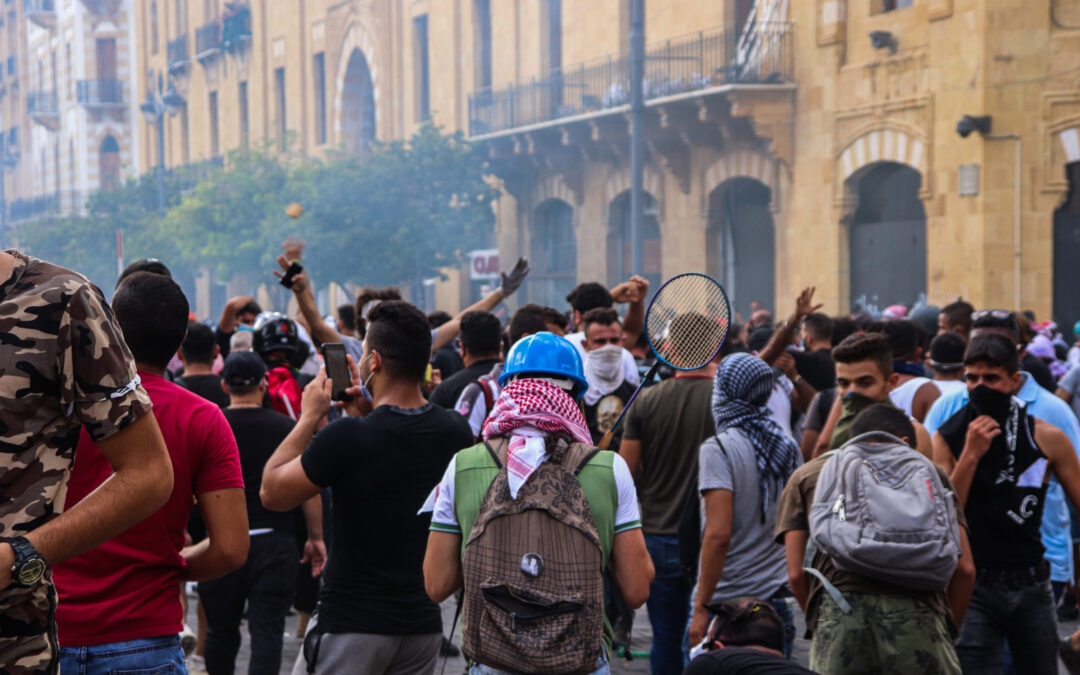
The ICJ is concerned at reports that on 8 and 9 August, Lebanese security forces, including Internal Security Force (ISF) units, parliamentary police and the army, employed excessive and unlawful force against hundreds of protestors, resulting in the injury of more than 700 people and dozens of hospitalizations.
The ICJ called on the Lebanese authorities to protect the rights to freedom of peaceful assembly and expression and refrain from using excessive and unlawful force against protestors demanding justice for the 4 August explosions in Beirut’s port district.
The explosions devastated the city’s infrastructure and resulted in the death, injury and internal displacement of large numbers of its inhabitants.
The ICJ stressed that credible allegations of excessive and unlawful use of force in the context of the protests must be promptly, thoroughly and impartially investigated and those responsible must be held to account.
According to information available to the ICJ, at least 14 journalists and media personnel covering the protests were among the wounded.
According to reports, a policeman also died after falling down an elevator shaft while being chased by protesters. While there were reports that some demonstrators threw rocks and firecrackers at security forces, reports also indicate that the security forces’ response was indiscriminate and, in some instances, excessive.
“Many protestors in Lebanon continue to be met with excessive and unlawful force by security agencies, telling the same grim story of how the Lebanese authorities habitually respond to unwelcome political expression and the grievances of the Lebanese public,” said Kate Vigneswaran, the ICJ’s Middle East and North Africa Programme Senior Legal Adviser.
“The people of Beirut have the right to peacefully express their outrage, at alleged official malfeasance that apparently contributed to last week’s tragic devastation, and to expect security forces will comply with the law,” she added.
Information from ICJ interviews with three protestors, and substantiated by reports by multiple media and news agencies, reveal that security forces fired large quantities of tear gas, in addition to rubber bullets, at protestors in several locations in central Beirut, including a gathering of at least 10,000 people including children at Martyr’s Square and those who occupied Parliamentary and ministerial buildings.
Reports also indicate that live ammunition was fired by security forces during the protests, namely birdshot.
A protestor interviewed by the ICJ stated that he was shot in the arm by a rubber bullet and in the leg by a pellet gun, the latter lodging shrapnel into various parts of his body.
Social media reports reveal that some protestors were shot in the face and eyes with rubber bullets. The ISF has denied using rubber bullets.
According to another protestor, government loyalists attacked her in the presence of ISF officers and the army as she filmed scenes outside the American University Hospital, threatening her with violence and by breaking her mobile phone.
Similar reports of security forces indiscriminately beating and harassing protesters have surfaced on social media platforms.
International law, governing the use of force by law enforcement officers, which is binding on Lebanon, mandates that force is only permissible as a last resort for the sole purpose of protecting life or preventing serious injury from an imminent threat, if strictly necessary and only to the extent necessary for the performance of their duty.
All use of force must be discriminate and proportionate to the threat of harm.
The ICJ has called for a prompt, transparent, independent and impartial investigation into the 4 August explosions by a special, independent mechanism, given the documented lack of independence in certain parts of the Lebanese judiciary, which was echoed by other human rights organizations and members of the international community.
Lebanon’s President dismissed the call as “a waste of time” and instead urged the Lebanese judiciary to act swiftly to probe the incident.
Prime Minister Hassan Diab announced his cabinet’s resignation on Monday following widespread calls for the political establishment to resign from their posts following the explosion. Nine members of Parliament, two government Ministers and the Lebanese Ambassador to Jordan had also resigned from their posts over the weekend.
“The explosions were devastating for the people of Beirut, resulting not only in the loss of life and massive injuries, but severe curtailment of their rights to housing and health and their other socio-economic rights,” said Vigneswaran.
“Based on the response of the Lebanese authorities thus far, and given their poor track record in pursuing and realizing accountability, it is clear that there is an urgent need for a proper accountability mechanism to investigate the explosions and respond to victims’ demands and calls for justice. A change in government is not enough,” she added.
Contact
Kate Vigneswaran, Senior Legal Adviser, ICJ Middle East and North Africa Programme, t: +31-62-489-4664; e: kate.vigneswaran(a)icj.org
Download
Full story with additional information: Lebanon-Protests-News-Press releases-2020-ENG
Arabic version: Lebanon-Protests-News-Press releases-2020-ARA
Photo Credit: Aya Nehme