The ICJ called on the UN Human Rights Council to request the Security Council to immediately refer the situation in Syria to the International Criminal Court. Watch the webcast of ICJ’s statement.
As a matter of urgency, the Security Council should take other effective measures to protect civilians and address the humanitarian crisis in Syrian cities and villages, the ICJ urged. The ICJ delivered its oral statement on 17 September 2012 in the course of the general debate on situations requiring the Council’s attention, during the course of the 21st regular session of the Human Rights Council.
On 9-10 September 2012, the ICJ participated in a conference on “the independence of the judiciary in Egypt in light of the constitutional reform process and international standards”.
The conference, organized jointly by the ICJ, the Hisham Mubarak Law Centre and the Egyptian Organisation for Human Rights, was attended by international and national experts, including Justice Ian Binnie, a former judge of the Supreme Court of Canada, Justice Ketil Lund, a former judge of the Supreme Court of Norway and Wilder Tayler, Secretary General of the ICJ.
The conference addressed the following topics: the independence of the judiciary; the statute for judges; the High Judicial Council; the Supreme Constitutional Court; military and security courts and the independence of the judiciary; and the independence and impartiality of the office of the public prosecutor.
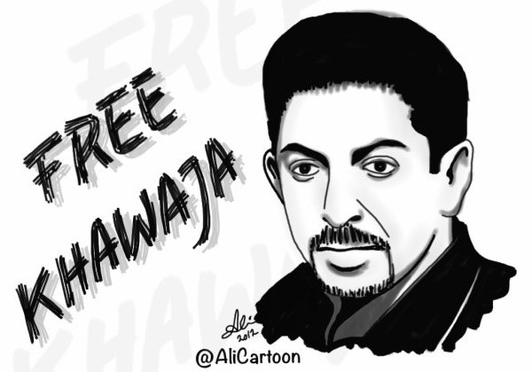
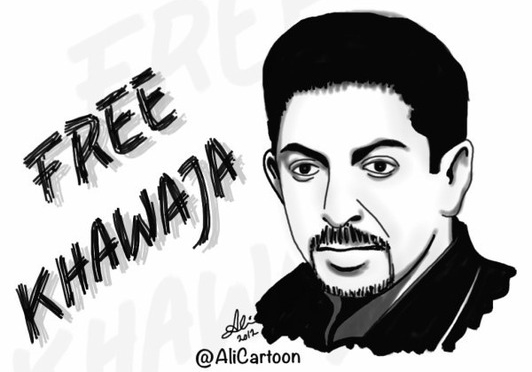
The ICJ calls upon the Bahraini authorities to immediately and unconditionally release 13 human rights defenders and political activists convicted by the Criminal Court of Appeal in Bahrain.
On 4 September 2012, they were convicted on charges relating to “conspiracy to overthrow the government”, “espionage” and “violation of the Constitution”. The sentences against the defendants ranged from 5 years to life imprisonment.
The ruling of the Criminal Court of Appeal upheld the convictions and sentences of the detainees handed down last year by the National Safety Court and the National Safety Court of Appeal, two exceptional military courts established under the royal decree of 15 March 2011, which declared the “state of emergency”. On 30 April 2012, the Bahraini Cassation Court ordered their retrial before a civilian court.
“The retrial by the Criminal Court of Appeal failed to remedy the failures of the original trials and to meet international standards of fair trial, including the right to be presumed innocent and to equality of arms. The Prosecution failed to provide any credible evidence against these detainees and their right to defence has been severely undermined at all stages of the proceedings,” said Said Benarbia, Senior Legal Adviser of the ICJ Middle East and North Africa Programme. “The retrial relied heavily on the findings of the first two trials, including “confessions” that the defendants claimed were obtained through torture and other ill-treatment.”
The Bahraini authorities should ensure that these allegations of torture and ill-treatment are promptly, independently and effectively investigated.
The Bahraini authorities should also ensure that the rights of human rights defenders and political activists to freedom of expression, association, and assembly are fully respected.
“Instead of subjecting these defenders and activists to various forms of harassment, intimidation and unfair trials, the Bahraini authorities should initiate comprehensive, meaningful and lasting constitutional and legal reforms that establish the rule of law and that fully protect the rights of Bahrainis to take part in the conduct of public affairs and to choose the form of their government,” Benarbia added.
For more information:
Saïd Benarbia, Middle East & North Africa Senior Legal Adviser, ICJ, t +41 22 979 3817; e-mail: said.benarbia(at)icj.org
The ICJ is urging the Syrian authorities to immediately and unconditionally release Mazen Darwish, a prominent human rights lawyer and defender, and President of the Center for Media and Freedom of Expression (SCM).
🍪 We use cookies on our website to improve your experience. By clicking "Accept all", you consent to the use of all the cookies. If you'd like to control which cookies we use, please visit "Cookie settings". To find out more, read our privacy policy and cookie policy.
Functional
Always active
The technical storage or access is strictly necessary for the legitimate purpose of enabling the use of a specific service explicitly requested by the subscriber or user, or for the sole purpose of carrying out the transmission of a communication over an electronic communications network.
Preferences
The technical storage or access is necessary for the legitimate purpose of storing preferences that are not requested by the subscriber or user.
Statistics
The technical storage or access that is used exclusively for statistical purposes.The technical storage or access that is used exclusively for anonymous statistical purposes. Without a subpoena, voluntary compliance on the part of your Internet Service Provider, or additional records from a third party, information stored or retrieved for this purpose alone cannot usually be used to identify you.
Marketing
The technical storage or access is required to create user profiles to send advertising, or to track the user on a website or across several websites for similar marketing purposes.


 The ICJ called on the UN Human Rights Council to request the Security Council to immediately refer the situation in Syria to the International Criminal Court. Watch the webcast of ICJ’s statement.