Feb 3, 2015 | Multimedia items, News, Video clips
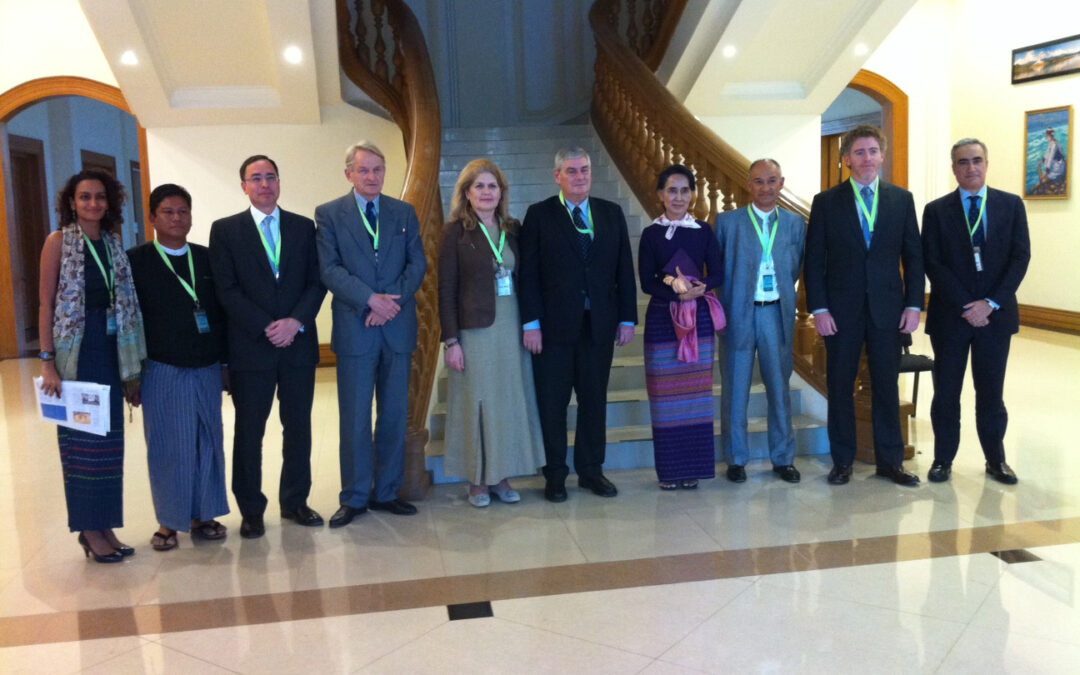
On video, ICJ Commissioner Azhar Cachalia and ICJ Asia & Pacific Regional Director Sam Zarifi, talk about a workshop with the Supreme Court of the Union of Myanmar. In parallel with this event, the ICJ met with Daw Aung San Suu Kyi.
The ICJ’s workshop with the Supreme Court of the Union of Myanmar was on the subject of judicial ethics and the rule of law, while at the meeting with Daw Aung San Suu Kyi, discussions covered the ICJ’s focus in Myanmar to support the judiciary in taking important steps towards asserting its independence from other branches of government; and to overcome significant individual and institutional obstacles, such as undue influence by the Executive in politically sensitive and criminal cases, corruption and a lack of resources.
Daw Suu and her colleagues shared information about the Rule of law Centres being initiated as a step towards building the capacity of local legal practitioners and contributing to rule of law reforms in Myanmar.
The ICJ delegation was led by Secretary-General Wilder Tayler, and included Asia & Pacific Regional Director Sam Zarifi, ICJ Commissioners Justices Azhar Cachalia, Ketil Lund and Radmila Dicic, International Legal Advisers Vani Sathisan and Daniel Aguirre and National Legal Adviser Kyawmin San.
Daw Aung San Suu Kyi is the Chairperson of the Lower House Committee for Rule of Law, Peace and Tranquility in the Myanmar Parliament and Chairperson of the National League for Democracy, and members of her Committee. She was awarded the Nobel Peace Prize in 1991.
Justice Azhar Cachalia, ICJ Commissioner and Chair of ICJ’s Executive Committee, talks about his participation in, and contribution to, an ICJ workshop with the Supreme Court of Myanmar.
Sam Zarifi, Director of ICJ’s Asia & Pacific Programme talks about ICJ’s workshop with the Supreme Court of Myanmar

Dec 3, 2014 | News
Vani Sathisan, ICJ’s International Legal Adviser in Myanmar, and Carlos Lopez, ICJ Senior Legal Adviser on Business and Human Rights made presentations at the annual Business and Human Rights Forum.
Vani Sathisan’s statement highlighted the State duty to protect human rights and provide access to remedies; the need for greater cooperation between businesses and local communities; and possibilities for home governments to cooperate on business and human rights issues.
She underscored that the State duty to protect, respect and fulfil human rights is one that is already grounded in international human rights law and accordingly, Myanmar must adopt and enforce laws – including policies, legislation, and regulations – that are preventative and remedial, and to regulate business conduct and protect the economic, social and cultural rights of its people.
Without proper investment, land and environmental laws, as well as an effective judiciary to enforce these laws and provide appropriate judicial remedies, development projects risk being counterproductive for sustainable development and the protection of human rights in Myanmar.
This panel discussion can be viewed on the UN’s Web TV.
Carlos Lopez Carlos Lopez focused on the work of the Committee on the rights of the child on business and human rights through the adoption of General Comment 16 on States obligations regarding the impact of business on the rights of the child.
The Guiding Principles on Business and Human Rights do not establish legal obligations, but elaborate on the practical implications of those obligations. The legal obligations for States to protect, respect and fulfil human rights are contained in international human rights treaties. One of them is the Convention on the Rights of the Child.
Besides examining State reports and providing conclusions and recommendations, the Committee elaborates General Comments to assist States in their implementation of their legal obligations under the Convention. In February 2013 the Committee adopted General Comment 16 on States obligations regarding the business impacts on the rights of the child. This General Comment was necessary:
· First, because in the Committee’s examination of State reports the issue of impacts of economic actors had arisen repeatedly. The General Comment is a more organized response to these practical and recurrent issues.
· Second, the Committee considered that the existing instruments and guidance did not sufficiently address the particular situation and needs of children. GC16 aims at fulfilling that gap in relation with States while the UNICEF Child Rights and Business Principles does so in relation to business enterprises.
The Committee, with the support of a core group comprising UNICEF, ICJ, Save the Children and OHCHR started a process of reflection, research and global and regional consultations (these took place in Kenya, India and Argentina and an international seminar was held in Sion, Switzerland.
This panel discussion can be viewed on the UN’s Web TV.
Carlos Lopez also moderated a Panel on the rights of the child and business enterprises, under the title Measures for implementing the Convention on the Rights of the Child in the context of business operations.
Oct 10, 2014 | News
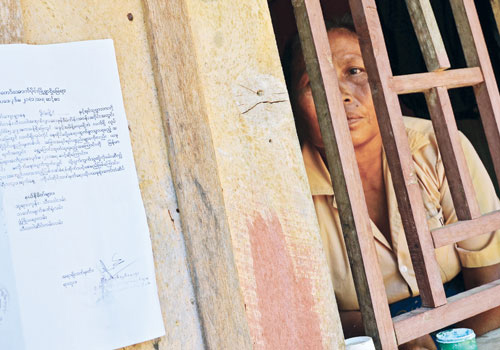
As Thai Prime Minister General Prayut Chan-Ocha visits Myanmar to revive the stalled Dawei Special Economic Zone (SEZ), the governments of Thailand and Myanmar should cooperate to establish a legal framework protecting the human rights of the area’s residents, said the ICJ.
Jun 18, 2014 | News
The ICJ’s Centre for the Independence of Judges and Lawyers (CIJL) has launched the first in a series of Country Profiles, a new online tool on the ICJ’s website.
Profiles on Myanmar, the Russian Federation, South Sudan and Swaziland are being published today.
Tunisia, Venezuela and Honduras will be added in the coming months.
By the end of 2014, all five regions in which the ICJ is active will be represented (Asia-Pacific, Africa, Europe, Latin America, MENA). The CIJL plans to add further countries on an on-going basis, and periodically to update existing profiles.
Each profile summarises information about the independence of judges, lawyers and prosecutors in the country, and assesses the situation against relevant international law and standards.
The profiles aim to provide users, including legal professionals, academics, government officials and human rights defenders, with material in an accessible format which can also be used for further analysis.
The profiles reflect the efforts of the CIJL and other ICJ programmes to monitor the independence and accountability of judges, lawyers and prosecutors in certain countries, particularly those where their independence is threatened or under attack.
Moreover, the profiles provide reference points on the laws and the standards applicable to the independence of judges and lawyers and the administration of justice in each country.
The profiles can be accessed from the ICJ webpage for the Centre for the Independence of Judges and Lawyers.
They are available as an interactive database on the ICJ’s website, and can also be downloaded in PDF format.