
Event: the rule of law and human rights in Myanmar
This side event to the 25th Human Rights Council session will take place on Wednesday, 12 March 2014, 16.00 – 18.00 pm, in Geneva, Palais des Nations, Room XXII.
The members of this panel are in a unique position to highlight on-going challenges to the rule of law in Myanmar and their impact on the enjoyment of human rights.
They will provide personal insight into the important international presence for human rights monitoring, practical challenges facing lawyers concerning the rule of law, and link these issues to sustainable economic development on the ground in Myanmar today.
This panel argues that it is crucial to maintain a robust engagement with the UN human rights mechanisms in order to support and facilitate the reform process in Myanmar and improve the country’s human rights situation.
Speakers:
Tomás Ojea Quintana, UN Special Rapporteur on the situation of human rights in Myanmar
Kyaw Min San, Myanmar lawyer, Pyoe Pin and Justice For All
Daniel Aguirre, International Commission of Jurists, Myanmar
Chair/moderator:
Carlos Lopez, International Commission of Jurists
The presentations by panellists will be followed by an open interaction with the audience. Copies of the recent ICJ report Right to Counsel: The Independence of Lawyers in Myanmar will be available.
Myanmar – HRC25 Side event – March 2014
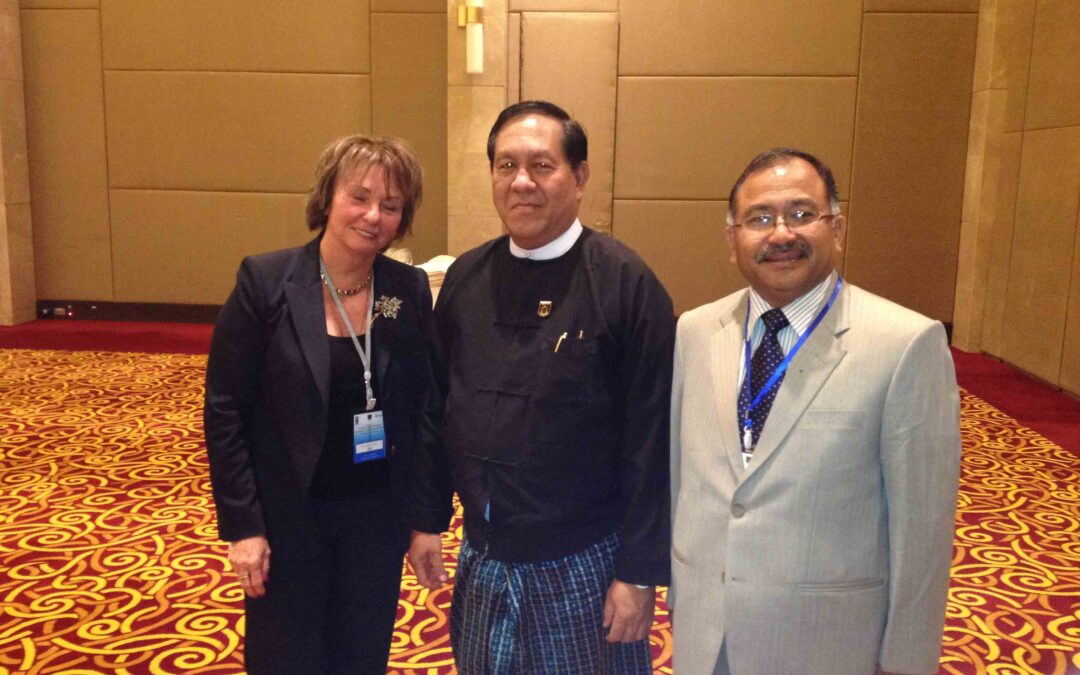
Myanmar’s court officials discuss judicial independence and integrity with international experts
The seminar was on “The Role of Judicial Independence and Integrity in Improving the Effectiveness of the Rule of Law”, with the participation of the ICJ.
The event, hosted by the Office of the Supreme Court of the Union (OSCU) in collaboration with the United Nations Development Programme (UNDP) and the ICJ, took place in Nay Pyi Taw on February 10th and 11th 2014.
It was attended by more than 40 judges and senior court administrators from all states and regions in Myanmar.
Discussions at the seminar focused on the ways in which Myanmar’s judicial system can continue to develop its functional independence and deliver justice for all.
In opening the seminar, the Honourable Chief Justice of the Union, U Htun Htun Oo, remarked that judicial independence and integrity are essential to building a reliable judicial system in which the people of Myanmar can trust, and which can uphold the rule of law.
During the seminar, Justice Kalyan Shrestha of Nepal, and ICJ Vice President Justice Michèle Rivet of Canada shared their experiences of the challenges of preserving judicial independence as a key pillar of a democratic society.
In her opening remarks, Ms. Renata Lok-Dessallien, UN Resident Coordinator, also noted that in addition to the importance of a fair legal framework, a trained judiciary and well-functioning court system, “the other half of the equation is from the bottom up: it is people’s perceptions of the professionalism, integrity and fairness of the system.”
Sam Zarifi, ICJ’s regional director for Asia and the Pacific added that “access to an independent and impartial tribunal is a human right”.
Both UNDP and ICJ expressed their willingness to continue working with Myanmar’s judiciary on the issues of judicial independence, and justice for all for the long-term.
Photo: ICJ Vice President Justice Michèle Rivet, Justice Kalyan Shrestha and Chief Justice U Htun Htun Oo
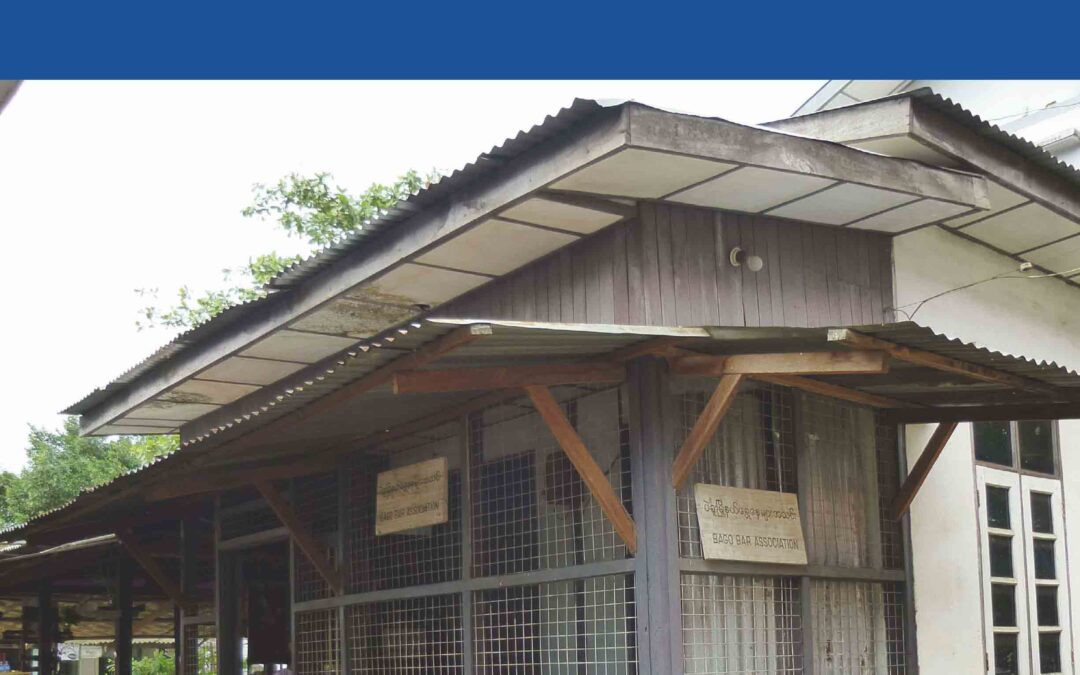
Myanmar: lawyers still face restrictions despite increased independence
Lawyers continue to encounter impediments to the exercise of their professional functions and freedom of association, as well as pervasive corruption, although they have been able to act with greater independence, says the ICJ in a new report launched today.
Right to Counsel: The Independence of Lawyers in Myanmar – based on interviews with 60 lawyers in practice in the country – says authorities have significantly decreased their obstruction of, and interference in, legal processes since the country began political reforms in 2011.
“The progress made in terms of freedom of expression and respect for the legal process is very visible,” said Sam Zarifi, ICJ Asia-Pacific director. “But despite the improvements, lawyers still face heavy restrictions and attacks on their independence, which can result in uncertainty and fear, particularly when it comes to politically sensitive issues.”
Systemic corruption continues to affect every aspect of a lawyer’s career and, as a result, is never absent from lawyers’ calculations vis-à-vis legal fees, jurisdictions and overall strategy.
“Corruption is so embedded in the legal system that it is taken for granted,” Zarifi said. “When the public also generally assumes that corruption undermines the legal system, this severely weakens the notion of rule of law.”
“Lawyers in Myanmar, as elsewhere, play an indispensable role in the fair and effective administration of justice,” Zarifi added. “This is essential for the protection of human rights in the country and the establishment of an enabling environment for international cooperation towards investment and development.”
But lawyers in Myanmar lack an independent Bar Council, the report says, noting that the Myanmar Bar Council remains a government-controlled body that fails to adequately protect the interests of lawyers in the country and promote their role in the fair and effective administration of justice.
The ICJ report shows that other multiple long-standing and systemic problems affect the independence of lawyers, including the poor state of legal education and improper interferences on the process of licensing of lawyers.
In its report, which presents a snapshot of the independence of lawyers in private practice in Myanmar in light of international standards and in the context of the country’s rapid and on-going transition, the ICJ makes a series of recommendations:
- The Union Attorney-General and Union Parliament should significantly reform the Bar Council to ensure its independence;
- The Union Attorney-General and Union Parliament should create a specialized, independent mechanism mandated with the prompt and effective criminal investigation of allegations of corruption;
- The Ministry of Education should, in consultation with the legal profession, commit to improving legal education in Myanmar by bolstering standards of admission to law school, law school curricula, and instruction and assessment of students.
Contact:
Sam Zarifi, ICJ Asia-Pacific Regional Director, (Bangkok), t:+66 807819002 e-mail: sam.zarifi(a)icj.org
Craig Knowles, ICJ Media & Communications, (Bangkok), t:+66 819077653, e-mail: knocraig(a)gmail.com
Myanmar-Right to Counsel-publications-report-2013-ENG (download full text in pdf)
MYANMAR-Right to Counsel-Publications-report-2015-BUR (Burmese version in pdf)

ICJ holds seminar on prerogative writs under the 2008 Constitution of Myanmar
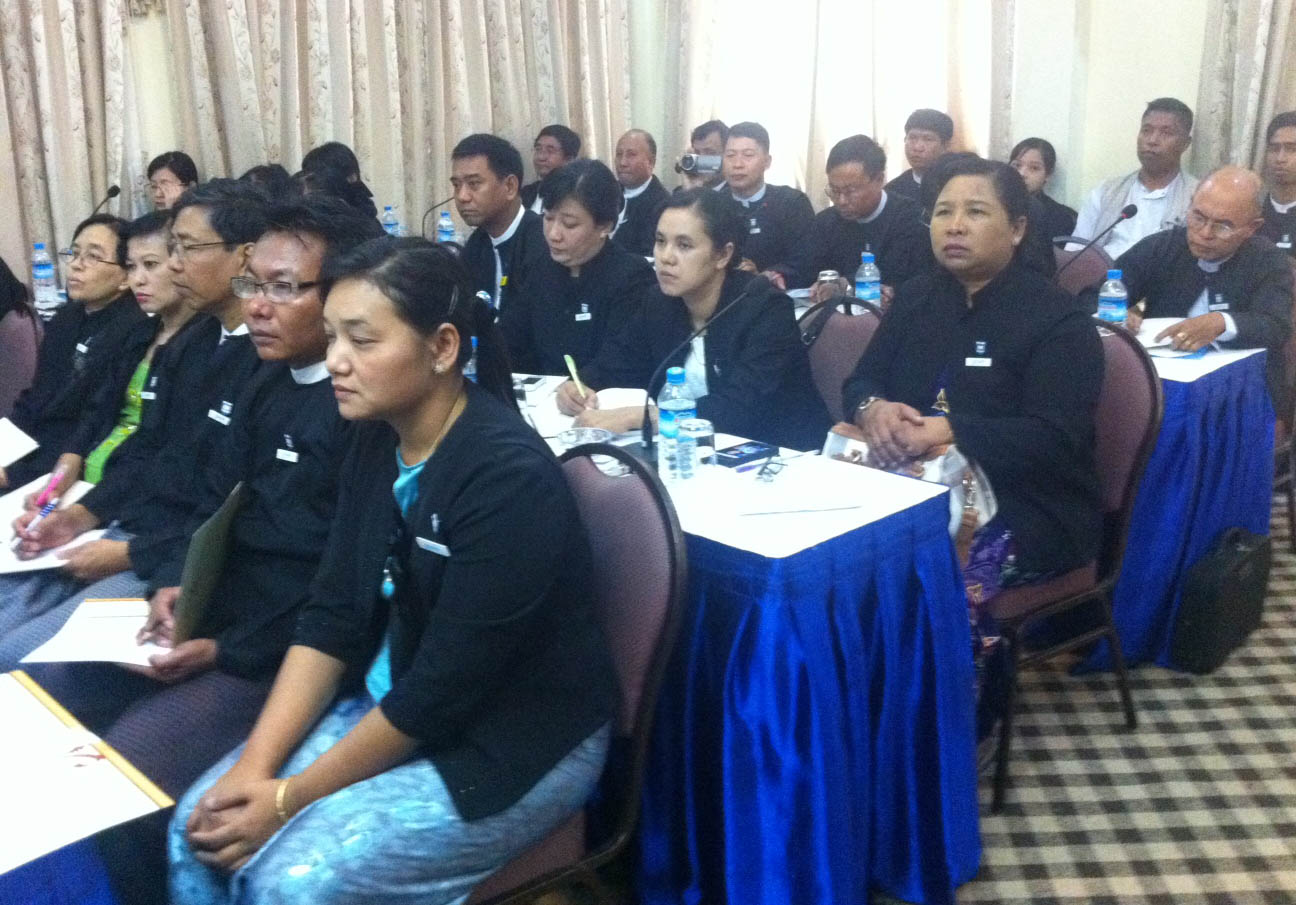 The ICJ, in collaboration with the Office of the Attorney General of the Union of Myanmar, held a two-day academic seminar in Naypyitaw entitled “The Prerogative Writs under the 2008 Constitution of Myanmar”.
At the event, which took place on 14 – 15 February 2013, opening remarks were given by His Excellency Dr. Tun Shin, Attorney General of the Union of Myanmar and Mr. Saman-Zarifi, Regional Director for Asia and the Pacific of International Commission of Jurists, to a total of approximately 40 public prosecutors and judges.
The aim of the seminar was to discuss and contribute to the application of the recently re-introduced prerogative writs, namely, habeas corpus, mandamus, prohibition, quo warranto and certiorari, under Myanmar’s 2008 Constitution which came into force in early 2011.
The seminar allowed ICJ to not only gain a deeper insight into the current writ practices in Myanmar but also permitted the Office of the Attorney General to draw best practices from other countries, such as Australia, Philippines and Malaysia.
The topics addressed during the seminar were the importance of prerogative writs in ensuring justice and upholding the rule of law; specific international standards on the independence of prosecutors and their role in the justice system; how writ cases are handled, challenges faced by the prosecutors and the burden of proof; and the powers of the judiciary to promulgate its own rules to ensure fundamental rights, as in the case of the Supreme Court in Philippines.
Panelists included Justice John Dowd AO QC, former Chairman of the International Commission of Jurists; Justice Adolfo Azcuna, Chancellor of the Philippine Judicial Academy and former Justice of the Supreme Court of the Philippines; and Mr. Andrew Khoo of the Malaysian Bar Council.
Recent News
 Myanmar: Five years after the coup “justice system” remains an instrument of repression31 Jan 2026
 Pakistan: Arbitrary arrest and sentencing of human rights lawyers Imaan Zainab Mazari-Hazir and Hadi Ali Chattha29 Jan 2026
 Türkiye: Conviction of Kurdish lawyers is an affront to justice and undermines the independence of the legal profession28 Jan 2026
 Joint Statements: Negotiations on the Convention on Crimes against Humanity22 Jan 2026