Dec 16, 2019 | News
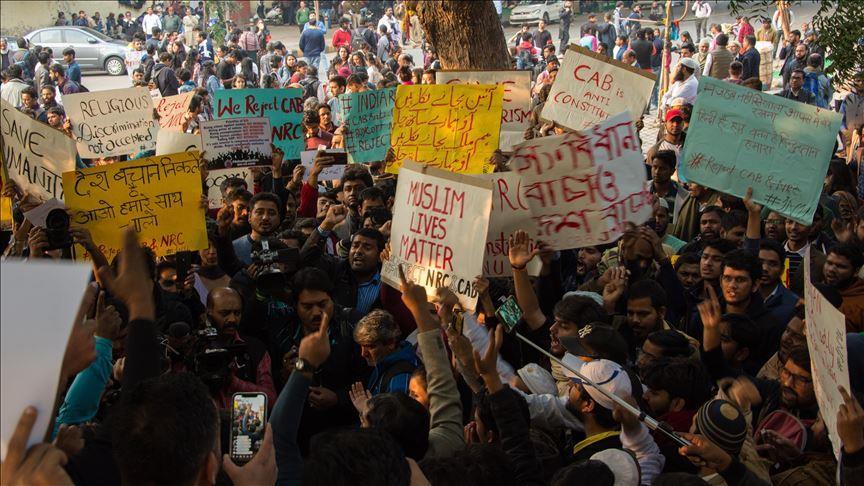
The Indian Police Service and the paramilitary Central Reserve Police Force must desist from the use of unlawful force and ill-treatment against demonstrators protesting the Citizenship (Amendment) Act, the ICJ said today.
The Indian authorities must also hold police and other public officials accountable for the human rights violations arising from these police actions, the ICJ added.
“The violent tactics that police have used over the past several days in Delhi, Uttar Pradesh, and other Indian states must cease and the government must address the legitimate concerns raised by the public about the discriminatory impacts of both the Citizenship Amendment Act and National Register of Indian Citizenship,” said Frederick Rawski, ICJ Asia Pacific Director.
“Any officials who use excessive force, including the unlawful or disproportionate use of pellet guns or tear gas cannons against unarmed student protestors, must be fully and impartially investigated and held accountable for their actions,” he added.
In its operations policing the demonstrations, the ICJ called on the authorities to abide by Indian Constitutional guarantees and international legal obligations on human rights.
These protect persons from torture and ill-treatment and the rights to freedom of expression, association and assembly.
They also require that police refrain from using unnecessary and disproportionate force and never use potentially lethal force unless to protect against an imminent threat to life.
The ICJ also called on the authorities to ensure that any person detained not be subjected to torture or other ill-treatment; have prompt and confidential access to counsel; and that those injured or otherwise provided with access to medical services.
“The police need to respond to prevent acts of violence, but they must use force only when strictly necessary. Potentially lethal force is only justifiably employed in self-defence or in defence of others against an imminent threat of death or serious injury,” said Rawski.
“If arrests need to be made, they must be done without exception in accordance with the law, respecting the rights of detainees to have access to legal counsel, to be free of torture and other ill-treatment of any kind, and to receive needed medical treatment,” he added.
The ICJ said that the authorities must undertake prompt, independent, impartial and thorough investigation of all allegations of unlawful use of force, with a view to holding accountable any responsible authorities and providing an effective remedy and reparation to victims.
Background
In response to the passage of the Citizenship (Amendment) Act, 2019, protests erupted all over the country, including in Assam, Tripura, Meghalaya, Arunachal Pradesh, Delhi, West Bengal, Kerala, and Hyderabad.
In Delhi and Uttar Pradesh, yesterday, members of the police and Central Reserve Police Force forced their way onto the campuses of Jamia Milia University and the Aligarh Muslim University in response to protests against the Citizenship (Amendment) Act, 2019.
At Jamia Milia University, the police and Central Reserve Police Force used tear gas cannons upon students who had been reportedly protesting peacefully. Police entered the university library and beat students who were there studying for their exams. The police detained (and subsequently released) some 50 students. Some reported being beaten while in detention, held for over six hours in a locked police station, and denied access to lawyers and family. Medical attention was also reportedly denied to some injured students.
At Aligarh Muslim University, the police and Central Reserve Police Force reportedly demolished the gates, and used tear gas, pellet guns, and lathi (wooden sticks) charge. They were said to have entered student hostels, wherein they reportedly caused damage to one room which had students inside it. According to a lawyer at the University, at least one’s student whereabouts is unknown and some 50 students and others have reported been injured, some severely. Some were reportedly taken to the hospital by the police.
The Citizenship (amendment) Act, 2019 amends the Citizenship Act, 1955, which governs questions of citizenship and aspects of lawfulness of migration status in India. The Act gives protected status to Hindu, Sikh, Jain, Parsi, Buddhist and Christian migrants from Pakistan, Afghanistan and Bangladesh, all Muslim-majority countries, who entered India on or before 31 December 2014. Similarly situated Muslims are categorized as “illegal migrants”.
The Bill provides to the above-mentioned religious communities and countries an expedited route of citizenship giving them the opportunity to be eligible for citizenship by naturalization if they have lived or worked in India for six years, as opposed to twelve years, as otherwise required. The Bill controversially excludes from its ambit certain ethnic and religious groups, such as Muslims, in violation of international law and standards protecting against discrimination.
To download the full statement with additional background information, click here.
Contact
Maitreyi Gupta, ICJ India Legal Adviser, t: +91 77 560 28369 e: maitreyi.gupta(a)icj.org
Frederick Rawski, ICJ Asia-Pacific Director, t: +66 64 478 1121; e: frederick.rawski(a)icj.org
Dec 11, 2019 | News
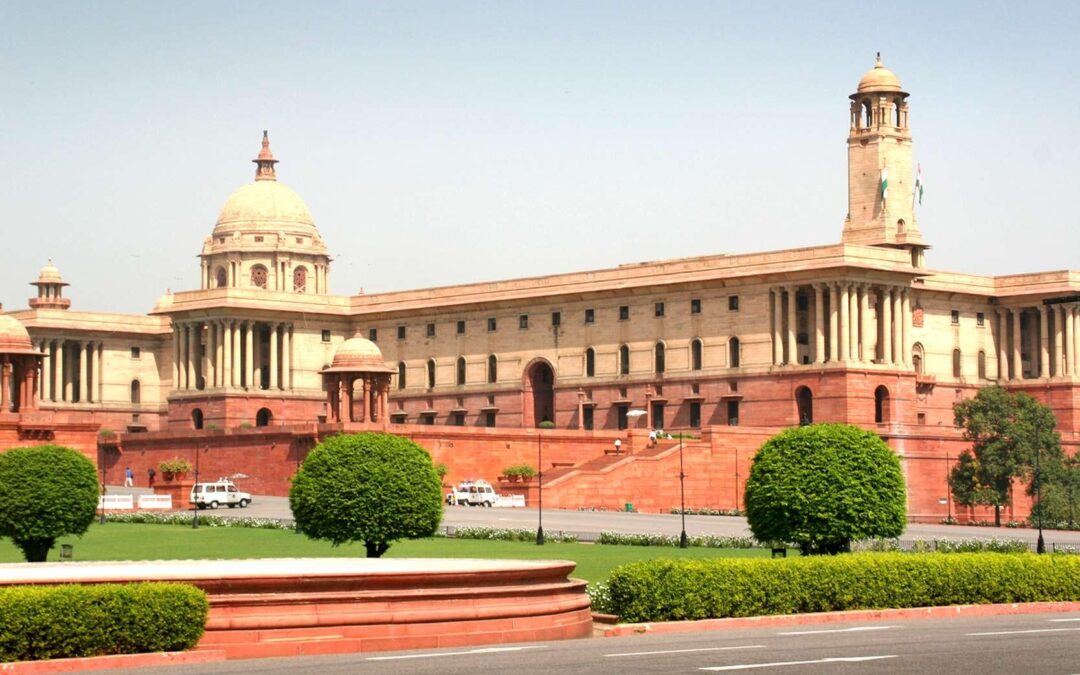
The ICJ today condemned The Citizenship (Amendment) Bill 2019 passed by the Rajya Sabha (upper house of the Indian Parliament) on 11 December 2019, after the Lok Sabha (lower house of the Parliament) adopted it on 9 December.
The ICJ calls on India to reconsider and repeal, or substantially amend, the Bill to bring it in line with international legal obligations and Indian Constitutional principles.
“The implementation of this proposed legislation would violate core principles of non-discrimination, equal protection of the law and freedom of religion, guaranteed under international law and the Indian Constitution,” said Frederick Rawski, ICJ’s Asia Director.
The Bill amends the Citizenship Act, 1955, which governs questions of citizenship and aspects of lawfulness of migration status in India. While it purports to provide protection and shelter to religious groups such as Hindus and provides them paths to citizenship, it excludes from its ambit certain religious groups such as Muslims.
The Bill gives protected status to Hindu, Sikh, Jain, Parsi, Buddhist and Christian migrants from Pakistan, Afghanistan and Bangladesh, all Muslim-majority countries, who entered India on or before 31 December 2014. Similarly situated Muslims are categorized as “illegal migrants”.
Furthermore, the Bill provides to the above-mentioned religious communities and countries an expedited route of citizenship giving them the opportunity to be eligible for citizenship by naturalization if they have lived or worked in India for six years, as opposed to twelve years, as otherwise required.
“The Citizenship (Amendment) Bill creates two tiers of citizenship and migration status in India based on religion, with Muslims relegated to the lower end,” added Rawski. “This Bill, which entrenches discriminatory practices into law, must not be implemented unless substantially amended to provide for equal protection for persons of all religions or other status.”
The legal framework for citizenship identified by this Bill is incompatible with bedrock rule of law and democratic principles. It is highly discriminatory and arbitrary, and manifestly fails to satisfy the State’s obligations under international human rights law, including the International Covenant on Civil and Political Rights (ICCPR), to which India is a party.
The arbitrary inclusion of some groups while excluding others violates Article 14 of the Indian Constitution and Article 26 of the ICCPR. India’s international obligations require that its regulation of citizenship under domestic law be compliant with the principle of non-discrimination, equality before the law, and equal protection of the law without discrimination on the grounds of, inter alia, race, religion, or ethnic or national origin. This Bill, which provides for differentiated criteria for citizenship and other legal protection based on membership of religious group, complies neither with international law nor Indian constitutional law.
The arbitrary inclusion of some groups while excluding others would only be permissible under Article 14 of the Indian Constitution and Article 26 of the ICCPR if the classification is founded on an intelligible differentia between the group excluded and the group that is included, and (ii) the differentia has a rational relation to the objects sought to be achieved by the Act.
The Bill claims religious persecution as the ground of reasonable classification, but then arbitrarily excludes several similarly situated and widely persecuted religious minorities such as Ahmediya Muslims and Shia Muslims from Pakistan and Bangladesh, Rohingyas from Myanmar, Hazaras from Afghanistan from its protective ambit. It therefore does not meet these criteria under the Indian Constitution and international law.
The adoption of the Bill comes as the Ministry of Home Affairs of the Indian Government issued a directive on August 8, 2017 to state governments to “identify and deport” 40,000 Rohingya refugees from Myanmar, which has led to deportation of 7 Rohingya men to Myanmar already.
In addition, the Indian Government has indicated that it will pursue nationwide National Register of Indian Citizens, which will likely exclude numerous people, many also Muslim, who should be recognized as Indian Nationals. A similar exercise undertaken in Assam earlier this year was an arbitrary and discriminatory process that rendered some 1.9 million people stateless. This violates international law and standards which protects the right to nationality and safeguards against statelessness.
Contact
Frederick Rawski, ICJ Asia-Pacific Director, t: +66 64 478 1121; e: frederick.rawski(a)icj.org
Maitreyi Gupta, ICJ India Legal Adviser, t: +91 77 560 28369 e: maitreyi.gupta(a)icj.org
Dec 10, 2019 | News
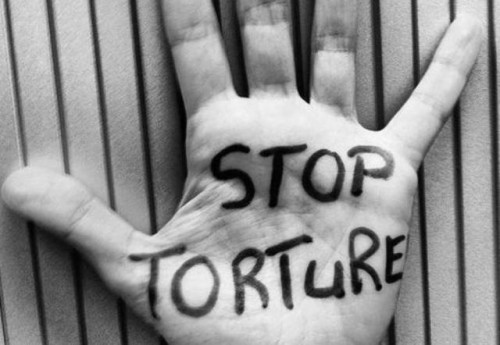
The pervasive practice of torture and other ill treatment can only be addressed if the States in the region ensure perpetrators are held accountable in line with international standards, said lawyers and activists from Bangladesh, India, Nepal, Pakistan and Sri Lanka.
The call came at a regional conference on the investigation and prosecution of torture and other ill treatment in South Asia, organized by the ICJ ahead of Human Rights Day.
“Governments in South Asia have done very little to support the victims and survivors of torture and other ill treatment, or to ensure their rights to truth, justice and reparation,” said Frederick Rawski, ICJ’s Asia Director.
“Despite the persistence of the practice, Governments have failed to follow their legal obligation to treat these crimes as the serious human rights violation they are,” he added.
Torture and other ill treatment are prevalent in South Asia, and in some countries widespread and systematic, with perpetrators enjoying impunity for the crime.
According to the ICJ, States in the region continue to deny the pervasiveness of torture, use torture as a deliberate tool to control and punish dissent, fail to enact specific legislation to criminalize torture, and where a special law exists, fail to implement it in good faith.
Consequently, there have been few concerted efforts to hold perpetrators of torture and ill treatment to account.
All too often, perpetrators get away with only disciplinary sanctions, and even when prosecutions happen, they do not result in convictions and commensurate penalties.
Suspects are often lower or middle-ranking public officials rather than their superiors, who are charged with lesser crimes than torture, such as assault, battery, coercion or abuse of office that carry relatively low punishments.
Prosecutions frequently fail because of the difficulties to prove torture, including securing witnesses for the prosecution, inadequate or conflicting medical evidence as well as threats of reprisals influencing victims and witnesses.
Even when such hurdles are overcome, immunities that protect public officials from prosecutions allow perpetrators to escape accountability.
Furthermore, military and intelligence agencies have extensive and unaccountable powers, including for arrest and detention, which facilitate the practice of torture and other ill treatment.
Under international law, States must ensure protection against torture and other cruel, inhuman or degrading treatment or punishment.
Whenever there are reasonable grounds to believe that torture has been committed, States are required to investigate allegations competently, impartially, independently, promptly and thoroughly.
While a comprehensive set of reforms, both in law and policy, is required to prevent and combat torture and other ill treatment – ensuring accountability for perpetrators would be a first step, said the ICJ.
Contact:
Frederick Rawski (Bangkok), ICJ Asia Pacific Regional Director, e: frederick.rawski(a)icj.org
Reema Omer, ICJ International Legal Adviser for South Asia (Lahore), t: +923214968434; e: reema.omer(a)icj.org
Dec 9, 2019 | Advocacy, News
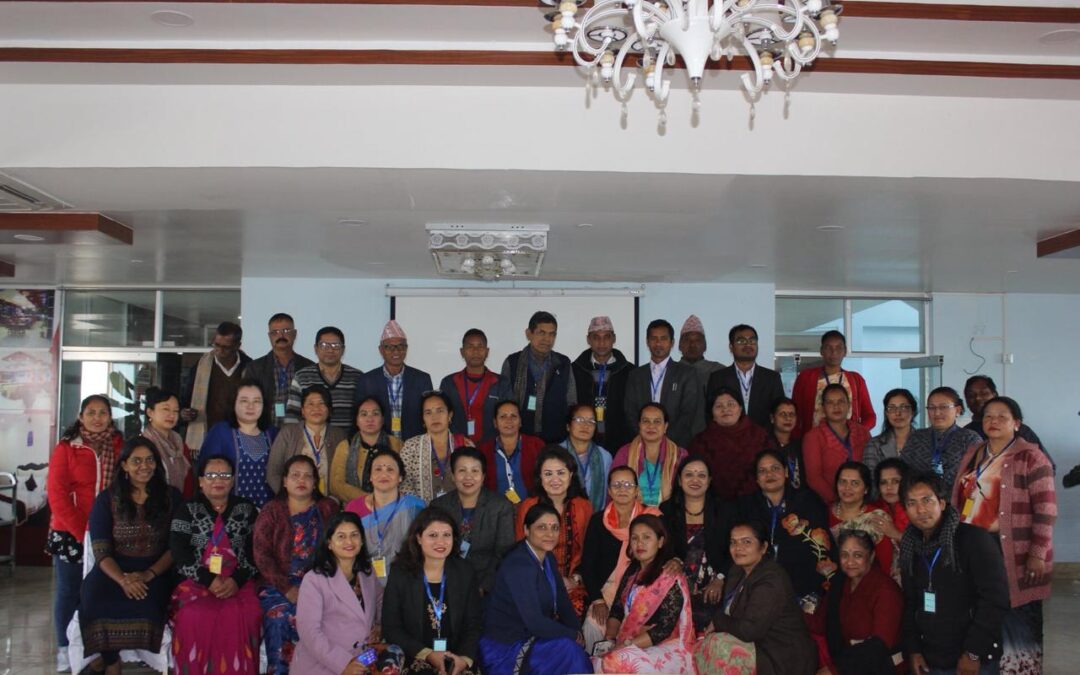
From 7 to 8 December 2019, the ICJ, in collaboration with UN Women, organized the 2019 Workshop of Judicial Committee Members on Eliminating Discriminatory Attitudes Against Women. It was held in Biratnagar, Nepal, and gathered thirty members from judicial committees in Province 1.
Judicial committees were created under Nepal’s Local Governance Operation Act, which was passed in 2017. The law laid out areas of competence of the judicial committees that gives them the potential to significantly impact the lives of women at the community level.
On the first day of the workshop, the discussions were aimed at strengthening the understanding of the members of judicial committees on women’s human rights, and the importance of eliminating gender stereotyping in their work to enhance access to justice for women. On the second day, there were more discussions on the mandate of judicial committees in Nepal and how they can take on the role of promoting and protecting women’s human rights in the country.
As ICJ’s International Legal Adviser, Ms. Boram Jang, pointed out, “Judicial committees are the first points of contact for women in Nepal when they want to access justice.”
It is because of this vital role they hold that the ICJ and UN Women have decided to focus on strengthening the capacity of judicial committee members to better understand the root causes of discriminatory attitudes towards women.
“Women victims and survivors should be able to rely on a justice system free from myths and stereotypes, and on a judicial committee whose impartiality is not compromised by these biased assumptions,” said Boram Jang.
According to Ms. Subha Gale, Programme Analyst of UN Women, “When we deprive women of their ability to access justice, we take away all their rights.”
The keynote speech during the workshop was given by Ms. Bandana Rana, Vice-Chairperson of the Committee on the Elimination of All Forms of Discrimination Against Women (CEDAW Committee). In her speech, she noted how Nepal has moved forward since it adopted its new Constitution, which recognizes the important role women play in the country’s development.
Ms. Bandana Rana also reminded the participants at the workshop how gender stereotypes foster narratives that are harmful for women in society. She said, “If we want to bring change, we must change these narratives. If we want equality among men and women, we must start by teaching our sons – not just our daughters – about equality and non-discrimination.”
Contact
Laxmi Pokharel, National Legal Advisor, International Commission of Jurists, t: +977 9851047588, e: laxmi.pokharel(a)icj.org
Dec 7, 2019 | News
The ICJ called on the Indian government to conduct an independent and impartial investigation into the apparently unlawful killings by Telangana Police of the four men accused of raping and killing of Dr. Priyanka Reddy on November 27, 2019.
The men had been in police custody for over a week at the time of the killings.
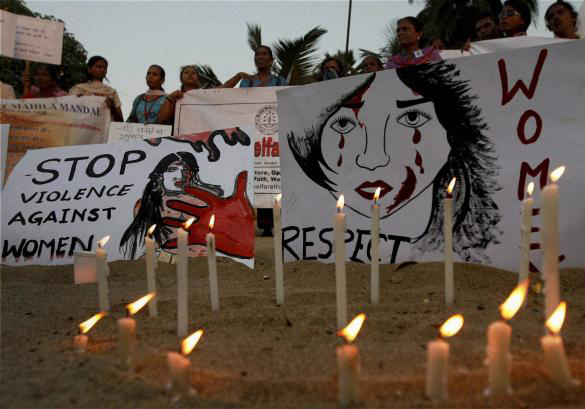
“The rape and killing of Dr. Reddy is a heinous crime, and sadly only the latest in a pattern of rampant sexual violence that plagues India. The perpetrators of such acts must be held accountable,” said Frederick Rawski, ICJ Asia-Pacific Director. “However, the unlawful killing of suspects in custody helps no-one. It denies victims true justice, rewards unlawful behavior by the police, and generally undermines the rule of law.”
On November 27, Dr. Priyanka Reddy, a veterinarian, was returning home when she was gangraped. Her body was subsequently burned by the perpetrators. The next day, four suspects were arrested. According to the police, they remained in custody until Friday, 6 December, when all four were shot and killed after they allegedly attempted to take weapons from the police and tried to escape during a re-enactment at the crime scene. Details of the incident remain unclear, though it has the appearance of a custodial execution.
“The suspicious circumstances of these deaths in custody, and the history of the use of extrajudicial killings in India, demands a thorough, independent and impartial investigation,” said Rawski. “The nationwide alarm at the trend of sexual violence is completely warranted. However, celebrating the unlawful behavior of police will not ultimately protect women from sexual violence or address their lack of access to justice.”
Several Indian women’s rights activist groups have also condemned the killings. A statement by the All India Progressive Women’s Association’s statement pointed out that “This is not justice. This is a ploy to shut down our demand for accountability from the police, judiciary, governments, and justice and dignity for women.” The National Human Rights Commission of India has also called for an investigation into the circumstances of the killing.
According to international standards including the International Convention of Civil and Political Rights (ICCPR), to which India is a party, States have a duty to investigate allegations of extrajudicial executions with due diligence and good faith, regardless of whether or not there is a formal complaint. The investigation of extrajudicial, summary or arbitrary executions must be thorough prompt, impartial and independent, towards establishing the crime committed and prosecuting those responsible for the crimes. This has been reiterated by the Supreme Court of India, which has condemned encounter killings, and set out guidelines for their investigation.
The ICJ urges the Indian Government to conduct a thorough and impartial investigation into the killings by the police, in line with the Supreme Court’s decisions, and India’s constitution and international obligations. The ICJ calls upon the courts to ensure that police officials who conduct unlawful killings are held accountable. It also calls upon the Government to take immediate steps to address the lack of an effective response from police personnel to allegations of rape and sexual violence, and to take effective lawful measures to prevent the unacceptable attacks upon victims of rape and other sexual violence seeking a remedy in the courts.
Contact
Frederick Rawski, ICJ Asia-Pacific Director, t: +66 64 478 1121; e: frederick.rawski(a)icj.org
Maitreyi Gupta, ICJ India Legal Adviser, t: +91 77 560 28369 e: maitreyi.gupta(a)icj.org