Sep 6, 2019 | News
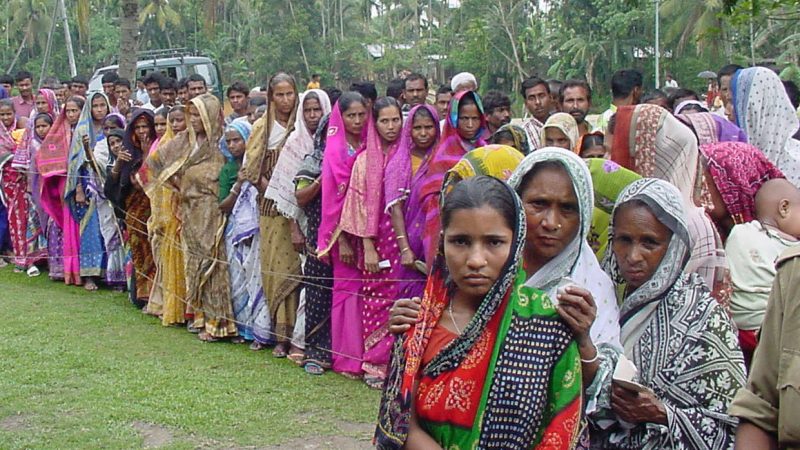
The ICJ, along with 124 other international and domestic civil society groups from around the world have condemned the actions of Indian government in publishing an incomplete and discriminatory Assam National Register of Citizens (NRC) on 31 August, 2019.
The NRC excludes some 1.9 million people – nearly 6 percent of the population of Assam – thereby rendering them at risk of statelessness. The statement points to violations of rights to equality and non-discrimination, as the process has disproportionately affected Muslims of Bengali descent, undocumented women and children as well as other minorities.
The groups call on India to take measures to redress the situation in a non- discriminatory and non-arbitrary manner, with full regard to due process rights and a commitment to protect the right to a nationality and to avoid statelessness of all long-term residents and their children.
Arbitrary deprivation of nationality is a human rights violation, which undermines the enjoyment of the human rights of those affected and their ability to participate fully in society. International law prohibits the arbitrary deprivation of nationality and obliges States to avoid statelessness, while guaranteeing the right of every child to acquire and preserve their nationality and to be protected from statelessness.
In 2015, the Assam state government, pursuant to a Supreme Court decision, announced it would initiate a process of updating the NRC, requiring every person in Assam who recognized themselves as an Indian citizen, to submit proof of their ancestry (or birth) in the country pre-dating 1971, the year that Bangladesh was formed. The act of requiring individuals to prove their citizenship by providing documentary evidence dating back over 50 years, and excluding applicants on the basis of their inability to fulfill this evidentiary burden, has led to arbitrary deprivation of nationality, contrary to Article 15 of the Universal Declaration of Human Rights.
Further, poor birth registration rates, despite an obligation under Article 7 of the Convention of the Rights of the Child to immediately register every birth has denied numerous applicants of a critical piece of evidence to establish their citizenship. Similarly, many people who possessed the required documents, have nonetheless been penalized due to administrative errors.
Despite repeated calls to action by UN human rights authorities, India has refused to reverse the process and other States have done little to press the Indian government to reverse course.
Those excluded from the list must appeal within 120 days to Foreigners Tribunals (FT), a quasi-judicial institution mandated to determine citizenship. In essence, this implies that the government already considers those excluded from the NRC to be foreigners, and not Indian citizens.
Find the full statement, endorsed by the ICJ and 124 other international and domestic civil society groups from around the world here: https://files.institutesi.org/cso-joint-statement-on-assam-nrc.pdf
Contact:
Maitreyi Gupta (Delhi), ICJ International Legal Adviser for India, t: +91 7756028369 e: maitreyi.gupta(a)icj.org
Frederick Rawski, ICJ Asia-Pacific Director, t: +66 64 478 1121; e: frederick.rawski(a)icj.org
Aug 30, 2019 | News
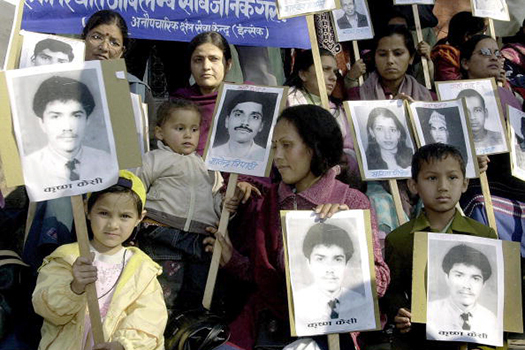
On the occasion of the International Day of the Victims of Enforced Disappearances, Advocacy Forum-Nepal, the Terai Human Rights Defenders Alliance (THRD), and the ICJ voiced their concern about the Government’s failure to provide justice for the victims of the country’s decade-long armed conflict, including victims of enforced disappearance.
The organizations also remembered the victims of enforced disappearances in Nepal and recognized the unceasing efforts of victims and their families and others advocating and campaigning for truth and justice for serious human rights violations in Nepal for over a decade.
Nepal faced a protracted internal armed conflict from 1996 to 2006. In the decade-long conflict, serious human rights violations and abuses were committed by both sides: the Government, including the Royal Nepal Army; and the Communist Party of Nepal (Maoist). Approximately 1,300 people were “disappeared” during the conflict. The fate of many of “disappeared” is yet to be known.
The Comprehensive Peace Agreement (CPA) put an end to the conflict on 21 November 2006, with both sides agreeing to hold perpetrators of human rights violations and abuses accountable and provide access to effective remedies and reparation to victims, including a commitment to publicize the fate or whereabouts of “disappeared”. However, nearly 13 years after the signing of the Comprehensive Peace Agreement in November 2006, these promises remain unfulfilled.
The Truth and Reconciliation Commission and Commission on Investigation of Disappeared Persons, both established in February 2015, have failed to resolve the many thousands of complaints brought to them by victims and their families, and have yet to publicize their findings. Furthermore, in 2015, the Supreme Court ruled the 2014 Act creating the legal framework for the Commissions to be unconstitutional, due in part to the inclusion of provisions that could be used to grant amnesty to perpetrators. In February 2019, the tenure of the commissions was extended to 2020, but the terms of the commissioners expired on 13 April 2019. As of August 2019, no formal replacements had been announced, though a committee to recommend appointments has been established. The ICJ and other organizations have called for a suspension of the current appointment process until amendments to the legal framework are made, and a more consultative and transparent process is initiated.
Nepal has also enacted a new Penal Code, with effect from August 2018. For the first time, the Penal Code recognized enforced disappearance as a distinct crime. While the intent behind this measure is commendable, the law does not meet Nepal’s obligations concerning crimes under international law. In particular, the definition of enforced disappearance falls short of international standards; the crime of enforced disappearance is not absolutely prohibited; provisions related to superior and command responsibility are inadequate; and the penalties for enforced disappearance are inconsistent with international standards. The provisions will apply retroactively to the more than 1,300 conflict era cases.
The organizations urged the Government of Nepal to:
- Amend the 2014 Transitional Justice Act to ensure it is consistent with international human rights standards and Supreme Court rulings, including removing amnesty for perpetrators;
- Revise the criminal code to bring it in line with international standards. At the minimum, this should include:
- amending the definition of enforced disappearances to bring it in line with Nepal’s international obligations and the Convention on the Protection of All Persons from Enforced Disappearance (CED)
- revising the penalty provisions in the Criminal Code Bill to comply with relevant provisions of the CED and other international law and standards
- removing the statute of limitations for enforced disappearance cases
- Ratify International Convention for the Protection of All Persons from Enforced Disappearances;
- Publicize the findings of the CIEDP; and
- Ensure that in Nepal’s legal system, the victims of enforced disappearance, including family members of “disappeared” persons, have the right to obtain reparation and prompt, fair and adequate compensation; and they can effectively exercise that right in practice.
Contact:
For the ICJ: Frederick Rawski, ICJ Asia-Pacific Director, t: +66 64 478 1121; e: frederick.rawski(a)icj.org
Background:
The International Day of the Victims of Enforced Disappearances falls on 30 August every year. Nepal is bound by international legal obligations under the International Covenant on Civil and Political Rights (ICCPR) and Convention against Torture and Other Cruel, Inhuman or Degrading Treatment or Punishment (CAT) – both of which it has acceded to – to investigate, prosecute, punish and provide remedies and reparation for the crimes of torture, other acts of ill-treatment, and enforced disappearance.
Nepal-International Day Enforced Disappearances-Press releases-2019-NEP (Story in Nepali)
Aug 6, 2019 | News
The Indian Government’s revocation of the autonomy and special status of Jammu and Kashmir violates the rights of representation and participation guaranteed to the people of Jammu and Kashmir under the Indian Constitution and in international law and is a blow to the rule of law and human rights in the state and in India, the International Commission of Jurists (ICJ) said.
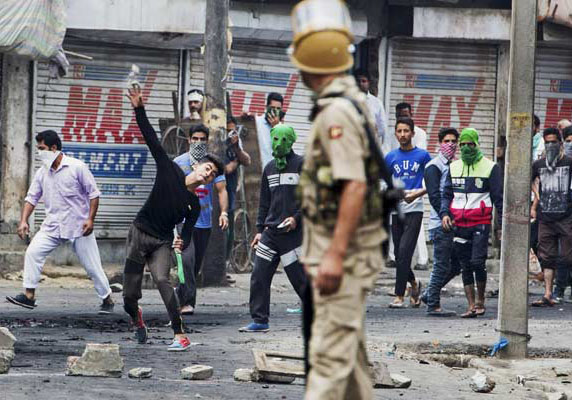
The Indian Government today pushed through a legislative package effectively eliminating the special status accorded to Jammu and Kashmir under Article 370 of the Indian Constitution, which granted autonomy to Jammu and Kashmir and limited the Indian Government’s legislative powers in the state. The move was preceded by a communication blackout, arbitrary detention of political leaders, banned movement and meetings of people, and increased military presence, purportedly to quell protests.
“The Indian Government has pushed through these changes in contravention of domestic and international standards with respect to the rights of people in Jammu and Kashmir to participate and be adequately represented, accompanied by draconian new restrictions on freedoms of expression, assembly, and travel, and with an influx of thousands of unaccountable security personnel,” said Sam Zarifi, ICJ’s Secretary General.
“The legality of the Indian Government’s measures to eviscerate Article 370 will certainly be tested before the Indian judiciary, which should look closely at the serious violations of proper legislative and Constitutional processes,” Zarifi said. “All eyes are now on the Indian Supreme Court to fulfill its functions in defense of the rights of people of Jammu and Kashmir and the Indian Constitution,” Zarifi said.
The procedure adopted to revoke the special status and autonomy of Jammu and Kashmir appears to be incompatible with judgments and observations of high courts and the Indian Supreme Court, who have clarified that the President of India would need the agreement of the government of Jammu and Kashmir to change its status. The amendments effectively render Article 370 inoperative in its entirety, without meeting the Constitutional requirements in spirit.
The revocation of special status of Jammu and Kashmir without agreement from the state government is contrary to the spirit of Article 370, which envisioned that the will of the people would be taken into account in decisions relating to state’s special status and autonomy.
“The Indian Government rushed through the amendments at a time when Jammu and Kashmir was under the direct rule of the Central Government, and the state legislature was dissolved. As the government of Jammu and Kashmir is not empowered to discharge its functions, it has not been consulted, let alone agreed to the revocation,” Zarifi said.
“The lack of consultation with the people of Kashmir is all the more troubling because the changes pushed by the Indian Government will materially affect Kashmir’s status as India’s only Muslim-majority state, including special rights for citizens of the state to own and hold land and seek education and employment,” Zarifi said.
The Office of the United Nations High Commissioner for Human Rights (OHCHR) in successive reports in 2018 and 2019 has noted that the region of Jammu and Kashmir, under dispute between India and Pakistan since 1947, has been the theatre of grave human rights violations, including unlawful killings, enforced disappearances and torture, committed with impunity by Indian security forces.
The UN High Commissioner for Human Rights in both reports recommended to the Indian Government to “fully respect the right of self-determination of the people of Kashmir as protected under international law”.
The ICJ condemns the legislative steps taken with respect to Jammu and Kashmir, and calls on the Indian Government to implement in full the UN High Commissioner’s recommendations, including respecting the right to self-determination of people of Jammu and Kashmir, and to respect, protect and fulfill the human rights of people in Jammu and Kashmir.
Contact
Sam Zarifi, ICJ Secretary General,e: sam.zarifi(a)icj.org, t: 41 (0)22 979 38 00
India-Jammu Kashmir and Autonomy-News-press release-2019-ENG (full story with additional information, in PDF)
Jul 29, 2019 | News
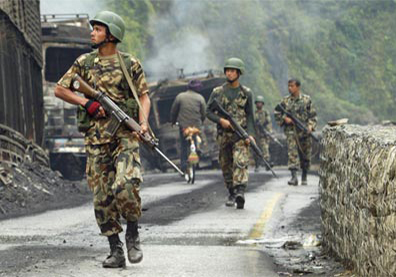
The Government of Nepal has failed to fulfill its commitment to provide justice for the victims of the country’s decade-long armed conflict, the ICJ, Amnesty International, Human Rights Watch, and TRIAL International said today.
The organizations echoed statements by victims and human rights groups about the Nepal government’s inaction on addressing conflict-era human rights violations, and a lack of transparency in the appointment of commissioners to the Truth and Reconciliation Commission and to the Commission on the Investigation of Enforced Disappearances.
“The lack of progress in holding perpetrators accountable for the suffering inflicted upon victims, their families and Nepali society as a whole, is appalling,” said ICJ Asia-Pacific Director Frederick Rawski.
“Nearly 13 years after the signing of the Comprehensive Peace Agreement, political leaders inside and outside of government are still playing games by politicizing the process. It is about time that they showed some courage, and took action to ensure access to justice, instead of continually looking after their own short-term self-interests,” he added.
“We have seen no evidence so far that the authorities of Nepal are serious about fulfilling their obligation to investigate conflict-era violations and bring all those suspected of criminal responsibility to justice in fair trials before ordinary civilian courts,” said Raju Chapagai, South Asia researcher at Amnesty International. “If the commitment to human rights obligations was as unflinching as claimed by Prime Minister KP Sharma Oli, the government would have acted diligently to deliver on its transitional justice responsibilities.”
After being elected in 2018, Prime Minister Khadga Prasad Oli renewed promises that the legal framework governing the transitional justice process would be brought into conformity with Nepal’s international human rights law obligations, as the Supreme Court had repeatedly directed. However, the government never amended the law, and instead pushed forward – without adequate consultation – with the establishment of a committee to recommend appointments to the transitional justice bodies.
“The failure of the government to deliver on its commitment to ensure truth, justice and reparations for the victims of conflict-era abuses shows a dismaying disregard for the protection of human rights,” said Meenakshi Ganguly, South Asia Director at Human Rights Watch.
The organizations called on the government to: 1) suspend the current process, and initiate a consultative and transparent process for the nomination and appointment of commissioners; 2) follow through on commitments to amend the 2014 transitional justice law to ensure that the legal framework is consistent with international human rights standards and Supreme Court rulings; and 3) adopt and publicize a plan for taking the transitional justice process forward.
“The legitimacy of Nepal’s transitional justice process lies both on a transparent and consultative appointment process for commissioners, and a strong legal foundation to allow the commissions to fulfil their mandate,” said Helena Rodríguez-Bronchú, Head of TRIAL International’s Nepal program. “Societal consensus is crucial for both factors.”
Amnesty International, ICJ and TRIAL International had previously submitted their analysis of the draft transitional justice legislation circulated in 2018 and had made recommendations on ensuring compliance with international human rights law. Human Rights Watch had also alerted for reform of the transitional justice law before appointing the commissioners. In April 2019, United Nations experts also wrote a joint letter to the foreign minister reminding the government of its commitment to amend the law and calling for a transparent process for appointing new commissioners after the terms of the previous commissioners expired.
Contact
Frederick Rawski, ICJ Asia-Pacific Director, t: +66 644781121 ; e: frederick.rawski(a)icj.org,
Nepal-trans just-News-Press releases-2019-NEP (story in Nepali, PDF)
Jul 23, 2019 | News
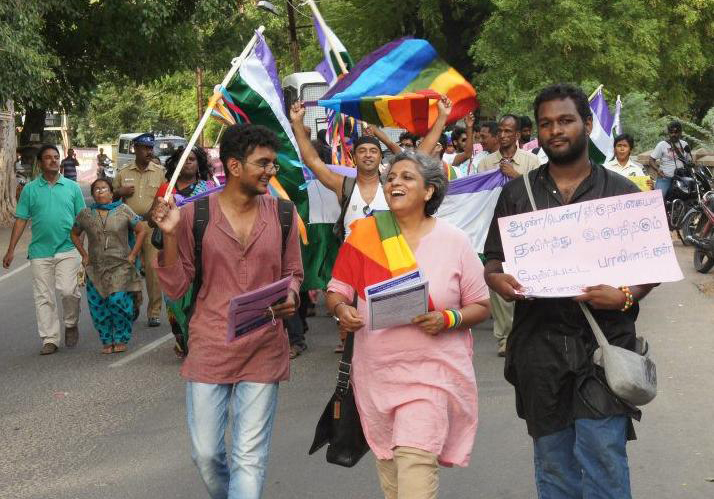
The Transgender Persons (Protection of Rights) Bill, 2019, does not adequately protect the rights of transgender people and should be revised to address the concerns of the transgender community and to conform with India’s international human rights obligations, the ICJ said today.
“The Transgender Bill as currently drafted still fails to fully protect the rights of transgender people including to self-identify, a right that has been upheld by the Indian Supreme Court,” said Frederick Rawski, ICJ’s Asia Pacific Director.
“If Parliament passes the Bill in its current form, it will miss an important opportunity to introduce a law that respects, protects and fulfills the human rights of transgender people as required by the Supreme Court’s decision in NALSA and India’s international obligations,” he added.
The Government introduced the Transgender Persons (Protection of Rights) Bill, 2019, before the Parliament on 19 July 2019.
The current draft, fails to address key concerns that have been repeatedly raised by the transgender community and human rights organizations.
Critically, the Bill continues to mandate sex reassignment surgery for transgender people who seek to identify as male or female.
This requirement clearly contravenes the Supreme Court’s judgment in NALSA v. UOI, which guarantees the right to self-identification, without any need for medical intervention. Nor does the Bill make provision for reservations in employment or education despite a mandate by the Supreme Court in NALSA.
Among the problematic provisions are those which set out lighter sentences for criminal offences when committed against transgender people (including “sexual abuse”, “physical abuse”, “verbal and emotional abuse”, “economic abuse” and denial of “passage to a public place”); inadequate or missing definitions of offences; the retention of provisions that could be used to target transgender people for criminal prosecution; and the absence of mechanisms to enforce prohibitions on discrimination in the law.
The ICJ acknowledges that the draft of the Bill contains improvements over the version passed by the Lok Sabha in 2018.
The new draft removes the requirement for a screening committee to review applications for the issuance of a gender identity certificate. It also no longer criminalizes “compel[ing] or entice[ing] a transgender person” to engage in begging
The ICJ and other human rights organizations have recommended the deletion of these provisions in light of the well-documented historical abuse that such laws enabled by making it possible to target transgender persons, and the resulting effect of creating a specter of criminality around transgender identities.
“The Bill does include some important improvements over its 2018 version, such as the elimination of screening committees for the issuance of identity documents, and problematic criminal provisions relating to begging. However, it still falls significantly short from a constitutional and an international human rights perspective,” said Rawski.
“We urge the Parliament to address the deficiencies that remain – such as provisions on mandatory sex reassignment surgery, which contravene human rights law – before passing it into law,” he added.
The current session of Parliament will close on July 26, 2019 and may be extended by two-three days. If passed by the Lok Sabha, this Bill will be introduced in the Rajya Sabha (Upper House of the Parliament) for consideration.
The ICJ urges the Lok Sabha to reconsider the Transgender Persons (Protection of Rights) Bill in accordance with the constitutional and international law obligations of the Indian state, and to ensure meaningful consultation with the transgender community in its lawmaking.
Contact
Frederick Rawski, ICJ Asia Pacific Region Director, e: frederick.rawski(a)icj.org, t: +66 644781121
Maitreyi Gupta (Delhi), ICJ International Legal Adviser for India, e: maitreyi.gupta(a)icj.org, t: +91 7756028369
Read also
ICJ Briefing Paper on India: Legal and Jurisprudential Developments on Transgender Rights, SAATHII Vistaara Coalition. The paper analyses in detail the domestic judicial developments on transgender rights as well as the legislative process undertaken until the Transgender Persons (Protection of Rights) Bill, 2018 was passed on 17 December 2018.
ICJ Briefing Paper on The Transgender Persons (Protection of Rights) Bill, 2016, analyzes the 2016 Bill, its shortcomings, and India’s international obligations, as it is the basis of the 2018 Bill.
ICJ Briefing Paper on Implementation of NALSA Judgment discusses the 2014 April NALSA decision that affirmed that transgender people have the right to decide their self-identified gender. The paper analyses the responsibilities placed on Indian authorities, gaps in implementation, and India’s relevant international law obligations.