Mar 19, 2018 | Advocacy, Non-legal submissions
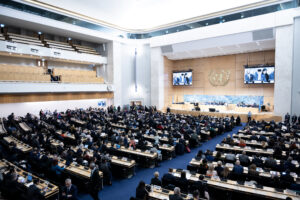
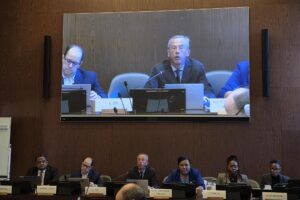
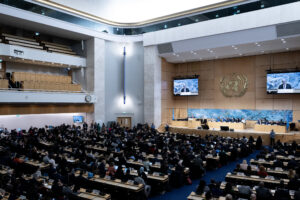
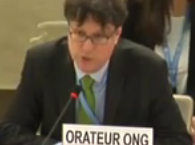
The ICJ spoke at the UN today on concerns about a resurgence of communal violence, and a failure to implement reconciliation and justice mechanisms, in Sri Lanka.
The statement, made during the adoption of the outcome of the Universal Periodic Review for Sri Lanka by the Human Rights Council, read as follows:
“The International Commission of Jurists (ICJ) welcomes the report of the Working Group on the Universal Periodic Review (UPR) on Sri Lanka.
Sri Lanka has stated that it maintains zero tolerance for hate speech and religious violence, and that the National Human Rights Action Plan 2017–2021 contains a firm commitment to enforce section 3(1) of the ICCPR Act. The ICJ further notes that a circular was issued requiring all police officers to take immediate action in this regard. Despite these commitments, recent events demonstrate renewed conflict owing to communal violence directed at the Muslim minority. A state of emergency was proclaimed on 6 March following inaction from law enforcement, and its inability to contain the violence, and emergency regulations were in operation until yesterday.
The ICJ urges the government to demonstrate through action, its willingness bring to account those who have incited communal violence, in line with the ICCPR Act and the commitments conveyed by His Excellency the Ambassador here today. Pervading impunity has emboldened perpetrators to incite violent hatred publicly. Justice must follow recent arrests, ensuring impartial and effective investigations and trials, in line with human rights.
The ICJ also notes the limited progress made on implementing HRC resolution 30/1. Of the reconciliation mechanisms promised, only the Office on Missing Persons is operational. There is little transparency with regards to the other proposed mechanisms (including the mechanism on accountability with involvement of international judges, prosecutors and investigators), or in relation to repeal and replacement of the Prevention of Terrorism Act. Any new counterterrorism law must comply with international human rights standards, and we welcome the Ambassador’s affirmation of the Government’s commitment to this today.
The ICJ urges Sri Lanka to accept and implement all relevant UPR recommendations without delay, before the opportunity for reform may be lost.”
Video of the ICJ statement is available here:
Video of the opening presentation by H.E. the Ambassador of Sri Lanka is available here:
Mar 19, 2018 | Advocacy, Non-legal submissions
The ICJ today delivered an oral statement at the UN calling on Pakistan to amend or repeal blasphemy laws, end military trials of civilians, and take effective measures against impunity.
The statement was delivered during the adoption of the Universal Period Review Outcome for Pakistan, at the UN Human Rights Council. It read as follows:
“The International Commission of Jurists (ICJ) regrets that Pakistan has not supported recommendations related to amending its blasphemy laws, ensuring its counter-terrorism measures are compatible with human rights, and combatting impunity for serious human rights violations.
Pakistan’s blasphemy laws are frequently misused; blatantly discriminate against minority religions and sects; infringe upon the rights to freedom of expression and religion; and give rise to serious fair trial concerns. The Government has failed to amend them in accordance with its international law obligations.
In January 2015, Pakistan empowered military courts to try people accused of terrorism-related offences. The ICJ has documented serious fair trials violations in the operation of military courts including: denial of the right to counsel of choice; failure to disclose the charges against the accused; denial of a public hearing; and a very high number of convictions based on ‘confessions’ without adequate safeguards against torture and other ill-treatment.
The Government has also failed to take steps to combat impunity for serious human rights violations such as extrajudicial killings, enforced disappearances, and torture and other ill-treatment, which are facilitated by laws such as the Actions (in aid of civil power) Regulation and other national security legislation.
Despite repeated commitments to do so, Pakistan has also not enacted legislation to recognize torture or enforced disappearance as a distinct, autonomous offence in its penal code.
The ICJ therefore urges the Government to reconsider, accept and implement UPR recommendations to:
- Ensure that military courts have no jurisdiction over civilians, including for terrorism-related offences;
- Repeal or amend all blasphemy laws, in line with international standards; and
- Ensure all perpetrators of serious human rights violations – including enforced disappearance and extrajudicial killings –are brought to justice.”
Video of the ICJ statement is available here:
Mar 8, 2018 | News
The Sri Lankan government must act swiftly and in line with human rights to prosecute those responsible for recent communal violence.
Particularly for attacks against the minority Muslim community in Kandy district, while avoiding the abusive practices of the past, said the ICJ today.
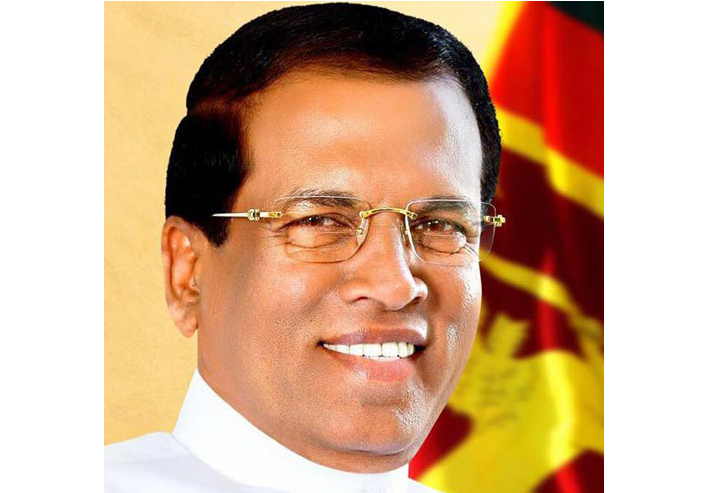
Sri Lanka’s President, Maithripala Sirisena, proclaimed an island-wide state of emergency on 6th March 2018, following a curfew imposed in several areas since Monday.
The action came following a spate of attacks against members of the Muslim community that was spreading in the Kandy district, following attacks in Ampara last week, in Gintota in 2016, and Aluthgama in 2014.
“The government must show that it will bring to account those who have incited communal violence, particularly notorious figures who have been emboldened by the pervading impunity to preach hatred openly and publicly. The arrest of key suspects yesterday is a start and convictions must follow,” said Frederick Rawski, ICJ’s Asia director.
“But the government must ensure that its investigation is impartial and effective and follows due process of the law,” he added.
The ICJ called upon the government of Sri Lanka to swiftly prosecute those responsible for inciting and carrying out the communal violence using existing legal provisions in the Penal Code and the ICCPR Act, the latter of which prohibits advocating “national, racial or religious hatred that constitutes incitement to discrimination, hostility or violence.”
The ICJ is concerned that the Emergency Regulations issued by the President through powers under the Public Security Ordinance, confer excessively broad powers on the army and the police to search, arrest and investigate.
“Given Sri Lanka’s experience of Emergency Regulations, the government should ensure that these regulations are time-bound and comply with Sri Lanka’s international human rights obligations, including under the International Covenant on Civil and Political Rights,” said Rawski.
The government has further restricted access to selected instant messaging applications and social media platforms “as an extraordinary but temporary response to limit the increasing spread of hate speech and violence through social media websites and phone messaging applications.”
“Blocking social media and other communication channels, even with the best of intentions, typically has the negative effect of restricting affected persons from seeking assistance, journalists from reporting around the situation and may actually undermine efforts to counter violence and hate speech. Any such measures should be narrowly targeted and limited in time,” said Rawski.
“A better approach would be for the Sri Lankan government to aggressively push back against these hateful narratives by demonstrating in actions as well as its rhetoric that Sri Lanka is a diverse country in which all of its citizens’ rights are respected and protected equally,” he added.
Background
Chapter XVIII of the Constitution and the Public Security Ordinance of Sri Lanka empowers the President to make emergency regulations in the interest of ‘public security and the preservation of public order or for the maintenance of supplies and services essential to the life of the community.’ Sri Lanka has a history of governance using emergency powers, which in the past has posed a challenge for democratic governance and human rights, providing law enforcement with wide powers, circumventing ordinary checks and balances.
The President, while justifying circumstances that led to his proclamation of a state of emergency, has stated that he “has given special instructions the Police and the tri-forces to take action in terms of these regulations, in a lawful manner in good faith while ensuring minimum disturbance to the life and well-being of people, in conformity with Fundamental Human Rights of people.”
Mar 5, 2018 | Advocacy, Non-legal submissions
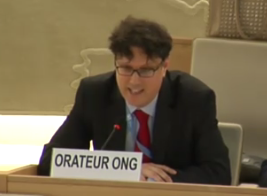
The ICJ today delivered an oral statement to the UN Human Rights Council, on transitional justice, prevention and impunity, highlighting the continuing problem of impunity in Nepal.
The statement, which was made during a clustered interactive dialogue with the Special Rapporteur on the promotion of truth, justice, reparation and guarantees of non-recurrence and the Special Adviser of the Secretary-General on the Prevention of Genocide, read as follows:
“The International Commission of Jurists (ICJ) remains deeply concerned by continuing impunity for gross human rights violations in many parts of the world, which undermines the potential for transitional justice to contribute to prevention as outlined in the Joint Study (A/HRC/37/65).
For example, in Nepal, more than ten years after the civil war, political expediency has trumped calls for justice and accountability. There has been near absolute impunity for those responsible for serious crimes under international law.
Transitional justice mechanisms – the Truth and Reconciliation Commission (TRC) and Commission on Investigation of Disappeared Persons (CoID) – have fallen short of international standards, both in their constitution and their operation, despite repeated orders by the Supreme Court of Nepal to enforce the standards.
The Commissions’ deeply flawed mandates, among other problems, allow them to recommend amnesties for gross human rights violations. In addition, their non-consultative, uncoordinated and opaque approach to their work has also created distrust with all major stakeholders, including conflict victims and members of civil society.
The Government continues to flout its obligation, both pursuant to the Supreme Court’s orders and under international law, to enact domestic legislation to criminalize serious crimes in accordance with international standards.
As highlighted by in the Joint study, turning a blind eye on past atrocities signals that some perpetrators are above the law, which further discredits State institutions and “breeds a (long-standing) culture of impunity in which atrocities may become ‘normalized’, rendering prevention significantly more difficult.” (para 43)
That, indeed, is the experience in Nepal: continuing impunity for gross human rights violations perpetrated during the conflict is one of the major obstacles to the creation of a stable and legitimate democratic government and lies at the heart of the rule of law crisis in the country. Ending impunity is essential to preventing further violations.”
Video of the statement is available here:
The delegation of Nepal exercised its right to reply later in the day. Its reply is here:
The ICJ oral statement complements a related written statement by the ICJ at the session.
Feb 23, 2018 | News
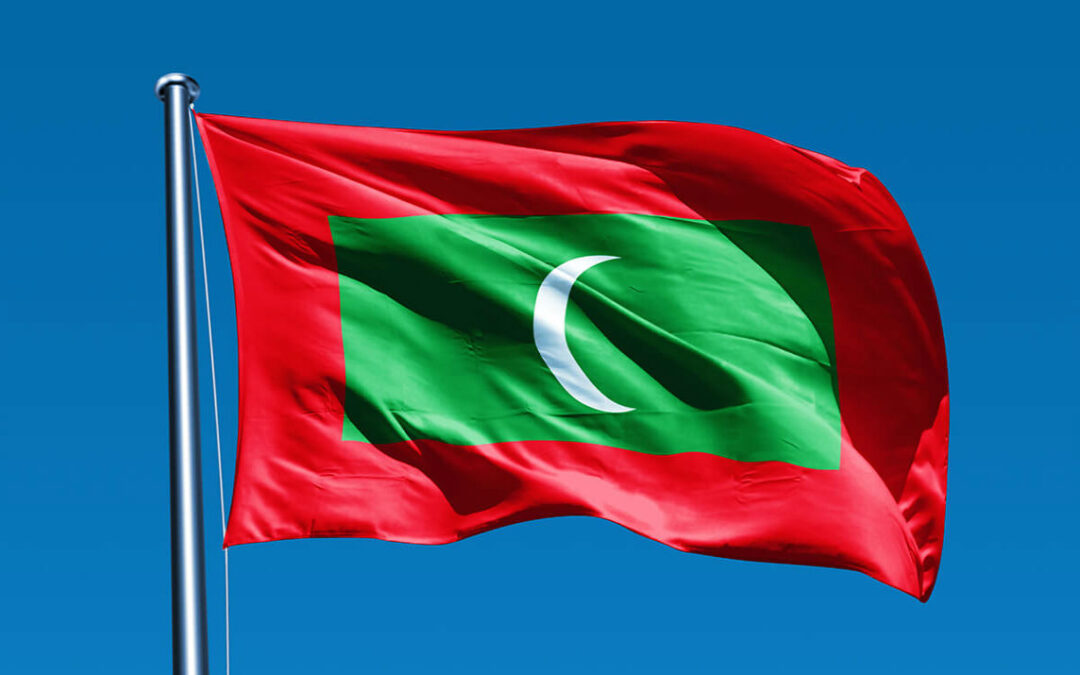
As the assault on the rule of law and human rights under the state of emergency in the Maldives continues, the ICJ expressed concerned about government reprisals taken against lawyers for performing their legitimate professional functions.
The ICJ urged the Maldivian authorities to stop obstructing the work of lawyers and respect the independence of the legal profession.
The ICJ called on the government to immediately lift the state of emergency, revoke the “suspension” of human rights protections, release judges of the Supreme Court and persons detained for political reasons, and ensure the independence of the judiciary.
On 22 February, the Department of Judicial Administration, the administrative arm of the Maldivian judiciary, suspended lawyer Hussain Shameem for an indefinite period of time, citing an ongoing investigation against him.
“No lawyer should be subject to persecution for carrying out their professional duties. Lawyers like Hussain Shameem are indispensable in ensuring human rights protection and upholding the rule of law in the Maldives, especially during a state of emergency,” said Frederick Rawski, ICJ’s Asia-Pacific Director.
The decision to suspend Shameem came only days after the Maldivian police launched an investigation against him for “obstruction of justice” and “obstruction of the administration of law and other government function”.
Hussain Shameem is representing members of the political opposition who are in detention, including former President Maumoon Abdul Gayoom and parliamentarian Faris Maumoon.
Before his suspension, Hussain Shameem had made public statements asserting that the declaration emergency declared by the Government on 5 February 2018 was unconstitutional.
He had also highlighted the poor conditions of detention of his clients.
The ICJ has learned that the police confiscated the mobile phones of another two lawyers, Mahfooz Saeed and Moosa Siraj.
Like Shameem, they were representing individuals arrested and detained during the state of emergency, including Justice Ali Hameed, who was part of the Supreme Court bench that recently issued a judgment directing the release of members of the opposition.
The police have also informed lawyers taking up cases during the state of emergency that they can only meet their clients for 30 minutes, which is an arbitrary and unlawful restriction on the fair trial rights of accused persons.
Under international standards, including the UN Basic Principles on the Role of Lawyers, governments must ensure that lawyers are able to perform all of their professional functions without intimidation, hindrance, harassment or improper interference.
International standards also provide that lawyers shall not suffer, or be threatened with, prosecution or administrative, economic or other sanctions for any action taken in accordance with recognized professional duties, standards and ethics.
“The government’s actions against these lawyers, who are just doing their job of protecting their clients’ rights, has a chilling effect on other lawyers in the country as it sends a message that any exercise of their professional responsibilities perceived as contrary to wishes of the governments will not be tolerated,” added Rawski.
Contact:
Frederick Rawski, ICJ Asia Pacific Regional Director, t: +66 64 478 1121, e: frederick.rawski(a)icj.org
Reema Omer, ICJ International Legal Adviser for Pakistan (London), t: +447889565691; e: reema.omer(a)icj.org
Additional information: the state of emergency
On 5 February, the Government of the Maldives had declared a 15-day state of emergency under Article 253 of the Constitution, suspending a range of human rights protections. The declaration of emergency followed a Supreme Court judgment on 1 February that ordered the release of at least nine members of opposition parties, who were in detention on a number of charges.
On 20 February, the Parliament extended the state of emergency for another thirty days, citing the ongoing constitutional crisis. The extension appears to have been taken in violation of Maldivian law and the Constitution as the number of parliamentarians required for such an extension was not present during the vote.
The constitutionally and internationally protected rights that have been suspended in part or in full during the state of emergency include, among others, the right to liberty; the right to freedom of assembly; and the right to privacy. Basic safeguards surrounding arrest, detention, search and seizures – including the criminal procedure code – have also been suspended.
The International Covenant on Civil and Political Rights (ICCPR), to which the Maldives is a State Party, allows for States only to derogate from full protection of only a limited number of human rights during declared “public emergency which threatens the life of the nation.” No rights can be entirely suspended. Measures of derogation may only be taken to the extent strictly necessary to meet a specific threat to the life of the nation.