Mar 21, 2016 | News
The Maldives must stop undermining the independence and integrity of the judiciary through arbitrary and politically motivated actions against judges, the ICJ said today.
“The ICJ visited the Maldives last month for the second time in a year, and we were dismayed to see that the Maldives government has continued to erode the rule of law and weaken the independence of the judiciary,” said Nikhil Narayan, ICJ’s Senior Legal Adviser for South Asia.
“The government must immediately stop targeting judges and other public officials with arbitrary criminal proceedings, threats, intimidation and harassment,” he added.
On 7 February, Magistrate Judge Ahmed Nihan was arrested, along with former Prosecutor General and former Criminal Court Judge Muhthaz Muhsin, in connection with an alleged ‘forged’ arrest warrant against President Yameen.
“The arrest of a judge for issuing a warrant, a function which is well within the ordinary powers and responsibilities of the judiciary, clearly violates basic principles of judicial independence,” Narayan further said. “The fact that the alleged warrant was against the President further suggests that Judge Nihan’s arrest was politically motivated.”
“Moreover, the severity of a charge of ‘terrorism’ for such an act, even if taken at face value, cannot reasonably be viewed as proportionate to the alleged offense,” he added.
On 16 March, more than a month after his arrest, Judge Nihan was charged under sections 4(a)(1)-(2) and 5(a)(2) of the Prevention of Terrorism Act, for attempting to unduly influence the state, attempting to create fear among the public, and attempting to forcefully disappear or hold a person hostage.
The Constitution of the Maldives does not provide immunity for the president from criminal accountability even while still in office.
The ICJ was also concerned to find during its visit that Maldivian authorities have continued to undermine the independence of the judiciary by using the threat of transfer or removal of judges as a tactic of political retribution, harassment and intimidation.
On 14 February, former Criminal Court Chief Judge Abdullah Mohamed was abruptly transferred from the Criminal Court to the Family Court following a sudden and late night meeting of the Judicial Service Commission (JSC), without being given an opportunity to appear on his own behalf during the meeting.
While the JSC has given no reasons for its decision, lawyers, human rights defenders and former government officials with whom the ICJ spoke suggested that the transfer had been taken in retaliation for Judge Abdullah’s failure to remand former Prosecutor General Muhsin following his arrest.
It was also suggested by those interviewed that a further motivation for the transfer was to ensure that Judge Abdullah could not indirectly influence the three-judge bench hearing the former Vice President’s criminal case in favor of the defendant. Judge Abdullah was reported to have close ties with both defendants.
In June 2015, Judge Azmiralda Zahir, one of only three female judges in the entire Maldivian judiciary and the only woman on the High Court, was arbitrarily and unexpectedly transferred by the Supreme Court from the Malé appellate bench to the southern regional bench, a transfer that amounts to a demotion, without formal notice or opportunity to challenge her transfer.
The Supreme Court has neither established clear criteria for its decision-making process in such matters nor informed Judge Zahir of the reasons for her transfer, of which she learned through media reports, despite repeated requests by her to both the Supreme Court as well as the JSC, the ICJ says.
“President Yameen’s government must quickly take genuine steps to restore the rule of law, strengthen the independence and integrity of the judiciary and restart the democratic transition process,” said Narayan.
Contact:
Nikhil Narayan, ICJ Senior Legal Adviser for South Asia, t: +977 9813187821 ; e: nikhil.narayan(a)icj.org
Read also:
Maldives: political crisis erodes rule of law and human rights
Maldives: arrest of Judge Ahmed Nihan further erodes judicial independence
Mar 16, 2016 | Advocacy, Non-legal submissions
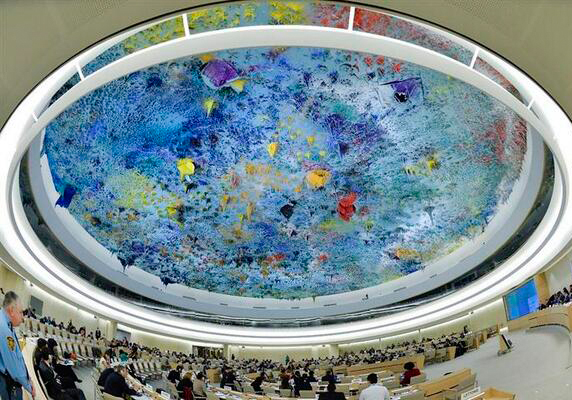
The ICJ today delivered an oral statement to the UN Human Rights Council, on the Universal Periodic Review of Nepal.
“The ICJ is concerned that the Government of Nepal has yet to implement many of the recommendations it accepted during the first UPR cycle, including several that reflect its international legal obligations regarding the new Constitution, investigation and prosecution of serious crimes, and establishment of credible transitional justice mechanisms.
The police continue to refuse to investigate conflict-era cases even when explicitly ordered by courts to do so. The transitional justice commissions do not enjoy the support of the victims and human right organizations, a year into their two-year mandate. Victims’ rights to truth, justice and reparation are not being respected, protected and fulfilled.
More than 59 persons, including 10 police personnel, were killed during recent protests, but as yet we are not aware of any impartial and effective investigation of the killings.
Many serious crimes under international law, including torture and enforced disappearance, still are not recognised as crimes under the Nepali penal code.
The ICJ therefore calls upon the Government to reconsider its position, and to accept and implement the UPR recommendations arising from this cycle, relevant to:
- Strengthening the constitutional protection of human rights;
- Amending the Truth and Reconciliation Commission Act, 2014, in line with international standards and Supreme Court orders;
- Establishing a credible transitional justice process;
- Preventing, investigating, and responding effectively to any use of excessive force by security forces;
- Ensuring prompt, independent and impartial investigations and, prosecution in cases of unlawful killings, whether the perpetrators are security forces or protesters;
- Amending the Penal Code to explicitly incorporate serious crimes under international law; and
- Ratifying relevant treaties, and accepting requests for visits of the Working Group on Enforced Disappearances, and Special Rapporteur on the right to truth.”
A more detailed written statement may be downloaded in PDF format here: HRC31-Advocacy-WrittenStatement-Nepal-2016

Mar 10, 2016 | Advocacy, Non-legal submissions
The ICJ today delivered an oral statement on counter-terrorism legislation in these countries, in an interactive dialogue at the UN Human Rights Council with the the Special Rapporteur on the promotion and protection of human rights and fundamental freedoms while countering terrorism.
The text of the statement follows:
COUNTER-TERRORISM LEGISLATION IN EGYPT, TUNISIA AND PAKISTAN
10 March 2016
Mr President,
The International Commission of Jurists (ICJ) welcomes the attention given by Special Rapporteur Ben Emmerson, to defective counter-terrorism legislation that facilitates violations of human rights, as reflected for example by communications on Egypt, Tunisia and Pakistan in the Communications Report of Special Procedures (A/HRC/31/79).
Numerous counter terrorism laws promulgated or applied in these and other countries include overly broad or imprecise definitions of terrorism-related offences. These extend the laws’ reach beyond acts of a truly terrorist character. Such laws can be and are abused or misapplied to criminalize the legitimate and peaceful exercise of fundamental rights and freedoms.
Further, these laws provide sweeping immunities that contribute to pervasive impunity for unlawful killings by security forces.
These laws also facilitate violations of the right to liberty and fair trial rights and insufficiently safeguard against abuses in detention. In Tunisia a person can be held in police custody without being brought before a judge for up to 15 days. In Pakistan, suspects can be held in preventive detention without charge, and without being brought before a judge, for up to 90 days.
Egypt and Pakistan continue to use military courts to conduct unfair trials of civilians in terrorism cases, contrary to international standards. At least eight civilians sentenced to death in secretive trials by military courts in Pakistan have been hanged since January 2015. “Expedited” procedures in terrorism circuit courts in the Egyptian civilian system also give rise to fair trial concerns.
The ICJ invites the Special Rapporteur to comment on measures or mechanisms that states, inter-governmental organisations, and civil society can take to help ensure that states such as Tunisia, Egypt and Pakistan repeal or amend counter-terrorism legislation to bring it into line with their international human rights obligations and commitments.
Feb 9, 2016 | News
The ICJ today condemned the arrest of Judge Ahmed Nihan and called it a further attack on the independence and integrity of the country’s judiciary.
“President Abdulla Yameen’s Government has dealt another blow to the independence of the judiciary and the rule of law,” said Sam Zarifi, ICJ’s Asia Director.
“The arrest of Judge Ahmed Nihan is another step down in the country’s downward spiral away from democracy and stability, and is squarely at odds with the Maldives’ international obligations,” he added.
Maldivian officials confirmed in a statement that Ahmed Nihan, a magistrate’s court judge, and Muhthaz Muhsin, former Prosecutor General, were arrested on Sunday night on charges of forging a warrant for the arrest of President Abdulla Yameen.
Muhthaz Muhsin was released soon after, but Judge Ahmed Nihan was placed in judicial custody for one week.
“Judge Ahmed Nihan’s arbitrary and seemingly politically motivated arrest is yet another example of executive highhandedness and the corrosion of separation of powers in the Maldives,” said Zarifi.
“Undue interference with the Human Rights Commission, the arbitrary dismissal of the Auditor General, and the unlawful removal of two Supreme Court justices are just a few examples,” he added.
According to the Maldivian media, the arrest warrant, allegedly issued by Judge Ahmed Nihan, related to an on-going investigation against President Abdulla Yameen for embezzlement of state funds.
President Yameen’s spokesperson said in an interview the warrant was “fraudulent” because it “did not originate from any official authority.”
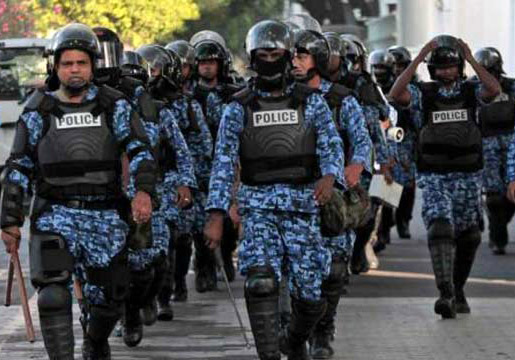
The Maldivian police (photo) claim the arrest warrant was issued using “falsified information”.
The ICJ calls on the authorities to immediately release Judge Ahmed Nihan and allow him to continue his judicial duties.
The ICJ also reiterates its previous calls on the Maldivian Government to implement recommendations on human rights and the rule of law, including the independence of the judiciary, received as part of the UN Universal Periodic Review process.
Contact:
Sam Zarifi, ICJ Asia Pacific Regional Director (Bangkok), t: +66 807819002; e: sam.zarifi(a)icj.org
Additional information:
In a fact-finding report released in August last year, the ICJ noted with concern the serious erosion of the independence, impartiality and integrity of the judiciary, which resulted in the deterioration in the rule of law in the Maldives and the stalling of the country’s transition toward a more representative government.
Article 14 of the International Covenant on Civil and Political Rights (ICCPR), which Maldives acceded to in 2006, safeguards the independence and impartiality of the judiciary.
International standards on judicial independence, including the UN Basic Principles on the Independence of the Judiciary, provide that judges shall be free from any “inappropriate or unwarranted interference with the judicial process”.
The fact that executive or legislative actors may disagree with a judge’s decision or interpretation of the law cannot be a valid ground for removal or punishment of the judge.
The UN Basic Principles on the Independence of the Judiciary further stipulate that judges shall be subject to suspension or removal only through proceedings that guarantee the right to a fair hearing (Principle 17); and then only for reasons of incapacity or behaviour that renders them unfit to discharge their duties (Principle 18); that all disciplinary, suspension or removal proceedings shall be determined in accordance with established standards of judicial conduct (Principle 19), and decisions in disciplinary, suspension or removal proceedings should be subject to an independent review (Principle 20). The Basic Principles elaborate on legal obligations under article 14 of the International Covenant and Civil Rights (ICCPR).
The Commonwealth Latimer House Principles on the Three Branches of Government 2003 contain similar provisions.
Article 154 of the Maldivian Constitution states that a judge may be removed from office only if the Judicial Service Commission finds that the person is grossly incompetent or guilty of gross misconduct.

Feb 3, 2016 | News
Yesterday’s decision of the Indian Supreme Court to refer to a larger bench of the same Court the petition challenging Section 377 of the Indian Penal Code (IPC), offers the opportunity to undo the appalling 2013 judgment of a two-judge bench of the SC in the Suresh Koushal case, says the ICJ.
“This order of the Supreme Court is a crucial opportunity to undo the injustice of the Suresh Koushal decision,” said Sam Zarifi, ICJ’s Asia Director. “It is an important test of the Supreme Court’s commitment to equality and ending discrimination against people on the basis of sexual orientation or gender identity.”
After the December 2013 Suresh Koushal decision – when the Supreme Court upheld the constitutionality of section 377 and reversed the Delhi High Court’s courageous and much celebrated decision – the petitioners filed a review petition, which was dismissed.
The petitioners then filed “curative petitions” in 2014, stating that the Supreme Court’s judgment of December 2013 violated principles of natural justice for several reasons. A “curative petition” allows the Supreme Court to re-assess its previous decisions on limited grounds, even after appeals and reviews have concluded.
Yesterday the Supreme Court referred the curative petition, and the major constitutional questions it raised, to a five-judge bench of the same Court, thus acknowledging doubts about the correctness of its 2013 ruling. A five-judge bench will now be set up to hear this challenge.
“The referral highlights the Supreme Court’s recognition of the need for a judicial response to the ongoing discrimination against people on the basis of sexual orientation and gender identity,” Zarifi said.
“After 16 years within the court process, this issue clearly could not be resolved with the highly problematic Suresh Koushal decision, which ignored the reality of consensual same sex behavior in India and the fact that Section 377 criminalizes people for who they are and leads directly to serious human rights violations.”
By criminalizing consensual same-sex adult sexual conduct, Section 377 is inconsistent with India’s obligations under international human rights law, including in respect of the rights to sexual autonomy, equality, non-discrimination, privacy, dignity, free expression, and life.
Many of these rights are guaranteed in India’s Constitution.
India is also a party to several international instruments, which require that these rights be respected, protected and fulfilled.
The Yogyakarta Principles – which apply international human rights law to issues of sexual orientation and gender identity – clarify that the rights to equality, non-discrimination and privacy require states to “repeal all laws that criminalize consensual sexual activity among persons of the same sex who are over the age of consent.”
The Supreme Court referred to these principles in the 2014 National Legal Services Authority v Union of India (NALSA) case where it also acknowledged that Section 377 was “used as an instrument of harassment and physical abuse against Hijras and transgender persons”.
“Yesterday’s decision offers hope that the Supreme Court intends to reaffirm the principle that people in India cannot be subjected to discrimination, harassment and violence, simply on the basis of their sexual orientation or gender identity,” Zarifi said.
Background
Section 377 makes it an offence to “voluntarily ha[ve] carnal intercourse against the order of nature with any man, woman or animal” and has been used to persecute people for their real or purported engagement in consensual same-sex sexual conduct. The penalty can extend to life imprisonment.
Several reports document how Section 377 has been a tool for discrimination, blackmail, extortion, and violence by state and non-state actors against the LGBTI community.
It has adversely affected HIV/AIDS prevention efforts, and has also reinforced harmful social stereotypes and taboos against sexual minorities.
The petitioners in the original challenge against section 377 have waged this legal battle for over a decade. The constitutional challenge against Section 377 was filed in 2001.
In 2009, in Naz Foundation v. Government of NCT of Delhi and Others, the Delhi High Court held that Section 377 denied “a person’s dignity and criminalises his or her core identity solely on account of his or her sexuality”.
It went on to find that this criminalization of identity denied “a gay person a right to full personhood which is implicit” in the notion of life under Article 21 of the Indian Constitution, and also violated the constitutional right to equality and non-discrimination. The High Court held that Section 377 was unconstitutional insofar as it criminalized consensual same-sex sexual conduct.
However, its judgment was appealed to the Supreme Court.
On appeal, in 2013 the Supreme Court reversed the decision of the Delhi High Court, holding the section to be constitutional.
The Supreme Court also affirmed that legislature would “be free to consider the desirability and propriety of deleting Section 377 IPC from the statute book or amend the same as per the suggestion made by the Attorney General”.