Mar 15, 2013 | Advocacy, Non-legal submissions
The ICJ today called on the Government of Sri Lanka to reconsider its rejection of key UPR recommendations on accountability and judicial independence and integrity.
In an Interactive Dialogue to consider the adoption of the outcome document on the Universal Periodic Review of Sri Lanka, the ICJ pointed to the urgent need for the Government to fully implement its legal obligations and commitment to initiate credible and independent actions to ensure justice, equity, accountability and reconciliation. Also pointing to the impeachment of the Chief Justice of Sri Lanka and attacks against the judiciary, the ICJ urged the Government to accept recommendations to strengthen and ensure judicial independence and the integrity of the judiciary.
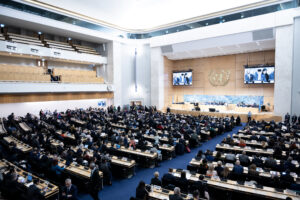
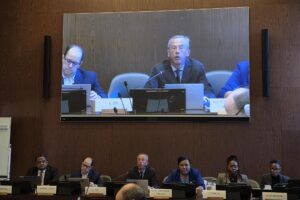
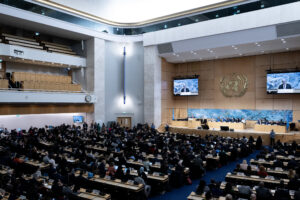
The statement was made during the Human Rights Council’s 22nd regular session (25 February to 22 March 2013) under Item 6 (Universal Periodic Review), following the review of Sri Lanka in by the Council’s Working Group on the UPR.
SriLanka-HRC22-Item6-UPRSriLanka-NonLegalSubmission-2013 (download full statement in PDF)
SriLanka-UPR-StakeholderSubmission-LegalSubmission-2012 (go to webpage on the ICJ’s submission on the UPR of Sri Lanka)

Mar 14, 2013 | Advocacy, Non-legal submissions
The ICJ today called on the Government of Pakistan to reconsider its rejection of UPR recommendations on the death penalty and enforced disappearances.
Expressing deep regret over recent events in Pakistan reversing a de facto moratorium on the imposition of the death penalty in the country, the ICJ called on the Government to accept UPR recommendations to adopt an official moratorium with a view to abolishing the death penalty in law. The ICJ also called on Pakistan to accede to the Second Optional Protocol to the ICCPR and to ratify the International Convention for the Protection of All Persons from Enforced Disappearances.
The statement was made during an Interactive Dialogue on the adoption of the UPR of Pakistan (Item 6 of the Council’s agenda) during the 22nd regular session of the Human Rights Council (25 February to 22 March 2013).
Pakistan-HRC22-Item6-NonLegalSubmission-2013 (download full statement in PDF)
Pakistan-UPR-StakeholderSubmission-LegalSubmission-2012 (go to webpage on the ICJ’s submission on the UPR of Pakistan)
Mar 14, 2013 | News
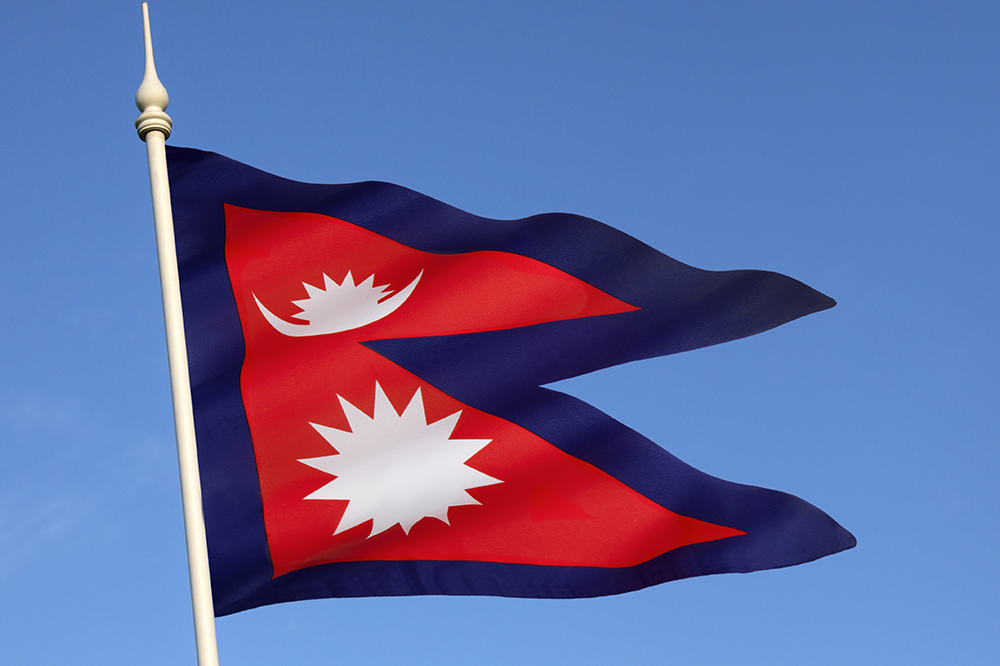
 Chief Justice Khil Raj Regmi should not keep his position on the Supreme Court after he was appointed today as the country’s interim prime minister so as to preserve the independence of the judiciary and the rule of law.
“The Supreme Court under the leadership of Chief Justice Khil Raj Regmi, has demonstrated a strong commitment to upholding the rule of law and protecting human rights in Nepal,” said Ben Schonveld, ICJ’s South Asia Director in Kathmandu. “To preserve the Nepali judiciary’s hard-won independence, the Chief Justice should step down from his post as soon as he assumes his position at the top of the Executive Branch.”
The Chief Justice Khil Raj Regmi was appointed as Chairperson of the Council of Ministers – effectively the country’s Prime Minister – today.
The country’s four key political parties agreed on an arrangement whereby Chief Justice Khil Raj Regmi will refrain from participating in his duties as Chief Justice of the Supreme Court while exercising powers of the Prime Minister conferred by the Interim Constitution, in brokering an election of the Constituent Assembly.
After the election is held, the agreement provides that the Chief Justice will resume his power and regular duties as Chief Justice.
In the interim, the senior-most judge of the Supreme Court will act as Chief Justice.
“Appointing the serving Chief Justice to act as Chairperson of the Council of Ministers throws the country into uncharted constitutional waters,” Schonveld added. “This agreement obliterates the line between the executive and the judiciary.”
A petition challenging the constitutional validity of the Agreement is currently before the Supreme Court.
The interim Constitution of Nepal guarantees the independence of the judiciary and the separation of powers.
Article 106 bans sitting and retired judges from assuming any appointment in government service apart from a role in the national human rights commission.
To enable the Chief Justice’s appointment as Prime Minister, the President under the recommendation of the Council of the Ministers amended several provisions of the Interim Constitution, including Article 106.
These amendments were made in contravention of the requirements of the Interim Constitution, which calls for a mandatory two-thirds majority of Parliament.
Under international law and standards, including the United Basic Principles on the Independence of the Judiciary, States are required to ensure an independent judiciary at all times.
Under the Bangalore Principles on Judicial Conduct, judges must be free, and be seen to be free, from inappropriate connections with the executive and legislative branches of government.
The Beijing Statement of Principles on the Independence of the Judiciary stresses the importance of the independence of the judiciary in a free society observing the rule of law.
Judges must uphold the integrity and independence of the Judiciary by avoiding impropriety and the appearance of impropriety in all of their activities.
CONTACTS:
Ben Schonveld, ICJ South Asia Director, (Kathmandu); t: 977 9804596661; email: ben.schonveld(at)icj.org
Govinda Bandi Sharma, ICJ Senior Legal Advisor, Nepal (Kathmandu), t: +977 9851061167; email: govinda.sharma(at)icj.org
Sheila Varadan, ICJ Legal Advisor, South Asia Programme (Bangkok), t: +66 857200723; email: Sheila.varadan(at)icj.org
Photo by Bikash Dware

Feb 28, 2013 | News
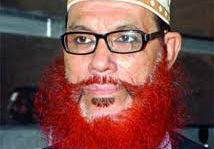 The death sentence handed down by the International Crimes Tribunal today against Delwar Hossain Sayeedi (photo) violates international standards of due process and fair trial, and, if carried out, would violate his right to life, says the ICJ.
“The ICJ wholly condemns the atrocities committed in Bangladesh’s war of liberation in 1971, notably the widespread and systematic use of rape as a form of torture and the unlawful killings. It is paramount that those responsible should be held accountable,” said Sam Zarifi, ICJ Asia Pacific Regional Director. “But even perpetrators of atrocities have rights. They should be brought to justice, not subjected to vengeance.”
Delwar Hossain Sayeedi, vice-president of the Jamaat-e-Islami party, was indicted on 3 October 2011 on 20 charges including genocide and crimes against humanity. He was arrested and brought before the War Crimes Tribunal for the first time on 2 November 2010. He was accused of working with the Al-Badr group during the independence struggle in the early 1970s.
The International Commission of Jurists opposes the death penalty as a violation of the right to life and a form of cruel and inhuman punishment. The United Nations General Assembly has called on all States to establish a moratorium on the death penalty with a view to universal abolition.
Today, crowds gathered outside the courthouse as the verdict was being read, demanding Delwar Hossain Sayeedi be sentenced to death for his role in the atrocities committed in the 1971 war of liberation. Earlier this month, widespread protests erupted across Bangladesh after the Tribunal imposed a life sentence on Abdul Qadar Mollah instead of the death penalty.
“The enormous demonstrations and the unfortunate violence that have accompanied each decision of the ICT demonstrate the passions still enflamed by the crimes of 1971. But it is in everyone’s interest to ensure that the rule of law and the path to justice are not subject to immediate political pressure,” Zarifi added. “The Government’s obligation to bring those responsible for the atrocities committed in 1971 to justice must not outweigh the presumption of innocence and the duty to ensure the security of all persons.”
The ICJ says that the International Crimes Tribunal does not adhere to international standards of a fair trial and due process.
According to the ICJ, there are serious procedure flaws at all stages: pre-trial release has been routinely and arbitrarily denied; witnesses have been abducted and intimidated; there have been credible allegations of collusion between the Government, prosecutors and judges.
On 14 February 2013, a draft amendment was tabled in Parliament, retroactively changing the International Criminal (Tribunals) Act 1973 to enable prosecutors to appeal a life sentence and seek the death penalty.
This amendment came after protests for a death sentence in the 5 February 2013 verdict against Abul Qadar Mollah.
As a State party to the International Covenant on Civil and Political Rights, Bangladesh is obligated to guarantee due process and fair trial rights to all suspects, even those accused of war crimes.
Such obligations include the right to an public hearing before a competent, independent and impartial tribunal; the right to be tried in one’s presence; the right to counsel and the right to a full defence; and the right not to be punished again for an offence for which there has already been a final conviction in accordance with the law.
“Failing to abide by minimum standards of due process will cast doubt on the Tribunal’s findings and undermine victims’ hard-fought battle for justice,” Zarifi said. “The Bangladesh Tribunal is one of very few transitional justice mechanisms that have imposed the death penalty.”
This verdict is the third issued by the tribunal. Earlier this month, Abdul Qader Mollah, the assistant secretary-general of the Jamaat-e-Islami was found guilty and sentenced to life imprisonment for committing crimes against humanity during the 1971 liberation war.
On 21 January, Abul Kalam Azad, a former leading member of the Jamaat-e-Islami party, was tried and convicted in absentia and sentenced to death for crimes committed during Bangladesh’s war of liberation in 1971. He was convicted on six counts of a crime against humanity and one count of genocide.
The government established the Bangladesh International Crimes Tribunal in 2010, after amending the International Crimes (Tribunals) Act 1973. The International Crimes Tribunal has jurisdiction to try crimes against humanity, crimes against peace, genocide, violations of the Geneva conventions and any other crimes under international law.
The ICJ supports the right of victims to seek truth and justice for the atrocities committed in the 1971 Liberation War.
However, any such process must adhere to international human rights standards, including full guarantees for a fair trial.
CONTACT:
Sam Zarifi, ICJ Asia-Pacific Regional Director, t: +66 26198477; email: sam.zarifi(at)icj.org
Sheila Varadan, ICJ Legal Advisor, South Asia Programme, t: +66 857200723; email: sheila.varadan(at)icj.org
Jan 30, 2013 | News
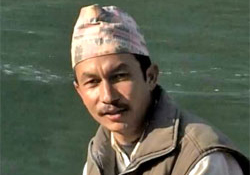 The Nepali government must ensure that the case of the 2004 killing of journalist Dekendra Thapa (photo) can proceed without further political interference, the ICJ said today.
“Political interference into an ongoing criminal investigation constitutes a fundamental attack on the rule of law in Nepal,” said Frederick Rawski, ICJ Nepal Country Representative. “The Government must ensure that there are no further attempts to subvert the course of justice.”
On 11 January, Nepal’s Attorney General, Mukti Pradhan, sent a written instruction to the local police and prosecutor not to move forward with the investigation and prosecution.
In response to a petition challenging the instruction, on 16 January, the Supreme Court ordered both Prime Minister Baburam Bhattarai and the Attorney General not to intervene in the ongoing investigation.
The Home Ministry subsequently ordered the transfer of officials involved in the investigation, and the Prime Minister himself has made public statements calling for the suspects to be released pending the much-delayed formation of a promised truth commission.
“It is now the obligation of the justice system to ensure due process and the right to a fair trial,” Rawski added. “This is an opportunity for Nepal to illustrate the political will exists to address past human rights violations, and that the country’s judiciary can provide justice for the victims while protecting the rights of the defendants.”
Dekendra Thapa was allegedly tortured and buried alive by Maoist cadres in 2004 during the country’s decade-long civil war, which ended in 2006.
The case was finally submitted to a District Court yesterday (January 28, 2013) by the District Attorney of Dailekh in Mid-Western Nepal. The Dailekh District Attorney has charged nine people alleged to be involved.
Five of the suspects have been arrested and produced before the district court.
“Dekendra Thapa was one of the thousands of civilians whose deaths have gone without proper explanation or justice,” said Rawski. “Thanks to the courageous decision of the local authorities to proceed with this case, there is now an opportunity for the Nepali justice system to begin answering the demands for justice.”
Contact:
In Kathmandu, Frederick Rawski, ICJ Nepal Country Representative : t +977-984-959-7681
In Bangkok, Sam Zarifi, ICJ’s Asia Director: t +66-807-819-002
Photo credit: Dhurba Basnet