Mar 23, 2018 | Advocacy, Non-legal submissions
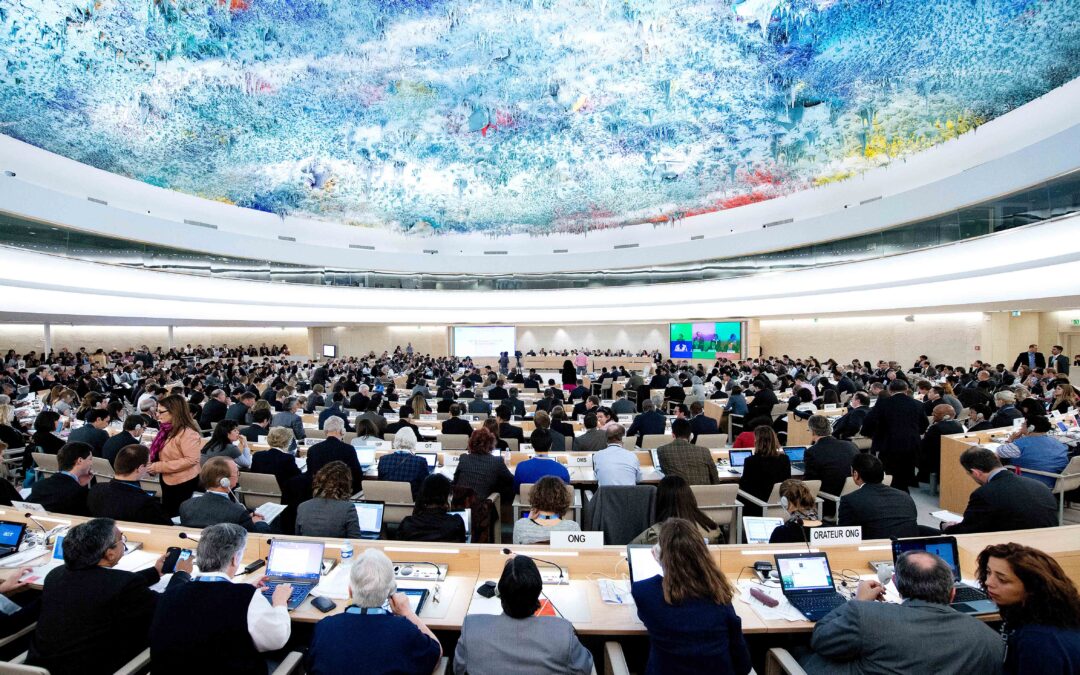
The ICJ today joined other NGOs in an end-of-session statement, reflecting on the 37th ordinary session of the UN Human Rights Council.
The statement was delivered by the International Service for Human Rights (ISHR) on behalf of:
- The East and Horn of Africa Human Rights Defenders Project (DefendDefenders)
- The Global Initiative for Economic, Social & Cultural Rights
- CIVICUS
- International Commission of Jurists
- International Federation for Human Rights Leagues
- Conectas Direitos Humanos
- Human Rights House Foundation
- Amnesty International
- International Lesbian and Gay Association
- Human Rights Watch
- Asian Forum for Human Rights and Development (FORUM-ASIA).
The statement read as follows (text in italics was not read aloud for lack of time):
“Our organisations welcome the adoption of the resolution on the promotion and protection of human rights and the implementation of the 2030 Agenda for Sustainable Development, particularly in reaffirming that all approaches to development must comply with the State’s international human rights obligations.
We agree that “cooperation and dialogue” are important for the promotion and protection of human rights, and that States should fully cooperate with the Council and its mechanisms, and ensure that all stakeholders are able to cooperate and engage with them without fear of reprisals.
However, we must now be vigilant to ensure that the resolution on Mutually Beneficial Cooperation, lacking in balance, does not undermine other important parts of the Council’s mandate: to address human rights violations and respond promptly to human rights emergencies in specific countries.
The Council has failed to take meaningful action to address the alarming situation on the ground in Cambodia. We welcome and echo the joint statement on Cambodia by over 40 states calling for further action if the situation does not improve in the lead up to the elections and for a briefing by the High Commissioner before the next Council session. We are concerned by Cambodia’s attempt to shut down criticism under item 10 debate on the worsening human rights situation in the country, as they are doing domestically.
We are disappointed by the weak outcome on Libya. Given the gravity of the human rights situation on the ground and the lack of accountability for crimes under international law, the Council cannot justify the lack of a dedicated monitoring and reporting mechanism.
We welcome the co-sponsorship of the Myanmar resolution by groups of States from all regions, making a joint commitment to address the continuing human rights violations and crimes against humanity in the country and support for the Special Rapporteur and Fact-Finding Mission to fulfil its mandate to establish truth and ensure accountability for perpetrators.
We also welcome the renewal of the mandate of the Commission on Human Rights in South Sudan allowing it to continue its vital investigations and identification of perpetrators. These developments acknowledge the importance of accountability for serious human rights violations and crimes under international law, which cannot be understated.
We welcome the adoption of the resolution on drugs and human rights as the OHCHR report will provide human rights indicators related to the drug issue that would help in future policies.
We welcome the resolution on Eastern Ghouta adopted after an urgent debate, demonstrating how this Council can respond in an agile manner to crises.
Having long supported the resolution on “protection of human rights while countering terrorism”, we appreciate the efforts that led to the end of the separate and deeply flawed initiative on “effects of terrorism on the enjoyment of human rights“. Future versions of the resolution must address the relevant issues exclusively and comprehensively from the perspective of the effective protection of human rights.
We welcome the Dutch-led joint statement on strengthening the Council, emphasising the importance of substantive civil society participation in any initiative or process and that the Council must be accessible, effective and protective for human rights defenders and rights holders on the ground.
Finally, we call on the Bureau co-facilitators on improving the efficiency and strengthening the Council to closely engage with all Members and Observers of the Council, human rights defenders and civil society organisations not based in Geneva.”
Mar 5, 2018 | News
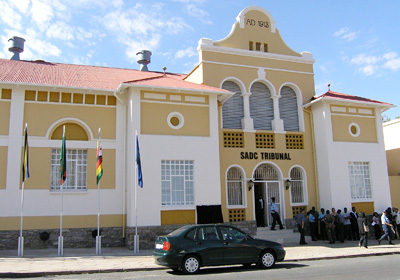
The ICJ has welcomed last Thursday’s judgment of the Pretoria High Court which declares the South Africa’s involvement in shutting down the South African Development Community Tribunal “unlawful, irrational, arbitrary and therefore unconstitutional”.
ICJ’s Africa Director, Arnold Tsunga described the judgment as a “triumph for the rule of law in Southern Africa and an opportunity for governments in the SADC region to commit to immediate restoration of the Tribunal”.
The SADC Tribunal has been inactive since 2012, when SADC Member States suspended its operations and removed individual access to the Tribunal, including in cases involving human rights violations.
The action was widely seen as a backlash for several judgments against Zimbabwe in relation to land programmes implemented during the administration of former President Robert Mugabe.
In a unanimous judgment delivered by High Court Judge President D Mlambo, the Court held that “any act which detracted from the SADC Tribunal’s exercise of its human rights jurisdiction at the instance of individuals, was inconsistent with the SADC Treaty itself and violated the rule of law”.
Describing former President Zuma’s decision to sign the replacement 2014 Protocol of the SADC Tribunal as one such act, the Court held that the rule of law in South Africa’s constitutional dispensation required prior Parliamentary approval for the Executive to lawfully participate in a decision to curb the powers of the Tribunal or withdraw South Africa from its obligations under the SADC Treaty and the Protocol establishing the Tribunal.
“A restoration of the SADC Tribunal to its original character will facilitate individual access to a much needed accountability mechanism and greatly enhance regional confidence in human rights and the rule of law”, said Arnold Tsunga.
In line with articles 14 and 15 of its 2000 Protocol, the SADC Tribunal had exercised supervisory jurisdiction over the human rights commitments of SADC Member State under the SADC Treaty.
The ICJ called on the governments of Southern Africa’s other 14 SADC Member States to take immediate and concrete steps to restore the SADC Tribunal and recommit to rebuilding, staffing and funding it to ensure its effectiveness.
Contact
Arnold Tsunga, ICJ Africa Director; t: +27716405926, or +254 746 608 859 ; e: arnold.tsunga(a)icj.org
Solomon Ebobrah, Senior Legal Adviser, ICJ Africa Regional Programme, t: +234 8034927549; e: solomon.ebobrah(a)icj.org
Feb 23, 2017 | Advocacy, Open letters
The ICJ joins South Sudanese, regional and other international non-governmental organizations in a joint letter urging the Human Rights Council to renew and strengthen the mandate and capacity of the UN Commission on Human Rights in South Sudan.
Action is needed to address the continued lack of accountability for severe, widespread and on-going crimes under international law and human rights violations and abuses, many of which amount to war crimes and crimes against humanity, during the upcoming 34th session of the UN Human Rights Council (UN HRC).
South Sudan-letter HRC34-Advocacy-Open letters-2017-ENG (full text in PDF)
Dec 14, 2016 | Advocacy, Non-legal submissions
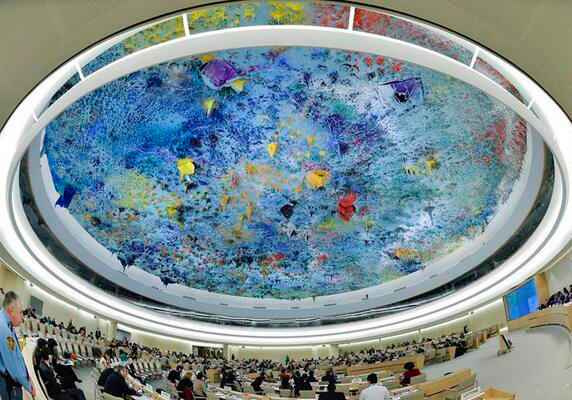
The ICJ today joined other NGOs in calling on the UN Human Rights Council to take bold and decisive action to address the grave situation in South Sudan.
The statement, made during a Special Session of the Human Rights Council, convened on an urgent basis to discuss the situation in South Sudan, underscores the negative consequences of continuing impunity and lack of accountability, and calls among other things for the Human Rights Council resolution to be adopted that would:
· Support a strengthened mandate and capacity of the UN Commission on Human Rights in South Sudan to investigate serious violations of human rights and humanitarian law and identify alleged perpetrators, with a special focus on sexual and gender based crimes.
· Request that the report of the UN Commission is transmitted to the UN Security Council for consideration and further action.
· Urge that all states encourage further concrete action to prevent a further escalation of violence and conflict, and to deter and address these on-going violations of international human rights and humanitarian law at the UN Security Council, including sanctions and the imposition of a comprehensive arms embargo.
· Urge the African Union to take immediate steps to establish the hybrid court for South Sudan provided for in the 2015 peace agreement.
The Human Rights Council ultimately adopted, without a vote (i.e. by consensus), a resolution that includes many of these elements (final text not yet available).
The full statement can be downloaded in PDF format here: un-jointstatementsouthsudan-advocacy-2016
It was delivered by Human Rights Watch on behalf of:
- Amnesty International
- Association for Human Rights in Ethiopia
- Defend Defenders
- Human Rights Watch
- Humanity United
- International Commission of Jurists
- International Refugee Rights Initiative
- International Service for Human Rights
- National Coalition of Human Rights Defenders Uganda
- Pan-African Human Rights Defenders Network
- South Sudan Human Rights Defenders Network
Feb 26, 2016 | Advocacy, Open letters
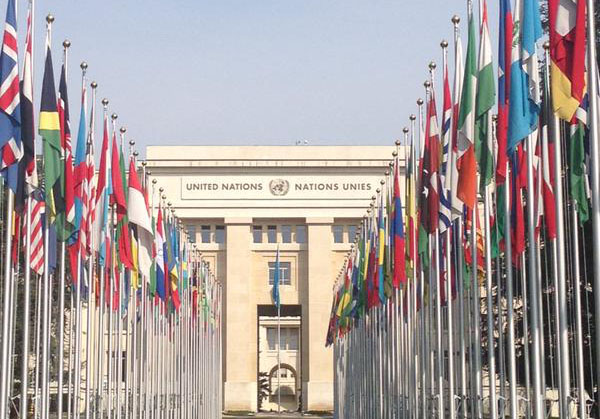
The open letter, which includes additional recommendations for a resolution on South Sudan to be adopted at the 31st ordinary session of the Human Rights Council (29 Feb – 24 Mar) is available here: Open Letter South Sudan