Dec 15, 2023 | Advocacy, News
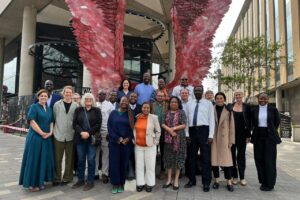
On the 11-year anniversary of the enforced disappearance of Lao civil society leader Sombath Somphone, we, the undersigned civil society organizations and individuals, strongly condemn the Lao government’s continued failure to provide necessary information as to his fate and whereabouts and reiterate our calls to the authorities to deliver truth, justice and reparations to his family.
International concerns over Sombath’s case, expressed by international civil society, United Nations (UN) human rights experts, and UN member states on last year’s anniversary of Sombath’s enforced disappearance, have been ignored by the Lao government.
On 25 September 2023, in a submission to the UN Human Rights Committee as part of its follow-up review of Laos under the International Covenant on Civil and Political Rights, the Lao government repeated previous misleading statements and miserably failed to provide any additional information on the steps it said it had taken to find Sombath. The government claimed it “never stopped trying to find the truth” about Sombath’s fate “in order to bring the offender(s) to justice.” In reality, the Lao authorities have continued to disregard Sombath’s wife, Shui Meng Ng, and have not provided her with any updates on her husband’s case since 2017. The government then made the extraordinary assertion that its Task Force’s investigation had been “carried out on the basis of transparency, impartiality and accountability, including the use of modern investigative techniques consistent with international standards by the capable inquiry officials.” It concluded that the case of Sombath needed “more time for investigation” and added that the Task Force was “still active in the investigation” and had “not yet closed the case.”
These government statements are unequivocally false in suggesting any degree of transparency. Existing evidence is clear that the Lao government has been engaged in a continuous cover-up of the facts of Sombath’s case since he was forcibly disappeared in 2012, including providing misleading information about its actions to his family, the Lao public, and the international community, as stated above.
We deplore the unmistakable pattern of inaction, negligence, and obfuscation that various Lao authorities have repeatedly engaged in for more than a decade and we continue to resolutely stand in solidarity with Sombath’s family and all other victims of enforced disappearances in Laos.
We reiterate our calls on the Lao authorities to take real and effective measures to establish the fate or whereabouts of Sombath and all other victims of enforced disappearances in the country, identify the perpetrators of such serious crimes, and provide victims with an effective remedy and full reparations. We also urge the government to immediately ratify without reservations the International Convention for the Protection of all Persons from Enforced Disappearance, which it signed in 2008, and to fully implement it into national law, policies, and practices.
As upcoming chair for the Association of Southeast Asian Nations (ASEAN), Laos will be placed in a strategic position to lead the regional efforts to strengthen, promote, and protect human rights. However, its continued failure to act on Sombath’s enforced disappearance sends a message of inadequacy to head the regional bloc and to fulfill ASEAN’s purpose under Article 1(7) of the ASEAN Charter, which is to strengthen democracy, enhance good governance, and the rule of law and to promote and protect human rights and fundamental freedoms.
We will continue to seek justice and accountability for Sombath. Until the truth is found and justice is delivered to his family, we will not stop demanding answers from the Lao government to the same question we have been asking for the past 11 years: “Where is Sombath?”
Background
Sombath Somphone, a pioneer in community-based development and youth empowerment, was last seen at a police checkpoint on a busy street of Vientiane on the evening of 15 December 2012. Footage from a traffic CCTV camera showed that police stopped Sombath’s vehicle at the checkpoint and that, within minutes, unknown individuals forced him into another vehicle and drove him away in the presence of police officers. CCTV footage also showed an unknown individual arriving and driving Sombath’s vehicle away from the city center. In December 2015, Sombath’s family obtained new CCTV footage from the same area and made it public. The video shows Sombath’s car being driven back towards the city by an unknown individual.
For further information, please visit: https://www.sombath.org/en/
List of Signatories
Organizations:
- Alternative ASEAN Network on Burma (ALTSEAN-Burma)
- Amnesty International
- Armanshahr Foundation | OPEN ASIA
- ARTICLE 19
- Asia Democracy Network (ADN)
- Asia Europe People’s Forum
- Asian Cultural Forum on Development (ACFOD)
- Asian Forum for Human Rights and Development (FORUM-ASIA)
- AWAM Pakistan
- Banglar Manabadhikar Suraksha Mancha (MASUM)
- Boat People SOS
- Cambodian Human Rights and Development Association (ADHOC)
- Cambodian League for the Promotion and Defense of Human Rights (LICADHO)
- Campaign Committee for Human Rights (CCHR)
- Campaign for Popular Democracy (CPD)
- Center for Prisoners’ Rights (CPR)
- Centre for Civil and Political Rights
- CIVICUS: World Alliance for Citizen Participation
- Commission for the Disappeared and Victims of Violence (KontraS)
- Committee of the Relatives of the May 1992 Heroes
- Community Resource Centre (CRC)
- Cross Cultural Foundation (CrCF)
- Dignity-Kadyr-kassiyet
- FIDH – International Federation for Human Rights
- Focus on the Global South
- Fortify Rights
- Fresh Eyes
- Front Line Defenders
- Hawai’i Institute for Human Rights
- Human Rights Alert
- Human Rights and Development Foundation (HRDF)
- Human Rights Commission of Pakistan (HRCP)
- Human Rights in China
- Human Rights Lawyers Association (HRLA)
- Human Rights Watch
- Indonesia Legal Aid Foundation (YLBHI)
- INFORM Human Rights Documentation Centre Sri Lanka
- Informal Sector Service Center (INSEC)
- International Campaign for Tibet (ICT)
- International Coalition Against Enforced Disappearances (ICAED)
- International Commission of Jurists (ICJ)
- International Rivers
- Internet Law Reform Dialogue (iLaw)
- Judicial System Monitoring Program (JSMP)
- Karapatan Alliance Philippines
- Kazakhstan International Bureau for Human Rights and Rule of Law (KIBHR)
- Korean House for International Solidarity (KHIS)
- Lao Movement for Human Rights
- Law and Society Trust Sri Lanka
- League for the Defence of Human Rights in Iran (LDDHI)
- Madaripur Legal Aid Association (MLAA)
- Malaysians Against Death Penalty and Torture (MADPET)
- Maldivian Democracy Network
- Manushya Foundation
- MARUAH
- National Commission for Justice and Peace (NCJP)
- Odhikar
- Pakistan Kissan Rabita Committee
- People’s Solidarity for Participatory Democracy (PSPD)
- People’s Watch
- Perhimpunan Bantuan Hukum Indonesia (PBHI)
- Philippine Alliance of Human Rights Advocates (PAHRA)
- Progressive Voice
- Pusat Komas
- Refugee and Migratory Movements Research Unit (RRMRU)
- Solidarity for People’s Education and Lifelong Learning (SPELL)
- Stiftung Asienhaus
- Suara Rakyat Malaysia (SUARAM)
- Task Force Detainees of the Philippines (TFDP)
- Thai Lawyers for Human Rights (TLHR)
- Think Centre
- Transnational Institute
- Vietnam Committee on Human Rights (VCHR)
- WOREC Nepal
- World Organisation Against Torture (OMCT)
Individuals:
- Anne-Sophie Gindroz
- David JH Blake
- Nico Bakker
- Randall Arnst
- Shui Meng and Sombath’s family, Vientiane
Dec 7, 2023 | Events, News
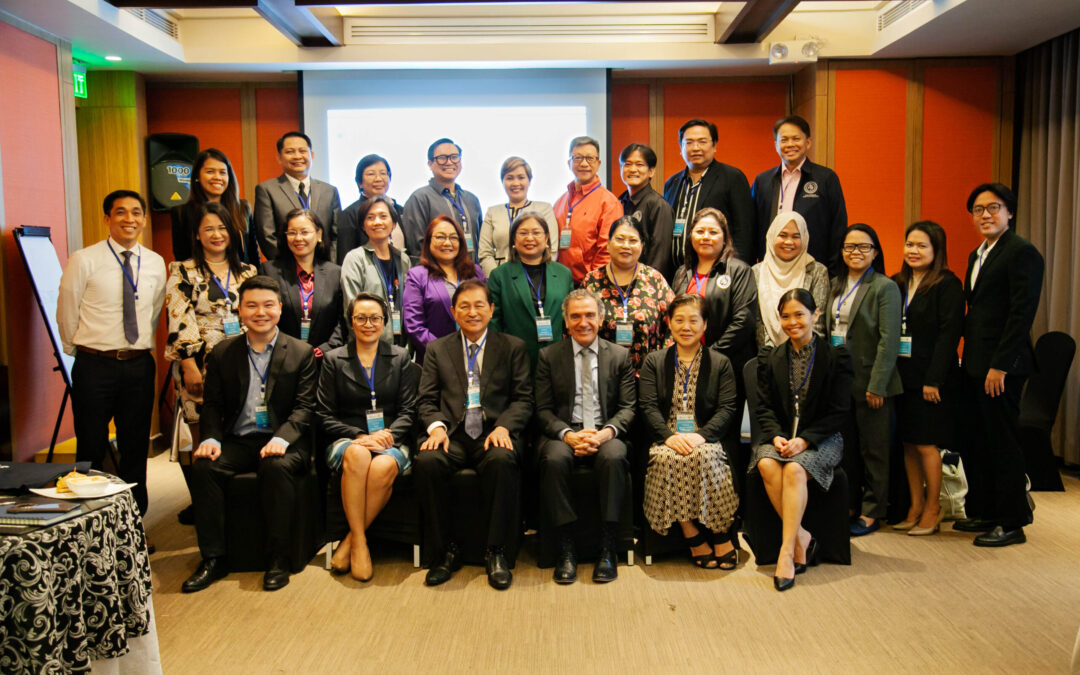
On 5 – 6 December 2023, the International Commission of Jurists (ICJ) co-organized a workshop, with the Department of Justice (DOJ) of the Philippines, on ensuring the protection of human rights in the online sphere under international human rights law.
The workshop was aimed at enhancing the capabilities of public prosecutors to integrate into their work the relevant international human rights law and standards pertaining to human rights in the online space.
“More than forty percent of our time each day is now spent connected to the internet. This has changed our lives. New technologies have also engendered new challenges for the fulfilment of human rights,” stressed Santiago Canton, ICJ Secretary General, during his opening remarks. “International human rights law provides the framework for us to better understand and respond to these new developments.”
Expert international and Filipino participants reaffirmed the pivotal role that public prosecutors play in protecting and promoting human rights in the digital sphere.
“This workshop was scheduled to coincide with the National Human Rights Consciousness Week in the Philippines, and the inauguration of the DOJ’s Human Rights Office, as part of our efforts to integrate human rights-based approaches into our prosecutorial work,” said Prosecutor Hazel C. Decena-Valdez, OIC Senior Deputy State Prosecutor, Department of Justice, noting the particular timeliness of the workshop in her opening remarks.
Participants raised concerns about human rights violations and abuses perpetrated in digital spaces, including the particular risks experienced by individuals from certain groups, such as children and women.
“The risks of violations or abuses of children’s rights in the digital environment include exposure to unlawful or harmful contents, and online bullying, threats, attacks, punishment, censorship and digital surveillance,” highlighted ICJ Commissioner Mikiko Otani, Former Chair of the UN Committee on the Rights of the Child. “The role of prosecutors in securing the rights of the child in digital environments is very important, by holding perpetrators of violations accountable, and protecting child victims from secondary victimization.”
The participants discussed the numerous challenges they face when prosecuting cases impacting human rights in the digital space, and mapped out how to better integrate international human rights law and standards into their investigatory and prosecutorial work in order to ensure access to justice and effective remedies.
Some of these challenges include how to: handle criminal cases based on domestic laws that conflict with international human rights law; ensure that there is accountability for violations and abuses of human rights online; and prevent biases and stereotyping, such as those based on gender, when investigating and prosecuting cases.
“Prosecutors should ensure that they develop protocols to help eradicate structural gender bias, and ensure gender-responsive approaches to their work. This includes preventing revictimization and ensuring confidentiality when handling cases,” underscored Melissa Upreti, ICJ Regional Director for Asia and the Pacific. “Online violence should not be distinguished as a lesser crime, and the human rights implications of online gender-based violence must be fully recognized.”
Contact
Melissa Upreti, ICJ Regional Director, Asia and the Pacific, e: melissa.upreti@icj.org
Daron Tan, ICJ Associate International Legal Adviser, e: daron.tan@icj.org
Caleen Obias, ICJ National Legal Consultant, e: caleen.obias@icj.org
Background
The workshop was attended by 22 public prosecutors from the Department of Justice.
The key thematic issues discussed during the workshop were:
- The right to online freedom of expression and information;
- Domesticating international human rights law;
- Protecting children’s rights online;
- Protecting women’s rights online; and
- Court technologies, access to justice and impacts on the right to a fair trial.
The speakers at the workshop were:
- Santiago Canton, Secretary General, ICJ;
- Prosecutor Hazel C. Decena-Valdez, OIC Senior Deputy State Prosecutor, Department of Justice;
- Justice Adolfo Azcuna, ICJ Commissioner; Justice, Supreme Court (Ret.); Chancellor Emeritus, Philippine Judicial Academy;
- Mikiko Otani, ICJ Commissioner; Member and Former Chair, UN Committee on the Rights of the Child;
- Melissa Upreti, Regional Director for Asia and the Pacific, ICJ; and
- Atty. Oliver Xavier Reyes, Senior Lecturer, University of the Philippines College of Law.
Dec 6, 2023 | Advocacy, News
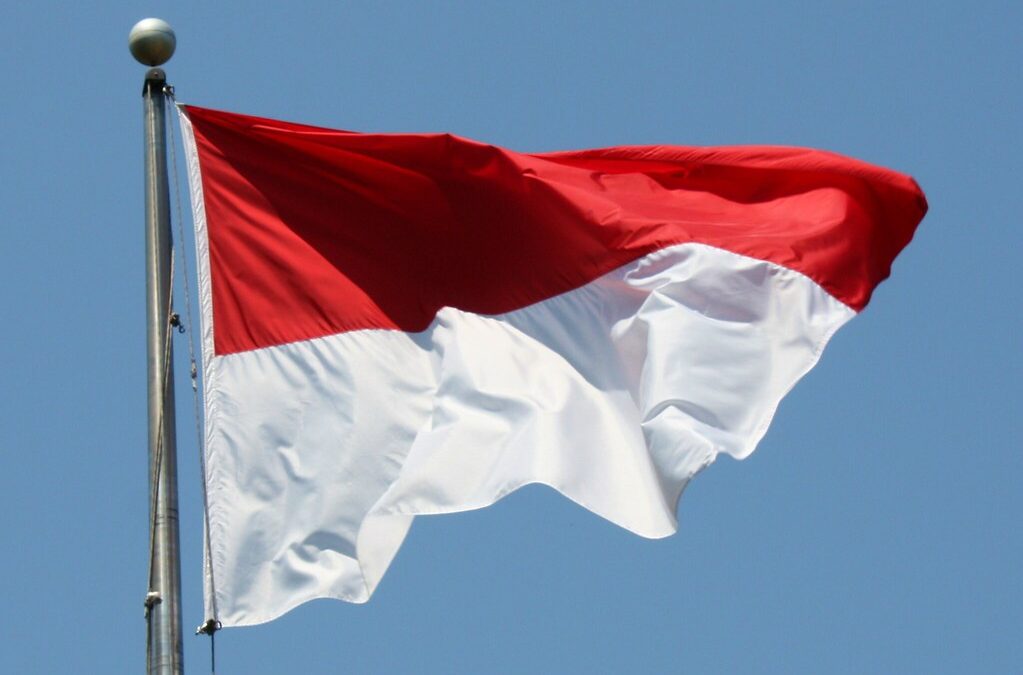
The second revision of Law No. 11 of 2008 on Electronic Information and Transactions (ITE Law), which was passed on 5 December 2023, does not comply with international human rights law and standards on freedom of expression and information, said the International Commission of Jurists (ICJ) today.
On 5 December 2023, the Indonesian House of Representatives passed the bill for the second revision of the ITE Law into law.
The ICJ is gravely concerned that the revised ITE Law fails to rectify the main flaws of its previous iteration, which has been used to wrongly criminalize and restrict free expression in online spaces. The criminal provisions contained in the revised law are inconsistent with international human rights law and standards, with added provisions having the potential to exacerbate repression of online expression.
“The retention of overbroad criminal provisions in the revised ITE Law signals the continuing failure of Indonesia to comply with its international human rights obligations to respect and protect the right to freedom of expression,” said Melissa Upreti, ICJ Regional Director for Asia and the Pacific. “The revision process lacked transparency, and important recommendations made by civil society to remove the ITE Law’s fatally flawed provisions have been disregarded.”
The ICJ is also concerned that the drafting process for the second revision was opaque, with public feedback on the draft having been ignored. The lack of transparency in the drafting process contravenes Indonesia’s obligation to ensure the effective exercise of the right to participate in public affairs, as guaranteed under article 25 of the International Covenant on Civil and Political Rights (ICCPR).
“The second revision of the ITE Law failed to capitalize on the opportunity for the Indonesian authorities to strengthen the protection of online freedom of expression and to reaffirm its commitment to respecting and protecting human rights in the online space. It is imperative that the revised law repeals or substantially amends the overbroad criminal provisions that have been used with concerning frequency to arbitrarily suppress online freedom of expression and create a climate of fear,” said Upreti.
In light of these concerns, the ICJ calls for the repeal or substantial amendment of the revised ITE Law to bring it in line with Indonesia’s human rights obligations to respect and protect the right to freedom of expression and information, through a transparent process that involves the effective participation of civil society.
Criminalization of free expression online
The revised ITE Law retains the overbroad and vague provisions criminalizing “contents that violate propriety” (article 27(1)); criminal defamation (article 27A); and “content that incites, persuades or influences” others that “causes feelings of hatred or hostility” based on protected characteristics (article 28(2)). A violation of these offences may result in imprisonment and criminal fines if found convicted (articles 45 and 45A).
Additionally, the revised law incorporates a new provision that imposes criminal liability for intentionally disseminating content that a person “knew contained false statements that cause public unrest” (article 28(3)), which may result in imprisonment if found convicted (article 45A(3)).
Any restriction on the right to freedom of expression and information must comply with the elements of legality, legitimate purpose, necessity and proportionality required under article 19(3) of the ICCPR. This means that any restriction on the right to freedom of expression must be based on law that is precisely worded, and be necessary for and the least restrictive measure to respond to a legitimate aim. The only aims identified as legitimate in article 19(3) are ensuring respect of the rights or reputations of others; or for the protection of national security, public order, public health or morals.
The criminal provisions in the revised law are unnecessary for any legitimate government purpose and risk making criminals of large numbers of ordinary internet users, and chilling many others from speaking online. They are clearly inconsistent with Indonesia’s obligations under article 19 of the ICCPR to guarantee the right to freedom of expression and information. They threaten unwarranted criminal sanctions for acts that are based on vague and overbroad language, which could be applied to unduly interfere with the rights of individuals and disproportionately impact those from disadvantaged and marginalized groups.
For instance, article 27(1) of the revised ITE Law threatens criminal sanctions for disseminating content that violates “propriety”, defined as “displaying nudity, genitalia, and sexual activity that contravenes with the values existing in society […]”. While the law now includes an exemption for public interest and self-defence (article 45(2)), this definition for “propriety” is vague and overbroad, having the potential to be weaponized to unjustly sanction any form of expression by individuals from marginalized groups, such as LGBTI-related content. Further, it could enable legal reprisals against victims/survivors of gender-based violence and lead to revictimization.
Defamation should never be subject to criminal, as opposed to civil, sanctions. The UN Human Rights Committee, which authoritatively interprets the ICCPR, has called on States to end the use of the criminal law for such purposes and affirmed that “imprisonment is never an appropriate penalty [for defamation]”. While the revised ITE law now incorporates a public interest exemption, the retention of criminal defamation will continue to have a chilling effect on online freedom of expression and information. Indeed, the previous criminal defamation provision in article 27(3) of the ITE Law, has already been applied to target expression critical of the government.
The criminalization of disseminating content that incites “feelings of hatred or hostility” in article 28(2) cannot be used to justify the application of criminal law. While States must act under the ICCPR article 20 to protect against actual incitement to violence and discrimination, provoking mere “feelings” of ill-defined conceptions of “hatred or hostility” stands well below the threshold of actual acts of violence or discrimination. In any event, the use of the criminal law is a plainly disproportionate measure to address any legitimate objective. The ICJ notes that the previous criminal hate speech provision in the ITE Law has been applied in an arbitrary manner to charge journalists and convict forms of expression that do not give rise to substantial harm.
The addition of article 28(3) in the revised ITE Law to criminalize disseminating “false statements” that causes “public unrest” is vague, overbroad and imprecise, which is inconsistent with the legality principle. Authorities may not rely on the prevention of “public unrest”, vaguely defined as “conditions that disturb public order […]”, to justify the disproportionate threat of criminal sanctions, especially imprisonment. The ICJ notes how other criminal provisions sanctioning disinformation, based on colonial-era regulations, have been used to arbitrarily sanction legitimate expression protected under international human rights law, including public interest reporting or critical opinions concerning public officials.
This press release can be downloaded in Bahasa Indonesian here.
Contact
Melissa Upreti, ICJ Regional Director for Asia and the Pacific, e: melissa.upreti@icj.org
Daron Tan, ICJ Associate International Legal Adviser, e: daron.tan@icj.org
Yogi Bratajaya, ICJ Legal Consultant, e: yogi.bratajaya@icj.org
Further reading
Dictating the Internet: Curtailing Free Expression, Opinion and Information Online in Southeast Asia
Indonesia: ICJ asks court to ensure that defamation and “false information” laws not be used to silence and criminalize human rights defenders
Indonesia: Law No. 12 of 2022 on Sexual Violence Crimes and Online Gender-Based Violence Against Women
Silenced But Not Silent: Lesbian, Gay, Bisexual and Transgender Persons’ Freedom of Expression and Information Online in Southeast Asia
Nov 30, 2023 | Advocacy, Analysis briefs, News
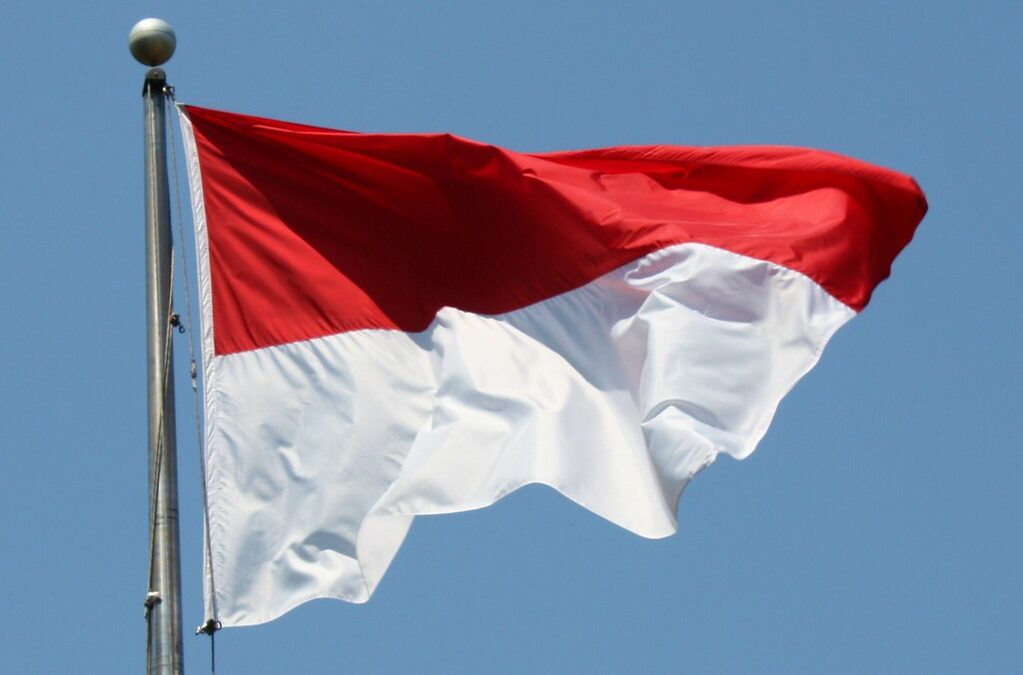
The International Commission of Jurists (ICJ), in an amicus curiae brief submitted today, has requested the East Jakarta District Court to give effect to Indonesia’s international legal obligations concerning freedom of expression and information in their adjudication of a case concerning criminal charges against two human rights defenders, Haris Azhar and Fatia Maulidiyanti.
Oct 11, 2023 | Advocacy, News
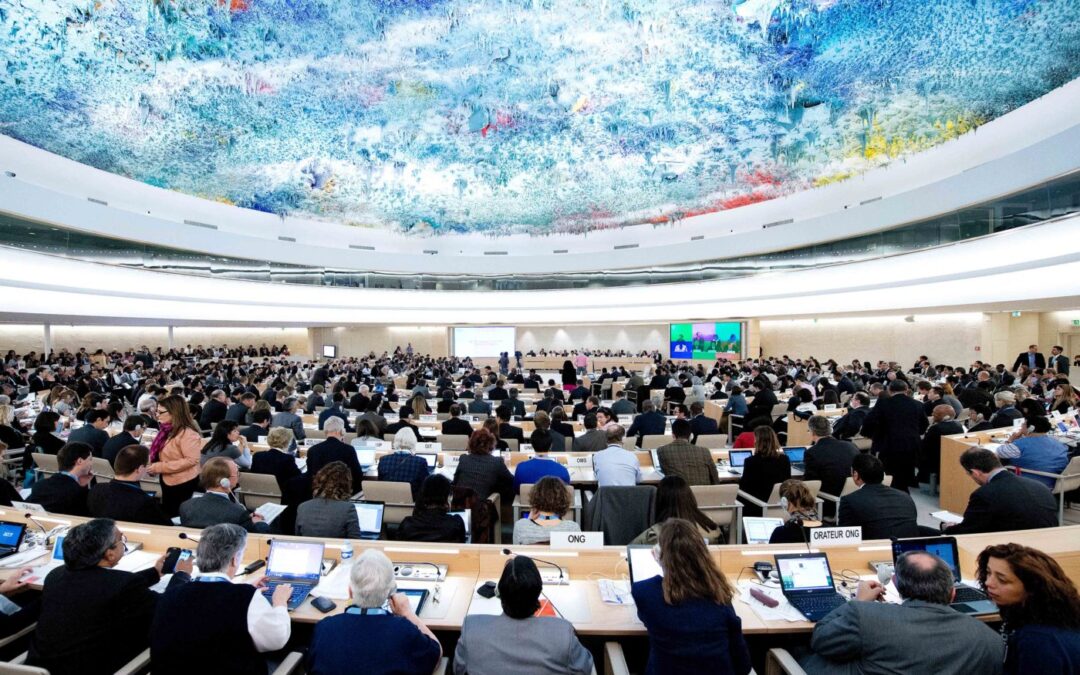
The International Commission of Jurists (ICJ) called the Human Rights Council’s (HRC) attention to the entrenched pattern of human rights violations in Cambodia, and called on the HRC to adopt a resolution to extend the Special Rapporteur’s mandate and ensure it has adequate resources and support.
Oral statement of the International Commission of Jurists (ICJ) during the Interactive Dialogue with the Special Rapporteur on the situation of human rights in Cambodia
“Madam Vice President,
The International Commission of Jurists (ICJ) concurs with the Special Rapporteur’s assessment that Cambodia has largely failed to implement the 20 human rights-related benchmarks proposed in his previous report to this Council.
In the lead-up to the national elections, there was a rapid escalation of the human rights and rule of law crisis in Cambodia. Human rights defenders and political opponents were convicted based on non-human rights compliant laws for exercising their right to freedom of expression, both online and offline, with new draconian laws on cybercrime and cybersecurity being drafted and considered.
The authorities have arbitrarily revoked licenses and blocked online access to independent media outlets without due process. The government at the highest level has employed rhetoric, reproduced online, to threaten and incite violence against political opponents with impunity, with credible reports of actual physical violence as an apparent consequence.
This systematic disregard for Cambodia’s international human rights obligations has been further exacerbated by the absence of an independent and impartial judiciary. The convictions of human rights defenders and political opponents were frequently accompanied by massive fair trial violations, including the effective application of a presumption of guilt.
It is imperative that the Council responds decisively to reverse this entrenched pattern of human rights violations in Cambodia by adopting a resolution to extend the Special Rapporteur’s mandate and ensuring it has adequate resources and support.
Thank you.”
Contact
Sandra Epal Ratjen, ICJ UN Representative and Senior Legal Adviser, e: sandra.epal@icj.org
Daron Tan, ICJ Associate International Legal Adviser, e: daron.tan@icj.org