Dec 27, 2019 | Advocacy
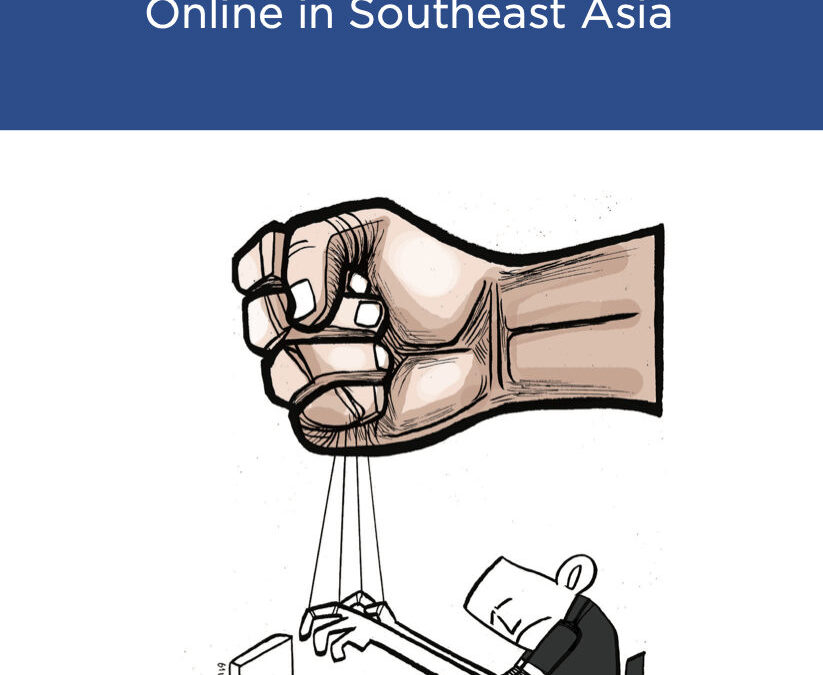
In December 2019, the ICJ launched its report Dictating the Internet: Curtailing Free Expression, Opinion and Information Online in Southeast Asia. The report looked at selected legal frameworks and case studies across ten countries in the region
The Myanmar section maps out a general pattern of abuse of legal frameworks by the government to restrict and control content online to the detriment of individuals’ rights to freedom of expression, opinion and information.
Download
Full report in Burmese.
The chapter on Myanmar in English and Burmese.
Dec 20, 2019 | News
On 20 December 2019, the ICJ submitted recommendations to the Ministry of Justice on the Draft Prevention and Suppression of Torture and Enforced Disappearances Act (“Draft Act”), scheduled for public consultation between 4 and 31 December 2019.
The ICJ also expressed concern at the recurrent delays in the amendment and enactment of this important legislation which will be critical for ensuring accountability and justice for future victims of torture and enforced disappearance.
In October, the Ministry of Justice withdrew the draft Act from the Cabinet “for further revision”, an act which has served to further delaye the passage of essential legislation criminalizing torture and enforced disappearances.
The ICJ also regretted that the latest Draft Act, after several rounds of revisions and public hearings, still has not addressed many of the principal shortcomings which the ICJ and other stakeholders and experts have indicated need necessarily be amended in order to bring the law into line with Thailand’s international human rights obligations, particularly under the Convention against Torture and Other Cruel, Inhuman or Degrading Treatment or Punishment (“UNCAT”) and the International Covenant on Civil and Political Rights (“ICCPR”).
As it stands, it is also inconsistent with the International Convention for the Protection of All Persons from Enforced Disappearance (“ICPPED”), which Thailand has signed and committed itself to ratify.
The key concerns include:
- Incomplete definitions of the crimes of torture and enforced disappearance, as well as other key terms discordant with international law;
- The absence of provisions concerning cruel, inhuman and degrading treatment (CIDT/P);
- The inadequacy of provisions on the inadmissibility of statements and other information obtained by torture, CIDT/P and enforced disappearances as evidence in legal proceedings;
- The inadequacy of provisions relating to modes of liability for crimes described in the Draft Act;
- The inadequacy of provisions concerning safeguards against torture, CIDT/P and enforced disappearances; and
- The absence of provisions concerning the continuous nature of the crime of enforced disappearance and statute of limitations for torture and enforced disappearance crimes.
Download the recommendations in English and Thai. (PDF)
Further reading
Thailand: ICJ, Amnesty advise changes to proposed legislation on torture and enforced disappearances
Thailand: ICJ submits recommendations on draft law on torture and enforced disappearance amendments
Dec 19, 2019 | News
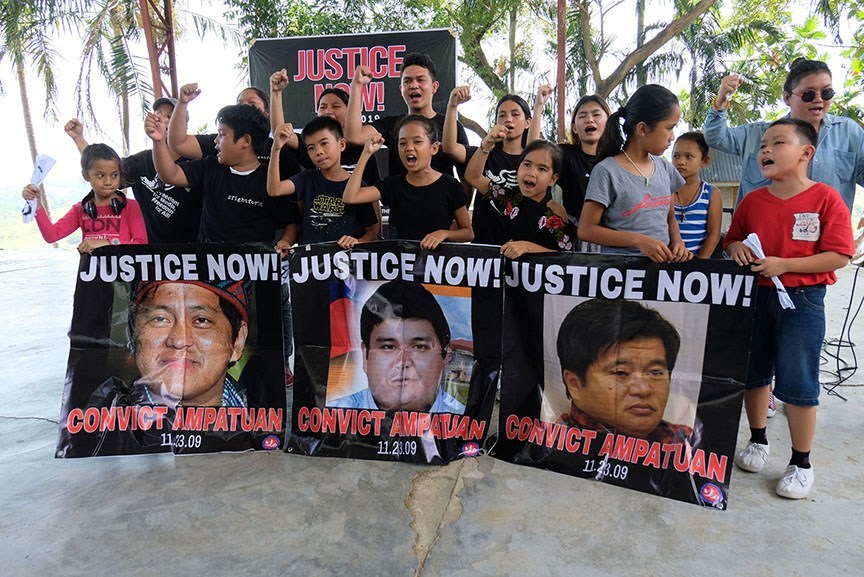
The ICJ said that today’s verdict by the Quezon City Regional Trial Court on the “Ampatuan Massacre” is a first step in achieving justice for the victims and their families.
The court found guilty several of the principal accused, including Zaldy Ampatuan, who is a former governor of the Autonomous Region in Muslim Mindanao. The Ampatuan Massacre involved the killing of 58 people, including 32 journalists. It became known as the single deadliest attack against journalists globally.
“The Ampatuan massacre was a human rights tragedy that demonstrated how ingrained impunity has become in Philippine society,” said Emerlynne Gil, ICJ’s Senior International Legal Adviser.
She added, “It clearly illustrated how respect for human rights has become a mockery in the Philippines, that it can be casually thwarted by a group of individuals who thought they can get away with the killing of 58 people, including journalists, in broad daylight.”
There are 197 accused named in this case, many of them members of the politically-powerful Ampatuan family. The principal accused, including Zaldy Ampatuan and several of his family members, were sentenced to imprisonment of reclusion perpetua (30 to 40 years) without parole. They were also ordered by the court to compensate the victims of the massacre.
The ICJ urged the Philippine government to use this case to now effectively address the culture of impunity in the country.
“The Philippine government should look to this case and use it more generally as a force for a comprehensive drive against impunity, which has been pervasive in unlawful killings, whether by State or private actors,” said Emerlynne Gil.
Background
On 23 November 2009, Bai Genalyn Mangudadatu, wife of Esmael Mangudadatu, was accompanied by members of her family, lawyers, political supporters, and journalists to file the certificate of candidacy of her husband, Esmael Mangudadatu, for the upcoming elections. They were killed by men who later on were revealed to have been ordered by Andal Ampatuan Sr., Andal Ampatuan Jr., and several other members of the Ampatuan family. The Ampatuan family is the political rival of the Mangudadatus.
The convoy of vehicles accompanying the Mangudadatus was ambushed. Passers-by were also killed by the armed men. Their bodies and vehicles were buried in shallow graves nearby.
There were 58 people killed that day, including 32 journalists who were accompanying the Mangudadatus. This became known as the single deadliest attack against journalists globally.
There were 192 persons named as accused in this case, including members of the Ampatuan family and law enforcement officers who conspired with them.
The trial went on for ten years. On 19 November 2019, Branch 221 of the Regional Trial Court of Quezon City rendered its decision finding guilty beyond reasonable doubt 28 people, including Zaldy Ampatuan, his brother Datu Andal Ampatuan Jr, and several other Ampatuan family members. They were sentenced to reclusion perpetua (30 to 40 years) without parole.
Contact
Emerlynne Gil, Senior International Legal Advisor, International Commission of Jurists, t: +66 8409 235 75, e: emerlynne.gil(a)icj.org
Dec 18, 2019 | Advocacy, News
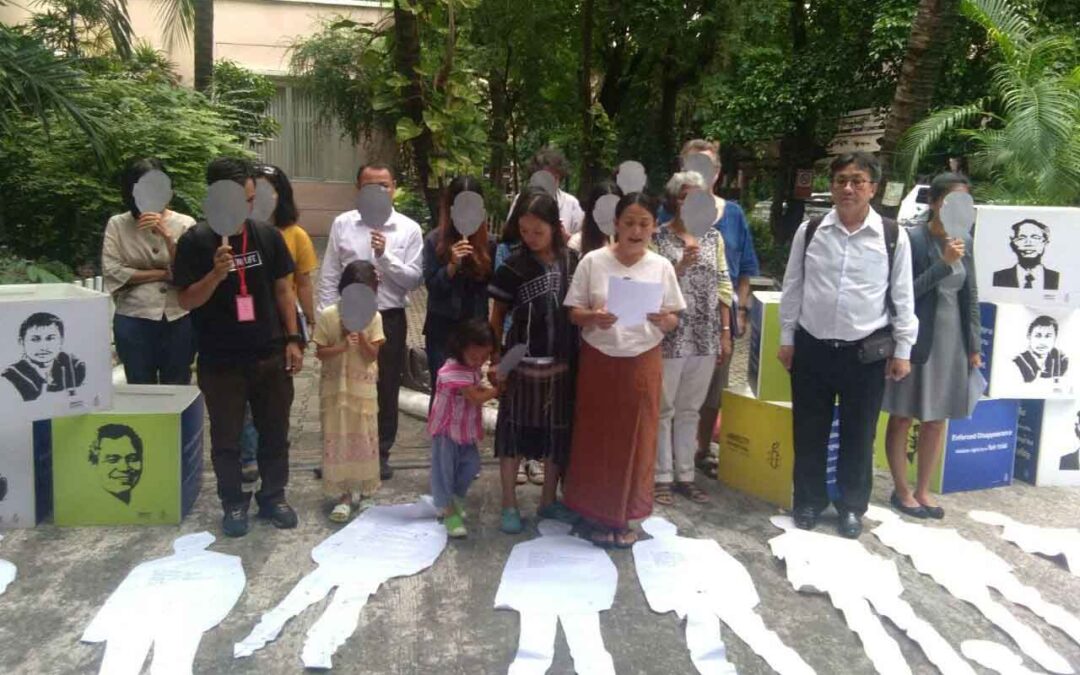
On 17 December 2019, the ICJ co-hosted a discussion on extrajudicial killings in Thailand and the lack of progress in investigations of these killings, with an emphasis on the killings of ethnic, racial, or linguistic minorities or indigenous persons, including indigenous persons in Northern Thailand and ethnic Malays in Southern Thailand.
The discussion was held at the Faculty of Law of Chiang Mai University. The event bought together participants from the North and Deep South of Thailand who considered developing joint advocacy strategy to address the troubling practices.
The event commenced with panel discussions on extrajudicial killings in Thailand and obstacles in access to justice faced by minority communities. Panelists included family members of victims, civil society organizations, lawyers and academics. Affected persons shared their experience as victims of attempted extrajudicial killings or relatives of victims of extrajudicial killings. Other panelists shared information on the dire trend of killings in their regions; concerns regarding extra-judicial killings of unarmed suspects; barriers to access to justice, including financial barriers due to poverty, lack of legal information, lack of trust in the authorities, and language barriers for indigenous speakers. Several panelists expressed concerns that family members of the victims could not participate in the investigation process. Others spoke on the objection of authorities to carry out autopsies of suspected extrajudicial killings in the Deep South.
ICJ’s Legal Adviser Sanhawan Srisod highlighted that investigators and law enforcement officials need to take into account international law and standards. These include the revised Minnesota Protocol on the Investigation of Potentially Unlawful Death (2016), which was launched in Thailand on 25 May 2017; and the 1990 UN Basic Principles on the Use of Force and Firearms by Law Enforcement Officials. Different standards of operation between the police and the military to make arrests, which make military officers prone to violate the UN Basic Principles on the Use of Force and Firearms by Law Enforcement Officials. She also spoke on the different types of firearms that security personnel use and how they affect the proportionality of force; and the lack of guidelines on the use of firearms in arrest operations that is in compliance with international laws and standards.
A theater performance by Lanyim Theatre took place after the discussion.
The first panel was moderated by Pranom Somwong, Thailand’s Representative for Protection International. The panel included affected persons of an alleged extra-judicial killing from Thailand’s Deep South; Maitree Chamroensuksakul, from Rak Lahu Group and relative of a victim of an alleged extra-judicial killing in Northern Thailand; Prof. Somchai Preechasinlapakun, Head of Law Research and Development Center, Chiang Mai University; and Yureesa Samah, Officer of Duay Jai Foundation.
The second panel was moderated by Nadthasiri Bergman, Director of Human Rights Lawyers’ Association. The panel included Preeda Nakpiew, Lawyer of Cross-Cultural Foundation; Anukul Awaeputeh, Lawyer and Head of the Pattani branch, Muslim Attorney Center Foundation; Sumitchai Hattasarn, Lawyer and Director of Centre for the Protection and Revival of Local Community Rights; and Sanhawan Srisod, Legal Adviser of the ICJ.
The event was conducted in collaboration with Amnesty International Thailand; Cross Cultural Foundation; Human Rights Lawyers’ Association; Inter Mountain Peoples’ Education and Culture in Thailand Association (IMPECT); Legal Research and Development Center, Chiang Mai University; Office of the High Commissioner for Human Rights (OHCHR) Regional Office for South-East Asia; and Protection International.
Further reading
Thailand: ICJ co-hosts discussion on addressing extrajudicial killings
ICJ holds seminar at Chiang Mai University Thailand on the right to life and the duty to investigate
Dec 15, 2019 | News
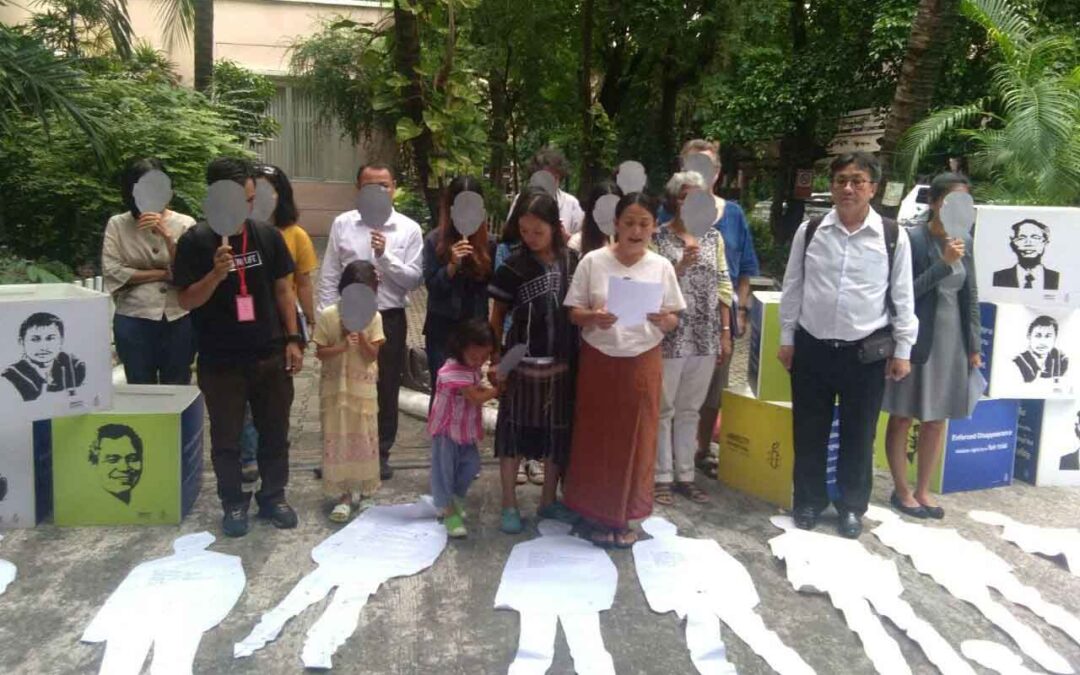
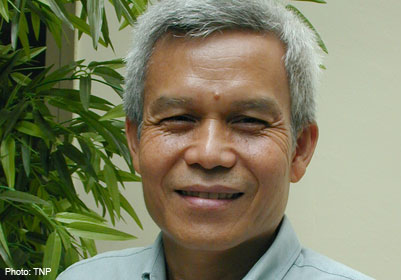
On 15 December 2019, the ICJ joined 87 organizations and 11 individuals in a statement urging the Lao and Thai governments to investigate apparent cases of enforced disappearance and demanding that the Lao government finally reveal Sombath Somphone’s whereabouts and ensure justice for him and his family.
The statement was issued on the seventh anniversary of the disappearance of Lao civil society leader Sombath Somphone and called particularly for the establishment of an independent and impartial investigative body tasked with determining Sombath’s fate and whereabouts without delay, considering the Lao police’s protracted failure to effectively investigate his case. The new body should have the authority to seek and receive international technical assistance in order to conduct a professional, independent, impartial, and effective investigation in accordance with international standards.
Sombath Somphone was last seen at a police checkpoint on a busy street in Vientiane on the evening of 15 December 2012. Footage from a CCTV camera showed that Sombath’s vehicle was stopped at the police checkpoint and that, within minutes, unknown individuals forced him into another vehicle and drove him away in the presence of police officers. CCTV footage also showed an unknown individual driving Sombath’s vehicle away from the city center. The presence of police officers at Sombath’s abduction and their failure to intervene strongly indicates state agents’ participation in Sombath’s disappearance.
Lao authorities have repeatedly claimed they have been investigating Sombath’s enforced disappearance but have failed to disclose any new findings to the public since 8 June 2013. They have met with Sombath’s wife, Ng Shui Meng, only twice since January 2013 – the last time in December 2017. No substantive information about the investigation has been shared by the police with the family, indicating that, for all intents and purposes, the police investigation has been de facto suspended.
The joint statement called on both Lao and Thai governments to promptly and impartial investigate all cases of suspected enforced disappearance in Laos and Thailand in line with international legal standards with a view towards determining the fate and whereabouts of apparent victims.
These include the cases of Od Sayavong, a Lao refugee living in Thailand who has been missing since 26 August 2019, and the cases of Ittiphon Sukpaen, Wuthipong Kachathamakul, Surachai Danwattananusorn, Chatcharn Buppawan and Kraidej Luelert, five Thai critics of the monarchy and the Thai government living in exile in Laos, who went missing between June 2016 and December 2018.
The statement further urged the Lao and Thai governments to promptly ratify the International Convention for the Protection of All Persons from Enforced Disappearance, which Laos and Thailand signed in September 2008 and January 2012 respectively; to incorporate the Convention’s provisions into their domestic legal frameworks, implementing it in practice; and to recognize the competence of the Committee on Enforced Disappearances to receive and consider communications from or on behalf of victims or other States parties.
The full statement is available here.
Contact
Frederick Rawski, ICJ Asia and the Pacific Director, e: frederick.rawski(a)icj.org